Introduction
Thirty kilometers south of Nakhon Ratchasima on Highway 304, the small district capital of Pak Thong Chai contains one of Thailand's greatest concentrations of silk weaving workshops and factories — an entire town organized around the production and sale of Thai silk in volumes that dwarf most other weaving centers in the country. Hundreds of workshops line the roads through the district, ranging from small family operations where a single weaver works a traditional handloom in a wooden house to larger semi-industrial facilities producing metered fabric in commercial quantities. What they all share is direct access to the buyer: there are no Bangkok middlemen, no department store markups, no Jim Thompson branding premiums. Pak Thong Chai is where silk is made and sold at the price it is worth, to anyone who turns up to buy it. For travelers who want authentic Thai silk — not a souvenir reproduction, not a printed synthetic — this is the destination.
Overview
Pak Thong Chai's position as a major silk center is the product of geography and history combined. The district sits at the edge of the Khorat Plateau where mulberry cultivation — the basis of sericulture — is viable, and its proximity to Nakhon Ratchasima city has given it access to a steady market, transport infrastructure, and the organizational density that supports a craft industry at scale. The district's silk reputation was significantly amplified in the mid-twentieth century when Jim Thompson, the American businessman who transformed Thai silk into an international luxury commodity, sourced some of his earliest commercial fabric from this area, establishing a connection between Pak Thong Chai weaving and the global silk market that continues today.
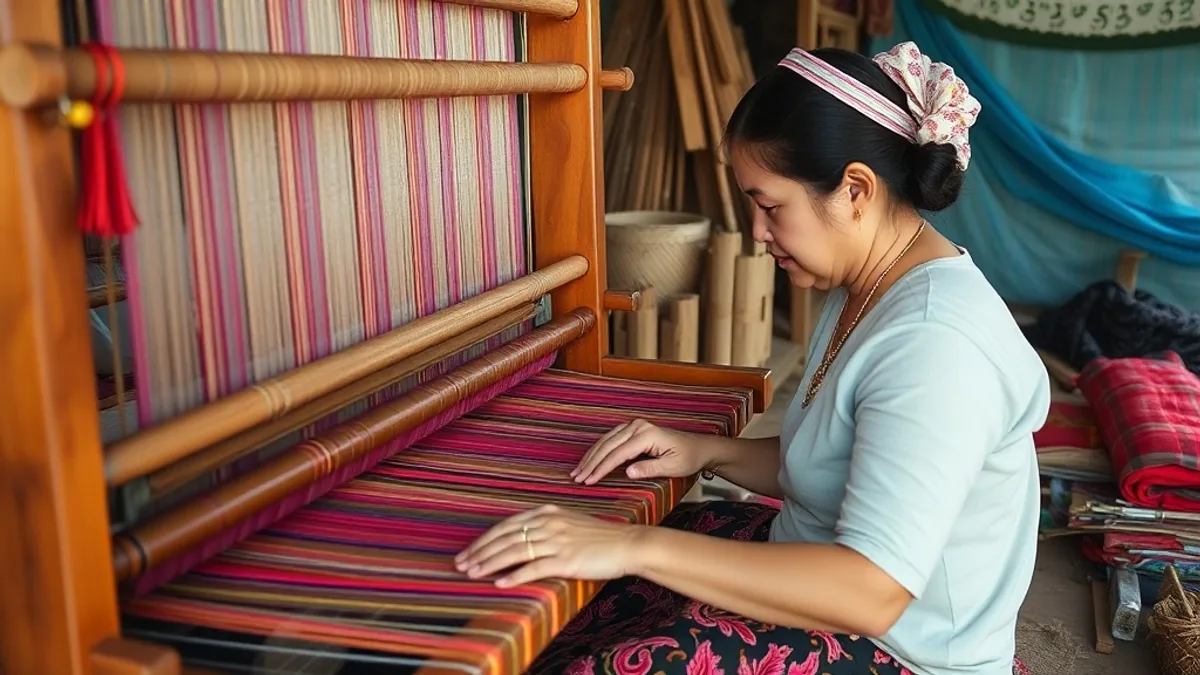
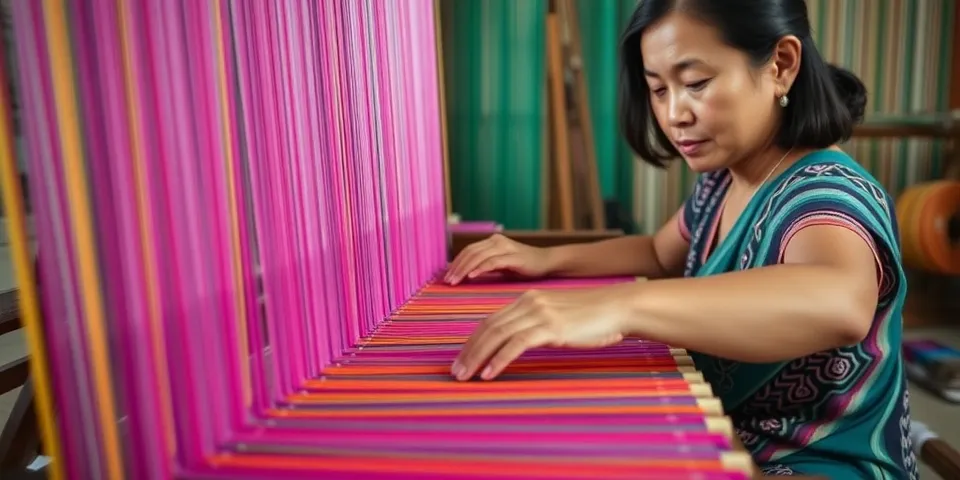
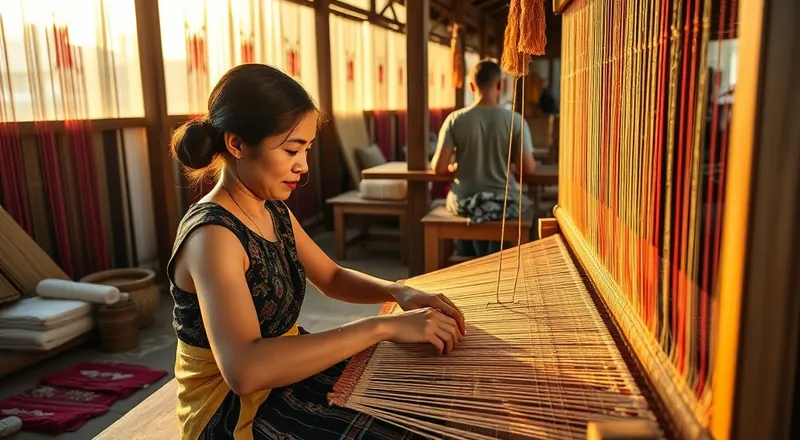
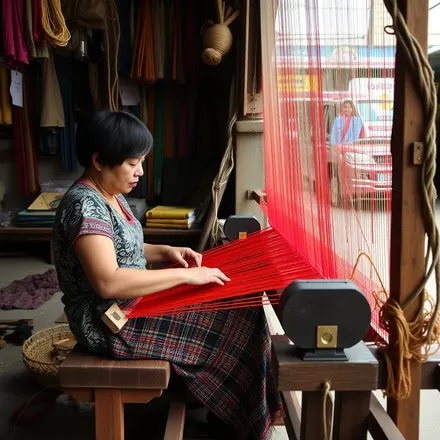
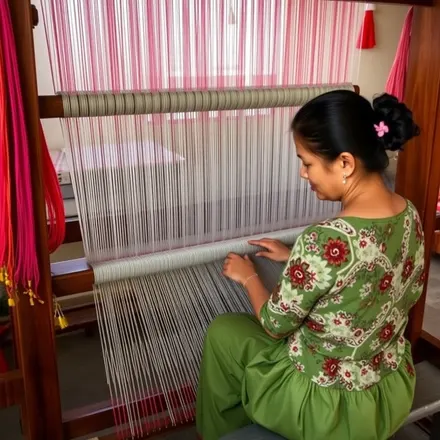
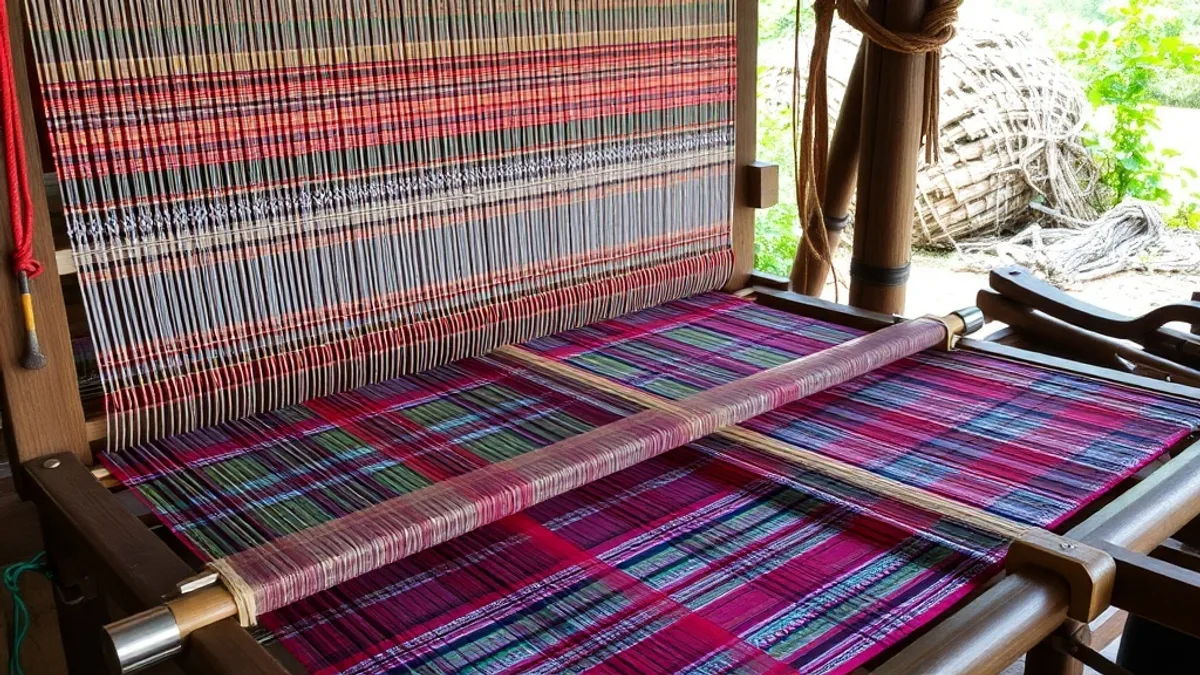
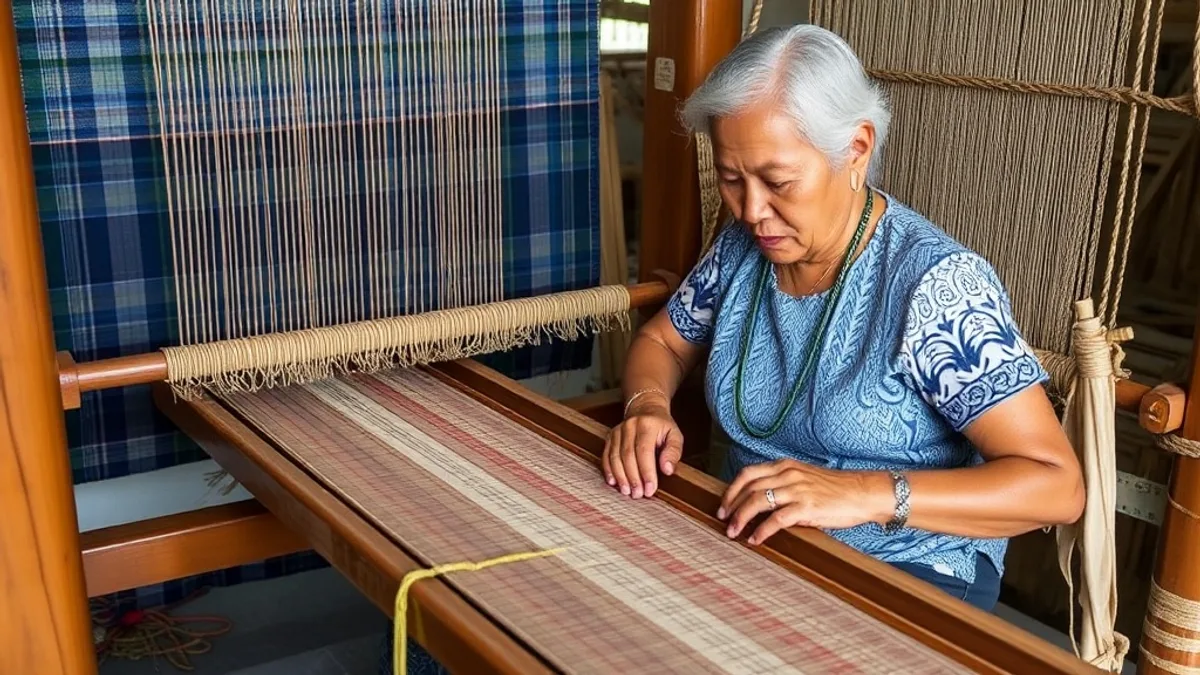
The process visitors can observe in Pak Thong Chai workshops begins with silk thread reeling from cocoons — most workshops now import raw silk thread from northern Thailand or China, though some still rear silkworms locally. The thread is wound onto bobbins, then wound onto the warp beam of the loom, and the weaving begins. In handloom workshops, the weaver uses foot pedals to operate the heddles that separate warp threads, then throws the shuttle carrying the weft thread across the shed in a single fluid motion, beats it down with the beater bar, and repeats — a rhythm that experienced weavers can sustain for hours, producing perhaps ten to fifteen centimeters of fabric per hour of careful work for complex patterns.
The distinction between handwoven and machine-woven silk is fundamental to purchasing intelligently in Pak Thong Chai. Handwoven silk (pha mai fai muea) is produced on traditional wooden or metal frame looms operated entirely by human hands and feet. The fabric has a natural slight irregularity in weave density and pattern edge definition that is the signature of handwork. Machine-woven silk (pha mai kat hak) is produced on power looms that operate at speeds no human can match — the fabric is perfectly uniform in weave, and pattern edges on woven-in designs are mechanically precise. Both are sold in Pak Thong Chai, and price is the primary indicator: a handwoven two-meter length of quality silk costs 800–3,000 THB; machine-woven equivalent fabric runs 200–600 THB. Neither is dishonest if correctly labeled — the problem arises when machine silk is sold as handwoven at handwoven prices.
The practical shopping strategy in Pak Thong Chai is to drive or ride through the district and stop at workshops where you can see active weaving on the premises — not just fabric displayed for sale. When buying is connected to watching production, the relationship between maker and buyer creates an accountability that purely retail shops cannot replicate. Workshop owners are generally welcoming of serious buyers and will explain what they are producing, walk you through quality differences, and sometimes allow you to try a few throws of the shuttle yourself.
For reference on quality and pricing, the nearest Jim Thompson outlet in Korat at Central Plaza Korat offers a useful benchmark — the branded fabric there is genuinely good quality, but prices reflect the brand premium, the Bangkok design team, and the international retail infrastructure. Comparable quality handwoven fabric from Pak Thong Chai workshops costs one-third to one-half the Jim Thompson price. For travelers who already own Jim Thompson silk and want to assess whether Pak Thong Chai matches the standard: it does, and in some cases exceeds it for traditional Isaan patterns.
Highlights
- Hundreds of silk workshops selling directly to visitors at production-site prices
- Handloom weaving demonstrations in family workshops — watching the complete production process
- Understanding the quality difference between handwoven and machine-woven silk
- Silk fabric at one-third to one-half the price of Bangkok branded retail
- Custom-order silk in chosen colors and patterns from some workshops
- The historical connection to Jim Thompson's Thai silk revival
- Scarves from 300 THB, blouses from 1,500 THB, two-meter lengths from 800 THB
- Pak Thong Chai Silk Market — the concentrated retail hub of the district
Pak Thong Chai workshops are active year-round during business hours (typically 8 AM to 5 PM, Monday to Saturday). The best time to visit for active weaving demonstrations is weekday mornings, when full production is underway. A weekend OTOP-certified silk fair is sometimes held in the district during December or January — the TAT Korat office can confirm dates. The drive from Korat takes 30–40 minutes on Highway 304; the road passes through Pak Chong-area agricultural land before reaching the weaving district.
Practical Information
Cost Level
No entrance fee. Silk prices: simple plain-weave scarf from 300–700 THB; mudmee ikat scarf from 500–1,200 THB; two-meter length of plain handwoven silk from 800–1,800 THB; two-meter length of complex-pattern mudmee from 1,500–4,000 THB; ready-made silk blouse from 1,500–3,500 THB; men's silk shirt from 1,200–2,500 THB. Machine-woven silk is 30–50% cheaper across all categories. Songthaew from Korat to Pak Thong Chai: 50–70 THB; private car or motorbike rental strongly preferred for flexibility.
Tips
Bring substantially more cash than you think you will spend — the combination of quality and value in Pak Thong Chai reliably exceeds visitor expectations, and many travelers wish they had bought more. Take a reference photo of any Jim Thompson or verified-quality silk item you already own — comparison against workshop samples is the most practical quality check available. If a workshop offers 'handwoven' silk at a price that seems impossibly low, it is machine-woven. The burn test (silk chars slowly and leaves crushable ash; synthetics melt and leave hard plastic residue) is always available as a final verification — any reputable workshop will be comfortable with you performing it on a loose thread.
Our creators on the ground in Nakhon-ratchasima share their best recommendations in their videos.
Creators who cover this spot
Discover YouTube creators who feature this topic in their videos.

Adventures Joel
British adventure vlogger exploring Thailand by motorbike.

Discover Thailand
Christian
Discover Thailand – Deutscher Thailand Reise-Creator auf YouTube.

GANZSCHOENTUTKA
Christina & Reci
GANZSCHOENTUTKA – Deutsche Weltreise-Creator mit Thailand-Fokus auf YouTube.
Places in this Guide
Discover the attractions and locations featured in this travel guide.
Explore Nakhon Ratchasima
Nakhon Ratchasima
นครราชสีมาNakhon Ratchasima, commonly known as Korat, is the gateway to Thailand's vast Isan region and one of the country's large...All creators from Nakhon Ratchasima →Location & Orientation

Frequently Asked Questions
How do I get to Pak Thong Chai from Nakhon Ratchasima?
Pak Thong Chai is 30 kilometers south of Nakhon Ratchasima on Highway 304, a well-maintained four-lane road. By private car or rental motorbike, the drive takes 30–40 minutes from the Korat city center. Songthaews (shared pickup trucks) run between Korat's market area and Pak Thong Chai throughout the day — fares are 50–70 THB each way, though schedules are irregular. A motorcycle rental from Korat (200–250 THB/day) is strongly recommended for independent visitors as it allows you to stop at multiple workshops at your own pace rather than being limited to the main market area.
How can I tell if silk is genuinely handwoven?
Several indicators help identify genuine handwoven silk. First, ask to see the loom — workshops selling handwoven silk should have looms actively in use. Second, examine the weave: handwoven silk has a very slight natural variation in thread spacing and weave density that is invisible from a distance but detectable under close inspection. Pattern edges on handwoven mudmee or supplementary-weft designs have a characteristic slight softness; machine-woven patterns are mechanically precise. Third, the price: genuine handwoven silk takes one to several hours per meter to produce — a price of 200 THB for a 'handwoven' two-meter length is not economically possible. Finally, the burn test on a loose thread is definitive for silk versus synthetic, though not for hand versus machine-woven.
Can I order custom silk in specific colors or patterns?
Many Pak Thong Chai workshops accept custom orders for visitors with specific requirements — a particular color, a pattern from a photograph reference, or a specific width. Custom orders typically require a minimum quantity (usually two to five meters) and a lead time of two to four weeks, which makes them impractical for travelers on short itineraries unless they are willing to have the order shipped home. For travelers based in Thailand or returning, a custom order from a Pak Thong Chai workshop is an excellent way to obtain specific fabric at a fraction of Bangkok pricing. Agree on specifications, deposit, and delivery terms in writing before leaving the workshop.
Is Pak Thong Chai silk the same quality as Jim Thompson silk?
Jim Thompson sources fabric from various Thai silk weaving centers and adds value through Bangkok-based design, quality control, and international retail infrastructure. The raw weaving quality from the best Pak Thong Chai handloom workshops is genuinely comparable to Jim Thompson's finished products — the same thread quality, similar weave density, equivalent durability. What the Bangkok brand provides is design consistency, color-fastness guarantees, and retail reliability that independent workshops in Pak Thong Chai cannot always match. For buyers who know what they are looking for and can assess quality in person, Pak Thong Chai offers equivalent or superior fabric at significantly lower prices. For buyers who want the confidence of a brand guarantee, Jim Thompson remains the benchmarked option.
What silk products offer the best value in Pak Thong Chai?
Plain-weave silk fabric by the meter offers the clearest value proposition — you can assess the thread count and weave quality directly, and the price differential versus Bangkok retail is most pronounced for undyed or simply-dyed cloth. Silk scarves are the most popular souvenir purchase: a quality mudmee ikat scarf from 500–900 THB offers genuinely export-quality craftsmanship at domestic workshop pricing. Silk neckties and pocket squares represent excellent value for formal gift purchases. Ready-made garments (blouses, shirts) are good value if sizing works — alterations are available at workshops with in-house tailors. Large-format silk yardage for home furnishing (cushion covers, table runners) is where the most dramatic price differences versus Bangkok retail emerge.