Introduction
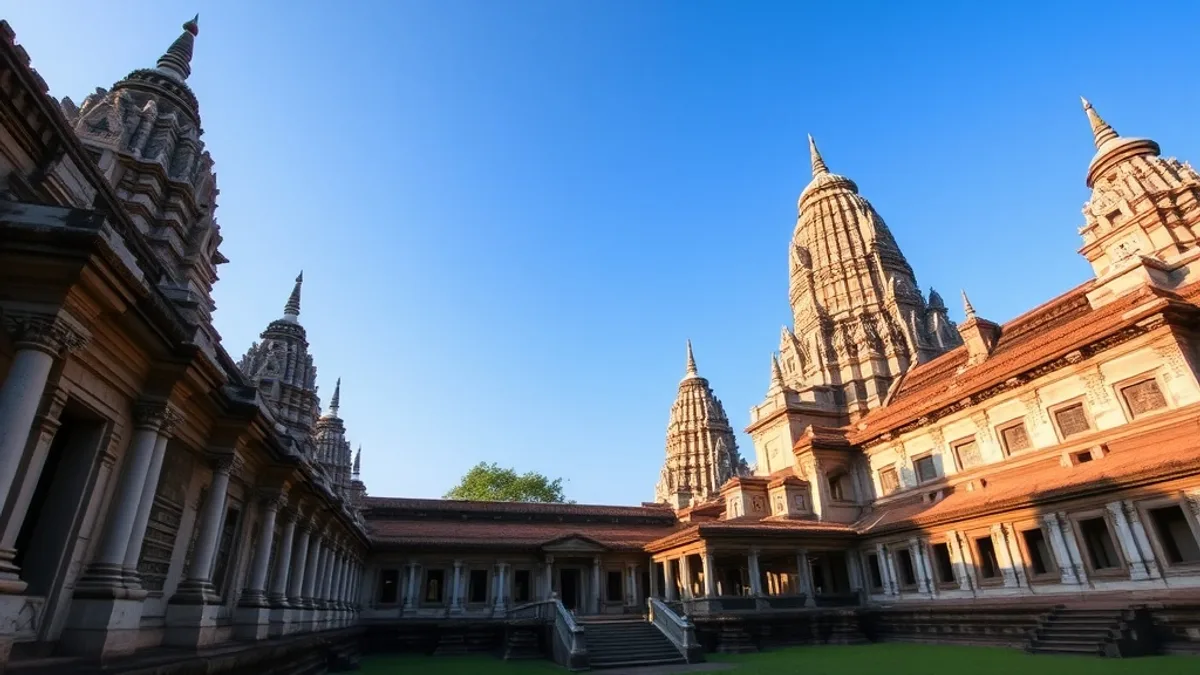
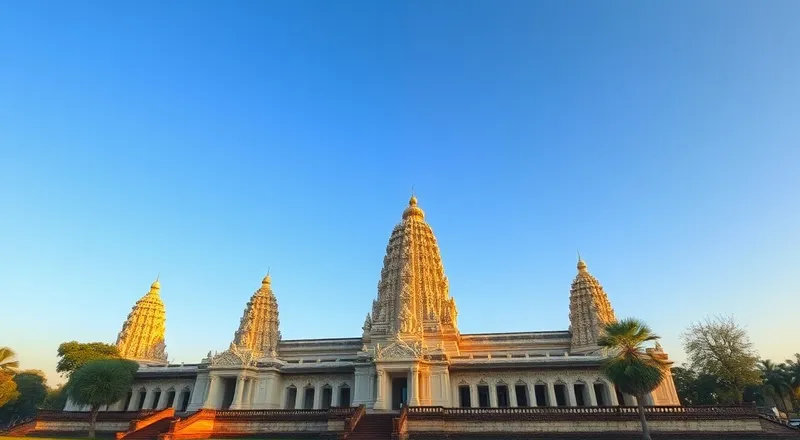
An hour north of Nakhon Ratchasima, in the small riverside town that shares its name, stands the most complete and beautifully restored Khmer temple complex in Thailand — and one of the finest in all of Southeast Asia. Phimai Historical Park encompasses the ruins of Prasat Hin Phimai, a temple whose construction began in the late eleventh century under the patronage of the Khmer kings at Angkor, predating the main construction phases of Angkor Wat itself. The white sandstone towers of Phimai rise with a grace and architectural confidence that has survived nine centuries of weather, war, and neglect with extraordinary dignity. Unlike Phanom Rung to the south or the temples of Angkor across the border, Phimai sits at ground level, with no hilltop climb, no physical barrier between visitor and architecture. You walk directly into a space that was once one of the most important religious sites on the Khmer highway between Angkor and the western reaches of the empire — and the sense of that history, quiet but unmistakable, fills the compound.
Overview
Phimai's historical significance is inseparable from the extraordinary Khmer road system that connected the heart of the empire at Angkor with its provincial centers. The Royal Road from Angkor Thom to Phimai, constructed in the eleventh and twelfth centuries, stretched approximately 220 kilometers through what is now northeastern Thailand — passing through a series of way-stations, rest houses (called arogayasala), and ceremonial gateways that are still being traced by archaeologists today. Phimai was the terminal point of this road, making it one of the most important ceremonial destinations in the entire Khmer empire.
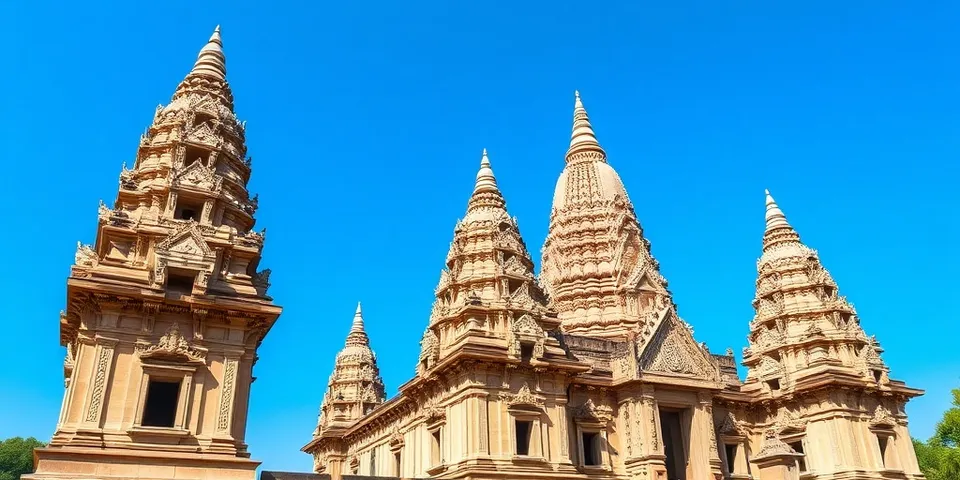
The temple complex itself was a Hindu-Buddhist hybrid sanctuary, as was characteristic of the Khmer religious tradition that moved fluidly between Shaivite and Mahayana Buddhist iconography depending on the devotional preferences of the ruling king. The outer wall encloses an area of approximately 1,000 by 600 meters, making it the largest Khmer temple complex in Thailand. The central sanctuary, Prasat Hin Phimai, is constructed from white Aranyik sandstone and pink laterite, its towers carved with episodes from the Ramayana, scenes of the Hindu cosmological ocean-churning myth (Samudra Manthan), dancing apsara celestial figures, and Buddhist imagery that reflects the temple's later Mahayana phase.
The Fine Arts Department's restoration of Phimai, conducted from the 1960s onward, is one of the most technically accomplished archaeological restoration projects in Thailand. The anastylosis method — in which fallen stones are documented, numbered, and rebuilt in their original positions using new stone only where absolutely structurally necessary — has returned the central sanctuary to something close to its original appearance. The work was advised and partly carried out in collaboration with the same French archaeological team that worked on Angkor, and the quality of the scholarship is evident in the result.
The Phimai National Museum, a five-minute walk from the park entrance, houses one of the finest collections of Khmer art outside Cambodia. The highlight is the sandstone statue of Jayavarman VII — the great late-twelfth-century Khmer king who presided over the empire's greatest territorial extent — presented in the seated meditative posture that was the standard iconography for his royal portraits. The museum's chronological display of Khmer sculpture from the pre-Angkorean period through the post-Angkorean decline provides essential context for the temple tour.
The Sai Ngam — Great Banyan Tree — on the bank of the Mun River at the edge of town is a phenomenon with no architectural rival. A single banyan tree that has spread and put down aerial roots over three and a half centuries now covers approximately 1,500 square meters of riverbank, creating a cathedral-like canopy of interlocked trunks and hanging roots that is simultaneously a natural wonder, a local park, and a spirit shrine festooned with offerings and decorated miniature houses. The tree is free to enter and can be combined with the temple visit in a half-day itinerary.
Phimai town itself merits a slow walk: small, atmospheric, populated with residents who have clearly decided that living alongside a world-class historical monument is entirely normal. Riverside restaurants serve the freshwater fish and Korat-influenced cooking of the Mun River valley at prices that reflect a town still adjusting to tourism rather than one that has optimized for it.
Highlights
- Prasat Hin Phimai — the finest white sandstone Khmer temple in Thailand, predating Angkor Wat
- The original Khmer Royal Road from Angkor Thom — one of the great infrastructure projects of the medieval world
- Apsara carvings and Ramayana reliefs on the central sanctuary, brilliantly preserved
- Phimai National Museum — the seated Jayavarman VII statue and the finest Khmer sculpture collection in Thailand
- Sai Ngam banyan tree — 350 years old, 1,500 square meter canopy, one of the world's largest single trees
- The thoughtful anastylosis restoration — Angkor-quality scholarship applied to a Thai site
- The small, unhurried town of Phimai — a genuine provincial town living alongside world-class heritage
- Easy day trip from Korat, just one hour by bus through flat Mun River valley farmland
Phimai is accessible year-round and can be visited comfortably in any season. November to February offers the most comfortable temperatures for outdoor exploration of the wide temple grounds. The Phimai Festival — held annually in November — sees the town come alive with a boat procession on the Mun River, light-and-sound shows at the temple, and a fair that fills the streets for several days. If you want the temple largely to yourself, early morning on a weekday is ideal — the park opens at 7 AM and the first tour buses typically arrive after 9 AM.
Practical Information
Cost Level
Phimai Historical Park entrance: 150 THB for foreigners, 30 THB for Thais. The ticket also covers the Phimai National Museum. Combined with Sai Ngam banyan tree (free). Bus from Nakhon Ratchasima (Korat) bus terminal to Phimai: 50–60 THB one way, approximately 1 hour. Tuk-tuk around Phimai town: 40–60 THB per trip. Lunch at riverside restaurants in Phimai: 80–150 THB per dish. Motorbike rental in Phimai for independent exploration of surrounding sites: 200–250 THB/day.
Tips
The morning light from the east falls directly onto the main sanctuary facade from around 7:30–9:30 AM, making this the best window for photography. The Phimai National Museum is genuinely excellent and should not be skipped — allow 45–60 minutes. The museum is air-conditioned, making it a welcome mid-day retreat when the temple grounds are at their hottest. Bring a bottle of water — the temple grounds offer no shade between structures. A combined Phimai-plus-day-trip itinerary pairing the temple with Khao Yai fills two very full days from a Korat base.
Our creators on the ground in Nakhon-ratchasima share their best recommendations in their videos.

Places in this Guide
Discover the attractions and locations featured in this travel guide.
Explore Nakhon Ratchasima
Nakhon Ratchasima
นครราชสีมาNakhon Ratchasima, commonly known as Korat, is the gateway to Thailand's vast Isan region and one of the country's large...All creators from Nakhon Ratchasima →Location & Orientation


Frequently Asked Questions
How does Phimai compare to Angkor Wat in Cambodia?
Phimai predates the main construction phases of Angkor Wat by roughly a century, and its architectural forms — the elongated towers, the cruciform galleries, the ornate sandstone carvings — directly influenced Angkor's design vocabulary. In scale, Angkor is vastly larger and more overwhelming; Phimai is a fraction of its size. But Phimai's intimacy and the quality of its restoration make it, in many ways, easier to understand and more emotionally accessible than the spectacle of Angkor. The carved reliefs at Phimai are in exceptional condition — better preserved in detail than many comparable surfaces at Angkor. For travelers who have seen Angkor and want to understand its origins, Phimai is an essential complement. For those who haven't been to Cambodia, Phimai provides a superb introduction to Khmer architecture.
What is the best way to get from Nakhon Ratchasima (Korat) to Phimai?
Buses depart from Nakhon Ratchasima's Bus Terminal 2 (northeastern bus terminal) to Phimai throughout the day — departures are frequent, fares are 50–60 THB, and the journey takes approximately one hour through flat agricultural landscape. The bus drops off near the town center, a short walk from the historical park entrance. For more flexibility, renting a car or motorbike in Korat allows you to combine Phimai with surrounding historical sites on the same day. The drive from Korat to Phimai follows Highway 2 north then provincial roads — approximately 60 kilometers, manageable in 45–50 minutes by car.
What is the Sai Ngam banyan tree and why is it significant?
Sai Ngam (Beautiful Banyan) is a single banyan tree (Ficus benghalensis) that has propagated itself through the banyan's characteristic aerial-root growth mechanism over approximately 350 years, creating what amounts to a small forest from one original trunk. The canopy now covers an area of roughly 1,500 square meters along the bank of the Mun River — making it one of the largest individual trees by canopy coverage in the world. The tree functions simultaneously as a local park (families picnic beneath its canopy), a spirit shrine (offerings and spirit houses are maintained at its base), and a tourist attraction. The sense of being inside the tree rather than under it — surrounded by dozens of descent root-columns — is a quietly extraordinary experience.
Are there other Khmer sites near Phimai worth visiting?
The wider Nakhon Ratchasima and Buriram region contains one of the greatest concentrations of Khmer historical sites outside Cambodia. Phanom Rung Historical Park (in Buriram province, approximately 120 kilometers east of Korat) is the finest hilltop Khmer sanctuary in Thailand — a pink sandstone masterpiece perched on an extinct volcano with a mathematically perfect axial alignment to the sunrise at the equinox. Prasat Mueang Tam, nearby at the foot of the same hill, is a laterite water-surrounded compound with beautifully preserved naga balustrades. The two can be combined in a single day from Korat or from a Phimai base. The provincial museum in Phimai provides maps and context for the entire regional site network.
When is the Phimai Festival and what happens during it?
The Phimai Festival typically takes place in the second weekend of November, organized by the Fine Arts Department and the provincial authority. The centerpiece is a boat procession on the Mun River in which illuminated vessels parade past the ancient city walls in a ceremony that echoes the waterway traditions of the Khmer period. The temple grounds host a light-and-sound show telling the history of the Khmer empire and Phimai's place in it — the production quality has improved considerably in recent years. A street fair brings food and handicraft vendors to the town center. The festival is a major event for Nakhon Ratchasima province and draws visitors from Bangkok and across Isaan; accommodation in Phimai and Korat books up several weeks in advance.