Introduction
Nakhon Ratchasima — Korat — is a real city in the full sense of the term, and its nightlife reflects that reality in ways that distinguish it sharply from the staged tourist entertainment of Bangkok's Khao San Road or Pattaya's Walking Street. This is a city of 330,000 people with Thailand's largest technical university, a strong middle class, a deeply embedded Isaan music and entertainment culture, and a growing craft beer scene that would surprise anyone whose mental image of northeastern Thailand is limited to rice fields and Buddhist temples. The social life of Korat happens in the area around the Suranaree monument (where the beloved female war hero Thao Suranari is honored as the city's patron), along the moat promenade, in the KTV entertainment complexes that are the preferred social format for Thai groups, at the Muay Thai stadium, and increasingly in a cluster of bars and craft beer taprooms that have emerged from the city's educated resident population. It is night as Thais actually live it — not packaged for foreign consumption, but genuinely welcoming to any visitor who arrives without demanding that it perform Thainess according to someone else's script.
Overview
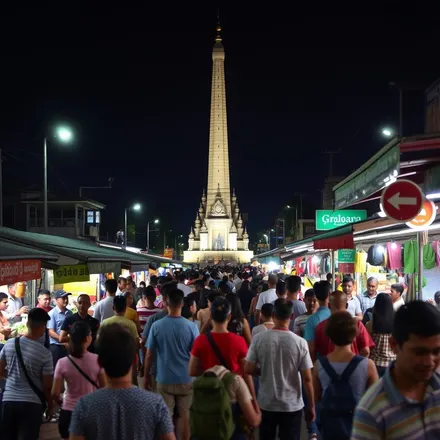
The Suranaree monument area at the center of the old city is the social focal point of Korat's evening life. The monument — a bronze statue of Thao Suranari (Mo, as locals call her) in martial pose, commemorating her leadership of the defense against a Lao invasion in 1826 — is illuminated at night and surrounded by a promenade that fills with residents of every age from dusk onward. Street food vendors, snack stalls, and souvenir sellers create a nightly market around the monument, and the atmosphere is festive and familial rather than transactional. Traditional music performances and occasional cultural events take place in the open plaza adjacent to the statue, particularly on weekends and Thai public holidays.
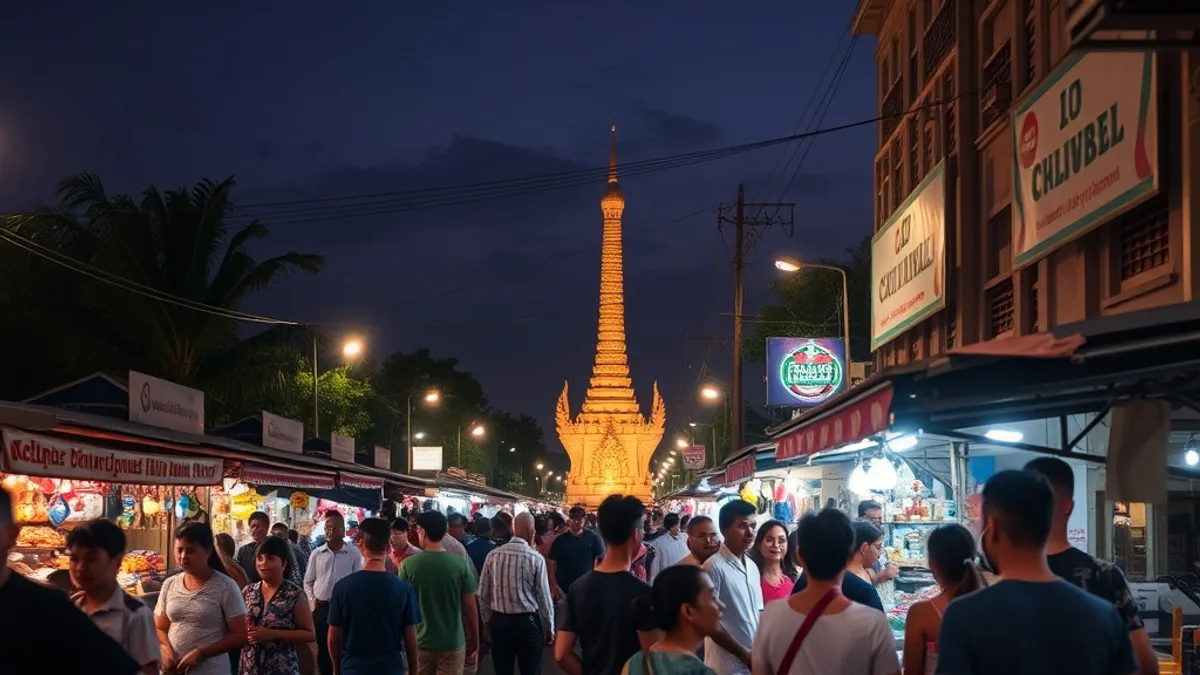
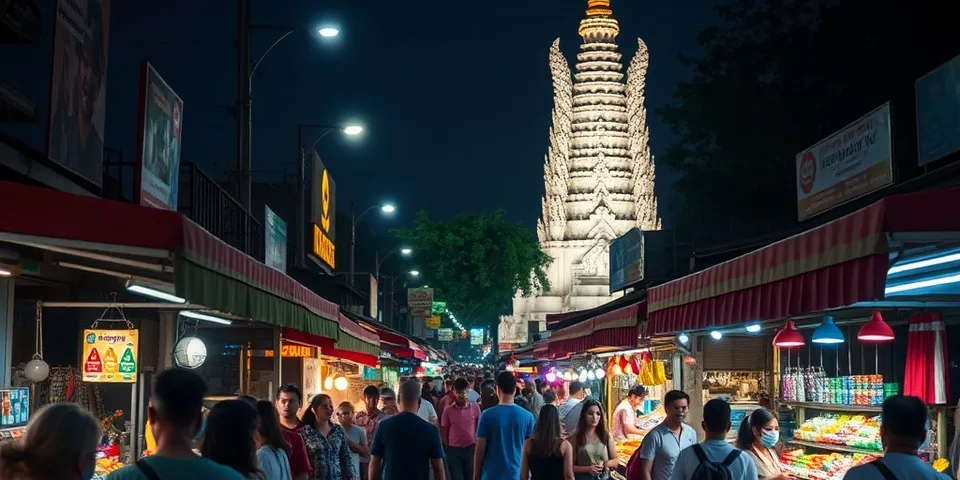
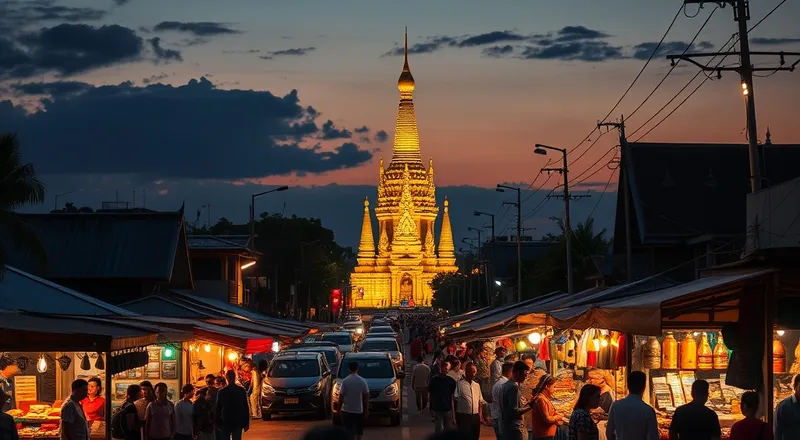
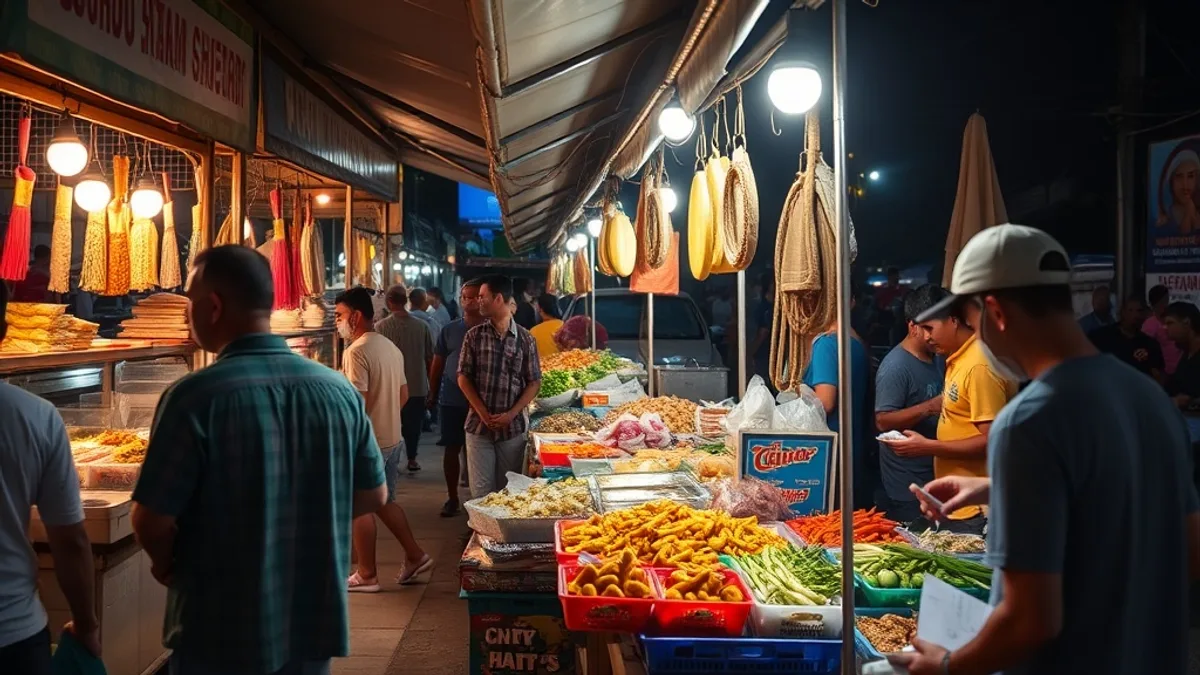
The Night Bazaar area, extending from near the Chumphon Gate through several streets of the old town, transforms after 6 PM into Korat's most comprehensive evening entertainment zone. Food stalls anchor the experience, but between them and the restaurants sit bars, live music venues, pool halls, and the kind of informal semi-outdoor drinking spaces that Thai cities do better than almost anywhere else on earth. Local bands play everything from luk thung (Thai country music) to rock covers to electronic pop in the live music venues along the bazaar streets, and the volume and energy levels rise through the evening.
KTV (karaoke television) is the dominant social entertainment format for Thai groups in Korat, as it is across most of provincial Thailand. The KTV entertainment complexes — large buildings with dozens of private karaoke rooms bookable by the hour — serve as the equivalent of restaurant-plus-bar for group social occasions in the local culture. Visitors traveling with Thai friends or colleagues may find themselves at a KTV evening; it is an entirely worthwhile experience of how Thai social life actually works, markedly different from the foreign-facing karaoke bars of Bangkok's entertainment districts.
Muay Thai boxing events at Korat's local stadiums bring a more athletic dimension to the nighttime entertainment calendar. Bouts are held on rotating weekly and monthly schedules depending on the season and promoter; the TAT Korat office and most guesthouses can advise on upcoming events. The stadium atmosphere — the distinctive sawing sound of the piphat orchestra accompanying each round, the crowd's collective held breath before a high kick, the trainers' corner instructions in regional dialect — is one of those experiences that connects directly to Thailand's living sporting culture in a way that the tourist-facing stadium shows in Bangkok cannot fully replicate.
Night Safari Korat, located in the city's western outskirts near Suranaree University, operates tram-based wildlife viewing tours through enclosures housing a range of animals including tigers, bears, giraffes, and various deer species. It is a conventional zoo-style experience rather than a genuine wildlife encounter — Khao Yai, one hour away, offers the real thing — but it is popular with Thai families and provides an accessible evening outing for visitors staying multiple nights in the city.
Korat's emerging craft beer scene is small but genuine, clustered around a handful of taprooms and bottle shops in the commercial district north of the old city and near the university. Local enthusiasts have established brewing operations that produce IPAs, wheat beers, and stouts from ingredients that reflect their Isaan context, and the taprooms that serve them attract the city's educated younger residents in numbers that make for lively evenings. Prices are higher than large-format Thai beer — expect 150–250 THB per glass — but the quality and atmosphere justify it for craft beer travelers.
Highlights
- Suranaree monument area — the illuminated civic heart of Korat's evening social life
- Night Bazaar with live Isaan music, food stalls, bars, and the most authentic evening atmosphere
- KTV entertainment culture — the social format that defines Thai group nightlife in provincial cities
- Muay Thai boxing at local stadiums with live piphat orchestra accompaniment
- Emerging craft beer taprooms near Suranaree University
- Night Safari Korat for families — tram-based wildlife park after dark
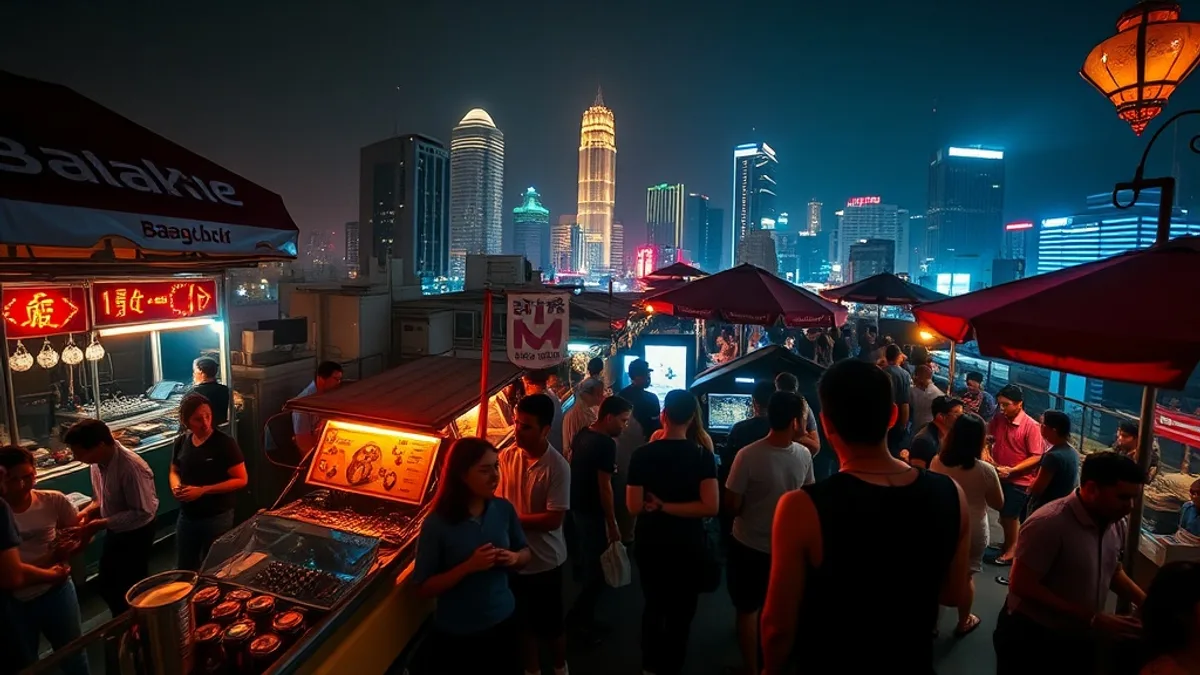
- Rooftop bars with views over the Korat skyline
- A genuinely local city night scene with no concessions to tourist performance
Korat's nightlife scene operates year-round with consistent quality. The cool season (November to February) makes outdoor evening areas like the Suranaree promenade and Night Bazaar most enjoyable. The annual Dark Side of Korat craft beer festival (typically January or February) is worth targeting for beer-focused travelers. Muay Thai stadium schedules vary — confirm current bout nights with local sources on arrival. The Suranaree monument area is at its most festive on weekends and Thai national holidays.
Practical Information
Cost Level
Night Bazaar entrance: free. Local beer at a bar or restaurant: 70–100 THB per bottle. Craft beer at taprooms: 150–250 THB per glass. KTV room rental: 300–800 THB per hour depending on room size and establishment quality (drinks typically not included in room rate). Muay Thai stadium admission: 300–500 THB for standard seats, 600–1,000 THB for ringside. Night Safari Korat: 350 THB adults, 150 THB children. Grab or tuk-tuk within the city at night: 60–120 THB depending on distance.
Tips
Getting around Korat at night is straightforward with Grab, which operates reliably across the city. Songthaews stop running by around 8–9 PM, after which Grab and motorcycle taxis are the primary options. The Night Bazaar and Suranaree area are entirely safe for solo travel at night — Korat is a provincial Thai city with the low street crime that characterizes most of the northeast. For Muay Thai events, arrive 30 minutes early to get good seats and observe the pre-fight ceremonies. Craft beer taprooms typically open at 5 PM and close by midnight; they are the best places in Korat to meet educated English-speaking locals.
Our creators on the ground in Nakhon-ratchasima share their best recommendations in their videos.
Places in this Guide
Discover the attractions and locations featured in this travel guide.
Explore Nakhon Ratchasima
Nakhon Ratchasima
นครราชสีมาNakhon Ratchasima, commonly known as Korat, is the gateway to Thailand's vast Isan region and one of the country's large...All creators from Nakhon Ratchasima →Location & Orientation
Frequently Asked Questions
Is Korat nightlife safe for solo foreign travelers?
Nakhon Ratchasima is one of the safer large cities in Thailand for nighttime independent travel. The city's nightlife is primarily domestic Thai in character — the entertainment infrastructure exists for a large local population rather than a foreign visitor market, and the social environment lacks the specific risks associated with heavily touristed zones. Standard urban safety precautions apply: use Grab rather than unmarked taxis late at night, keep valuables in your hotel safe, be aware of your alcohol intake in unfamiliar environments. The Night Bazaar area and Suranaree monument promenade are family-frequented public spaces even late in the evening, making them particularly comfortable for solo travelers.
How does Korat nightlife compare to Bangkok?
Korat's nightlife is markedly different from Bangkok's in ways that many travelers find either preferable or at least more interesting. The bars and entertainment venues exist primarily for local Thai residents rather than foreign visitors, which means the pricing is domestic Thai, the music is what Thais actually listen to rather than what tourists expect, and the atmosphere is genuinely social rather than commercially transactional. You will not find the concentration of international venues, the all-night clubs, or the variety of Bangkok — but you will find Isaan live music in its natural habitat, KTV culture as actually practiced, and the specific warmth of a provincial Thai city's social life that Bangkok's internationalism has largely washed away.
What is Isaan music and where can I hear it in Korat?
Isaan music is the folk music tradition of northeast Thailand — centered on the khaen (a free-reed mouth organ of bamboo pipes), the phin (a three-stringed lute), and the characteristic call-and-response vocal style of luk thung and mor lam genres. Mor lam in particular, with its rapid-fire vocal delivery, pentatonic scale, and lyrics addressing themes of rural life, migration, and romantic longing, is the authentic musical voice of Isaan. Live performances occur at the Night Bazaar's music venues, at local outdoor events around the Suranaree area, and at larger concert venues on the city's outskirts during festival periods. Korat's position as Isaan's gateway city means both traditional forms and contemporary Isaan pop are represented in the entertainment scene.
Is there a rooftop bar or viewpoint in Korat?
Several hotels in central Nakhon Ratchasima have rooftop bars or sky lounges with views over the city, though Korat is a low-rise city and the 'skyline' is modest compared to Bangkok. The best views are from bars in the upper floors of hotels along Mittraphap Road and in the commercial district north of the old city. Craft beer taprooms and modern bars near Suranaree University sometimes occupy upper-floor premises with open terraces. The rooftop pool area of some of the city's mid-range hotels is open to non-residents for a fee and provides pleasant elevated outdoor space for an evening drink.
When are Muay Thai boxing events held in Korat?
Korat has a functioning Muay Thai stadium culture with regular events, though the schedule varies by season and is organized by local promoters rather than on a fixed national calendar. Events typically take place on Friday or Saturday evenings. The TAT office in Korat on Mittraphap Road and most guesthouses in the city can advise on current fight nights and where to buy tickets. Ticket prices are significantly lower than tourist-facing Muay Thai venues in Bangkok and Phuket — ringside seats at 600–1,000 THB are genuine value for the experience. The fighter quality ranges from developing regional fighters to established professionals; any fight card in Korat will include at least some competitive, high-level bouts.