Introduction
Three hours north of Bangkok, where the flat central plains give way to the forested highlands of the Khorat Plateau's southern edge, Khao Yai National Park spans more than 2,000 square kilometers of some of the most biologically rich forest in mainland Southeast Asia. This is Thailand's oldest and most-visited national park — a UNESCO World Heritage Site as part of the Dong Phayayen-Khao Yai Forest Complex — and its wildlife sightings are among the most reliable anywhere in the region. Wild Asian elephants graze in the park's open grasslands often enough that a visit without an elephant sighting counts as an unusually unlucky day. Hornbills — four species of them — call from the forest canopy in numbers that make Khao Yai one of the best birding destinations in mainland Southeast Asia. Gibbons whoop in the morning mist. Gaur, the world's largest wild cattle, move through the forest edge at dusk. Khao Yai is not a zoo and makes no promises, but its density of wildlife reliably delivers the kind of encounters that justify the journey from anywhere.
Overview
Khao Yai National Park straddles the border between Nakhon Ratchasima, Prachinburi, Nakhon Nayok, and Saraburi provinces, but the Nakhon Ratchasima (Pak Chong) side is the primary visitor gateway, closest to Bangkok by road and rail and equipped with the park's main visitor center, the majority of trail access, and most of the surrounding resort and food infrastructure. The park covers 2,168 square kilometers of tropical and subtropical moist broadleaf forest, seasonal dipterocarp forest, and montane evergreen forest at elevations ranging from 100 to 1,351 meters above sea level.
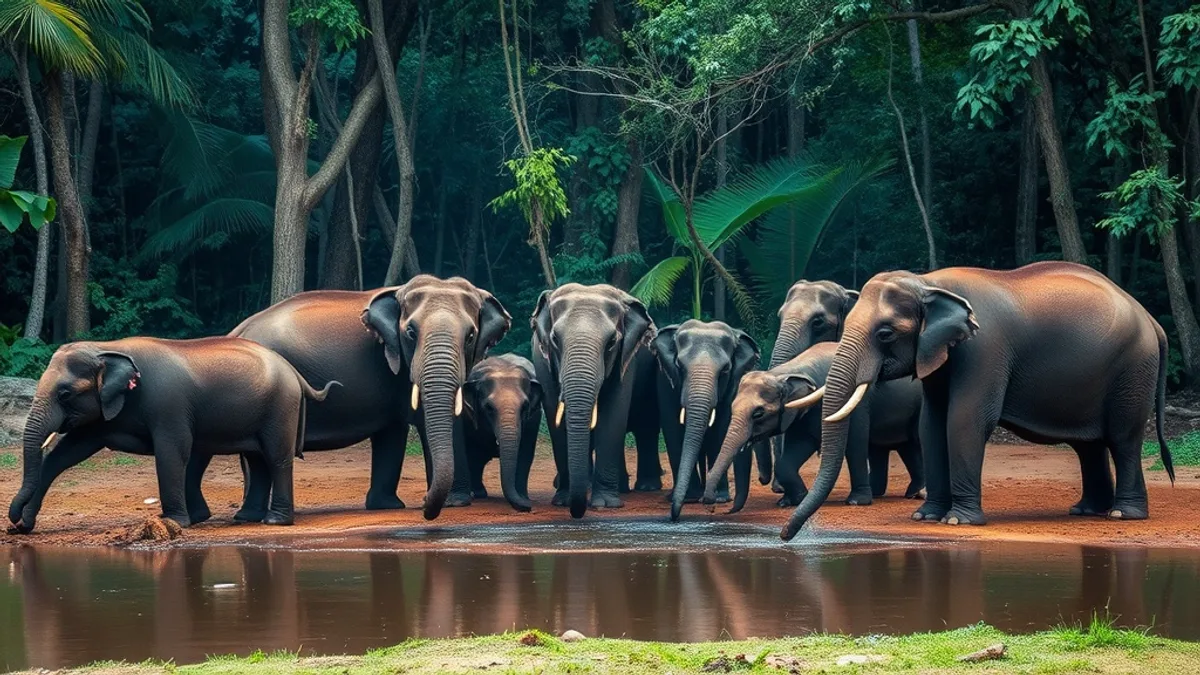
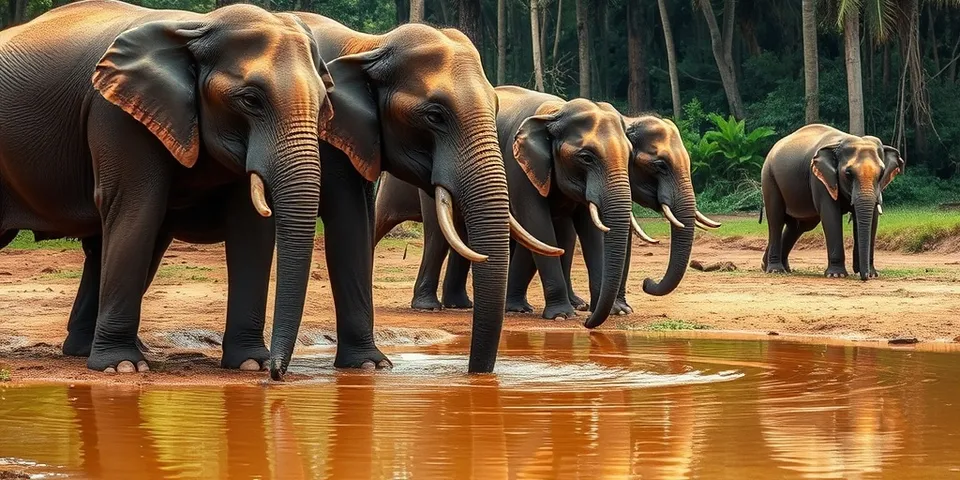
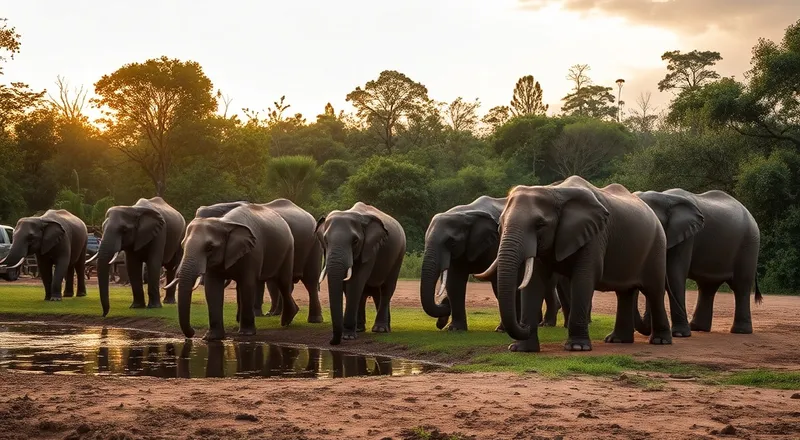
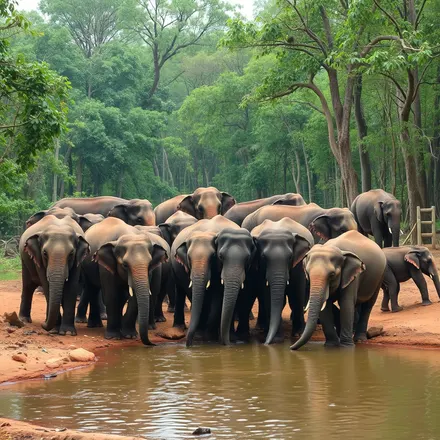
The wildlife is the primary draw. Asian elephants (Elephas maximus) live in the park in a population estimated at 200–300 individuals — one of the healthiest elephant populations in mainland Thailand, living entirely wild and free-ranging. Sightings are most common at open meadows near Km 33 on the main park road and at the Nong Phak Chi observation tower, especially in the early morning and late afternoon. The critical behavioral rule: remain in or beside your vehicle during elephant encounters, never approach on foot, and give herds a clear retreat path. Rangers will assist.
Haew Narok Waterfall (Hell's Fall) is the park's visual centerpiece — a 150-meter drop in two tiers through jungle so dense that the sound precedes the sight by several minutes of walking. The best approach is from the park's southern road, and the trail from the upper parking area to the base of the falls (approximately 1.5 kilometers) passes through pristine forest where hornbill calls are nearly guaranteed. The lower viewpoint directly faces the main curtain of water, and the spray reaches visitors even in dry season. Haew Wang Waterfall, smaller and more accessible, sits near the main visitor center.
Night safaris — operated by park-licensed operators from the Pak Chong side — offer a completely different Khao Yai experience. Spotlight-equipped trucks cruise the main park road from dusk, scanning the grass edges and forest margins for barking deer, sambar, porcupine, and civets. Bears (Asiatic black bear and sun bear both occur) are irregular but genuine sightings. Pythons occasionally cross the road. The atmosphere of a Khao Yai night safari — the warm darkness, the sudden appearance of eyes in the spotlight beam, the ranger's quiet identification — is unlike any other wildlife experience accessible from Bangkok.
The trail system offers walks ranging from a 30-minute loop near the visitor center to the challenging two-day Mo Singto trail for experienced hikers who are prepared for the possibility of genuine wildlife encounters en route. All overnight hikes require ranger accompaniment and advance booking through the park visitor center. Day-hiking trails are clearly marked and do not require guides, though a ranger guide (500–800 THB for a half day, bookable at the visitor center) vastly improves wildlife spotting odds and forest interpretation.
Beyond the park's boundaries, the Pak Chong area has developed a parallel identity as Nakhon Ratchasima's weekend escape zone. Italian-style wineries with tasting rooms and vineyard tours have established themselves on the higher slopes — a distinctly unexpected element of the Khao Yai landscape, enabled by the plateau's relatively mild temperatures and the ambition of Thai viticulture entrepreneurs. PB Valley, Granmonte, and GranMonte Estate are the most established names. Golf courses, resort spas, and farm-stay operations fill the accommodation landscape from budget to luxury.
Highlights
- Wild Asian elephants — one of Thailand's most reliable viewing opportunities in natural habitat
- Four species of hornbill in the forest canopy, plus gibbons, gaur, barking deer, and bears
- Haew Narok Waterfall — a spectacular 150-meter cascade through pristine jungle
- Night safari by spotlight truck — scanning forest edges for nocturnal wildlife after dark
- UNESCO World Heritage recognition as part of the Dong Phayayen-Khao Yai complex
- Day hiking trails from easy loops to challenging multi-day wilderness routes
- Italian-style wineries in the Pak Chong area — tastings and vineyard tours
- Nong Phak Chi observation tower — prime elephant and bird observation point
- Three to four hour drive from Bangkok — the most accessible genuine wilderness near the capital
Khao Yai is rewarding year-round but the two primary seasons offer different experiences. November to June (dry season) offers clear skies, full-flowing waterfalls through December, easier trail conditions, and the best wildlife visibility at forest edges and waterholes. The monsoon season (July to October) brings lush green forest, flowing waterfalls at full force, and fewer visitors — but muddy trails and occasional leeches on forest paths. Wildlife viewing is actually excellent in the monsoon as animals concentrate near open water. Weekends and Thai public holidays see significantly higher visitor numbers; weekday visits are notably more atmospheric.
Practical Information
Cost Level
Park entrance: 400 THB for foreign adults, 200 THB for foreign children, 40 THB for Thais. Vehicle entry: 50 THB per car. Night safari tours (private operators outside the park gate): 800–1,500 THB per person depending on group size and operator. Ranger guide for day hiking: 500–800 THB for a half day. Accommodation near the park gate ranges from budget guesthouses at 500–900 THB to mid-range resorts at 2,000–5,000 THB and luxury retreats at 8,000–20,000 THB. Many visitors do Khao Yai as a day trip from Bangkok — expressway toll plus petrol adds approximately 400–500 THB each way by private car.
Tips
Book weekend accommodation near Khao Yai at least two to three weeks in advance — the park's proximity to Bangkok makes it one of Thailand's most popular weekend destinations. Park admission must be booked online in advance through the DNP (Department of National Parks) website during peak periods — the system can sell out for popular dates. Do not feed any wildlife — this is a genuine conservation rule, not a guideline, and it applies especially to monkeys, which have become dangerously habituated to human food in some areas. The park closes at 6 PM for day visitors; night safari operators have licensed access after hours.
Our creators on the ground in Nakhon-ratchasima share their best recommendations in their videos.
Places in this Guide
Discover the attractions and locations featured in this travel guide.
Explore Nakhon Ratchasima
Nakhon Ratchasima
นครราชสีมาNakhon Ratchasima, commonly known as Korat, is the gateway to Thailand's vast Isan region and one of the country's large...All creators from Nakhon Ratchasima →Location & Orientation
Frequently Asked Questions
How reliable are elephant sightings in Khao Yai?
Khao Yai offers some of the most reliable wild elephant viewing in Thailand. The park's elephant population of 200–300 individuals ranges across the park's open meadows and forest edges, with highest sighting frequency at the grassland areas around Km 33 on the main park road and near Nong Phak Chi observation tower. Early morning (6–8 AM) and late afternoon (4–6 PM) are peak activity periods. Park rangers and experienced guides know the current ranging patterns of family groups and significantly increase sighting probability. On most mornings with a ranger guide, elephant sightings are the rule rather than the exception. Remain vehicle-based during encounters.
What is the difference between day visiting and staying overnight near Khao Yai?
Day visits give you access to the park's main trails, waterfalls, and meadow wildlife viewing in daylight hours. An overnight stay adds the night safari experience (which cannot be done as a day trip from Bangkok), early-morning park entry before the day-visitor crowds arrive, and the atmospheric experience of the forested highlands at dawn. Most wildlife photographers and serious birders choose at least one overnight to access the golden-hour morning light in the park. The accommodation ecosystem near the Pak Chong gateway has matured significantly — good options exist at every price point within 15 minutes of the park gate.
Are the wineries near Khao Yai worth visiting?
For visitors interested in an unexpected Thai experience, the Pak Chong wine region is a genuine and enjoyable detour. Thailand's wine industry is small but taken seriously — PB Valley and Granmonte produce award-winning wines from Shiraz, Chenin Blanc, Viognier, and Colombard grapes grown on the plateau's slopes at 300–400 meters altitude. Vineyard tours and tastings typically cost 200–400 THB and include the winery facility and a brief explanation of tropical viticulture. The wines themselves are better than expectations set by the latitude — the plateau's relatively cool nights produce grapes with surprising acidity and freshness. A winery visit pairs naturally with a Khao Yai day to add variety to the itinerary.
Can I do Khao Yai as a day trip from Bangkok?
Yes — Khao Yai is a viable day trip from Bangkok, though a very full one. By car, the drive takes 2.5–3.5 hours depending on Bangkok traffic. By train, catch an early departure from Hua Lamphong or Krung Thep Aphiwat to Pak Chong station (2–2.5 hours), then take a local songthaew or arrange a pickup to the park gate. A day trip gives you approximately 6–8 hours in the park if you leave Bangkok by 6 AM and return by 8 PM. This is enough for Haew Narok waterfall, meadow wildlife viewing, and one or two trail walks. Night safari is not possible as a same-day Bangkok day trip. Advance online booking for park entry is strongly advised for weekend day trips.
What wildlife is realistically visible on a typical Khao Yai visit?
A typical day visit with reasonable timing (early morning, with a guide) can expect: Asian elephants with high probability, several hornbill species (Great Hornbill, Wreathed Hornbill, Oriental Pied Hornbill) with very high probability, white-handed gibbons heard and often seen, barking deer at forest edges, various primate species including macaques and gibbons, a wide range of forest birds, monitor lizards, and diverse insect and butterfly species. Gaur are seen regularly but not daily. Tigers exist in the park in very small numbers and sightings are extremely rare. The night safari adds barking deer and sambar in spotlight with high probability, and occasional bears, civets, and owls.