Introduction
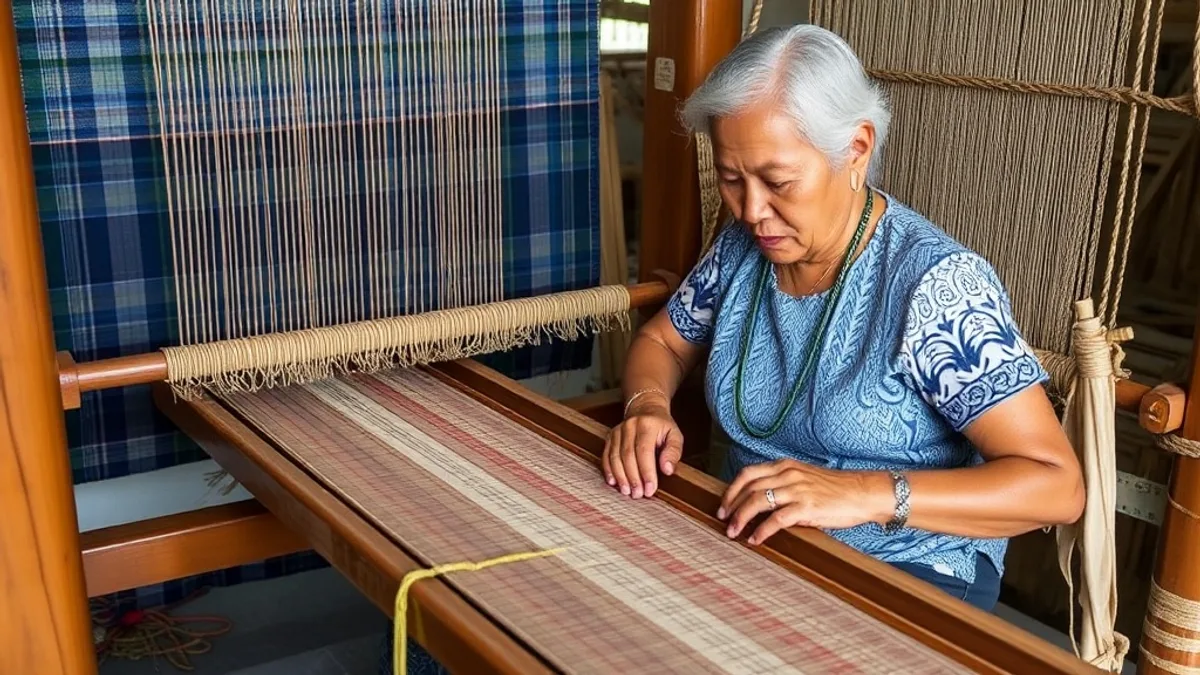
In the villages surrounding Ubon Ratchathani, women work at looms that produce some of the finest mudmee ikat silk in Thailand, using dyes extracted from local plants, barks, and minerals in a process that has remained essentially unchanged for centuries. Ubon and the neighboring province of Si Saket form the heartland of eastern Isaan silk culture — a tradition that has survived industrialization, synthetic competition, and rural economic pressure to remain a genuinely living craft rather than a museum exhibit. Here you will find silk woven not for tourists but for merit-making ceremonies, for phaa sin skirts worn to temple festivals, for wedding dowries and funeral offerings: cloth made with intention and technique that no factory can replicate. Beyond silk, Ubon's craft landscape encompasses extraordinary basketry traditions in which different villages specialize in entirely different forms, lacquerware, and the government-certified OTOP cooperatives that have given rural artisans a dignified commercial platform. For the traveler prepared to go slightly off the standard route, Ubon's craft villages are among the richest and most rewarding destinations in all of northeast Thailand.
Overview
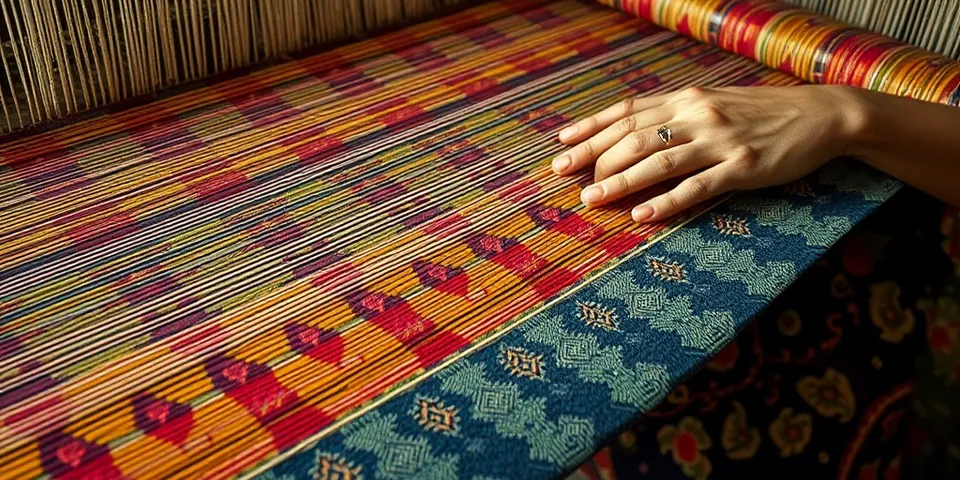
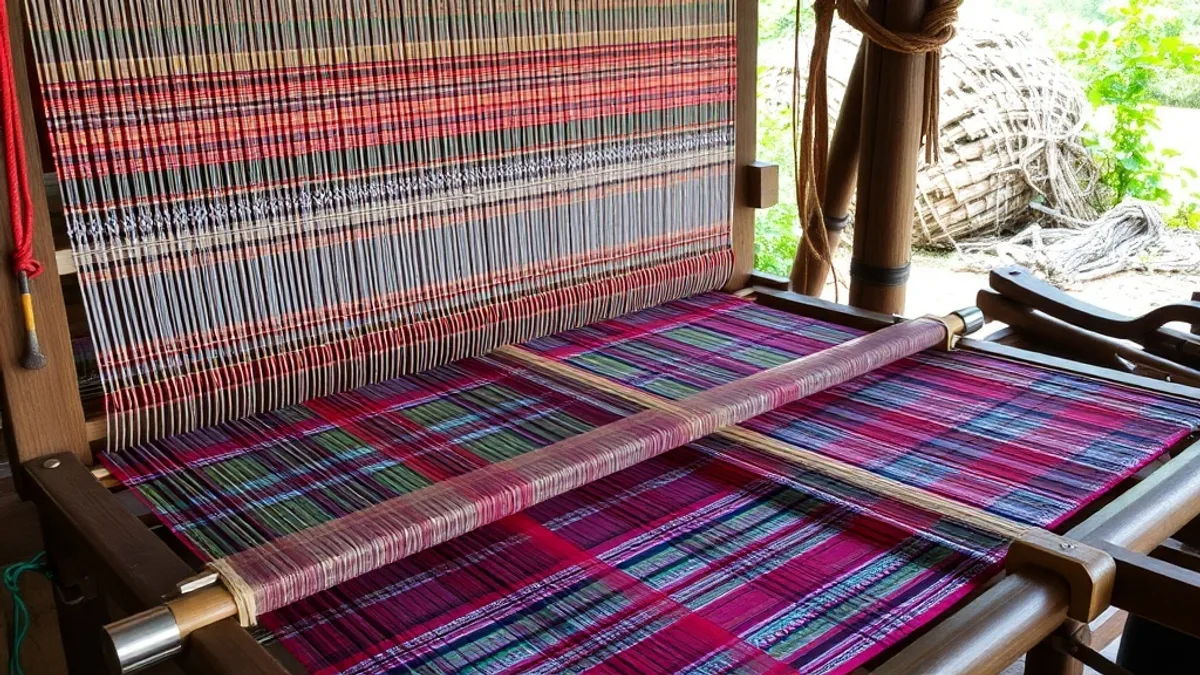
The mudmee ikat silk technique practiced in Ubon and Si Saket is one of the most technically demanding textile arts in Southeast Asia. Unlike plain-weave silk, where color is added to the finished cloth, mudmee ikat requires the silk threads to be dyed in complex patterns before weaving begins. Bundles of threads are tightly bound at calculated intervals with rubber or banana fiber to create a resist — areas that will not absorb dye — then submerged in successive dye baths that build up the final pattern layer by layer. When the bindings are removed and the threads are woven on the loom, the pattern emerges across the surface of the cloth with a characteristic soft-edged bleed at pattern boundaries that is the hallmark of authentic ikat work and impossible to replicate by printing.
The color palette of eastern Isaan mudmee silk is deeply connected to the local landscape. Indigo blue — the most iconic Isaan color — comes from the indigofera plant cultivated in kitchen gardens and along field edges. Jackfruit heartwood produces a warm yellow; tamarind bark, dark brown; ebony fruit, the deep black used in complex diamond-and-hook patterns. Lac resin harvested from trees infested with scale insects yields reds and purples. The gathering and preparation of these natural dyes is itself a skill passed from generation to generation, and weavers with knowledge of the full traditional dye palette are increasingly respected as keepers of cultural memory.
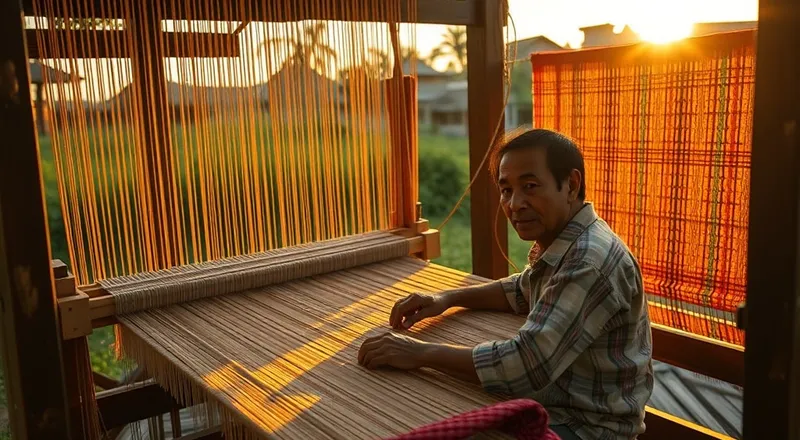
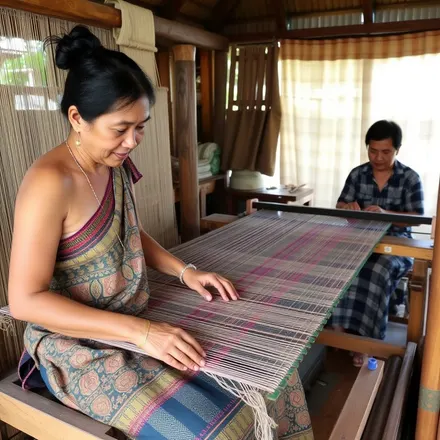
Ban Pha Daeng, a weaving village accessible from the city center, is the most visitor-friendly point of entry into Ubon's silk culture. Several households here weave in partially open workshops, and the sight of a master weaver throwing the shuttle across a full-width loom while managing the foot pedals of the heddle with rhythmic precision is one of those travel experiences that reasserts the dignity of human skill in the age of mass production. The village cooperative sells finished fabric and garments directly, cutting out intermediaries entirely.
Ubon's OTOP (One Tambon One Product) certification system, a government initiative that verifies and promotes locally-produced handicrafts, creates a useful quality signpost for visitors navigating the craft market. OTOP-certified cooperatives have passed quality standards and are accountable to the provincial administration. The OTOP shop near the city market and the weekend OTOP fair at Thung Si Mueang Park are reliable places to purchase authentic products with some guarantee of provenance.
Basketry is the craft that perhaps most surprised visitors who come expecting only silk. The basketry traditions of Ubon and Si Saket are extraordinarily varied — different villages have developed distinct specialties in form, material, and technique over generations. Bamboo basketry for rice storage differs completely from the woven bamboo trays used in ceremonial food offerings, which in turn differ from the delicate water-hyacinth weaving that has emerged as a contemporary cottage industry using an invasive plant turned material resource. The textures, geometries, and cultural functions encoded in each basket type reward attention far beyond their practical utility.
For travelers with a deeper interest in connecting with the Queen Sirikit SUPPORT Foundation's work in this region, the TAT Ubon office can provide contacts and directions to the nearest SUPPORT-affiliated cooperative, where the royal patronage of Thai silk is manifest in training programs, design development, and fair-trade sales infrastructure.
Highlights
- Mudmee ikat silk woven using natural dyes from indigo, jackfruit, ebony, and lac resin
- Ban Pha Daeng weaving village — watching the complete process from dyeing to finished cloth
- OTOP-certified cooperatives selling authentic handicrafts directly at village prices
- Extraordinary basketry traditions — different villages specializing in distinct forms and techniques
- The connection to Queen Sirikit's SUPPORT Foundation and royal patronage of traditional craft
- Lacquerware workshops in Ubon producing ceremonial and domestic objects
- Silk scarves and phaa sin skirts made to order in village workshops
- Understanding the difference between handwoven mudmee and machine-printed imitations
- The weekend OTOP craft fair at Thung Si Mueang Park
Weaving is a year-round activity and villages are accessible in all seasons, though the cool dry months of November to February make village exploration by motorbike most comfortable. The annual provincial handicraft fair in Ubon, typically held in December or January, brings artisans from across the eastern provinces together at Thung Si Mueang Park and is the single richest opportunity to see the full range of eastern Isaan craft traditions in one place. Ban Pha Daeng and other weaving villages are most active on weekday mornings before the heat of the afternoon.
Practical Information
Cost Level
Village visits are free. Silk prices: simple mudmee scarf from 200–600 THB; two-meter length of quality mudmee fabric from 600–2,000 THB; premium complex-pattern phaa sin skirt from 1,500–5,000 THB. Basketry items: 80–500 THB depending on size and complexity. Motorbike rental in Ubon: 200–250 THB per day. The OTOP shop near the central market offers consistent pricing without negotiation. Village cooperatives expect gentle negotiation and appreciate visitors who show genuine interest in the craft rather than treating the exchange purely as a transaction.
Tips
Bring cash — village cooperatives and roadside workshop sellers rarely accept cards. Learning a few Thai phrases of appreciation ('suay mak' — very beautiful; 'raka thaorai?' — how much?) transforms every interaction. The burn test remains the most reliable way to identify genuine silk: a thread from real silk chars slowly, smells like burning hair, and leaves a crushable ash; synthetic thread melts, smells chemical, and leaves hard plastic residue. Ask for the test before buying if you are uncertain. Photography of weavers at work is generally welcomed but always request permission first — a gesture toward the camera and a questioning look is universally understood.
Our creators on the ground in Ubon-ratchathani share their best recommendations in their videos.

Places in this Guide
Discover the attractions and locations featured in this travel guide.
Explore Ubon Ratchathani
Ubon Ratchathani
อุบลราชธานีUbon Ratchathani is a culturally rich province in Thailand's far northeast, bordering Laos along the Mekong River. The c...All creators from Ubon Ratchathani →Location & Orientation


Frequently Asked Questions
How does Ubon Ratchathani silk differ from Buriram or Surin silk?
All three provinces share the mudmee ikat tradition and the same broad Lao-Isaan cultural heritage, but regional variations in pattern vocabulary, color preference, and weave structure have developed over generations. Ubon and Si Saket silk tends toward finer thread counts and a somewhat lighter hand than Buriram's heavier mudmee cloth — a difference with roots in the specific silk worm varieties historically raised in each area. Pattern motifs also differ: eastern Isaan silk incorporates some Cambodian geometric influences from the Khmer cultural presence in the region, while Surin's patterns reflect stronger Khmer courtly design heritage. Collectors who know the regional traditions can often identify provenance at a glance from the pattern vocabulary alone.
Can I arrange a silk dyeing workshop or weaving lesson in Ubon?
Some weaving cooperatives in and around Ubon offer informal demonstration sessions for interested visitors, and a few have developed short structured workshops for tourists, though this is less formalized than in Chiang Mai's craft tourism scene. The Tourism Authority office in Ubon (on Kheuan Thani Road) is the best starting point — staff can contact cooperative workshops that welcome visitors for demonstrations and sometimes hands-on participation. Some travel agencies operating from Ubon guesthouses include silk village visits with brief weaving introductions as part of day tours. Genuine interest, patience, and a Thai-speaking guide make an enormous difference to the depth of these encounters.
What is OTOP and how does it help me identify authentic crafts?
OTOP — One Tambon One Product — is a Thai government certification and promotion program that designates specific handicrafts, agricultural products, and processed foods as the characteristic product of a particular sub-district (tambon). OTOP certification involves quality verification by provincial authorities and gives producers access to a national distribution network including government OTOP shops and fair pavilions. For buyers, an OTOP-certified product from a verified cooperative provides a degree of quality assurance and provenance that a roadside stall purchase cannot. Five-star OTOP products represent the highest certification level and are often selected for royal gift sets and export promotion.
What basketry traditions are specific to the Ubon Ratchathani area?
Ubon's basketry traditions are more varied than most visitors expect. The province's rice-farming culture generated a range of storage and processing baskets — kradong flat winnowing trays, various sizes of sticky-rice steaming baskets, and the distinctive krathip conical sticky-rice serving baskets that appear on every Isaan table. Ceremonial basketry for temple offerings and merit-making events uses finer bamboo weaves and sometimes lacquered or gilded finishes. More recently, water-hyacinth weaving has emerged as a viable cottage industry in villages near waterways — the invasive plant is harvested, dried, and woven into baskets, bags, and home furnishing items that have found enthusiastic export markets.
Are there day tours from Ubon city that include silk village visits?
Several guesthouses and small travel agencies in Ubon offer day tours combining silk villages with other highlights — typically pairing Ban Pha Daeng or a Si Saket weaving cooperative with a temple visit and a stop at the OTOP handicraft shop. Prices run approximately 800–1,500 THB per person for a half to full-day guided excursion including transport. Independent exploration by rented motorbike is equally feasible and considerably cheaper — the TAT office provides a useful map of weaving villages within 30–50 kilometers of the city. A Thai-speaking guide adds significant depth to village visits and is worth engaging if budget allows.