Introduction
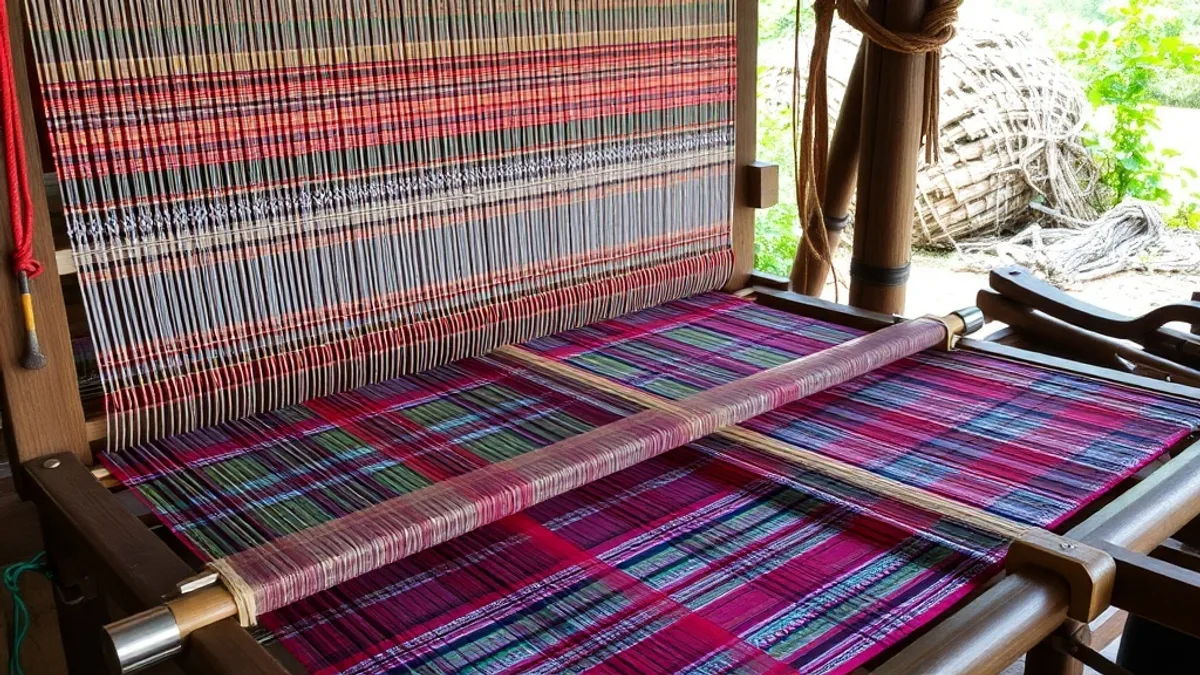
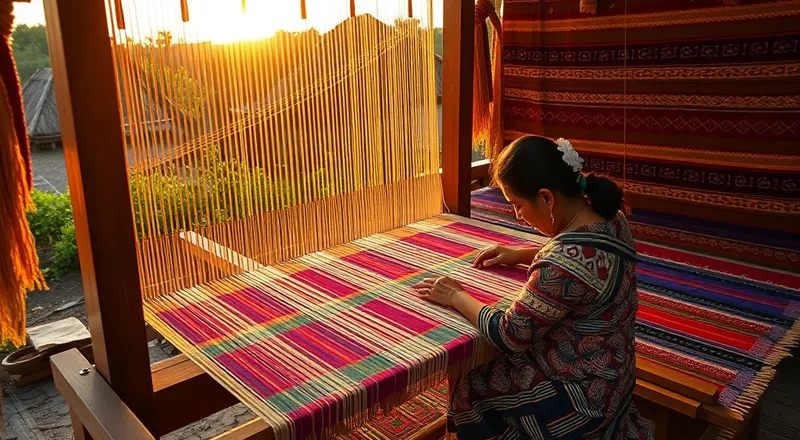
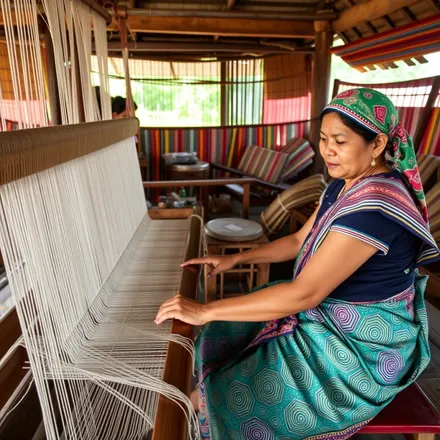
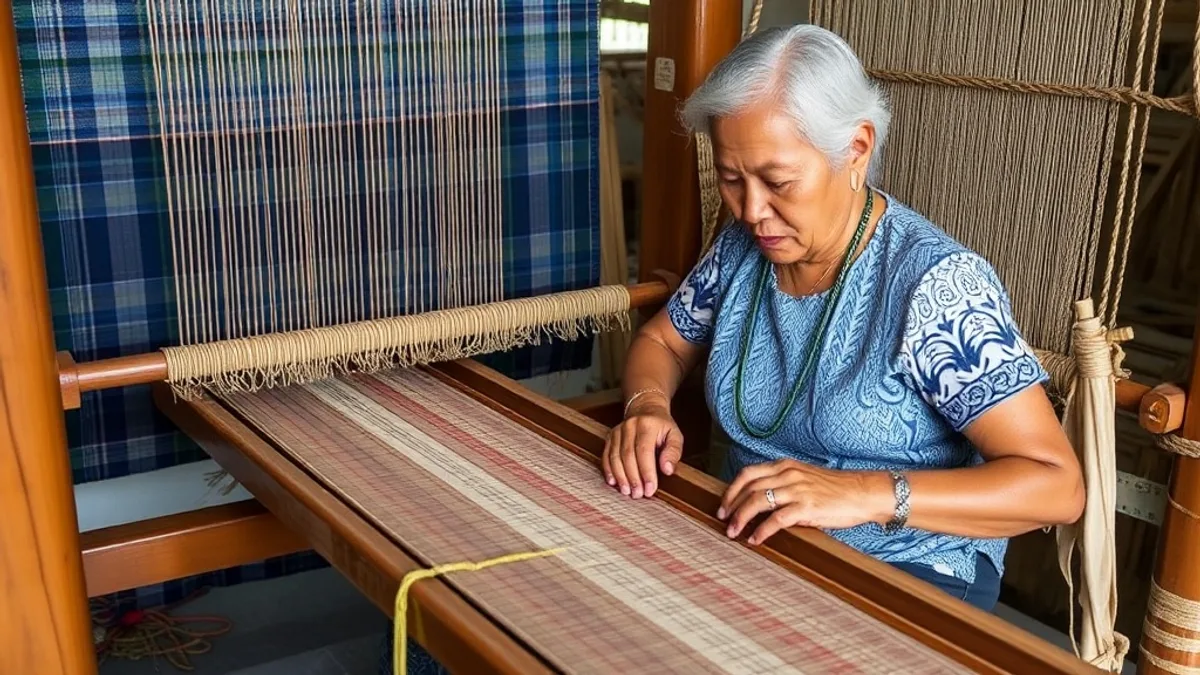
In the villages that scatter the flat landscape between Buriram's ancient temples and the Mun River, women sit at wooden looms that have barely changed in a thousand years, weaving silk with a patience and precision that belongs to a different era entirely. Buriram's silk tradition is one of the quiet glories of northeast Thailand — a living craft that survived modernization, synthetic competition, and decades of rural poverty to emerge as a genuine cultural treasure. The mudmee ikat technique practiced here, in which threads are resist-dyed in complex patterns before weaving, produces cloth of extraordinary intricacy. The colors come from plants, bark, and minerals gathered from the surrounding landscape. If you want to understand what authentic Thai cultural heritage looks like when it has not been packaged for tourists, a day spent in Buriram's silk villages will show you.
Overview
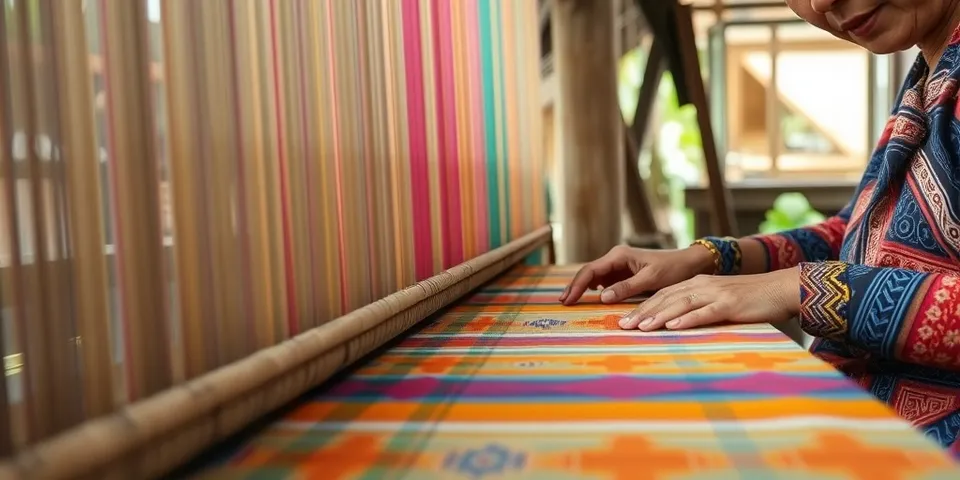
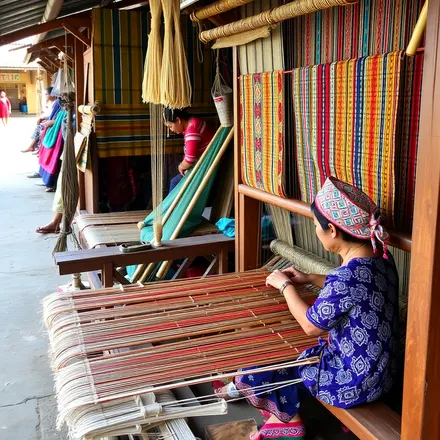
The Ban Kruat district of Buriram, approximately 60 kilometers east of the city toward the Cambodian border, is the heartland of Buriram's silk-weaving culture. Villages here have maintained the craft through generations, with daughters learning from mothers and grandmothers in a transmission of knowledge that requires no textbooks or institutions — only proximity and practice. The sounds of a silk village at work are distinctive: the rhythmic clack of the heddle, the soft hiss of the shuttle, the occasional creak of the wooden loom frame as the weaver leans into her work.
The mudmee ikat technique begins long before any weaving occurs. Silk threads are bundled and bound with rubber at precise intervals to create a resist pattern, then submerged in dye baths made from local natural materials: indigo plants for blues, jackfruit heartwood for yellows, lac (an insect resin) for reds, and various barks and roots for the earthy browns that give Isaan silk its characteristic warmth. Multiple dyeing rounds build up complex patterns that only reveal themselves fully when the threads are finally woven together on the loom. A single piece of quality mudmee silk can take weeks to complete.
The connection between Buriram's silk tradition and the Thai royal family is significant and worth understanding. Queen Sirikit, who passed away in 2022, devoted decades to the promotion and preservation of Thai silk weaving as a royal project — establishing the SUPPORT Foundation in 1976 to provide income and training to rural weavers. This royal patronage gave the craft a legitimacy and economic platform that saved countless weaving villages from abandonment during Thailand's rapid industrialization. Today, the SUPPORT Foundation continues to certify authentic Thai silk and provides a network of shops in Bangkok where genuine village silk can be purchased at fair prices.
Buriram's silk is closely linked to that of neighboring Surin province — the two areas share design vocabulary, technique, and the Khmer cultural heritage that informs many traditional patterns. Surin hosts a larger silk festival annually in November, coinciding with the famous Elephant Festival, but Buriram's village weaving operations are arguably more accessible for travelers wanting to see the craft in its natural context rather than at a curated festival setting.
For buyers, the distinction between authentic handwoven mudmee silk and machine-made imitations is critical. Genuine silk has a natural sheen and warmth that synthetic fabrics cannot replicate — holding it to a light source reveals the shimmer of individual protein filaments. Authentic mudmee patterns have slight irregularities at pattern edges (where the resist-dyed threads meet) that are absent in machine prints. Prices for genuine handwoven silk in Buriram villages range from 500–3,000 THB per two-meter piece depending on complexity, while Bangkok department stores sell the same quality for three to four times more. Weaving cooperatives in Ban Kruat and surrounding villages sell directly to visitors, cutting out the middleman entirely.
Highlights
- Watching mudmee ikat silk being woven on traditional wooden looms in Ban Kruat district villages
- Natural dyeing demonstrations using indigo, jackfruit wood, lac resin, and local plants
- Buying authentic handwoven silk directly from weaving cooperatives at village prices
- Learning to identify genuine silk from synthetics and machine-made imitations
- The connection to Queen Sirikit's SUPPORT Foundation and royal silk patronage
- Silk patterns with Khmer and Lao cultural motifs specific to the Mun River Valley
- Village-to-loom supply chain — from silk cocoon processing to finished cloth
- Spontaneous roadside workshops visible from the Ban Kruat road on working days
- Combining silk village visits with the nearby Khmer temple circuit
Silk weaving is a year-round activity in Buriram's villages, but the best time to visit is November to February when temperatures are comfortable for village exploration on foot or by motorbike. The annual Buriram Silk Festival typically takes place in January or February and brings weavers from across the province together for demonstrations, competitions, and sales. November also sees Surin's combined Silk and Elephant Festival, which makes a natural two-province combination trip.
Practical Information
Cost Level
Visiting weaving villages is free. Silk prices vary considerably by quality and complexity: a simple mudmee scarf from 150–400 THB; a two-meter length of standard mudmee fabric from 500–1,200 THB; premium complex-pattern cloth from 2,000–5,000 THB. Silk shirts and phaa sin (skirts) made up in village workshops: 400–800 THB. Transport to Ban Kruat from Buriram city: songthaew or local bus around 60–80 THB each way, or motorbike rental for 200–250 THB/day to explore at your own pace.
Tips
Do not buy silk from shops near major tourist sites in Chiang Mai or Bangkok if you want authentic Isaan mudmee — the provenance is often unclear and prices inflated. In Buriram villages, look for the OTOP (One Tambon One Product) certification mark on cooperatives, which indicates quality verification. Bring cash — village cooperatives rarely accept cards. Photography of weavers at work is generally welcomed but always ask first. Learning to say 'sวยมาก' (suay mak — very beautiful) and 'raka thaorai?' (how much?) in Thai goes a long way.
Our creators on the ground in Buriram share their best recommendations in their videos.
Creators who cover this spot
Discover YouTube creators who feature this topic in their videos.

Discover Thailand
Christian
Discover Thailand – Deutscher Thailand Reise-Creator auf YouTube.

GANZSCHOENTUTKA
Christina & Reci
GANZSCHOENTUTKA – Deutsche Weltreise-Creator mit Thailand-Fokus auf YouTube.

Ricky in Isaan
British expat documenting authentic daily life and culture in rural Isaan, Thailand.
Places in this Guide
Discover the attractions and locations featured in this travel guide.
Explore Buriram
Buriram
บุรีรัมย์Buriram is located in Northeast Thailand (Isan) and stands for authentic rural life, Khmer temple ruins, motorsport at C...All creators from Buriram →Location & Orientation


Frequently Asked Questions
How do I get to the silk weaving villages in Buriram?
The main weaving villages are concentrated in Ban Kruat district, approximately 60 kilometers east of Buriram city. The easiest approach is to rent a motorbike in Buriram city (200–250 THB/day) and ride east on Highway 24 toward Prakhon Chai, then take provincial roads south toward Ban Kruat. Local songthaews and buses also serve the route but on infrequent schedules. The Tourism Authority of Thailand office in Buriram city (opposite the train station) can provide current maps and contact information for cooperative workshops that welcome visitors.
What is mudmee ikat silk and how is it different from other Thai silk?
Mudmee (also written mat-mee) is a resist-dyeing technique in which silk threads are bound and dyed in specific patterns before being woven. The word comes from the Lao 'mut mee,' meaning 'tied threads.' The process creates geometric patterns — diamonds, hooks, stars, and stylized animals — that appear to bleed or blur slightly at their edges, a hallmark of authentic mudmee. This is different from standard Thai silk, which is woven in solid colors or simple stripes, or from printed silk where the pattern is applied after weaving. Mudmee is technically more demanding and culturally specific to the Isaan and Lao weaving traditions.
How can I tell if silk is genuine or synthetic?
The burn test is the most reliable method for loose threads: genuine silk burns slowly, smells like burnt hair, and leaves a crushable ash; synthetics melt, smell chemical, and leave hard plastic residue. When shopping, genuine silk has a natural luminosity and warmth against the skin that synthetics never replicate. Handwoven mudmee silk has slightly irregular pattern edges where the resist-dyed threads meet. Machine-made imitations have perfectly uniform pattern edges. The price is also a strong indicator — if it seems too cheap for the complexity claimed, it is almost certainly not genuine handwoven silk.
Is there a festival dedicated to silk in Buriram?
Buriram typically holds a provincial silk fair in January or February, showcasing weavers from across the province's districts. The event is smaller and more local in character than the famous Surin Silk Festival in November, which benefits from being combined with the Elephant Festival and draws national and international visitors. For those interested specifically in Buriram silk, the provincial fair is actually preferable — it is a genuine trade and cultural event rather than a tourist showcase, with direct access to weavers and competitive pricing that does not account for visitor markup.
Can I take a weaving lesson in Buriram?
Some weaving cooperatives in Ban Kruat and surrounding villages offer informal lessons for interested visitors, though these are not formally packaged as tourism products in the way you might find in Chiang Mai's craft tourism scene. The key is showing genuine interest and being respectful — most weavers are happy to demonstrate technique and let visitors try the loom. The Tourism Authority office in Buriram city can sometimes connect interested visitors with cooperative workshops that have space and willingness to host. A guide who speaks Thai and knows the villages is very helpful for arranging this kind of authentic interaction.