
Introduction
Long before Angkor Wat dominated the landscape of Southeast Asia, the Khmer Empire extended its reach deep into what is now northeast Thailand. Buriram province holds the most spectacular concentration of Khmer sanctuaries outside Cambodia — hilltop temples, water-surrounded ruins, and forgotten sanctuaries half-swallowed by the jungle. This is not the Thailand of beach resorts and full-moon parties. This is the Thailand of real history, of volcanic stone carved into gods and demons by artisans dead a thousand years. Phanom Rung sits on an extinct volcano and aligns perfectly with the rising sun on the April equinox — a feat of astronomical engineering that still draws crowds to witness it. Below the mountain, Prasat Mueang Tam mirrors the cosmos in its ornamental ponds. Scattered further across the province are lesser-known ruins that most travelers never find. This trail is for those who want to go deeper into the heart of ancient Southeast Asia.
Overview
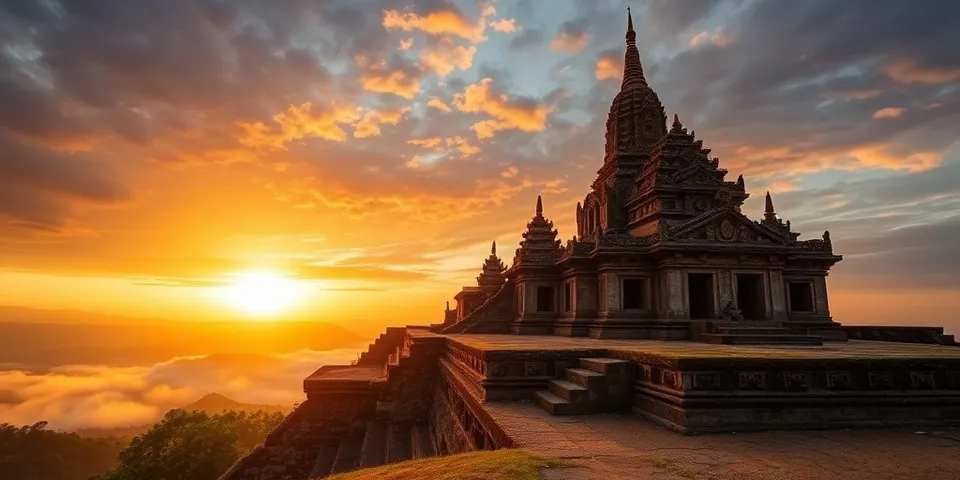
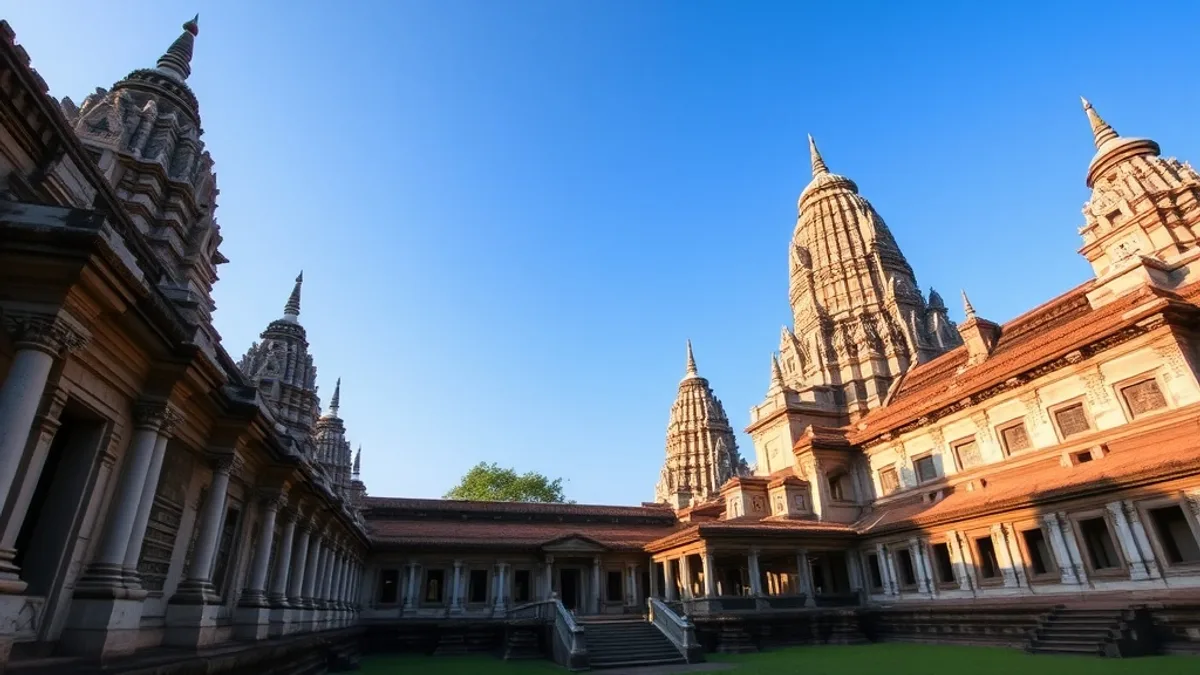
Phanom Rung Historical Park is the crown jewel of Buriram and arguably the most impressive Khmer temple complex in Thailand. Built between the 10th and 13th centuries, it rises dramatically on the rim of an extinct volcano at 383 meters above sea level. The processional walkway leading to the main sanctuary is over 160 meters long, flanked by sandstone pillars topped with early-blooming lotus buds. The main tower (prang) is dedicated to Shiva and is surrounded by smaller towers and galleries. What makes Phanom Rung cosmically unique is its solar alignment: on specific days around April 13–15 during the Thai Songkran festival period, the rising sun shines through all 15 doorways of the temple in a perfectly straight line. This event draws thousands of visitors to what is usually a quiet hilltop sanctuary. The temple has been considered for UNESCO World Heritage listing, a recognition long overdue for a site of this caliber.
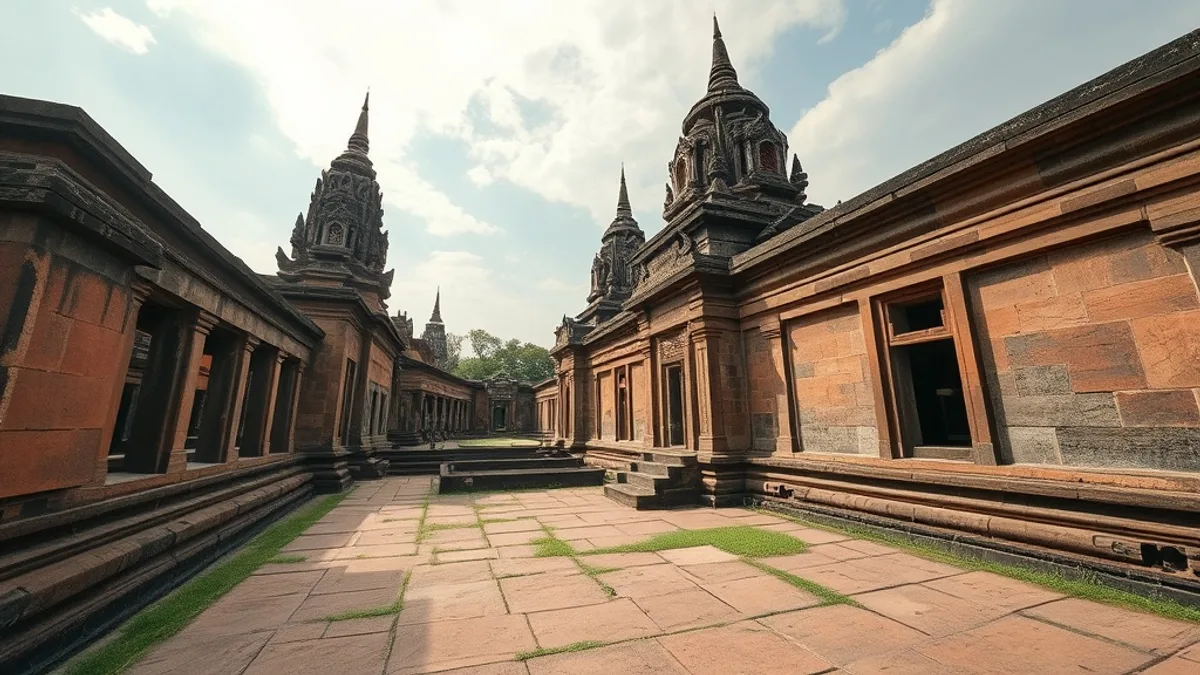
Prasat Mueang Tam, just 8 kilometers south of Phanom Rung, is entirely different in character and equally extraordinary. Built in the late 10th century, it sits on flat ground and is surrounded by four large L-shaped ponds (baray) that still hold water — their lily pads and reflections create a dreamlike atmosphere, especially at dawn. Five towers stand in a cruciform arrangement at the center, and the gallery walls are carved with intricate lintels depicting Hindu deities. The Naga (serpent) balustrades flanking the entrance pathways are remarkably well preserved. Unlike Phanom Rung, Mueang Tam sees far fewer visitors, giving it a contemplative, almost meditative quality that the more famous site lacks on busy days.
For those willing to venture beyond the two headline sites, Buriram province contains a dozen more Khmer sanctuaries in varying states of preservation. Prasat Ban Ben, near the village of the same name, is a compact but beautifully detailed laterite and sandstone tower surrounded by rice paddies — the contrast of ancient stone against working farmland is genuinely striking. Prasat Khok Ngiu is smaller still and rarely visited, accessible via a dirt road that rewards patient explorers with complete solitude. Both sites are free to enter and have no tourist infrastructure whatsoever, which is precisely their appeal.
The ideal way to explore the Buriram temple circuit is by motorbike. Rentals are available in Buriram city for around 200–250 THB per day. The main route connects Buriram city to Nang Rong town (the best base for temple exploration), then on to Phanom Rung and Mueang Tam. The roads are excellent and the countryside between temples — rolling hills, cassava fields, silk-weaving villages — is itself a pleasure to ride through. Allow two full days for a proper exploration of the major and minor sites combined.
Highlights
- Phanom Rung's April solar alignment — sunrise through all 15 doorways simultaneously
- Prasat Mueang Tam's lotus-filled baray ponds and 10th-century Naga balustrades
- The 160-meter processional walkway leading to Phanom Rung's main sanctuary
- Prasat Ban Ben surrounded by working rice paddies — zero tourists, maximum atmosphere
- Shiva lintel at Phanom Rung — once stolen, recovered from a Chicago museum in 1988
- Motorbike circuit through Buriram countryside connecting 4–6 temple sites in one day
- Phanom Rung Museum — exhibits on Khmer art, ceramics, and regional history
- Prasat Khok Ngiu — a forgotten ruin accessible only via rural dirt track
- Sunset from the Phanom Rung volcanic rim with views across the Khorat Plateau
November to February offers the most pleasant temperatures for temple exploration — cooler mornings, clear skies, and dry roads make motorbike touring a genuine pleasure. March and April are hotter but bring the unmissable solar alignment event at Phanom Rung. Avoid May to October if you dislike rain, though the temples surrounded by water — particularly Mueang Tam — are strikingly beautiful when the monsoon fills the baray ponds to the brim and clouds stack dramatically over the plains.
Practical Information
Cost Level
Phanom Rung entry: 100 THB. Prasat Mueang Tam: 100 THB. Combination ticket covers both. Motorbike rental in Nang Rong or Buriram city: 200–250 THB/day. Budget guesthouses in Nang Rong from 350 THB/night. Mid-range hotels in Buriram city from 600–900 THB/night. Meals at local restaurants near Nang Rong market: 50–80 THB. A full two-day temple circuit including accommodation, food, transport, and entry fees should cost 1,500–2,500 THB total for a budget traveler.
Tips
Stay in Nang Rong rather than Buriram city — it is 20 kilometers closer to the temples and far quieter. Arrive at Phanom Rung by 7:30am to have the sanctuary largely to yourself before tour groups arrive from Nakhon Ratchasima. Bring sunscreen and water for the hilltop walk — there is no shade on the processional causeway. Dress respectfully with covered shoulders and knees; sarongs can be borrowed at the entrance. The road to Mueang Tam passes through a working silk village worth a spontaneous stop.
Our creators on the ground in Buriram share their best recommendations in their videos.
Creators who cover this spot
Discover YouTube creators who feature this topic in their videos.

Adventures Joel
British adventure vlogger exploring Thailand by motorbike.

Discover Thailand
Christian
Discover Thailand – Deutscher Thailand Reise-Creator auf YouTube.

Ricky in Isaan
British expat documenting authentic daily life and culture in rural Isaan, Thailand.
Places in this Guide
Discover the attractions and locations featured in this travel guide.
Explore Buriram
Buriram
บุรีรัมย์Buriram is located in Northeast Thailand (Isan) and stands for authentic rural life, Khmer temple ruins, motorsport at C...All creators from Buriram →Location & Orientation

Frequently Asked Questions
When does the famous Phanom Rung solar alignment happen?
The alignment occurs four times a year when the rising or setting sun shines through all 15 doorways of the main sanctuary in a straight line. The most celebrated event is around April 13–15, coinciding with the Thai Songkran festival. The Fine Arts Department organizes a cultural celebration on the hill during this period, drawing large crowds. Arrive by 5:30am to secure a good position and expect the site to be unusually busy. The alignment also occurs in February and October but draws smaller crowds and has less cultural fanfare surrounding it.
How do I get to Phanom Rung from Bangkok?
The most efficient route is by overnight train from Bangkok Hua Lamphong to Buriram station (approximately 6 hours, from 200 THB in 3rd class to 700 THB in 2nd class sleeper). From Buriram city, catch a songthaew to Nang Rong (60 THB), then hire a motorbike or take a day-trip pickup truck to the temples. Alternatively, buses from Bangkok's Northern Bus Terminal reach Nang Rong directly in around 6–7 hours for 250–350 THB. Self-driving from Nakhon Ratchasima takes approximately 1.5 hours via Highway 24.
Can I visit both Phanom Rung and Mueang Tam in one day?
Absolutely — the two sites are only 8 kilometers apart and a combination ticket covers both. Most visitors spend 2–3 hours at Phanom Rung and 1–1.5 hours at Mueang Tam, making a half-day excursion very feasible. If you have a full day and a motorbike, you can add Prasat Ban Ben and the Phanom Rung Cultural Center to the itinerary. Many travelers combine both temples with lunch in Nang Rong town before continuing to one of the more remote satellite sites in the afternoon.
Is Phanom Rung better than Angkor Wat?
The comparison is unfair in terms of scale — Angkor Wat is an enormous city complex while Phanom Rung is a single hilltop sanctuary. But in terms of individual impact, many visitors find Phanom Rung more emotionally resonant precisely because it is intimate, uncrowded (on normal days), and set dramatically on a volcanic summit with sweeping views across the Khorat Plateau. The quality of stone carving rivals anything at Angkor, and unlike the Cambodian temples, you share the site with a fraction of the tourists. For a first-time visitor to Khmer architecture, Phanom Rung is an ideal introduction.
What is the story of the stolen Phanom Rung lintel?
The Phanom Rung lintel depicting the reclining Vishnu (Narai Banthomsin) was stolen from the temple in the 1960s and surfaced at the Art Institute of Chicago in 1967. It took over two decades of diplomatic negotiations before Thailand successfully recovered it in 1988 — a landmark moment for cultural heritage repatriation in Southeast Asia. The lintel is now displayed prominently at Phanom Rung in its original position above one of the temple doorways. It is one of the most historically significant pieces of Khmer art in Thailand and a symbol of the temple's cultural importance.