Introduction
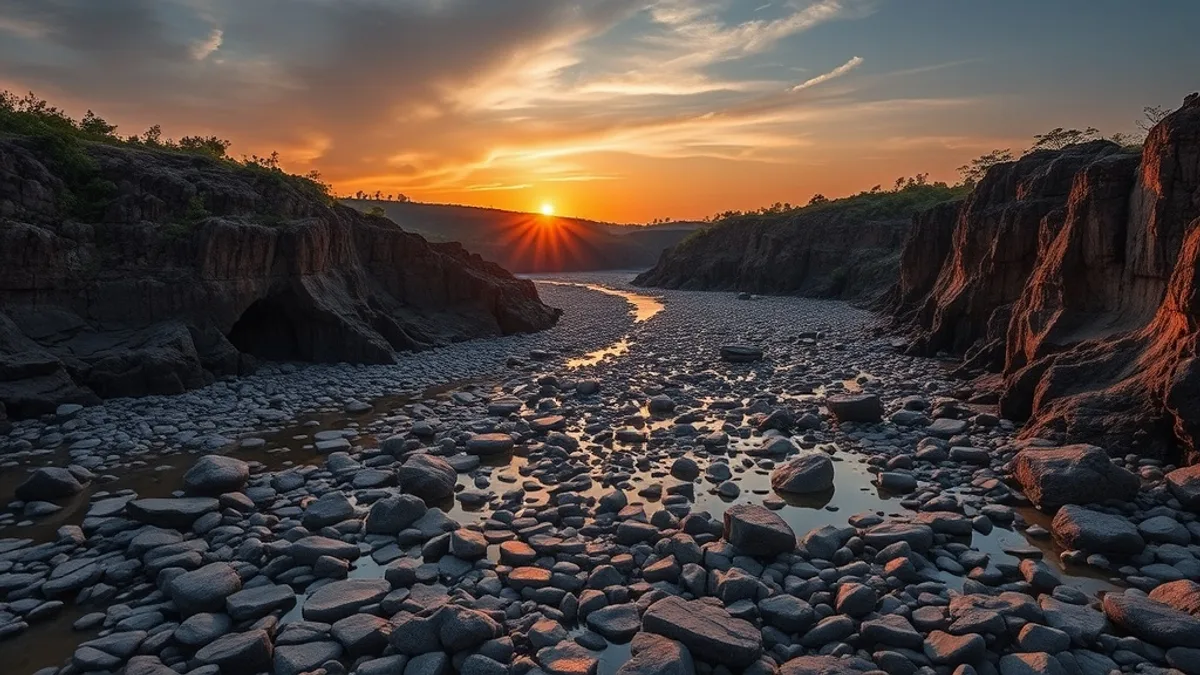
At the far eastern edge of Thailand, where Ubon Ratchathani province reaches toward the meeting point of Thailand, Laos, and Cambodia, the Mekong River performs one of its most dramatic geological spectacles. Each dry season, as the river drops to its seasonal low, it exposes an vast plateau of pale sandstone carved by millennia of current into thousands of depressions, pools, and channels — a landscape so otherworldly it has earned the name Sam Phan Bok: Three Thousand Holes. Travelers who make the effort to reach this stretch of the Mekong find something genuinely rare: a natural phenomenon of startling beauty in a setting almost entirely free of tourist infrastructure. No entrance kiosk, no tour buses, no souvenir stalls. Just the river, the stone, the sky, and the occasional fisherman from Ban Muang village balancing over the current with a throw net. This is Ubon Ratchathani's wildest and most beautiful natural asset, and it remains almost entirely unknown outside the province.
Overview
Sam Phan Bok sits along the Mekong approximately 100 kilometers northeast of Ubon Ratchathani city, reachable by driving north and east through the agricultural flatlands of Amnat Charoen and into Khong Chiam district. The landscape of the journey itself is instructive — this is genuine rural Thailand, the Thailand of rice fields and wooden water towers and road-side shrines, entirely untouched by the hospitality industry that has transformed so many other corners of the country.
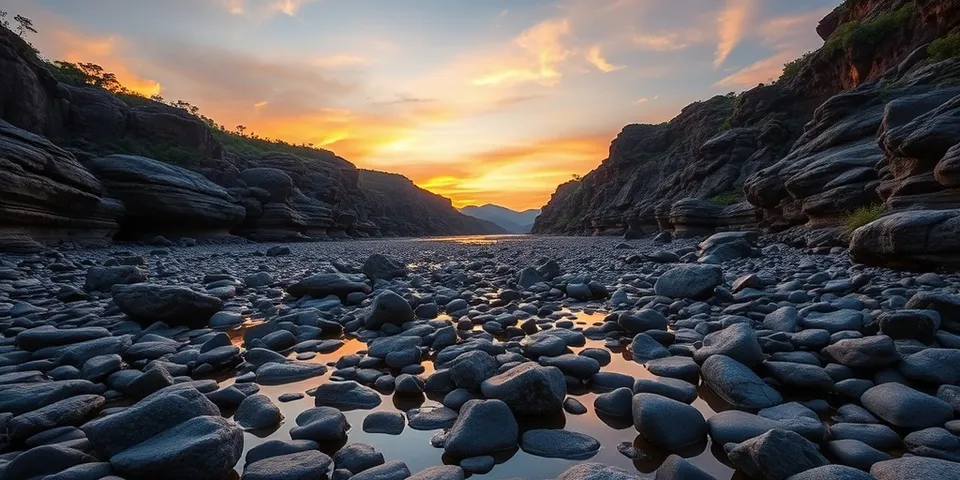
The rock formations are exposed from approximately mid-October through January, when Mekong water levels are at their lowest following the monsoon retreat. The Mekong here drops several meters from its flood-season peak, and as it does, it uncovers a vast bench of reddish-pink sandstone stretching hundreds of meters along the bank and extending far out into the shallows. The current has spent thousands of years sculpting the stone into an extraordinary variety of forms: circular pools precisely the size of bathtubs, long channels carved like aqueducts, overhanging ledges, smooth rounded mounds, and countless smaller depressions that catch rainwater and reflect the sky. Across the river in Laos, the opposite bank mirrors the formations, and in the clearest atmospheric conditions the Lao mountains are visible as a blue silhouette on the horizon.
The nearest village is Ban Muang, where local fishermen operate simple boat tours onto and around the formations during the visiting season. A boat trip allows you to see the formations from the river level, observe the fishermen working the edge pools for freshwater fish, and reach sections of the plateau inaccessible from the bank. Prices are negotiated directly with boat owners — expect to pay 200–400 THB for a 30–45 minute circuit. Camping on the rock plateau is possible and deeply atmospheric; several travelers camp overnight to watch the sunset and sunrise over the Mekong, when the stone takes on colors ranging from deep amber to pale gold.
Pha Taem National Park, approximately 50 kilometers north of Sam Phan Bok, adds a compelling second element to any Mekong excursion from Ubon. The park's defining feature is a cliff face several hundred meters long carrying prehistoric paintings estimated at 3,000–4,000 years old — fish, elephants, giant catfish, geometric patterns, and human figures painted in red ochre on the rock face above a sheer drop to the Mekong. The viewing walkway along the cliff edge also offers some of the finest Mekong panoramas in Thailand. Entrance is 200 THB for foreigners.
Khong Chiam town, where the Mun River empties into the Mekong, is another essential stop. This small town markets itself as the location of the 'two-color river' phenomenon — at the confluence, the brown Mun and the deeper-colored Mekong flow side by side for a short stretch before mixing, creating a visible stripe of contrasting colors. It is subtle in photographs but genuinely affecting in person, particularly at sunset when the light catches both currents differently. Simple riverside restaurants in Khong Chiam serve freshwater fish caught that day, and the town has several simple guesthouses for those wanting to spend the night near the river.
The Chong Mek border crossing, in the far southeast of the province, allows onward travel into Laos (Vang Tao crossing) for travelers with Lao visas, offering an adventurous extension of any eastern Ubon itinerary.
Highlights
- Sam Phan Bok — thousands of naturally carved rock pools exposed each dry season along the Mekong
- Boat tours from Ban Muang village across the rocky formations at river level
- Camping overnight on the sandstone plateau for sunrise and sunset over the Mekong
- Pha Taem National Park's 3,000-year-old cliff paintings above dramatic Mekong panoramas
- Khong Chiam's Two-Color River at the confluence of the Mun and Mekong at sunset
- The Lao mountains visible across the river on clear days from multiple viewpoints
- Chong Mek border crossing for onward travel into Laos
- Entirely undeveloped tourism setting — no crowds, no tour buses, genuine wilderness atmosphere
Sam Phan Bok is only accessible during the dry season low-water period: mid-October through January, with November and December typically offering the most complete exposure of the formations. By February, rising water begins to cover the lower pools. Pha Taem National Park is accessible year-round, but the cliff paintings are best viewed in the morning before haze builds. A dedicated Mekong day trip from Ubon city requires an early start — 6 AM departure allows comfortable visits to both Sam Phan Bok and Pha Taem before sunset at Khong Chiam.
Practical Information
Cost Level
Sam Phan Bok itself has no entrance fee. Boat tours: 200–400 THB negotiated with Ban Muang boat owners. Pha Taem National Park entrance: 200 THB foreigners, 40 THB Thais. Camping at the Mekong: free but bring your own supplies (nearest shops are in Khong Chiam, 25km). A rented motorbike from Ubon for a self-guided loop (250 THB/day) is the most flexible option; the total loop distance is roughly 250–300 kilometers. Petrol for the round trip: approximately 100–120 THB. Alternatively, join a day tour from Ubon guesthouses for around 800–1,200 THB per person including transport.
Tips
The road to Sam Phan Bok from Ubon passes through Amnat Charoen — a pleasant small city worth a coffee stop. Download offline maps before departure; mobile signal is inconsistent in the final 30 kilometers. During the dry season the exposed rock is slippery in unexpected ways — water-filled pools hide unstable footing. Wear shoes with grip rather than flip-flops. The sunset at Khong Chiam confluence is a fixed appointment — arrive at the riverside viewing point at least 30 minutes before the sun drops to the Lao hills. Freshwater fish restaurants in Khong Chiam have menus in Thai only; pointing at what other tables are eating is both practical and socially natural.
Our creators on the ground in Ubon-ratchathani share their best recommendations in their videos.

Places in this Guide
Discover the attractions and locations featured in this travel guide.
Explore Ubon Ratchathani
Ubon Ratchathani
อุบลราชธานีUbon Ratchathani is a culturally rich province in Thailand's far northeast, bordering Laos along the Mekong River. The c...All creators from Ubon Ratchathani →Location & Orientation

Frequently Asked Questions
What is the best way to reach Sam Phan Bok from Ubon Ratchathani city?
The most practical option is renting a motorbike in Ubon (200–250 THB/day from guesthouses near the bus terminal) and riding northeast via Highway 217 toward Amnat Charoen, then north to Khong Chiam district. Google Maps navigation works reliably for most of the route; the final road to Ban Muang village is unpaved but passable on any bike. A private car charter from Ubon runs approximately 1,500–2,500 THB for a full day. Public transport options exist but are slow and infrequent — songthaews run to Khong Chiam from Ubon's Warin Chamrap station area on irregular schedules and do not reach the Sam Phan Bok trailhead directly.
Can I swim in the pools at Sam Phan Bok?
The shallow rock pools at Sam Phan Bok that are not actively flowing with river current are safe to wade in, and many visitors do so. Swimming in the Mekong itself, however, is dangerous — the river carries powerful and unpredictable undercurrents even at low-water season, and its deceptively calm surface masks subsurface flows that have claimed lives. Never enter the main river channel, even in apparently shallow areas near the bank. The boat tour operators from Ban Muang are experienced with the water conditions and will advise on safe areas — follow their guidance and do not go beyond the areas they indicate.
What are the prehistoric paintings at Pha Taem National Park?
Pha Taem's cliff paintings, located on a west-facing sandstone cliff above the Mekong, are among the most extensive prehistoric rock art sites in mainland Southeast Asia. Estimated at 3,000–4,000 years old and painted in red ochre (hematite mixed with animal fat), they depict giant Mekong catfish (some drawn life-size at over two meters), elephants, humans, geometric patterns, and abstract symbols. The paintings were made by people of the Ban Chiang cultural tradition, one of the earliest bronze-age civilizations in the region. A well-maintained walkway with explanatory boards (in Thai and English) runs along the cliff face, making independent exploration straightforward. Morning light is best for photography.
Is it possible to cross into Laos from this area?
Yes — the Chong Mek border crossing in southern Ubon Ratchathani province connects to the Lao side at Vang Tao. Laos e-visas can be obtained in advance online (approximately USD 35), and the crossing is open daily. From Chong Mek, it is possible to travel onward to Pakse (Laos's southern hub city) about 40 kilometers north, which gives access to the Bolaven Plateau, the 4,000 Islands area of the Mekong, and bus connections northward. This makes eastern Ubon a genuine gateway to southern Laos for overland travelers, and combining a Mekong river trip with a short Laos excursion is an itinerary worth considering for anyone with a week or more in the region.
Are there accommodation options near Sam Phan Bok?
Khong Chiam town, approximately 25 kilometers from Sam Phan Bok, has the best selection of simple guesthouses and small resorts near the Mekong — prices run 400–900 THB per night for clean fan or air-conditioned rooms. Several riverside resorts have been developed in recent years with views directly over the Mekong and are popular with Thai weekenders. Ban Muang village itself has no formal accommodation, though some families have been known to rent spare rooms informally during the visiting season. For those wanting to camp at Sam Phan Bok, bringing a tent from Ubon (rental available at a few outdoor shops near the university) and pitching on the rock plateau is a deeply atmospheric option with a completely free cost.