Introduction
The food of Ubon Ratchathani carries the culinary signatures of every culture that has passed through or settled at this eastern crossroads: Lao flavors from across the Mekong, Cambodian herb traditions from the nearby border, central Thai techniques absorbed through decades of migration, and the foundational Isaan repertoire of fermented fish paste, charcoal-grilled meats, and sticky rice that underlies all northeastern Thai cooking. The result is a food scene of genuine distinction — more varied and more interesting, arguably, than any other province in Isaan, with a price-to-quality ratio that repeatedly astonishes visitors accustomed to Bangkok or tourist-facing markets in the north. Eating in Ubon means sitting at plastic tables under fluorescent strip lights, pointing at things on charcoal grills, sharing dishes with strangers, and encountering flavors that have no equivalent in any Thai restaurant you have visited outside this region. That is not a disadvantage. It is precisely the point.
Overview
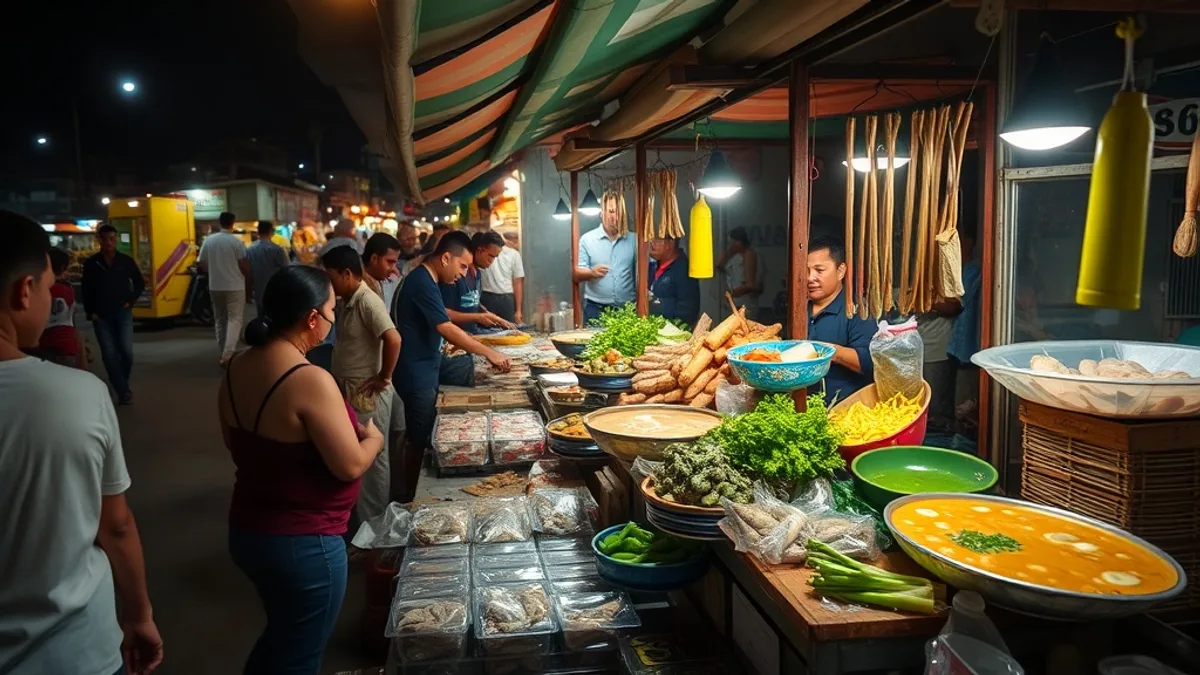
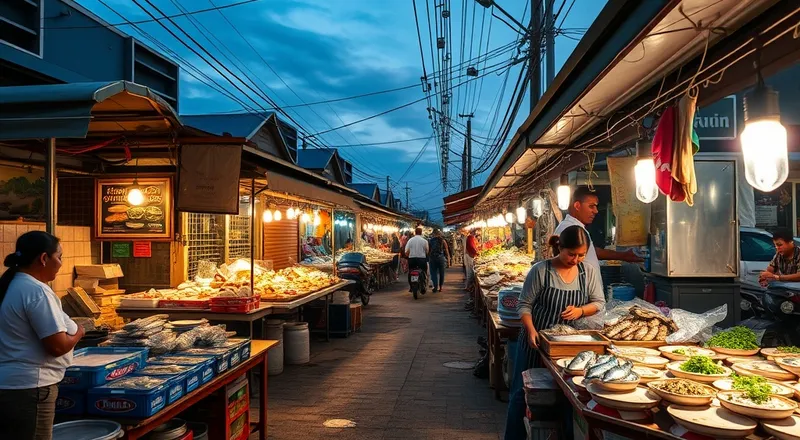
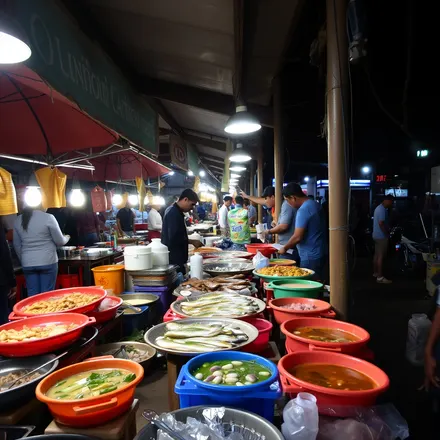
The Ubon Night Bazaar, running nightly along the Rin Kaew Road riverfront area and the network of streets behind it, is the social and culinary center of the city after dark. Dozens of stalls extend across several blocks, offering the full range of Isaan and eastern Thai cooking alongside the inevitable grilled items, papaya salads, and noodle soups that anchor every provincial Thai night market. What distinguishes the Ubon Night Bazaar from its counterparts elsewhere is the specific local dishes that appear alongside the universal standards — and the freshness of the river fish from the Mekong and its tributaries that supply the city's markets daily.
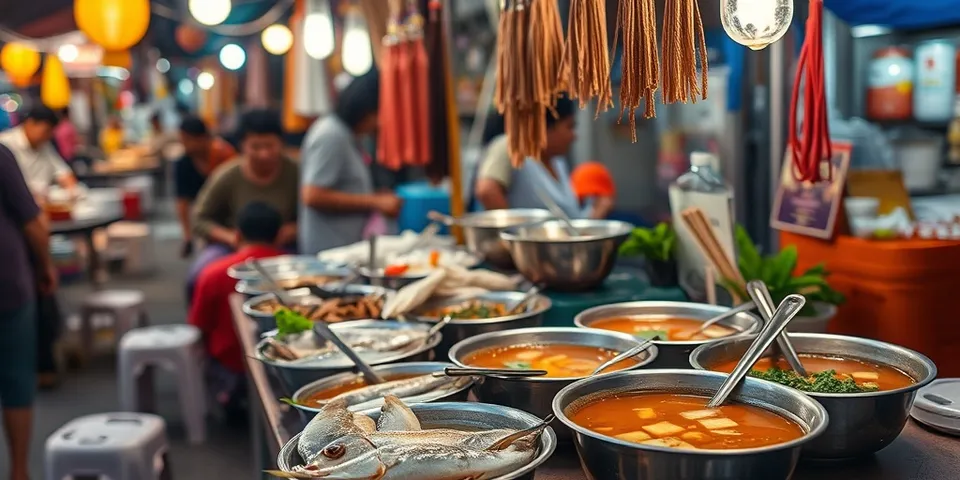
Gaeng Om is perhaps the most distinctive Ubon dish: a thin, intensely herbaceous soup-stew built around dill, lemongrass, kha galangal, and a local herb called phak chi lao (a parsley-like plant of Lao origin) that gives the broth a flavor profile unlike any central Thai or northern soup. It is typically made with catfish or freshwater eel, and the combination of fermented fish base with the sharp herbal finish is at once strange and completely compelling. Find it at market stalls with clay pots visible on the charcoal; a bowl costs 40–60 THB.
Or Lam is the Lao-Isaan stew that epitomizes the Mekong cultural corridor: a slow-cooked mixture of vegetables, bamboo shoot, young eggplant, dried buffalo skin, and the defining ingredient — sakhan, a wild vine whose root imparts a faintly numbing, aromatic quality unlike any other ingredient in Thai cooking. Or Lam is common across Laos and is understood in the Ubon area as shared cultural heritage with the communities across the river. Some Ubon restaurants have been making it for three generations.
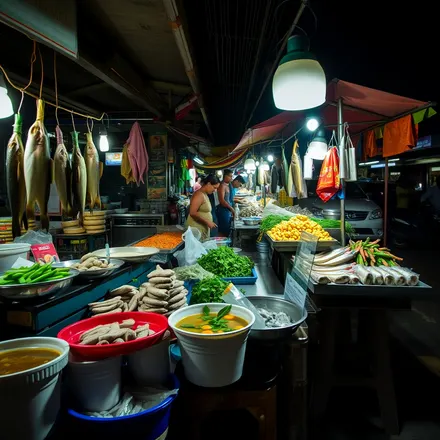
The morning food scene centers on noodle carts that appear at key intersections and near the main market from 6 AM, serving boat noodles (kuay tiew ruea) — dark, rich broth with pork or beef, blood, and herbs — at 30–40 THB per bowl. The Rin Kaew Market itself is extraordinary in the morning hours: fresh Mekong fish laid out on banana leaves (look for pla soi, pla nin, and the larger catfish varieties), enormous bunches of the wild herbs that define eastern Isaan cooking, and fermented products in every conceivable form. Even the giant Mekong catfish (pla buk) occasionally appears here, though the endangered status of the species means its presence is increasingly rare and controversial.
The fermented sausage tradition is central to Ubon's food identity. Sai krok isan — a coarse pork sausage fermented with cooked sticky rice for two to three days before being strung on bamboo skewers and grilled over charcoal — achieves its sharpest, most characterful versions in eastern Ubon markets. The fermentation gives a gentle sourness that balances the pork fat and garlic; eating it with raw cabbage, sliced ginger, and fresh chilies is not merely tradition but the perfect flavor combination. Vendors set up at the Night Bazaar and along the main market from mid-afternoon; three to four skewers with accompaniments cost 40–60 THB.
The area around Ubon Ratchathani Rajabhat University — northeast of the city center — hosts a food street that operates primarily in the late afternoon and evening, catering to student budgets with prices that feel almost impossibly low: complete rice dishes from 35–50 THB, freshly made papaya salad for 30 THB, grilled chicken by the piece for 15–25 THB. The quality is consistently excellent — student areas in Thai provincial cities are, as a rule, among the best places to eat in Thailand.
Highlights
- Ubon Night Bazaar — the lively riverfront market with eastern Isaan's widest street food selection
- Gaeng Om herb soup — intensely flavored with dill and phak chi lao, unique to the Ubon area
- Or Lam — slow-cooked Lao-influenced stew with sakhan vine root, a dish of the Mekong corridor
- Morning boat noodle carts at Rin Kaew Market from 6 AM
- Sai krok isan fermented sausage grilled over charcoal with raw herbs
- Rin Kaew Market's morning fresh fish from the Mekong and its tributaries
- University food street — outstanding quality at student prices (35–50 THB per dish)
- Cambodian and Lao herb influences producing flavors unavailable elsewhere in Thailand
- Local beer halls with live isan music and generously priced grilled fish plates
Ubon's street food scene operates year-round. The Night Bazaar is at its most atmospheric from October to February when temperatures are comfortable (22–30°C) for outdoor eating. During the Candle Festival in July, the market expands significantly with vendors from across the region arriving to serve the crowds. Mornings (6–9 AM) are the best time for the fresh market and boat noodle carts. The university food street peaks between 4 PM and 8 PM. Avoid eating at stalls that have been sitting in direct sun for hours — this is especially important for fermented sausage and raw meat products.
Practical Information
Cost Level
Ubon's street food is some of the most affordable in Thailand, even by provincial standards. Single-dish meals at Night Bazaar stalls: 40–80 THB. Gaeng Om or Or Lam with rice: 50–70 THB. Boat noodles at morning carts: 30–40 THB. Sai krok sausage skewers: 10–15 THB per piece. University food street complete meals: 35–50 THB. Grilled fish at local beer halls: 150–350 THB depending on size and species. Local beer (Chang or Leo): 60–80 THB per bottle. Budget well-fed per day: 300–500 THB.
Tips
The Rin Kaew Market is best visited before 8 AM when fresh produce arrives and the market is at its peak. For Gaeng Om and Or Lam, look for stalls with clay pots over charcoal rather than modern gas burners — the slow-cooked version has depth that a rushed preparation cannot match. Pointing at what you want is entirely normal and welcomed. The phrase 'aroy mak' (very delicious) said after eating makes any vendor's day. Keep small bills — 20 and 50 THB notes — as change supply at market stalls can be limited. The local beer halls along the river toward Khong Chiam Road offer the most atmospheric evening experience.
Our creators on the ground in Ubon-ratchathani share their best recommendations in their videos.
Creators who cover this spot
Discover YouTube creators who feature this topic in their videos.

Eat Street Repeat
Eat Street Repeat is a USA-based creator documenting Thailand's authentic street food culture since 2015.

Ricky in Isaan
British expat documenting authentic daily life and culture in rural Isaan, Thailand.

Thai Food Quest
American food enthusiast documenting Thailand's regional cuisine from Bangkok street carts to northern hill tribe recipes.
Places in this Guide
Discover the attractions and locations featured in this travel guide.
Explore Ubon Ratchathani
Ubon Ratchathani
อุบลราชธานีUbon Ratchathani is a culturally rich province in Thailand's far northeast, bordering Laos along the Mekong River. The c...All creators from Ubon Ratchathani →Location & Orientation


Frequently Asked Questions
What makes Ubon Ratchathani food different from other Isaan provinces?
Ubon Ratchathani's food reflects its position at the confluence of three cultural borders — Thai, Lao, and Cambodian — in ways that no other Isaan province can match. The Lao influence is strongest: dishes like Or Lam, the herb palette centered on dill and phak chi lao, and the fermented fish traditions all reflect centuries of cross-Mekong cultural exchange. Cambodian herb and spice influences appear in some rural dishes that are virtually unknown outside the eastern border area. The city's size and its role as a regional center means the food scene also has genuine depth — not just street food but established restaurants with multi-generational recipes that have refined these traditions over decades.
Is it safe to eat street food in Ubon Ratchathani?
Ubon's street food is generally safe for visitors following basic common-sense precautions. Stick to stalls with high turnover — busy stalls mean fresh food. Cooked-to-order dishes are safer than items that have been sitting out. Avoid raw meat and raw blood products unless you have a very resilient digestive system — these are genuine local staples but can cause problems for unacclimatized visitors. Grilled and fried items, soups, and cooked-rice dishes carry minimal risk. Drinking water: buy sealed bottles rather than using tap water. The fermented products like sai krok sausage are safe when freshly cooked — the fermentation process acidifies the meat, but adequate grilling is still essential.
Where exactly is the Ubon Night Bazaar?
The Night Bazaar (Talad Rin Kaew) is located along Rin Kaew Road near the Mun River in the central part of Ubon city, running from early evening until around midnight. The market extends from the riverside promenade into several connecting streets and is easily found by following the cooking smells and the light after 5 PM. A second, slightly smaller night market at Thung Si Mueang Park offers a similar range of food in a more open setting. Both are accessible by tuk-tuk from any central hotel for 40–60 THB.
Can I find vegetarian food in Ubon Ratchathani's markets?
Vegetarian and vegan eating in Ubon requires some navigation but is entirely possible. Thai Buddhist observance creates a consistent supply of Jay (vegan) food during Buddhist holy days — look for yellow flags on market stalls indicating Jay food. Papaya salad (som tum) made without fermented crab or shrimp paste is widely available and genuinely delicious. Rice dishes with stir-fried vegetables are on every market menu. Morning markets have excellent fresh fruit and prepared vegetable dishes. The most challenging element of Isaan cuisine for vegetarians is the ubiquity of fermented fish paste (pla ra) as a background flavoring in seemingly vegetable dishes — being explicit with vendors ('mai sai pla ra' — no fish paste) is important.
What is the giant Mekong catfish and can I eat it?
The giant Mekong catfish (Pangasianodon gigas, pla buk in Thai) is one of the world's largest freshwater fish — adults can reach 3 meters in length and weigh over 300 kilograms. It is endemic to the Mekong River basin and is critically endangered under IUCN classification, with wild population numbers having collapsed dramatically over the past three decades due to overfishing, dam construction, and habitat loss. While pla buk occasionally appears on menus in riverside restaurants near the Mekong, eating it is ethically problematic given its conservation status. Several freshwater fish alternatives from the Mekong — pla soi, pla nin (tilapia), and various catfish species — are abundant, sustainable, and equally delicious prepared in the local style.