
Introduction
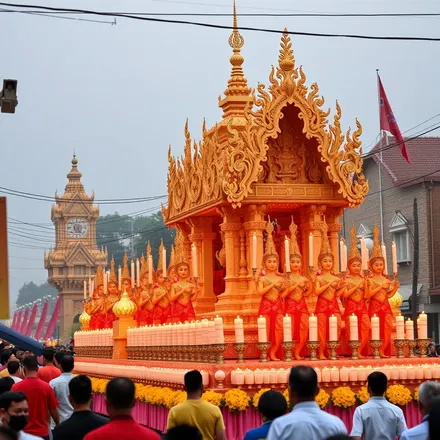
Every July, the provincial city of Ubon Ratchathani transforms into the stage for one of the most breathtaking cultural spectacles in Southeast Asia. The Khao Phansa Candle Festival marks the beginning of Buddhist Lent — the three-month rains retreat during which monks remain in their monasteries — and Ubon celebrates it with an intensity that has no equal in Thailand. Competing districts commission teams of skilled artisans to carve colossal sculptures from solid blocks of beeswax and paraffin, sometimes reaching eight meters in height, depicting scenes from the Ramayana, the life of the Buddha, and mythological cosmology in extraordinary detail. These are not decorations — they are masterworks, created over months by artists who consider this their highest civic and spiritual duty. The parade through the streets of Ubon is a procession of moving art, accompanied by classical Thai dance performances and the electrifying roar of a crowd who understand exactly what they are witnessing. For travelers who have not yet discovered Ubon Ratchathani, this festival is the doorway into one of Thailand's most genuinely rewarding regions.
Overview
The Khao Phansa Candle Festival has its roots in a very practical piece of Buddhist monastic discipline. During the ancient period in India, monks traveling and teaching during the monsoon season were reported to be trampling young rice seedlings and injuring small creatures sheltering from the rains. The Buddha instituted the Vassa rains retreat — a three-month period of stationary residence — to address this. In Thailand, this became Khao Phansa, and communities developed the tradition of presenting large candles to temples to provide light for monks studying through the long rains season. In Ubon Ratchathani, what began as a practical offering evolved, over centuries, into a competitive art form on a monumental scale.
The candle floats — billed formally as the Candle Carving Floats Procession — are the undisputed centerpiece of the festival. Each of Ubon's districts and major institutions fields a team of artists, craftspeople, and cultural performers who spend months designing and executing a single themed sculpture. The works depict scenes with a complexity that rewards close inspection: a single float might feature dozens of individual figures, each carved in its own posture and expression, surrounded by intricate floral work, mythological animals, and architectural details executed in wax of extraordinary delicacy. The Ramayana episodes are perennial favorites — Hanuman's armies, the battle between Rama and Ravana, the abduction of Sita — but Buddhist cosmology, royal history, and local folklore all appear as themes depending on the competing district's choice for that year.
The parade route runs through the heart of Ubon city, typically following Pha Daeng Road before turning toward Thung Si Mueang Park, where the floats are displayed for several days after the parade. Crowds begin gathering along the route in the early morning for an afternoon procession; the atmosphere is festive and intensely communal. Classical Thai dance troupes perform atop companion floats, and brass bands from local schools alternate with traditional piphat orchestras. The best viewing positions fill by mid-morning, and the most sought-after spots — elevated vantage points in buildings along the main route — are booked years in advance by regular attendees.
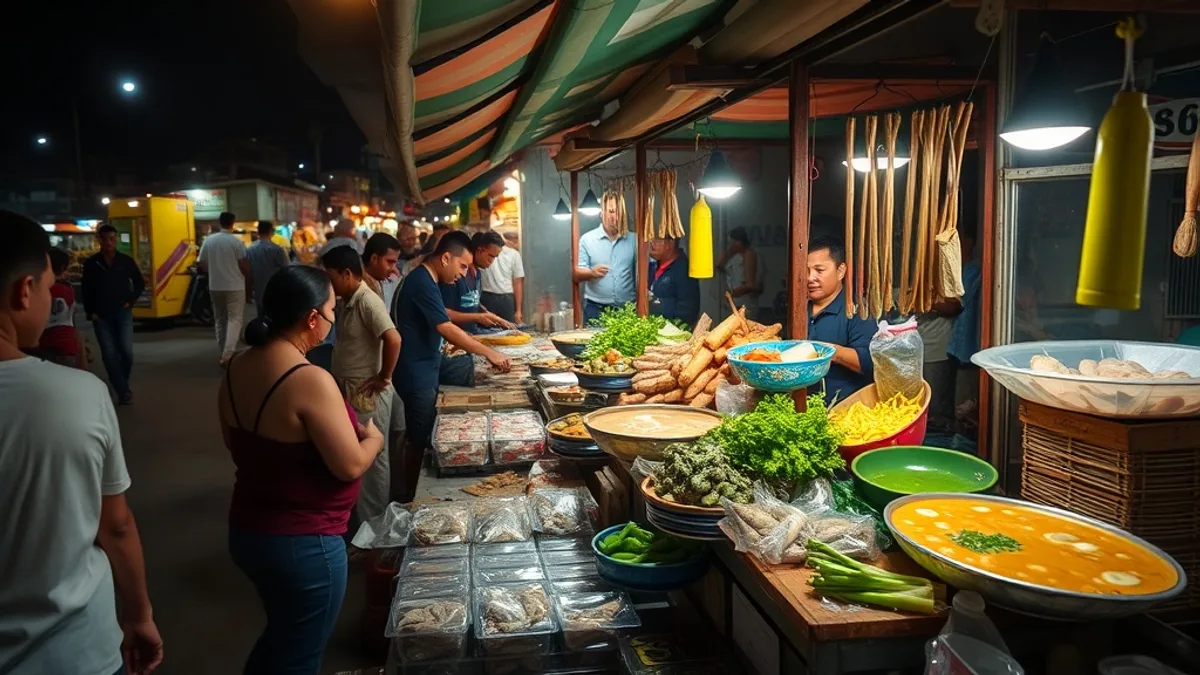
Outside the main parade, the festival week fills Ubon with satellite events: evening light-and-sound shows, cultural exhibitions at the National Museum, competitions among local schools for candle-carving miniatures, and an intensified version of the city's already excellent food scene, with vendors arriving from across the eastern provinces. Wat Jaeng and Wat Thung Si Mueang hold special ceremonies, and the lamp-lighting ritual at the river's edge at dusk on the eve of Khao Phansa is an experience of quiet spiritual beauty in stark contrast to the parade's exuberance.
Planning logistics for the festival requires unusual advance preparation. Hotels in Ubon sell out completely for the festival weekend — not weeks but months in advance, and for peak positions near the parade route, reservations made a full year ahead are not uncommon. The Tourism Authority of Thailand's Ubon office can provide the exact dates for each year (the festival follows the lunar calendar, falling on the full moon of the eighth lunar month, typically mid-July). Budget travelers should note that guesthouses in surrounding towns like Warin Chamrap, directly across the Mun River and connected by bridge, offer significantly more availability, and local minibuses run through the night during festival week.

Highlights
- Monumental wax sculptures up to 8 meters tall carved by competing district teams over months of preparation
- The Khao Phansa parade procession through central Ubon with classical Thai dance performances
- Ramayana and Buddhist cosmology depicted in extraordinary carved detail on each float
- Evening lamp-lighting ceremony at the Mun River on the eve of Buddhist Lent
- Miniature candle-carving competitions held at local schools and temples throughout festival week
- Post-parade float display at Thung Si Mueang Park — several days of close-up viewing access
- Intensified street food scene with vendors arriving from across eastern Isaan
- Special cultural exhibitions at Ubon Ratchathani National Museum during festival week
- The remarkable community effort — entire districts mobilizing months of civic and artistic labor
- Combining the festival with Ubon's year-round temple circuit and Mekong excursions
The festival falls on the full moon of the eighth lunar month — typically mid-July, though the exact date shifts each year. The core events run for three to four days around the full moon, with the main candle parade on the day of Khao Phansa itself. The surrounding week sees the city at its most festive. Weather is hot and humid (32–35°C) with afternoon rain showers typical of the monsoon season — lightweight rain gear is advisable. The period immediately after the festival, through October and November, is arguably the best time to visit Ubon for non-festival travel: rivers are full, the landscape is vivid green, and crowds have gone.
Practical Information
Cost Level
Watching the parade and festival events is entirely free. Accommodation, however, carries a festival premium: guesthouses from 400–800 THB that normally cost 250–500 THB, mid-range hotels from 1,500–3,500 THB. Food costs remain reasonable — street stalls serve complete Isaan meals for 60–120 THB. Tuk-tuks within the city center: 50–80 THB per trip during festival days. The National Museum charges 100 THB for foreign visitors. Bus from Bangkok (Northern/Northeastern Bus Terminal) costs 350–550 THB for an overnight service; domestic flights on Lion Air or Bangkok Airways run 800–2,500 THB depending on how far in advance you book.
Tips
Book accommodation at least six months in advance for festival week — a full year for any property near the parade route. The post-parade float display at Thung Si Mueang Park is worth visiting in the early morning when crowds are lighter and you can inspect the carving detail up close. Arrive at least 90 minutes before the parade start time to secure a good viewing position. The Tourism Authority of Thailand office on Kheuan Thani Road is genuinely helpful for maps and timing information. Bring a hat, sunscreen, and a lightweight poncho — the combination of July sun and sudden monsoon showers is the festival's only physical challenge.
Our creators on the ground in Ubon-ratchathani share their best recommendations in their videos.
Creators who cover this spot
Discover YouTube creators who feature this topic in their videos.

Discover Thailand
Christian
Discover Thailand – Deutscher Thailand Reise-Creator auf YouTube.

Global Travel Mate
Jeroen is a Dutch expat documenting Bangkok's urban landscape through bicycle exploration and cultural observation.

Ricky in Isaan
British expat documenting authentic daily life and culture in rural Isaan, Thailand.


Places in this Guide
Discover the attractions and locations featured in this travel guide.
Explore Ubon Ratchathani
Ubon Ratchathani
อุบลราชธานีUbon Ratchathani is a culturally rich province in Thailand's far northeast, bordering Laos along the Mekong River. The c...All creators from Ubon Ratchathani →Location & Orientation

Frequently Asked Questions
When exactly does the Ubon Ratchathani Candle Festival take place?
The festival falls on Khao Phansa — the first day of Buddhist Lent — which follows the lunar calendar and lands on the full moon of the eighth lunar month. This typically falls in mid-July, though the precise date shifts by one to two weeks each year. The main candle parade takes place on the Khao Phansa day itself, with preparations and satellite events running for three to four days beforehand and the float display continuing for several days afterward. The Tourism Authority of Thailand publishes confirmed dates for the following year in advance, and the TAT Ubon office website is the most reliable source for exact timing.
How far in advance should I book accommodation for the festival?
For any accommodation within walking distance of the parade route, booking a full year in advance is not excessive — many returning visitors make reservations immediately after leaving the previous year's festival. For guesthouses and hotels outside the immediate center, six months' notice is the practical minimum. The town of Warin Chamrap, directly across the Mun River from central Ubon, has significantly more accommodation availability during the festival period and is connected to the center by a bridge walkable in twenty minutes. Several Ubon residents rent out rooms during festival week — check local Facebook groups if hotels are fully booked.
How long does it take to carve the candle festival floats?
The preparation process begins immediately after the previous year's festival ends — teams from each competing district begin planning, sourcing wax, and building structural frameworks within weeks of the conclusion of one festival in preparation for the next. Active carving typically begins four to six months before the parade, with teams working in dedicated workshops that are partially open to curious visitors during the preparation period. The TAT Ubon office can sometimes arrange visits to workshops where teams are at work, which offers a remarkable perspective on the scale of civic dedication the festival represents.
Is the Candle Festival appropriate for children?
The Candle Festival is an excellent experience for children. The enormous colorful sculptures are immediately captivating, and the parade atmosphere — with its music, dance, and elaborate costumes — is designed for communal celebration rather than religious solemnity. The post-parade float display at Thung Si Mueang Park is particularly well-suited to families as children can view the carvings up close at their own pace. The heat and crowd density on the parade day itself require some planning — bringing water, sun protection, and positioning yourselves with a clear line of sight before the crowds peak is advisable with young children.
What other cultural events happen in Ubon Ratchathani throughout the year?
Ubon Ratchathani has a rich cultural calendar beyond the Candle Festival. Ok Phansa (the end of Buddhist Lent in October) sees a celebrated illuminated boat procession on the Mun River — smaller in scale than the Candle Festival but atmospherically beautiful. The city holds a prominent OTOP handicraft fair in winter showcasing silk, basketry, and lacquerware from across the eastern provinces. The Sam Phan Bok rocky landscape along the Mekong opens for visitors from October through January when dry-season water levels expose the dramatic rock formations. The provincial food scene has depth year-round, and the temple circuit — including Wat Nong Pa Phong — draws a quiet stream of Buddhist pilgrims from around the world throughout the year.