
Introduction
Thailand has been transforming its coastal communities into tourism infrastructure for four decades, and in most provinces the traditional fishing village has been replaced, obscured, or packaged into a cultural show. Trat's coastal communities remain an exception. The province's remote position — at the far eastern extremity of the Gulf coast, beyond the Koh Chang tourist traffic — has preserved fishing village life with a completeness that is increasingly rare in Thailand. Stilted wooden houses stand over tidal water on piles worn smooth by decades of salt air. Longtail boats are loaded and unloaded at the same concrete piers that their owners' grandparents used. Dawn catches are sold directly on the pier to women who have been running the same village stalls for thirty years. This is coastal Thailand in a register of authenticity that most visitors never reach.
Overview
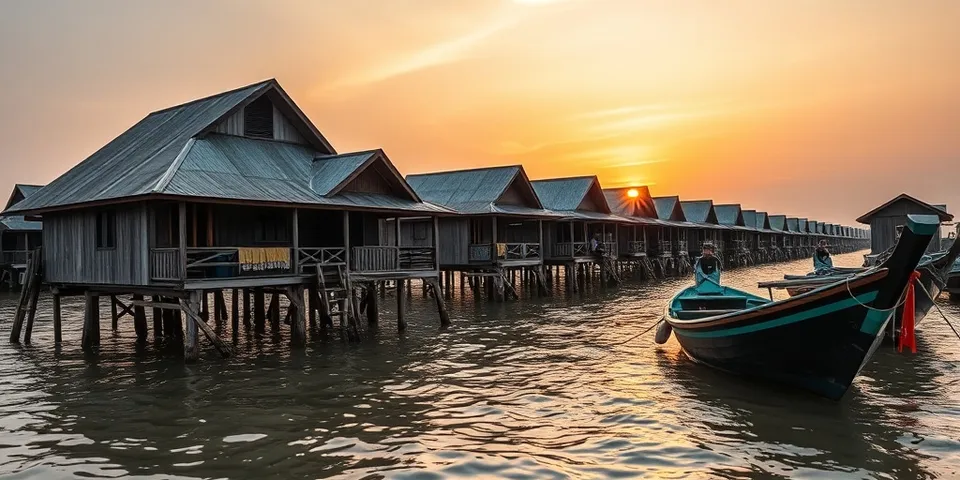
Ban Khlong Son on Koh Chang's northern coast presents one of the most photogenic traditional fishing communities remaining on any Thai island. The stilted wooden houses in the village date back several generations, their dark-stained timber contrasting with the pale aquamarine of the shallow water beneath. The village's working character is unmistakable — nets hung out to dry along the walkways, ice boxes waiting at the pier for the next boat arrival, the smell of diesel and salt and drying fish that characterises every working fishing settlement in the world. Arriving at the village at 5am during the morning catch landing is the most immersive entry point: the community is fully awake and operational before dawn, and the activity at the pier during those early hours is as unguarded as documentary photography gets in the modern era.
On the mainland coast south of Trat town, Hat Sai Si village maintains a boat-building tradition that has been gradually disappearing from most of coastal Thailand. Craftsmen here construct longtail boats using techniques passed down through families — selecting hardwoods for the hull, shaping the bow curve without molds, and applying multiple layers of pitch and resin for waterproofing. Watching a boat builder work is a quiet privilege; asking to observe is almost always welcomed with a characteristic Thai hospitality that stops just short of offering you a tool to try yourself.
Squid fishing is the dominant nighttime activity along this coast, and the spectacle of the squid boats at work is visible from any elevated position on the shore. The vessels deploy arrays of extremely bright fluorescent lights that attract squid from depth — on dark nights the boats are visible as a constellation of light across the water, and the glowing green and white patterns shift as boats move to follow the squid. Night tours aboard working squid boats are available through local fishermen for approximately 400-600 THB per person, departing around 8pm and returning by midnight. The experience of hauling squid from the illuminated water beside the boat — the animals arriving in silver flashes at the surface — connects visitors directly to the most ancient form of human fishing practice.
Community tourism initiatives in several Trat fishing villages offer structured homestay experiences and guided visits to the working aspects of fishing life: boat repair, net mending, fish drying, and the traditional smoking and salting processes that preserve the catch for inland markets. These initiatives are typically run by village women's groups and are priced at 500-1500 THB per person for a full morning or evening program.
Highlights
- Ban Khlong Son on Koh Chang — traditional stilted village with multi-generational wooden houses over water
- Dawn catch at village piers (4-6am) — the most unguarded and atmospheric arrival time
- Hat Sai Si mainland village with active boat-building tradition in hardwood longtails
- Night squid fishing boats visible from shore — a constellation of light across dark water
- Night boat tours aboard working squid boats at 400-600 THB per person
- Village homestay and community tourism programs run by women's groups
- Net mending, fish drying, and traditional salting demonstrations
- Seafood at village restaurants — 50% cheaper than resort areas with equal or better freshness
- Photography of stilted houses at dawn with calm water reflections
- The boat-building tradition at Hat Sai Si — hardwood longtail construction techniques
The most authentic village experience requires an early morning visit — arriving by 5am for the catch landing gives you the full atmosphere. This is manageable if you stay overnight in a village guesthouse or arrange a very early Grab pickup from Trat town. For squid fishing night tours, October through March is the peak season when squid are most plentiful. Year-round the villages retain their character, but the cool season (November-March) is most comfortable for extended outdoor exploration.
Practical Information
Cost Level
Village entry: free. Night squid fishing boat tour: 400-600 THB per person. Community tourism program (morning or evening, includes demonstration and meal): 500-1500 THB. Village restaurant seafood meal: 150-400 THB per person. Overnight homestay in participating village: 400-800 THB per night including breakfast. Longtail boat charter for custom village tours: 800-1500 THB per boat per half day.
Tips
Ask permission before photographing individuals — a gesture of the camera with raised eyebrows communicates the question universally. Most fishermen are happy to be photographed when they understand the photograph is personal rather than commercial. Bring a small gift (fruit, snacks, or a contribution to the village tea fund) when joining a homestay — the gesture is noticed and appreciated far more than its monetary value. Wear shoes that can get wet as fishing village piers are often partially flooded at high tide.
Our creators on the ground in Trat share their best recommendations in their videos.

Places in this Guide
Discover the attractions and locations featured in this travel guide.
Explore Trat
Trat
ตราดTrat is Thailand's easternmost province, bordering Cambodia and home to some of the country's most stunning island desti...All creators from Trat →Location & Orientation


Frequently Asked Questions
How do I arrange a night squid fishing tour in Trat?
The most reliable approach is through your accommodation — guesthouses in Trat town and on Koh Chang typically have established contacts with local fishermen who offer tourist boat tours alongside their working trips. Alternatively, walking to a fishing village pier in the late afternoon and asking directly (through gestures and the words 'meuk' for squid and 'kheun ni' for tonight) will usually produce a willing boat owner. Expect to negotiate the price (400-600 THB per person is fair for a working boat tour, not a dedicated tourist boat). Bring warm layers — the Gulf is cool at night from November to February — and expect to get wet.
Is Ban Khlong Son village accessible to independent visitors?
Yes, Ban Khlong Son on Koh Chang's northern coast is accessible by road from the main island highway. It is not a formal tourist attraction with entry fees or structured tours — it is simply a working fishing village that tolerates and generally welcomes respectful visitors. Walking through the village on the raised wooden walkways connecting the stilted houses is accepted, but moving through residential areas requires the same awareness you would bring to any private community. The pier area and the stretch of village facing the water are the most appropriate places for extended observation and photography.
What traditional boat-building techniques are used at Hat Sai Si village?
The longtail boats built at Hat Sai Si use a construction approach developed over generations in coastal Southeast Asia. Hulls are shaped from hardwood planks — traditionally teak or mai yang, though wood availability has shifted the trade toward other durable tropical species. The distinctive upswept bow and stern are shaped by steaming and bending planks rather than cutting the curve from solid timber, which conserves material and produces a stronger, more flexible structure. Caulking between planks uses a mixture of pine tar and cotton or coconut fibre. The propulsion system — the long shaft connecting the engine to the propeller — is usually purchased rather than made, but the hull itself is entirely hand-crafted.
How fresh is the seafood at Trat's fishing village restaurants?
Genuinely very fresh — fresher, on average, than seafood in Bangkok's most expensive restaurants, because the supply chain is measured in hours rather than days. In a working fishing village restaurant, the fish you eat at lunch arrived at the pier that morning. Some restaurants have open seawater tanks where live fish, crab, and prawns are held until ordered. The village restaurants are typically informal — plastic tables, no English menu, the day's catch displayed on ice — but the quality of the raw ingredient is exceptional. Prices are substantially lower than resort-area restaurants: a full seafood meal for two in a village restaurant runs 400-800 THB.
What is the community tourism program like and who runs it?
Community tourism programs in Trat's fishing villages are typically organised by village women's groups or community councils with support from the Tourism Authority of Thailand. Programs vary by village but typically include a guided walking tour of the village's working areas, a demonstration of fish processing or net preparation, participation in a traditional activity (making dried fish snacks, for example), and a meal prepared with local ingredients. The programs are genuine community development initiatives designed to create alternative income for fishing families during periods when the catch is poor or prices are low. Booking 24-48 hours in advance is usually required; contact through Trat town guesthouses is the most reliable approach.