Introduction
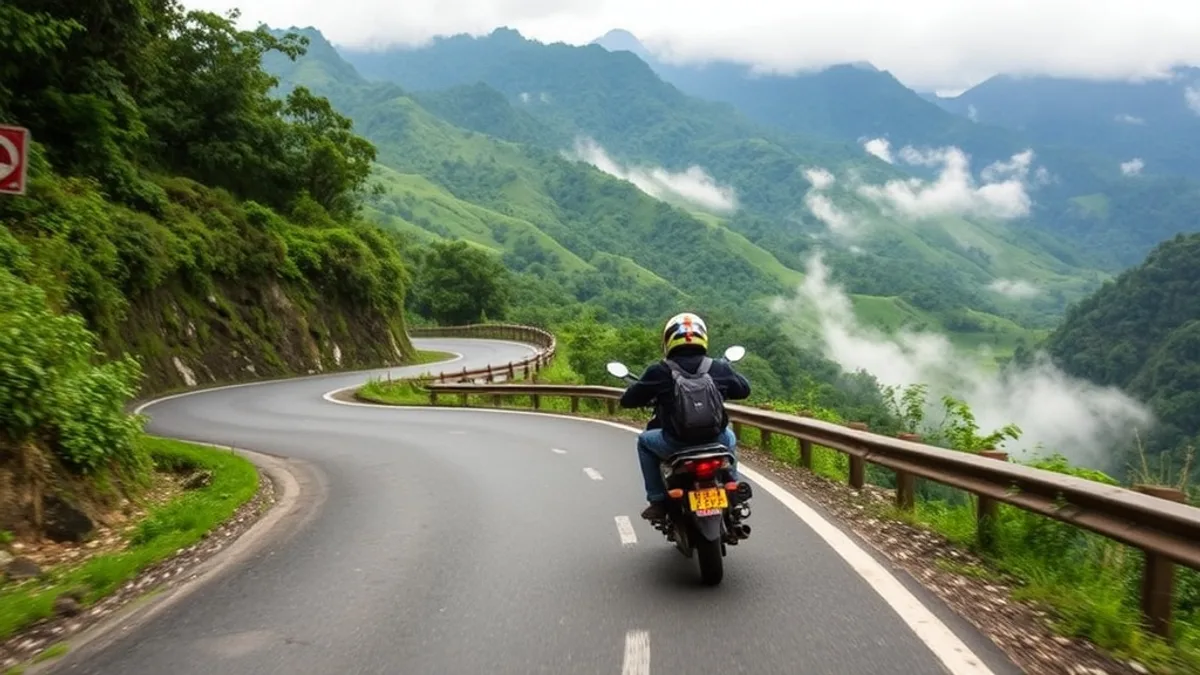
There are road trips, and then there is the Mae Hong Son Loop. Ask any long-term traveller in Thailand which single itinerary best captures the country's northern character — the vertiginous mountain scenery, the cultural layering of Karen and Shan and KMT Chinese communities, the particular quality of light on high-altitude rice terraces at dusk — and the answer comes back with unusual consistency: 762 curves between Chiang Mai and Pai, then the continuing road west toward Mae Hong Son, south to Mae Sariang, and back east to Chiang Mai through a full circuit of approximately 600 kilometres that can be ridden in three days at a push or savoured over five or six at a pace more appropriate to the landscape. Pai is the natural staging post: a town that sits on the loop itself, offering the best accommodation, café culture, and mechanical support of any point on the circuit. Many riders who plan to pass through end up staying for days before continuing. Many who finish the loop return to Pai to decompress. The road is addictive. Pai is where the addiction takes hold.
Overview
The Mae Hong Son Loop is Thailand's most celebrated motorcycle touring route and one of Southeast Asia's finest. The full circuit covers approximately 600 kilometres and can be approached from either direction, though the majority of riders travel counter-clockwise: Chiang Mai to Pai via the celebrated Highway 1095 (762 curves in 135 kilometres), then Pai to Mae Hong Son via Soppong (the most dramatic mountain section of the route), then Mae Hong Son south to Mae Sariang via the towns of Khun Yuam and Mae Chaem, and finally the return east to Chiang Mai.
The first day's ride from Chiang Mai to Pai on Highway 1095 is simultaneously the most famous and the most unnerving section for nervous riders. The 762 curves are not an exaggeration — the road climbs and descends through ranges of forested hills in an almost continuous series of switchbacks, hairpins, and long curving descents that require constant steering input. The mountain scenery compensates entirely: roadside viewpoints reveal valley after valley of forested ridges fading to blue in the distance, and the elevation changes bring successive changes in vegetation from dry deciduous forest at lower elevations to montane forest where moss hangs from the branches and the temperature drops perceptibly. The standard motorbike for this route is a 125-150cc automatic scooter available for hire in Chiang Mai for 200-350 THB per day; riders with more experience prefer 250-400cc manual bikes available from specialist rental shops for 500-900 THB per day.
The Pai to Mae Hong Son section — Highway 1095 continuing west — is less famous than the Chiang Mai-Pai stretch but arguably more beautiful. The road passes through Soppong village (an excellent overnight stop with access to Tham Lod Cave) before climbing to the highest elevations of the loop, where rice terraces carved into near-vertical hillsides by Karen and Shan farmers create a landscape of agricultural artistry that seems impossible in person. Mae Hong Son itself is a small city dramatically positioned at the end of a valley, ringed by mountains so close that they feel like walls, with a morning fog that fills the valley and dissipates gradually through the morning revealing the town's Burmese-influenced temples and lake-side landscape.
The southern leg — Mae Hong Son to Mae Sariang to Chiang Mai — follows a long valley route that is less dramatic than the northern sections but passes through seldom-visited towns where authentic northern Thai market culture continues without tourist modification. Mae Sariang is an excellent overnight stop with good food and river-facing restaurants. The final return to Chiang Mai via Highway 108 is straightforward. Safety is the essential consideration throughout: mountain roads require constant attention to road condition, oncoming traffic on blind curves, and fuel availability (petrol stations are sparse in some sections — carry a small emergency supply). Riding after dark on mountain roads is strongly discouraged.

Highlights
- Highway 1095 — 762 curves from Chiang Mai to Pai through forested mountain ranges and mountain-valley viewpoints
- Pai to Mae Hong Son — the most dramatic and least-visited section of the loop, passing Karen rice terraces and highland communities
- Soppong overnight — small highland village with access to Tham Lod Cave, quieter than Pai and beloved by long-route riders
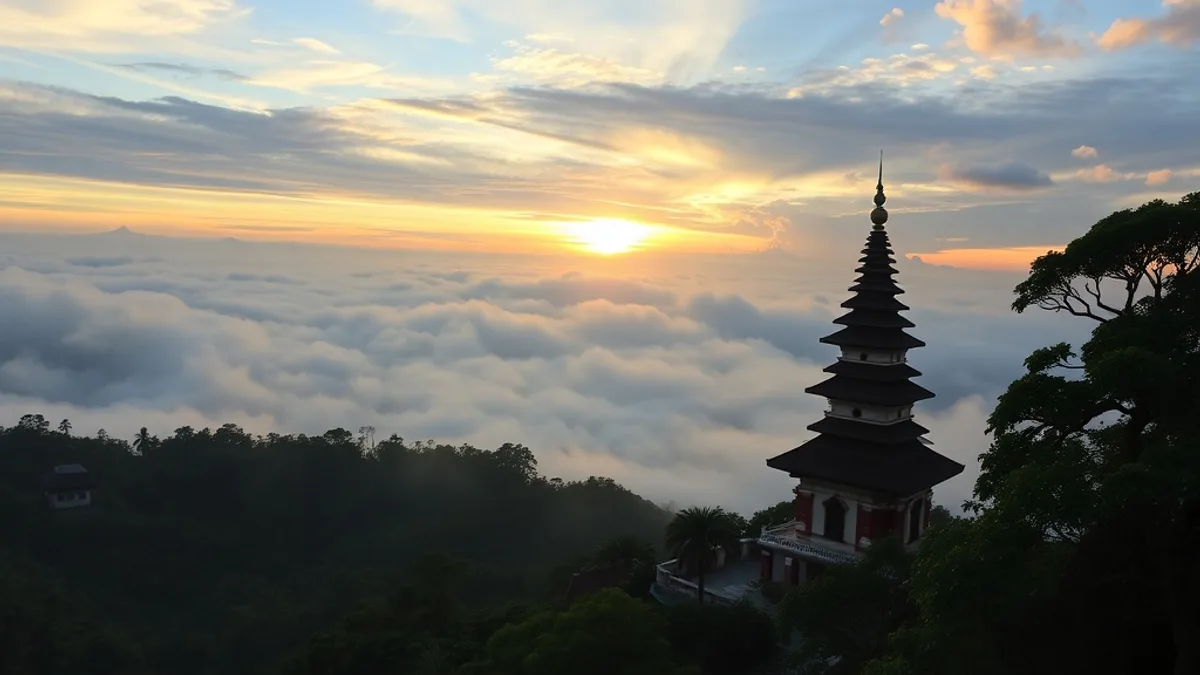
- Mae Hong Son morning fog — Burmese-influenced temples emerging from valley mist each morning in Thailand's most remote provincial capital
- Mae Sariang river town — authentic market culture, riverside restaurants, and genuine small-city northern Thai life midway through the southern loop
- Karen and Shan village encounters — highland communities visible from the road and accessible by short detours throughout the loop
- Motorbike rental in Pai — 200-400 THB/day for automatics, 500-900 THB/day for semi-automatics; local mechanics available for repairs
- Mountain road photography — each section of the loop produces views that require regular stops and a camera with a wide-angle lens
- Three-day minimum itinerary — Chiang Mai to Pai (Day 1), Pai to Mae Hong Son via Soppong (Day 2), Mae Hong Son circuit + south return (Days 3-5)
November to February is the optimal riding season for the Mae Hong Son Loop — dry roads, excellent visibility, cool temperatures at altitude, and the morning mist in highland valleys that makes the scenery most evocative. March and April bring heat and smoke haze from agricultural burning that reduces mountain visibility dramatically and makes full-day riding physically taxing. The rainy season from June to October makes mountain roads genuinely hazardous — wet switchbacks and occasional landslides create dangers that outweigh the landscape's dramatic green intensity. If riding in the shoulder season (May or October), check road conditions locally before each day's ride.
Practical Information
Cost Level
Motorbike rental in Pai: 200-400 THB/day for automatic scooters, 500-900 THB/day for semi-automatic 250-400cc bikes. Full-loop fuel costs approximately 800-1,200 THB for a 600km circuit. Accommodation at guesthouses on the route: 300-800 THB per night. Meals at restaurants and markets along the route: 60-150 THB per meal. The complete three-to-five-day loop including accommodation, food, fuel, and rental runs approximately 3,000-6,000 THB per person — making it one of the best-value extended travel experiences in Southeast Asia. Travel insurance covering motorbike accidents is strongly recommended (check policy terms as many exclude motorbikes above 125cc).
Tips
Get a local mechanics check of your rental bike before leaving Pai — test brakes, lights, and tyres carefully. Carry a basic puncture repair kit as remote mountain sections can leave you 20+ kilometres from the nearest garage. Download the route offline on Google Maps or Maps.me before departing — mobile signal is intermittent throughout the loop. Fuel up at every opportunity and never allow the tank to drop below quarter-full. Ride at a pace where you can stop in time for anything appearing around the next blind curve. Mountain roads have loose gravel on the outer edges of curves — stay toward the centre. Helmets are legally required and genuinely essential.
Our creators on the ground in Pai share their best recommendations in their videos.
Creators who cover this spot
Discover YouTube creators who feature this topic in their videos.

Adventures Joel
British adventure vlogger exploring Thailand by motorbike.

Thailand Motorbike Diaries
Australian rider documenting motorcycle adventures across Thailand's diverse terrain.

Travis Leon
American expatriate content creator based in Bangkok producing practical lifestyle and cost-of-living content for aspiring expats in Thailand.


Places in this Guide
Discover the attractions and locations featured in this travel guide.
Explore Pai
Pai
ปายPai is a laid-back mountain village tucked away in the valleys of Mae Hong Son province, beloved for its bohemian atmosp...All creators from Pai →Location & Orientation

Frequently Asked Questions
Can a beginner rider complete the Mae Hong Son Loop on a scooter?
The Mae Hong Son Loop is achievable on a 125cc automatic scooter but is not recommended for true beginners — riders who have never operated a motorbike before arriving in Thailand. The 762-curve Chiang Mai-Pai section requires confident handling of the bike through sustained switchback sequences, and the steep descents require controlled braking rather than the casual riding sufficient for flat city streets. Riders who have some scooter experience (even from other Asian destinations) and who are willing to ride slowly — 40-60 km/h rather than pushing the bike — can complete the loop safely. The key rules are: never ride after dark, always stop if tired, and take the southern leg (Mae Hong Son to Chiang Mai) seriously as its lower drama can produce complacency.
How many days does the full Mae Hong Son Loop take?
The minimum for a meaningful experience is three full riding days: Chiang Mai to Pai (135km, half a day riding, the rest settling in), Pai to Mae Hong Son via Soppong (110km, full day), and Mae Hong Son south to Chiang Mai via Mae Sariang (370km, long day or two short days). Most experienced riders strongly recommend five days: this allows a full day in Pai, a night in Soppong with a Tham Lod Cave visit, a morning in Mae Hong Son, a relaxed southern leg with a Mae Sariang overnight, and a final return to Chiang Mai without pressure. The loop at three days feels rushed; at five days it feels properly experienced. One additional day for mechanical delays or weather is prudent.
Where should I rent a motorbike for the Mae Hong Son Loop?
Rental is most commonly arranged in Chiang Mai for a full loop, or in Pai for a partial loop of the surrounding area. Chiang Mai has the widest selection of rental shops, including specialist adventure motorbike operators offering well-maintained 250-400cc bikes with documentation for crossing into national park areas. Pai has reliable rental shops on the main road through town offering automatics and semi-automatics at competitive prices. Check that the rental contract includes basic insurance or liability terms and photograph any existing damage before riding. For the full loop, renting in Chiang Mai and returning to Chiang Mai is logistically simplest; some shops in Pai allow one-way rentals with a premium.
What fuel situation should I expect on the loop?
Fuel availability varies significantly by section. The Chiang Mai-Pai stretch on Highway 1095 has petrol stations at regular intervals. Between Pai and Soppong, options are limited — fuel up fully in Pai before departing. Between Soppong and Mae Hong Son there is a petrol station in Mae Hong Son city. The southern leg between Mae Hong Son and Mae Sariang passes through stretches where fuel stations are 50+ kilometres apart. The practical approach is to never allow your tank to fall below one-quarter and to top up at every available station regardless of whether you think you need to. In very remote sections, local villages sometimes sell petrol from plastic bottles — acceptable as emergency fuel but variable in quality.
Is there a permit required to ride in Mae Hong Son Province?
No special permit is required for Thai roads on the Mae Hong Son Loop for standard motorbike rental. A valid international driving licence covering motorcycles is technically required under Thai law and practically required if involved in an accident or stopped by police — riding without one can void rental insurance and create legal complications. Some national park entry points along the loop charge a 300 THB foreigner entry fee for vehicles; budget for this at Doi Inthanon if including it in your route. The roads between all major towns on the loop are public highways requiring no special access. Some unpaved trails into specific forest or border areas may require additional authorisation — check locally before departing the main roads.