Introduction
Pai sits at the convergence of several geological and ecological forces that have conspired to produce a natural environment of unusual richness and variety. The same tectonic activity that pushed the mountains of Mae Hong Son Province skyward left thermal vents beneath the valley floor, surfacing as the sulfurous hot springs that draw visitors for soaks in mineral-rich water surrounded by jungle canopy. The rivers descending from the surrounding peaks cut through limestone and sandstone over millennia, creating the canyons, swimming holes, and waterfalls that define the landscape around town. Within a radius of twenty kilometres from Pai's centre, it is possible to stand in a natural thermal pool while overlooking a forested ridge, swim in a clear river below a waterfall that tumbles through its own small canyon, and descend by bamboo raft through a cave system alive with roosting bats and hovering fireflies. This is a natural playground of a kind that rewards the traveller who moves beyond the cafés and the Walking Street to engage with the landscape that originally made Pai extraordinary.
Overview
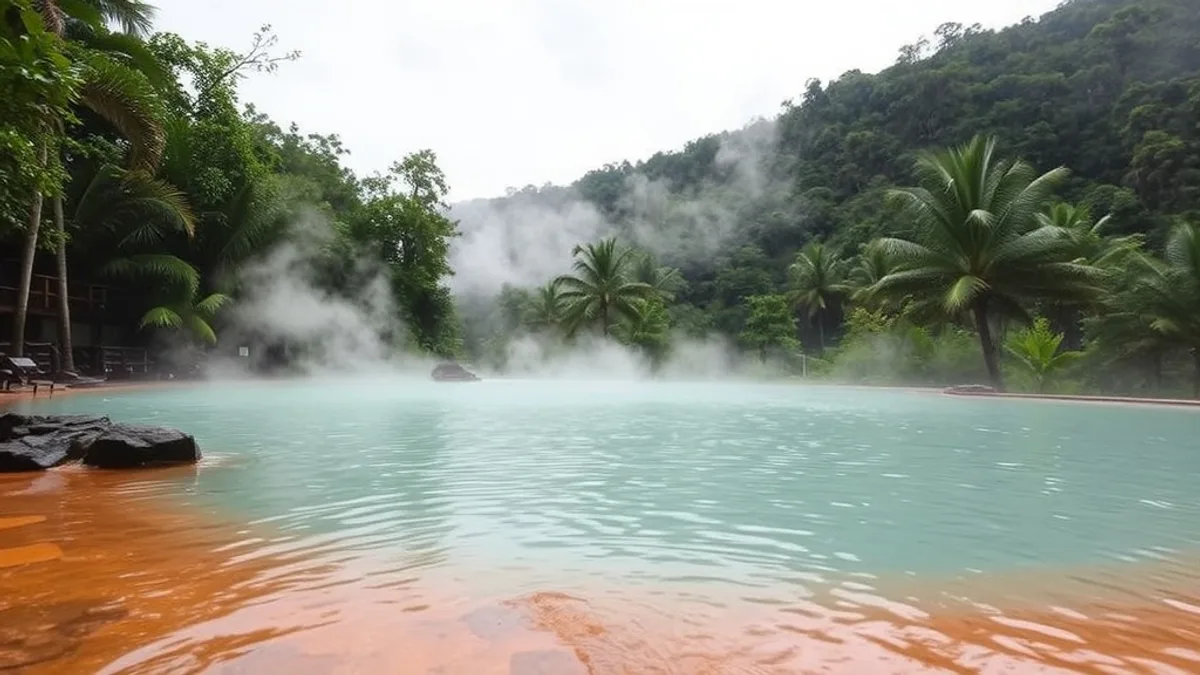
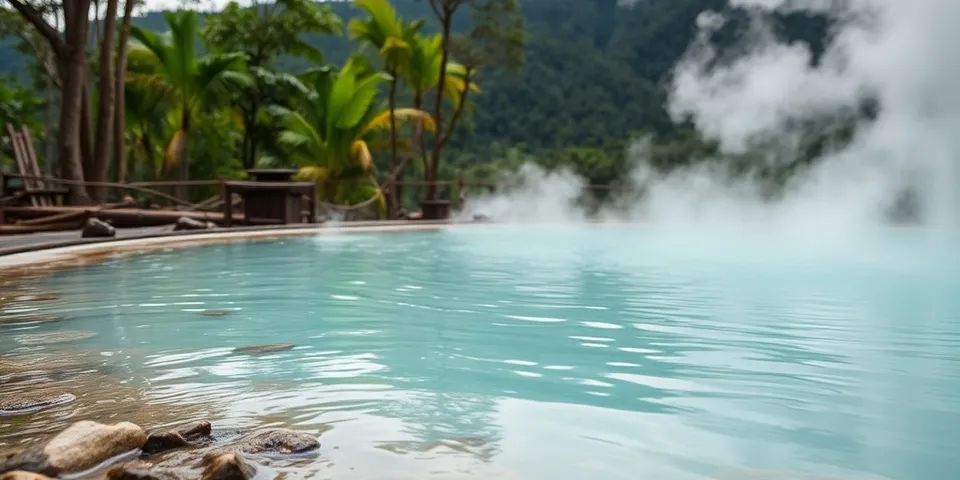
Tha Pai Hot Springs is the most developed and most visited of Pai's natural thermal sites, located approximately 8 kilometres southeast of the town centre on the western bank of the Pai River. The springs emerge at temperatures approaching 80 degrees Celsius and are channelled into a series of developed pools at the park where temperatures are moderated to a manageable 37-42 degrees for bathing. The park entrance fee of 200 THB includes access to all pools, changing facilities, and the landscaped grounds surrounding the main spring, where steam rises theatrically from the earth and the mineral-scented air carries the faintly sulfurous character of genuine geothermal activity. The pools are best visited in the early morning before the day tour groups arrive from Chiang Mai, or in the late afternoon when slanting light filters through the surrounding trees and the temperature contrast between the thermal water and the cooling mountain air becomes most pronounced. A small café at the park sells drinks and light meals, and locals from nearby villages sometimes sell fresh fruit at the entrance.
For visitors willing to walk rather than simply soak, the trail system around the hot springs area connects to Pam Bok Waterfall, a compact but genuinely impressive cascade located approximately 20 minutes on foot from the main road, accessible via a jungle path that crosses seasonal streams and passes through forest thick with tree ferns and bamboo groves. The waterfall drops into a small natural swimming pool surrounded by sandstone walls that have been carved by the water into smooth, curved forms — an intimate space that rarely appears on tour itineraries and rewards independent exploration. The swimming is excellent in the dry season when water clarity is at its best.
For those with more time and energy, Mae Yen Waterfall offers the most rewarding full-day trekking experience accessible from Pai. The trail begins at a village east of town and climbs steadily through agricultural land and secondary forest before entering the national park boundary and gaining elevation through increasingly dense primary forest. The return journey covers approximately 18-22 kilometres depending on the exact route and requires a full day with an early start. The waterfall itself — a multi-tiered series of cascades totalling approximately 30 metres in height — is most impressive from October to December when the rainy season's water volume has not yet fully receded. Few commercial tours operate to Mae Yen, making it a genuinely off-the-beaten-track experience.
Tham Lod Cave, while technically located near the village of Soppong approximately 1.5 hours west of Pai on the road toward Mae Hong Son, is sufficiently accessible to include as a day trip from a Pai base. The cave system extends approximately 1,600 metres through a limestone karst formation and is navigated partly on foot and partly by bamboo raft along the underground stream that flows through its central passage. The cave houses a population of several hundred thousand wrinkle-lipped bats and millions of cave swiftlets whose nests — the basis of the bird's nest soup trade — cling to the cave ceiling. At dusk, the bat exodus from the cave entrance is a wildlife spectacle on a scale that makes even sceptical observers stop and stare. A local guide, mandatory for cave entry, costs approximately 300-400 THB per group.
Highlights
- Tha Pai Hot Springs — sulfurous thermal pools at 37-42°C in a forested park setting, 8km southeast of Pai town (200 THB entry)
- Pam Bok Waterfall — intimate canyon waterfall reached by 20-minute jungle trail, excellent natural swimming pool at its base
- Mae Yen Waterfall — full-day trekking reward, 30-metre multi-tiered cascade through primary forest east of Pai
- Tham Lod Cave — 1,600m limestone cave navigated by bamboo raft, 1.5h from Pai near Soppong village
- Bat exodus at Tham Lod — hundreds of thousands of bats exiting the cave at dusk in a wildlife spectacle
- Pai River swimming holes — clear river pools accessible by short trails from various roadside points around the valley
- Coffee plantation roads — scenic drives through hillside arabica farms between the hot springs and waterfall sites
- Cool-season thermal contrast — soaking in 40°C pools while breathing 15°C mountain air in the December-January morning mist
- Lod Cave bamboo rafting — underground river journey through firefly-lit cave passages near Soppong
November to February is the optimal season for Pai's natural attractions — cool, dry weather makes trekking to Mae Yen Waterfall pleasant, the river swimming holes are clear, and the contrast between thermal pool temperatures and the cold mountain air makes hot spring bathing particularly enjoyable. The rainy season (June to October) dramatically increases waterfall volume and jungle greenness but makes forest trails slippery and the Pai River too fast for safe swimming. Tham Lod Cave near Soppong is accessible year-round but the bamboo raft route through the cave is affected by very high water levels in September to October. Hot springs are open year-round.
Practical Information
Cost Level
Tha Pai Hot Springs entry: 200 THB per person. Tham Lod Cave near Soppong: approximately 300-400 THB per group for a mandatory local guide plus 100 THB park entry. Motorbike rental for accessing all sites independently: 200-400 THB per day. Mae Yen Waterfall trek: free if self-guided (local directions from Pai guesthouses), or 800-1,200 THB with a guided trekking operator. Pam Bok Waterfall: free access via footpath from roadside parking. Budget approximately 600-1,000 THB for a full day combining hot springs, waterfalls, and river swimming including transport and entry fees.
Tips
Visit Tha Pai Hot Springs before 9 AM to beat day-trippers from Chiang Mai, or after 4 PM for golden-hour light and cooler air temperatures. Bring biodegradable soap and shampoo if planning to swim in natural river pools — standard personal care products damage aquatic ecosystems in streams and waterfalls. Wear water shoes or sandals with straps for hot spring and waterfall visits as the rocks around natural pools are often slippery. For the Tham Lod Cave trip, depart Pai by 2 PM to arrive in time for the late-afternoon bat exodus — the timing is specific and missing it significantly reduces the experience. Carry at least 1.5 litres of water per person for any waterfall trekking.
Our creators on the ground in Pai share their best recommendations in their videos.

Places in this Guide
Discover the attractions and locations featured in this travel guide.
Explore Pai
Pai
ปายPai is a laid-back mountain village tucked away in the valleys of Mae Hong Son province, beloved for its bohemian atmosp...All creators from Pai →Location & Orientation


Frequently Asked Questions
Are the Pai hot springs natural and are they safe to bathe in?
The Tha Pai Hot Springs are genuine geothermal features — naturally occurring vents where groundwater heated by subsurface volcanic activity rises to the surface at temperatures near 80 degrees Celsius. The developed bathing pools at the hot spring park channel this water through a cooling system that moderates pool temperatures to 37-42 degrees Celsius, which is safe and therapeutic for bathing. Sulfur and various minerals dissolved in the water are beneficial for skin in moderate exposure. Swimming directly in the main vent is dangerous and prohibited — the natural temperature will cause severe burns. Staying in hot water above 40 degrees for more than 20-30 minutes can cause overheating; alternate soaking with cool breaks, particularly in warm months.
Can I hike to Mae Yen Waterfall independently without a guide?
Mae Yen Waterfall can be reached independently but requires careful preparation. The trailhead begins at a village approximately 3 kilometres east of Pai town, reachable by motorbike or on foot. The trail is reasonably well-marked in the lower sections but becomes less clear in the upper forest. A basic map and offline GPS (Maps.me or AllTrails) are strongly recommended. The round trip takes 6-8 hours depending on pace and fitness level. Carry at least 2 litres of water, food, and rain gear. Inform your guesthouse of your plans before departing. If in doubt, a local guesthouse or trekking operator can arrange a guide for 600-900 THB — particularly useful in the rainy season when trail conditions change.
How far is Tham Lod Cave from Pai and is it worth the day trip?
Tham Lod Cave is located near Soppong village approximately 50 kilometres west of Pai on Highway 1095, a journey of about 1 to 1.5 hours by motorbike or car. The journey itself is a highlight — the mountain road between Pai and Soppong passes through some of the most scenic highland landscape in northern Thailand, with forested ridges, valley farms, and occasionally the cloud cover that gives the region its misty character. The cave is absolutely worth the trip: a 1,600-metre underground passage with genuinely impressive stalactite formations, an underground river navigated by bamboo raft, and the bat exodus at dusk that is one of northern Thailand's most dramatic wildlife moments. Combine with a night in Soppong to avoid rushing and to experience the village at its quietest.
Where are the best swimming holes in the Pai River?
Several river access points along the Mae Nam Pai offer natural swimming in clear mountain water. The most accessible are along the road east of Pai toward the hot springs, where the river can be reached from roadside parking areas via short trails. The swimming is best from November to April when water levels are lower, clarity is high, and the current is gentle. From June to October, the river runs fast and carries debris that makes swimming inadvisable except in specific calm eddies that locals know well. Ask at your guesthouse for the current best spots — access points and conditions change season to season. Bring your own towels and a change of clothes as there are no facilities at most natural river access points.
Is it better to visit the hot springs on a guided tour or independently?
Visiting independently almost always produces a better experience at Tha Pai Hot Springs. Guided tours from Chiang Mai typically arrive between 10 AM and 12 PM in groups of 10-20, making the pool areas busy and reducing the contemplative quality of the experience. Independent visitors with a motorbike can arrive at opening time (around 7-8 AM), spend an unhurried morning in near-solitude, and combine the visit with Pam Bok Waterfall and river swimming without being constrained by a group schedule. The entry fee, directions, and facilities at the hot springs are all straightforward and require no guide. Tham Lod Cave is the exception — a local guide there is mandatory and genuinely valuable for both safety and cultural context.