Introduction
Nakhon Ratchasima — universally known as Korat — occupies a unique culinary position in Thailand. It is the city where Isaan and central Thailand meet: where the herbal intensity of northeastern cooking softens toward the sweeter, saucier profile of the central plains, where sticky rice shares the table with steamed jasmine rice, and where dishes that exist in no other provincial city in Thailand have evolved from this specific cultural convergence. The most iconic of these is Pad Korat — a stir-fried dish specific to Nakhon Ratchasima, built around pork, egg, tomatoes, fresh basil, and a local seasoning combination that no central Thai or northeastern restaurant has quite replicated, because it belongs to Korat and to nowhere else. The city's night markets are large, loud, and intensely local — Korat's 330,000 residents eat out with the enthusiasm of a population that knows it has good food to choose from, and the visiting traveler who follows their lead will eat better than almost anywhere else in the northeast.
Overview
Korat's culinary identity was formed by its position as the northeastern gateway — the first large city encountered by travelers and traders moving from Bangkok and the central plains into Isaan's vast agricultural hinterland. This gateway function created a two-way culinary exchange that has been operating for centuries: central Thai techniques and ingredients flowed north and east, Isaan traditions flowed south and west, and Korat absorbed and hybridized both.
Pad Korat is the dish that embodies this hybridity most completely. Superficially it resembles a central Thai stir-fry — the wok technique, the oyster sauce, the basil — but the specific spice balance, the addition of local fermented ingredients, and the particular char from the high-heat cooking style give it a character that is unmistakably its own. Most Pad Korat uses pork with egg scrambled in the wok alongside tomatoes and a quantity of fresh Thai basil that would be considered extravagant in a Bangkok kitchen. Some versions add a spoonful of local nam prik pao (roasted chili paste) that darkens and deepens the sauce. It is served with jasmine rice — not sticky rice — in a nod to its central Thai heritage. Order it at almost any Korat restaurant that lists it on the menu; the standard version runs 50–80 THB.
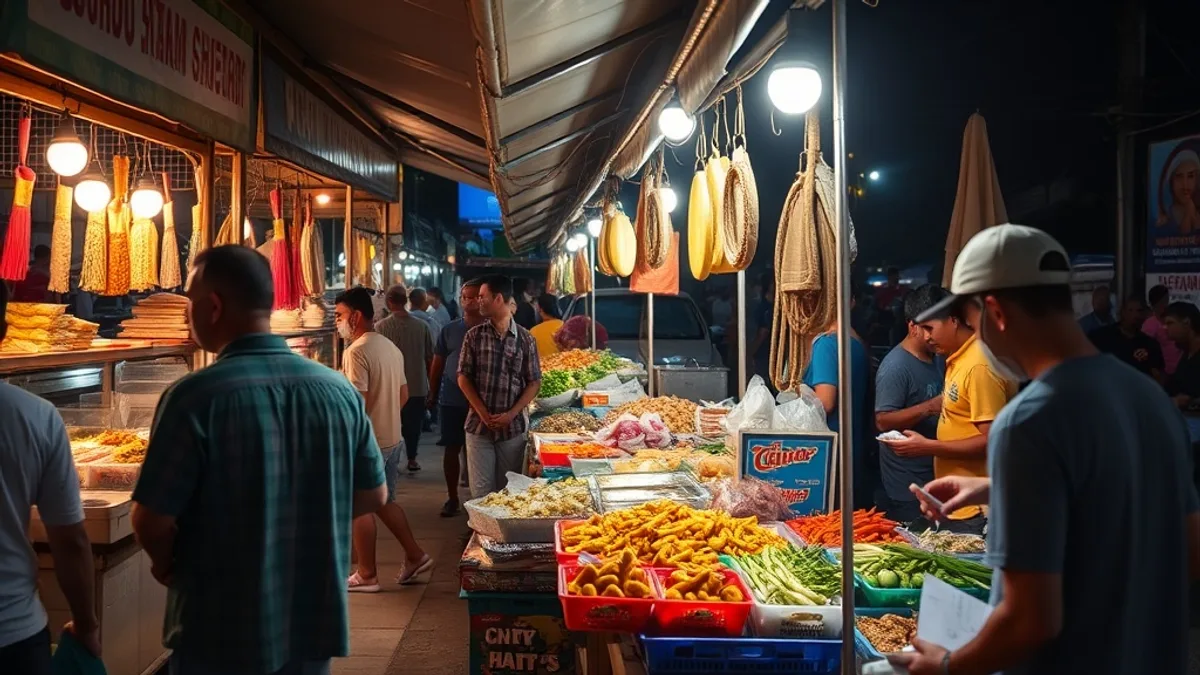
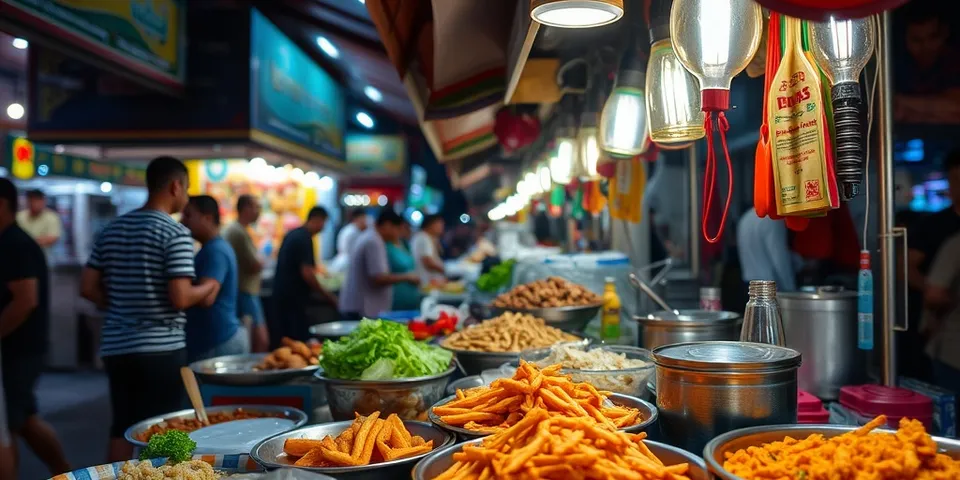
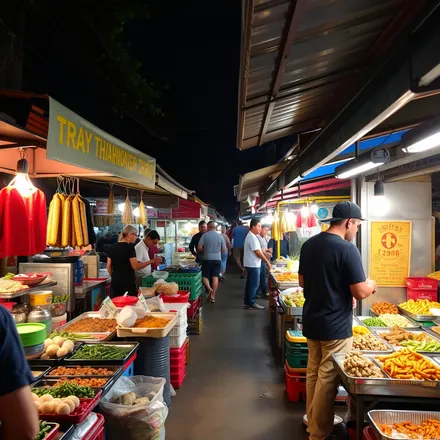
The Makhampom Market (Talad Makhampom), in the older part of the city near the historic Suranaree monument, is Korat's most atmospheric night market. The market runs from late afternoon into the night, filling a covered area and the surrounding streets with vendors selling Korat-specific dishes alongside Isaan classics. Tom Zap — the explosive, citrus-sour Korat-style clear soup with pork ribs, lemongrass, galangal, and a generous hand with fish sauce — is essential ordering here. So is the local-style som tum, which in Korat tends to carry more sweetness than the blazingly sour Udon Thani versions, reflecting central Thai influence.
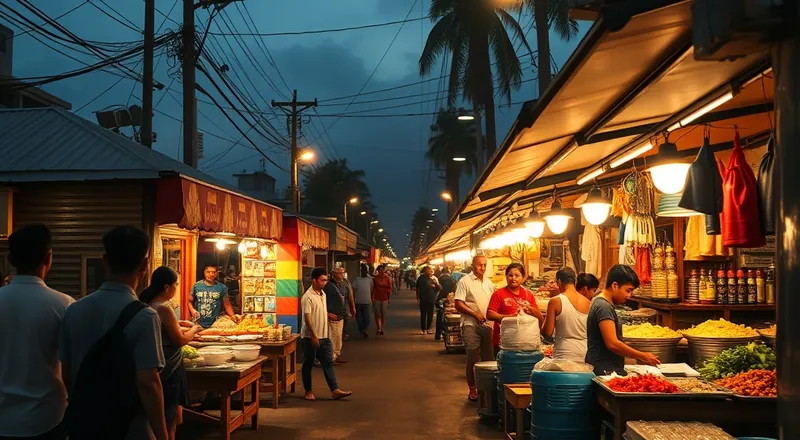
Chumphon Night Bazaar offers a larger, more commercial version of the night market experience — dozens of stalls across a wide open area, with space to sit at tables under the stars and order from multiple vendors simultaneously. The grilled items are the strength here: gai yang (marinated grilled chicken) carved to order, sai krok sausage, whole grilled fish wrapped in banana leaf with lemongrass and herbs.
The area around Bueng Ta Khrai lake in the southeast of the city has developed into a pleasant waterfront eating zone, with restaurants and stalls offering fresh fish from the lake alongside the standard Korat repertoire. The sunset over the water makes this the most scenic eating option in the city.
Korat's university district — centered around Suranaree University of Technology in the city's western extension — replicates the formula found in every large Thai university city: cheap, fresh, high-turnover food in the 35–60 THB range that feeds a demanding student population. Rice dishes, noodle soups, fresh juices, and rotating daily specials make the area worth the short taxi ride from the city center for budget-conscious travelers. The Railway Station area, near the historic old quarter, preserves a concentration of traditional shophouse restaurants serving Korat-style food that predates the city's modern development — some establishments here have been operating for three or four decades.
Highlights
- Pad Korat — the stir-fried pork and basil dish unique to Nakhon Ratchasima, a true local creation
- Makhampom Market — the most atmospheric night market near the Suranaree monument
- Tom Zap — Korat-style clear soup with pork ribs, assertively sour and aromatic
- Chumphon Night Bazaar for grilled items, gai yang, and outdoor market atmosphere
- Bueng Ta Khrai lake waterfront restaurants with sunset views
- Railway Station area traditional shophouse restaurants with multi-decade recipes
- University district cheap eats — 35–60 THB complete meals for the budget traveler
- The Isaan-central fusion food vocabulary found nowhere else in Thailand
Korat's food scene operates year-round. Night markets peak in the cool season (November to February) when outdoor eating is most pleasant, but the food quality is consistent regardless of season. Makhampom Market runs from approximately 4 PM to 10 PM daily; Chumphon Night Bazaar from 5 PM to 11 PM. The Railway Station area restaurants open from 7 AM and are busiest at morning and lunch hours. Central Plaza Korat's food court is a useful air-conditioned backup during peak afternoon heat.
Practical Information
Cost Level
Korat's street food is extremely good value. Pad Korat at a restaurant: 50–80 THB. Tom Zap at a market stall: 50–70 THB. Gai yang (grilled chicken, half portion): 60–80 THB. Som tum: 30–50 THB. Complete university-district meal: 35–60 THB. Night market stall dishes: 40–80 THB. Freshwater fish at Bueng Ta Khrai restaurants: 150–350 THB depending on size. Local beer at a restaurant: 70–90 THB per bottle. A generous daily food budget in Korat: 300–500 THB eating mostly street food and market stalls.
Tips
The Suranaree monument area (the famous statue of Thao Suranari, the female war hero of Korat) is a natural navigation landmark for the central market zone. Korat's tuk-tuks run on fixed city zone prices — agree on the fare before departure. The Grab app works reliably in Korat for metered pricing. Central Plaza Korat (the large shopping mall on Mittraphap Road) has a well-stocked supermarket and food court useful for provisions. For the most authentic experience of Pad Korat, ask locals for their personal recommendation — every Korat resident has an opinion on the best version, and following that recommendation almost always leads somewhere good.
Our creators on the ground in Nakhon-ratchasima share their best recommendations in their videos.
Creators who cover this spot
Discover YouTube creators who feature this topic in their videos.
Eat Street Repeat
Eat Street Repeat is a USA-based creator documenting Thailand's authentic street food culture since 2015.
Ricky in Isaan
British expat documenting authentic daily life and culture in rural Isaan, Thailand.
Thai Food Quest
American food enthusiast documenting Thailand's regional cuisine from Bangkok street carts to northern hill tribe recipes.

Places in this Guide
Discover the attractions and locations featured in this travel guide.
Explore Nakhon Ratchasima
Nakhon Ratchasima
นครราชสีมาNakhon Ratchasima, commonly known as Korat, is the gateway to Thailand's vast Isan region and one of the country's large...All creators from Nakhon Ratchasima →Location & Orientation


Frequently Asked Questions
What exactly is Pad Korat and where is the best place to eat it?
Pad Korat is a stir-fried dish indigenous to Nakhon Ratchasima, built around pork (usually minced or thinly sliced), egg, tomatoes, fresh basil, and a seasoning combination that typically includes oyster sauce, fish sauce, sugar, and a spoonful of roasted chili paste. The dish is cooked at high heat in a hot wok, giving the ingredients a charred edge that defines the flavor. It is served with jasmine rice rather than sticky rice — a central Thai inheritance. Almost every restaurant in Korat that serves local food will have it on the menu. For the most celebrated versions, ask residents near the Makhampom Market area or the Railway Station neighborhood, where long-established restaurants have been making it for decades.
How does Korat's food compare to other Isaan cities?
Korat's food is distinctly different from Udon Thani's, Khon Kaen's, or Ubon Ratchathani's, primarily because of the strong central Thai influence. Where deeper-Isaan cities lean heavily toward intensely sour and funky fermented flavors, Korat's kitchen has absorbed sweeter, milder notes from central Thai cooking. The fish sauce is lighter, the sweet basil appears in larger quantities, jasmine rice is as common as sticky rice, and dishes like Pad Korat have no direct equivalent elsewhere in Isaan. This makes Korat's food scene more approachable for visitors unused to the assertive fermented-fish intensity of northeastern cooking, while still being genuinely local and far removed from Bangkok-restaurant Thai food.
Is there a food court or organized food hall suitable for first-time visitors to Thai markets?
Central Plaza Korat, the large shopping mall on Mittraphap Road, has a well-organized food court on its upper floors where both Thai and international options are available in a clean, air-conditioned, price-tagged environment. This is a useful orientation point for visitors who find the spontaneity of street market navigation daunting. The Terminal 21 Korat shopping center, a newer development modeled on the Bangkok Terminal 21, also has a food court with a good selection. For the genuine market experience in a slightly more structured setting, the indoor portion of Makhampom Market provides labeled stalls and plastic tables in a covered environment — a step between food court and pure street food.
What is Tom Zap and how is the Korat version distinctive?
Tom Zap (also written Tom Saap) is a clear-broth soup built around pork ribs, lemongrass, galangal, kaffir lime leaf, and a significant quantity of citrus juice — usually lime — that creates a sour, sharp, intensely aromatic broth. It is related to Tom Kha and Tom Yum but is lighter, more acidic, and without coconut milk. The Korat version tends to be less fiery with fresh chilies than the Udon or Khon Kaen versions, and some Korat restaurants add a small quantity of oyster mushroom and Korat-specific herb combinations. The dish is universally popular throughout Isaan and is one of the most reliable and enjoyable orders at any market stall that has a visible pot of broth simmering.
Where are the best street food areas for visitors staying near Korat's city center?
Visitors based near the central city — around the Suranaree monument and the inner moat area — have excellent access to the Makhampom Market (15 minutes on foot), the Railway Station area food street (10 minutes by tuk-tuk), and the smaller local stalls that cluster around the morning fresh markets. The evening food scene around the moat and the promenade near Chumphon Night Bazaar fills from around 5 PM and offers the most convivial outdoor eating atmosphere. For breakfast, the morning market area near the old city gate structures serves boat noodles and rice porridge from around 6:30 AM. Grab is available for transport to more distant areas like Bueng Ta Khrai or the university district.