
Introduction
The Sukhothai period — roughly the 13th to 15th centuries CE — produced two of the most significant contributions to Thai cultural heritage: a distinctive and widely influential style of Buddhist iconography, and a ceramic tradition that, at its peak in the kilns of Sawankhalok (modern Si Satchanalai district), exported its products across maritime Southeast Asia with a reach that brought Sukhothai-made glazed ceramics to the Philippines, Indonesia, Japan, and the Arabian Peninsula. Neither of these contributions can be fully appreciated by walking through the Historical Park alone. The Ramkhamhaeng National Museum in New Sukhothai holds the most comprehensive collection of Sukhothai sculpture and Sawankhalok ceramics outside Bangkok's national collection, and the kiln sites at Ban Ko Noi in the Si Satchanalai district — where more than 200 kilns operated at the industry's height — constitute an archaeological site of comparable significance to the temple ruins they produced goods for. To visit Sukhothai without engaging with its arts legacy is to visit the stage while missing the performance.
Overview
The Sukhothai Buddha image style is one of the five canonical styles of Thai Buddhist sculpture and is considered by many art historians to be the most refined and spiritually sophisticated of them all. The defining characteristics of the Sukhothai style are immediately recognisable: a flame-shaped ushnisha (the cranial protuberance representing enlightenment) that rises from the head like a pointed flame rather than the flatter forms of earlier periods; elongated, oval features with a quality of serene withdrawal; the walking Buddha posture (not found in other traditions) in which the figure moves forward with one hand raised in the gesture of dispelling fear; and a general quality of spiritual elegance that art critics consistently describe as combining power and grace in a uniquely Thai manner. The finest examples are in the Ramkhamhaeng National Museum — where the collection spans the full range of sizes from intimate domestic icons to large bronze assembly hall images — and in situ throughout the Historical Park.
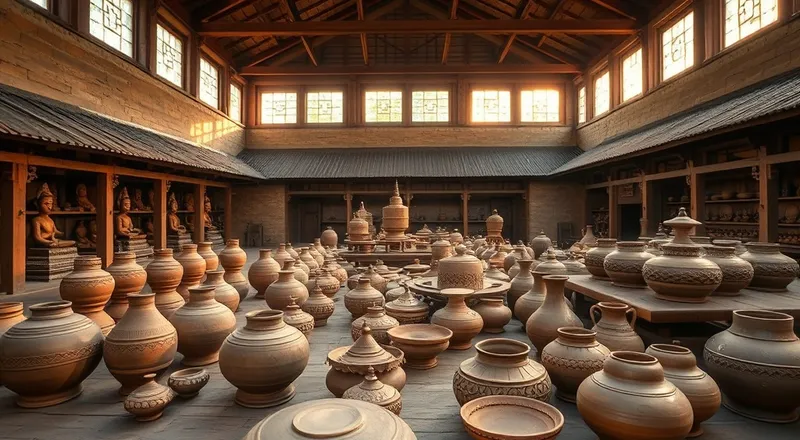
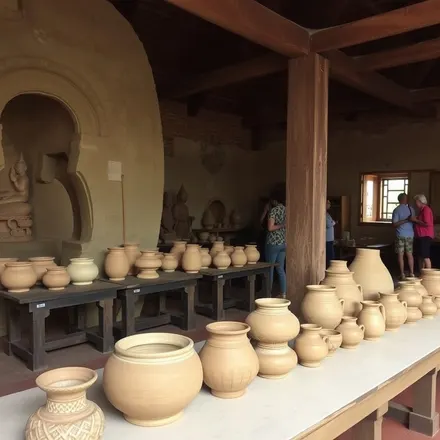
The Ramkhamhaeng National Museum, named after Sukhothai's most celebrated king who is also credited with developing the Thai alphabet, occupies a large building in New Sukhothai and houses the definitive regional collection of Sukhothai-period artifacts. The ground floor holds the most important Sukhothai sculptures, including several walking Buddha images of exceptional quality and a collection of steles bearing some of the earliest examples of written Thai script. The ceramic collection on the upper floor is the most comprehensive accessible display of Sawankhalok ware outside a specialist institution: glazed celadon vessels in the distinctive Sukhothai grey-green glaze, brown-and-cream underglaze painted pieces with fish and floral motifs, and the distinctive figurines (animals, musicians, devotional images) that were produced alongside the utilitarian wares. Entry to the museum is 150 THB.
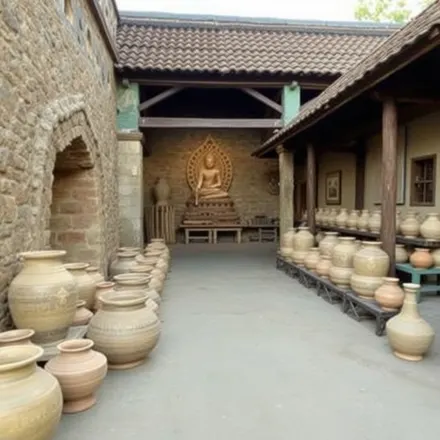
Sawankhalok (Si Satchanalai district, 55km north of Sukhothai) was the royal kiln district of the Sukhothai kingdom, established by royal decree to produce ceramics of sufficient quality for palace use and diplomatic gift-giving. The kilns operated from approximately the 14th to the 16th centuries, reaching a peak production during which they exported goods across maritime trade routes in quantities that have been archaeologically confirmed by underwater excavation of shipwrecks in the Gulf of Thailand and beyond. The Ban Ko Noi kiln sites on the western bank of the Yom River preserve the remains of more than 200 kiln sites in various states of excavation and reconstruction — walking through the site is a genuinely affecting experience in which the scale of what was once produced here becomes palpable. Several kilns have been reconstructed or partially exposed for visitor access, and a site museum explains the production processes and trade networks in detail.
Living craft traditions related to the Sukhothai heritage continue in communities around the region. Silversmithing families in Old Sukhothai and New Sukhothai produce decorative pieces continuing techniques documented from the kingdom period, and several workshops in the vicinity of the Historical Park offer hands-on ceramics experiences using traditional forms and glazing methods. The Loi Krathong Festival — celebrated across Thailand on the full moon of the 12th lunar month, typically November — is said to have originated in Sukhothai during the reign of King Ramkhamhaeng, and the Sukhothai celebration of the festival remains the largest and most elaborate in the country. The Historical Park on Loi Krathong night is transformed into a site of extraordinary atmospheric power.

Highlights
- Sukhothai Buddha style — the flame ushnisha, walking Buddha posture, and serene elongated features of Thailand's most refined canonical sculpture tradition
- Ramkhamhaeng National Museum — comprehensive collection of Sukhothai sculpture and Sawankhalok ceramics in New Sukhothai (150 THB entry)
- Ban Ko Noi kiln sites — 200+ kiln remains in Si Satchanalai district, the royal ceramic production complex that exported across maritime Southeast Asia
- Sawankhalok celadon ware — the distinctive grey-green glazed pottery that reached the Philippines, Indonesia, Japan, and beyond
- Walking Buddha images — the unique Sukhothai innovation of the advancing figure with raised hand, found nowhere else in Buddhist art
- Earliest Thai script steles — the Ramkhamhaeng Inscription at the National Museum, attributed to the king credited with developing written Thai
- Silversmithing workshops — Old Sukhothai craftsmen continuing metalworking techniques from the kingdom period
- Loi Krathong origin — Sukhothai's claim to have invented the festival, celebrated with unmatched scale in the Historical Park each November
- Hands-on pottery workshops — traditional Sawankhalok-influenced ceramics sessions available near the Historical Park
The Ramkhamhaeng National Museum is open year-round (Wednesday to Sunday, 9 AM to 4 PM — closed Monday and Tuesday). The Ban Ko Noi kiln sites at Si Satchanalai are accessible year-round but most rewarding in the dry season (November to March) when the site paths are dry and the light is favourable for photography. The Loi Krathong Festival at Sukhothai Historical Park falls in November (exact date varies by lunar calendar — check the current year's date) and is one of Thailand's most atmospheric festival experiences; accommodation in New Sukhothai books out weeks in advance for this period. Silversmithing and pottery workshops operate year-round and require advance booking.
Practical Information
Cost Level
Ramkhamhaeng National Museum: 150 THB entry. Si Satchanalai Historical Park (for Ban Ko Noi access): 100 THB entry, plus 100 THB for the Chaliang sub-zone where kiln sites are concentrated. Transport to Si Satchanalai from Sukhothai: 100-150 THB by songthaew or 300-400 THB by private hire. Pottery workshop (half-day, near Historical Park): approximately 500-800 THB per person. Silversmithing workshop (1-2 hours): 300-500 THB. Museum and crafts day in Sukhothai: budget approximately 600-1,000 THB per person including transport, entry fees, and a workshop.
Tips
The Ramkhamhaeng National Museum is closed on Mondays and Tuesdays — check the day of your visit carefully as many travellers miss this and arrive to find it shut. The museum's ceramic collection is on the second floor and is sometimes overlooked by visitors focused on the ground-floor sculptures; allow extra time for the ceramics displays which provide essential context for any Si Satchanalai visit. For the Ban Ko Noi kiln sites, hire a local guide (available at the Si Satchanalai visitor centre) who can explain what you are looking at — the site is visually ambiguous without context. Bring mosquito repellent for the kiln site visit, which is an outdoor archaeological area with limited shade.
Our creators on the ground in Sukhothai share their best recommendations in their videos.
Places in this Guide
Discover the attractions and locations featured in this travel guide.
Explore Sukhothai
Sukhothai
สุโขทัยSukhothai, meaning 'Dawn of Happiness,' is the cradle of Thai civilization and home to a UNESCO World Heritage Historica...All creators from Sukhothai →Location & Orientation

Frequently Asked Questions
What is Sawankhalok ware and why is it historically significant?
Sawankhalok ware refers to the ceramic tradition produced in the royal kilns of Si Satchanalai district during the Sukhothai kingdom period, approximately 14th to 16th centuries CE. The ware encompasses several types: celadon (a grey-green glazed stoneware influenced by Chinese Song dynasty ceramics), underglaze-painted wares with distinctive fish and floral motifs in brown on cream, and a variety of figurines and decorative pieces. Its historical significance lies in its export reach — archaeologists have recovered Sawankhalok ceramics from shipwreck sites throughout Southeast Asian waters and from archaeological deposits as far as Japan and the Arabian Peninsula, documenting a trade network of extraordinary range for a small interior kingdom. The production techniques and aesthetic vocabulary influenced ceramic traditions throughout the region.
Where is the best place to see Sukhothai Buddha images?
The finest and most comprehensive collection of Sukhothai-period Buddha images is at the Ramkhamhaeng National Museum in New Sukhothai (150 THB, Wednesday to Sunday). The museum holds examples across the full range of sizes and materials — bronze, stone, and stucco — including several walking Buddha images of exceptional quality that art historians consider among the masterpieces of Buddhist sculpture. In the Historical Park itself, Wat Mahathat contains numerous images in various states of preservation, and Wat Si Chum houses Phra Achana, the 15-metre seated monolith that is the most immediately impressive single image in the park. The National Museum is essential for understanding the aesthetic vocabulary; the Historical Park places those images in their spatial and devotional context.
Can I participate in traditional ceramics making near Sukhothai?
Several workshop operators near the Sukhothai Historical Park offer hands-on ceramics sessions drawing on the Sawankhalok tradition, ranging from half-day introductions to full-day intensive workshops. These typically cover basic wheel-throwing or hand-building techniques, apply traditional glaze colours and motifs, and arrange firing with results available for collection (or posted internationally) after the kiln cycle. Prices run approximately 500-800 THB for a half-day session. Booking in advance through your guesthouse or the New Sukhothai tourism office is recommended. More advanced workshops focusing specifically on historical Sawankhalok glazing and decoration techniques are available at a few specialist studios — ask specifically if authentic historical techniques are used rather than contemporary approximations.
When is the Loi Krathong Festival at Sukhothai?
The Loi Krathong Festival falls on the full moon of the 12th month of the Thai lunar calendar, which corresponds to November in the Gregorian calendar (the exact date varies by year — in 2026 it falls in late November). Sukhothai's celebration is considered the largest and most historically authentic in Thailand, drawing on the city's claim to be the festival's birthplace during the Sukhothai kingdom period. The Historical Park is illuminated for several nights around the full moon, traditional krathong (lotus-shaped floating offerings) are released on the ponds, and a Sound and Light show brings the ruins to life. Accommodation in New Sukhothai books out weeks in advance for the festival period — book rooms as early as possible if planning to attend.
Is the Ramkhamhaeng National Museum worth visiting before or after the Historical Park?
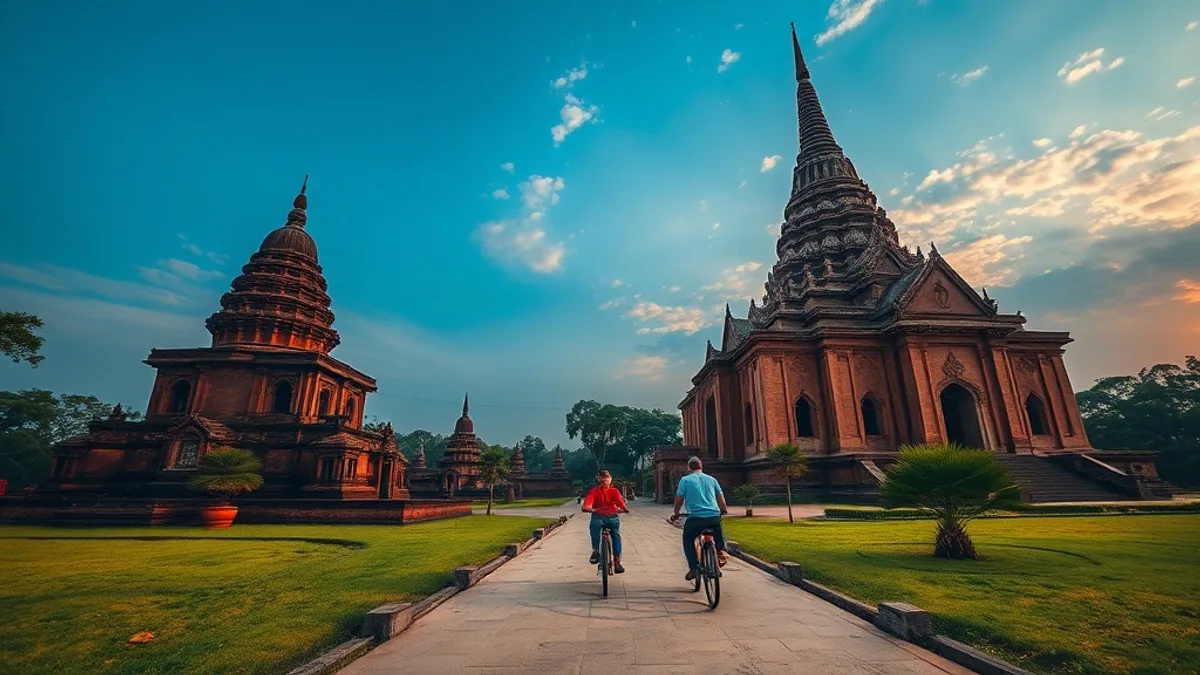
Visiting the museum before the Historical Park significantly enhances the park experience — the museum provides the iconographic, historical, and artistic context that transforms temple ruins from impressive stone structures into legible cultural artifacts. Spending two hours at the museum in the morning, understanding the Sukhothai Buddha style, the kingdom's political history, and the ceramic tradition, then cycling through the park in the afternoon produces an integrated experience considerably richer than either visit alone. The museum closes at 4 PM (and is shut Monday-Tuesday), so a combined day requires careful timing: museum from 9 AM to 11 AM, park from noon to 5 PM is a practical schedule. The park stays open while the museum closes; prioritise the museum in the morning.