Introduction
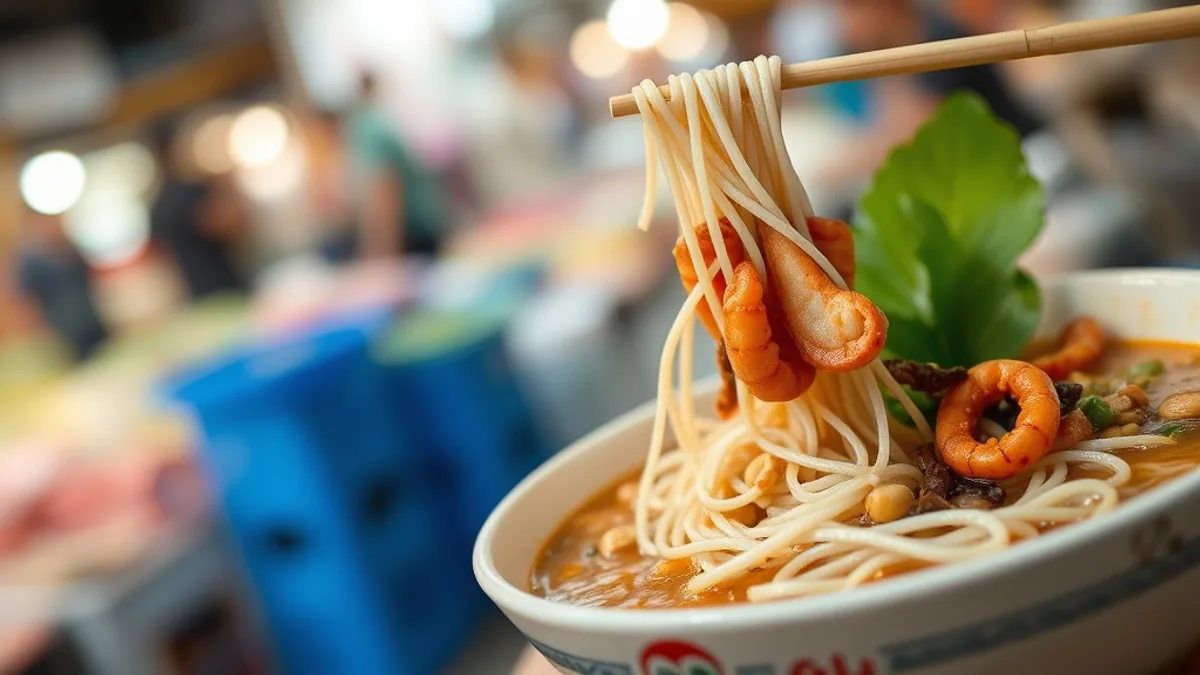
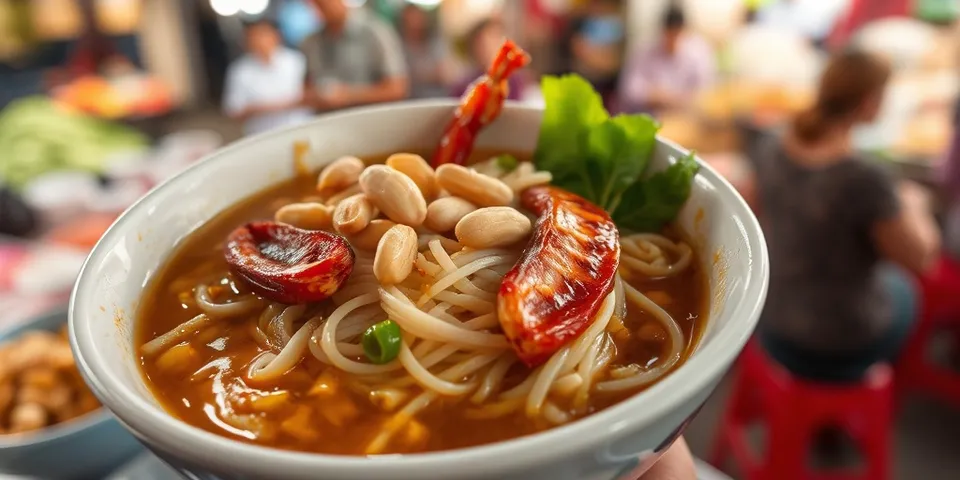
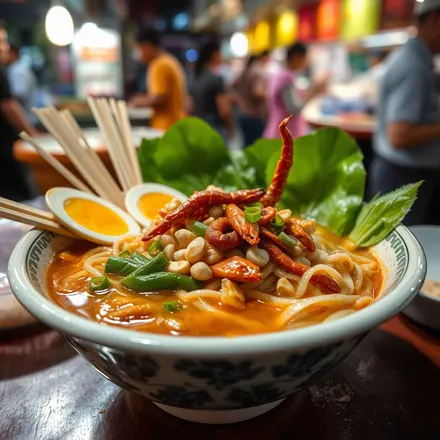
Every Thai city has a night market. What distinguishes Sukhothai's food culture from the generic street-food circuit is a dish so particular to this place that it carries the city's name: Guay Teow Sukhothai, a noodle soup that is simultaneously familiar in the Thai culinary tradition and utterly unlike the equivalent soups served anywhere else in the country. The Sukhothai bowl arrives with thin rice noodles in a clear, slightly sweet pork broth, garnished with ground peanuts, dried shrimp, sliced long beans, and sugar cane residue that adds a subtle sweetness distinguishing it from the saltier broths of Bangkok or the coconut-enriched soups of the south. This is a dish with a century of local development behind it, refined by generations of noodle shop owners in a city that has been feeding pilgrims and scholars visiting its temples for as long as those temples have stood. The night market is where you find it at its most alive — not the tourist-facing reproduction but the real article, served from a pot that has been on the same corner for decades.
Overview
New Sukhothai's night market operates in the downtown area near San Lak Mueang (the city pillar shrine) from approximately 5 PM to 9 PM daily. Unlike the purpose-built night markets of larger Thai cities, Sukhothai's market has the character of a genuine neighbourhood market that has expanded over time to accommodate the town's modest but steady visitor traffic: locals and visitors mingle without the sharp segregation of price and product that marks tourist-facing markets elsewhere. The market extends along several blocks of street, with produce vendors occupying one section, prepared food stalls another, and a small area of clothing and household goods completing the commercial mix.
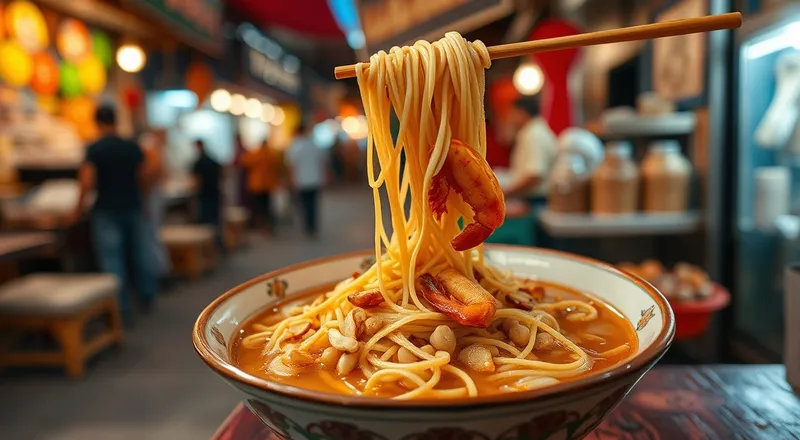
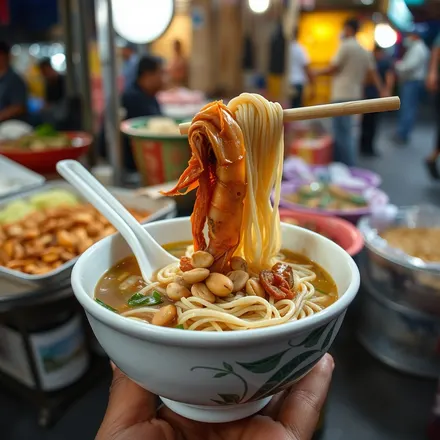
The noodle stalls are the essential starting point. Several long-established shops have operated on or adjacent to the night market for decades, recognisable by the queues of local residents that distinguish serious food from tourist-oriented imitations. Guay Teow Sukhothai is served in small bowls (40-60 THB) intended to be eaten in sequences of two or three rather than as a single large portion — a practice that allows the diner to adjust seasoning between bowls (tableside condiments include dried chilli, fish sauce, sugar, and vinegar) and to eat at the measured pace the dish was designed for. The broth is the element that most surprises first-time visitors: it is clear rather than cloudy, lighter than the deep broths of Chiang Mai's khao soi, and carries a sweetness from the sugar cane residue that is immediately recognisable as distinct and specific to this city.
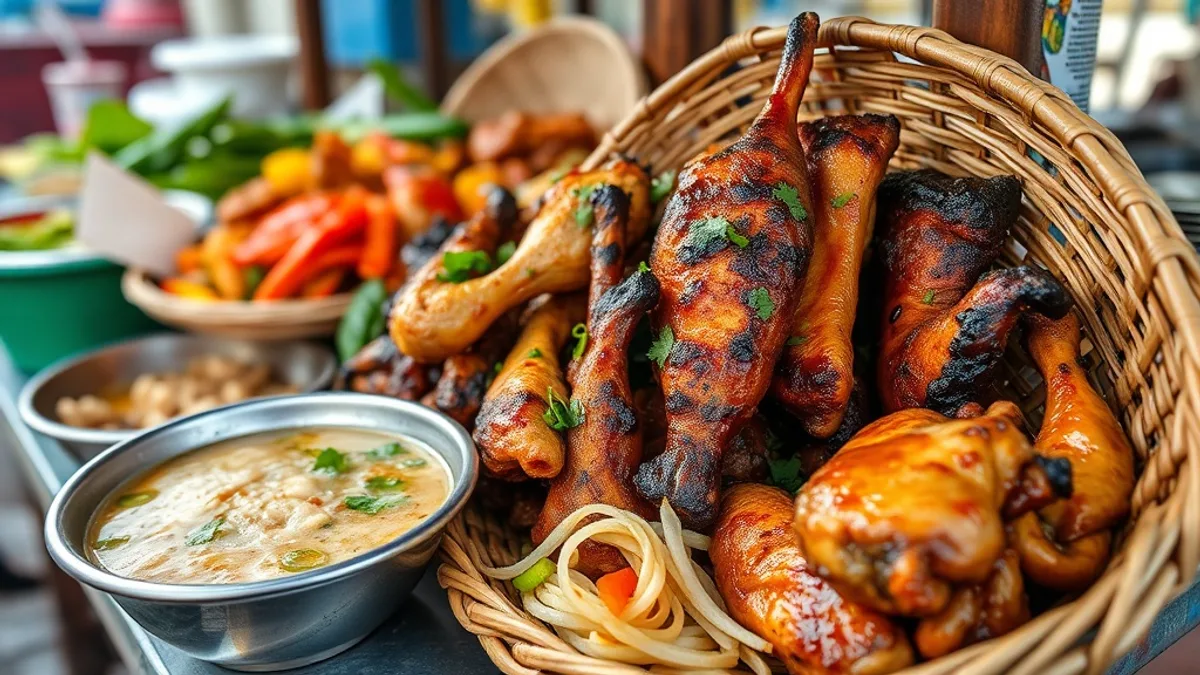
Beyond the signature noodle soup, the Sukhothai market offers the full range of central Thai street food with a regional character shaped by the city's proximity to both the northern highlands and the central plains. Kanom mo kaeng — a custard square made from mung bean or taro with coconut milk and eggs, baked in a palm leaf container — appears at several market stalls and represents one of the better traditional Thai sweets still made with genuine care outside Bangkok's artisanal food scene. Grilled meats (pork skewers, chicken with sticky rice, sai ua sausage with northern Thai spicing) complement the noodles in a market dinner that covers all food groups without excessive expenditure.
The specialty coffee culture in Sukhothai has grown alongside the broader Thai café wave, and several small coffee operations have established themselves in New Sukhothai catering to the town's young professionals and the visiting community of travellers who have discovered that Sukhothai rewards multi-day rather than single-day visits. The best of these operate from shophouses near the night market area and open from the early morning — useful for a pre-temple coffee before the dawn minibus to the Historical Park. The Ramkhamhaeng National Museum, a ten-minute walk from the night market, has a small café on its grounds serving traditional Thai drinks that complements a museum visit exploring the culture that produced the cuisine.
Highlights
- Guay Teow Sukhothai — the city's signature clear-broth noodle soup with peanuts, dried shrimp and sugar cane residue, 40-60 THB per bowl
- New Sukhothai Night Market — downtown evening market mixing local produce, prepared food, and a genuinely un-touristy atmosphere
- Kanom Mo Kaeng — traditional Thai custard squares in palm leaf containers, one of Thailand's finest heritage sweets
- Long-established noodle shops — family operations running for decades, identifiable by queues of local residents
- Tableside condiment culture — personalising each bowl with dried chilli, fish sauce, sugar, and vinegar in the Thai noodle tradition
- Multi-bowl noodle eating — the local practice of ordering two to three small bowls sequentially with seasoning adjustments between
- Sai ua sausage — northern-style herbed pork sausage appearing at grilled meat stalls throughout the market
- Specialty coffee in New Sukhothai — growing café scene near the night market for pre- or post-dinner coffee
- San Lak Mueang market area — the city pillar area adjacent to the main market section, lively with local evening activity
The Sukhothai Night Market operates year-round from approximately 5 PM to 9 PM. The cool season (November to February) makes evening market sitting most pleasant — temperatures drop to 18-22°C in the evenings during this period, making outdoor dining genuinely comfortable. The hot season (March-May) is manageable but less enjoyable for extended outdoor sitting. The market does not close in the rainy season but attendance drops on heavily rainy evenings. For the best noodle experience, arrive at the established shops before 7 PM to avoid the most crowded period when seating at popular stalls can become limited.
Practical Information
Cost Level
Guay Teow Sukhothai: 40-60 THB per small bowl (budget 120-180 THB for a satisfying two to three bowl dinner). Grilled meat skewers: 15-30 THB per stick. Kanom mo kaeng and traditional sweets: 20-40 THB per piece. Fresh fruit at produce stalls: 20-50 THB per portion. A full night market dinner with noodles, grilled items, and a sweet costs approximately 150-250 THB per person — making Sukhothai one of Thailand's genuinely affordable food experiences. Sit-down restaurants adjacent to the market charge 80-200 THB per dish for a full meal. Coffee at the small specialty cafés near the market runs 50-80 THB.
Tips
The best Guay Teow Sukhothai shops are identifiable not by signage but by the local clientele — if you see a noodle stall with a queue of residents eating rather than tourists photographing, that is the one to choose. Follow the tableside seasoning instructions that come with your first bowl: start with the broth as-is, then adjust with the condiments in small increments. Order small bowls rather than large if you want to try multiple rounds. The night market area near San Lak Mueang is more atmospheric than the shophouse area to the east — aim for the central section. Bring cash as most stalls do not accept cards.
Our creators on the ground in Sukhothai share their best recommendations in their videos.
Places in this Guide
Discover the attractions and locations featured in this travel guide.
Explore Sukhothai
Sukhothai
สุโขทัยSukhothai, meaning 'Dawn of Happiness,' is the cradle of Thai civilization and home to a UNESCO World Heritage Historica...All creators from Sukhothai →Location & Orientation


Frequently Asked Questions
What makes Sukhothai noodles different from other Thai noodle soups?
Guay Teow Sukhothai is distinguished from other Thai noodle soups by several specific characteristics: a clear pork broth that is lighter and slightly sweeter than the darker broths of Bangkok-style noodle soups, the addition of ground peanuts which add texture and a nutty richness, dried shrimp providing umami depth, sliced long beans for crunch, and most distinctively, a small amount of sugar cane residue (the fibrous remnant after juice extraction) that contributes a mild sweetness specific to this preparation. The dish is served in small bowls by convention, intended to be eaten in multiples with seasoning adjustments between servings. It is one of Thailand's most precisely localised regional dishes — the closest equivalent in regional specificity would be Chiang Mai's khao soi or Bangkok's boat noodles.
Where is the best place to eat Sukhothai noodles in town?
The most reliable approach is to look for establishments that have operated for more than one generation in the same location — these are the shops where the broth preparation technique has been refined over decades and where local residents eat rather than tourist-facing restaurants offering the dish as a novelty. Several long-established noodle shops operate near the main market area and along the streets behind the bus station in New Sukhothai. Your guesthouse owner's recommendation is typically more reliable than any review website for the current best bowl in town, as shop quality and ownership change over time and local knowledge remains current. A good bowl at a reputable shop costs 40-60 THB.
Is there a Sukhothai food market near the Historical Park as well as in New Sukhothai?
Food options within and immediately adjacent to the Historical Park are limited to a visitor centre snack shop and occasional vendor carts near the main entrance areas. The genuine food market experience is in New Sukhothai, 12 kilometres east, where the night market and the established noodle shops operate. Some visitors choose to eat breakfast in New Sukhothai before taking the songthaew to the park, return for lunch, and then make an evening visit to the night market as a conclusion to the day. The 30-50 THB songthaew connection between New Sukhothai and the park runs regularly enough (though less frequently after 5 PM) to support this rhythm.
What traditional sweets should I try at the Sukhothai market?
Kanom mo kaeng is the essential Sukhothai sweet — a dense, slightly firm custard made from mung bean paste or taro with coconut milk and eggs, baked in a palm leaf container. It is one of the original Thai palace sweets with a history predating the Bangkok period, and it is made with genuine quality at several market stalls in New Sukhothai. Other worth-seeking sweets include kanom tuay (coconut cream cups steamed in small ceramic cups), kanom chan (layered pandan and coconut jelly in delicate striped segments), and the various fresh fruit preparations — mango with sticky rice being the most universally available and satisfying. Traditional Thai sweet-making is a morning activity at many stalls, so the best selection appears early in the day at the morning market that precedes the evening market in some areas.
Are there restaurants near Sukhothai Historical Park for lunch between temple visits?
Several restaurants and food stalls operate near the east gate of the Central Zone, aimed at visitors spending a full day at the park. Quality and price at these establishments varies — they serve functional Thai food and cold drinks at tourist prices (100-200 THB per dish, slightly above town prices). The better approach for a mid-day meal is to ride or take songthaew back to New Sukhothai for lunch at the established local restaurants and noodle shops, then return to the park in the afternoon. The 30-minute round trip adds an hour to your day but produces a significantly better meal. If staying near the park, guesthouse dining tends to be home-style Thai cooking at reasonable prices and is often the best food available near the Historical Park entrance.