Introduction
The Isaan plateau is not the obvious destination for nature tourism — most travelers pass through on the way to temples or keep moving toward the Mekong. But Buriram province harbors surprising pockets of genuine wilderness: an extinct volcanic crater topped with a gilded Buddha and ringed by ancient forest, wooded escarpments where gibbons call at dawn, and rural roads where hornbills cross overhead as you ride between silk villages. Khao Kradong Forest Park sits on the edge of Buriram city like a green secret that the city has never properly advertised. For travelers exhausted by tourist infrastructure, a morning walk here — steam rising from the forest floor, monks walking the circuit path in orange robes, the distant calls of birds in the canopy — offers exactly the unscripted encounter with Thailand that most people come looking for but rarely find.
Overview
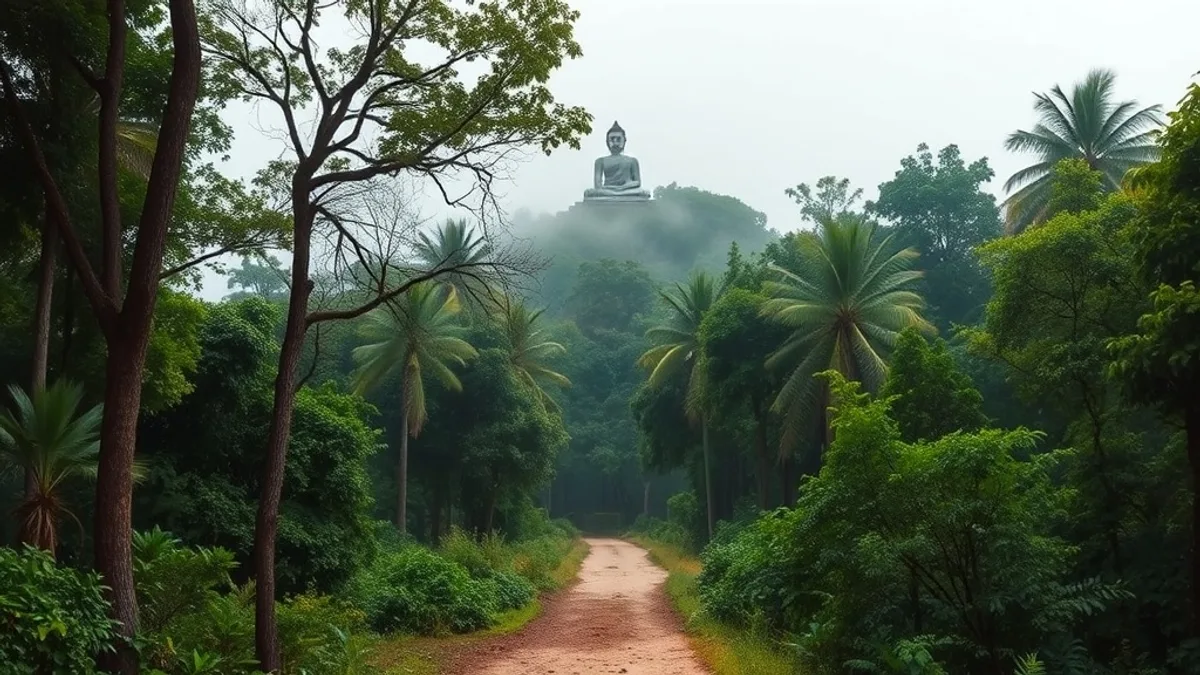
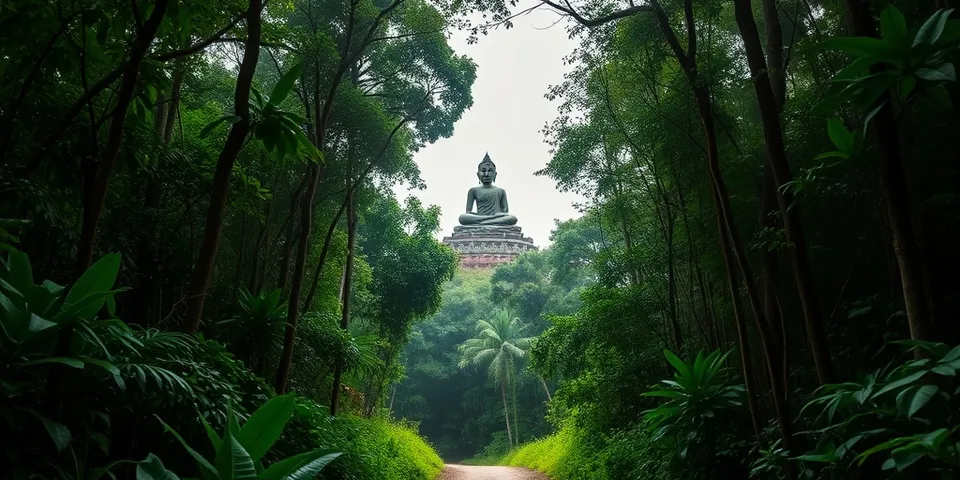
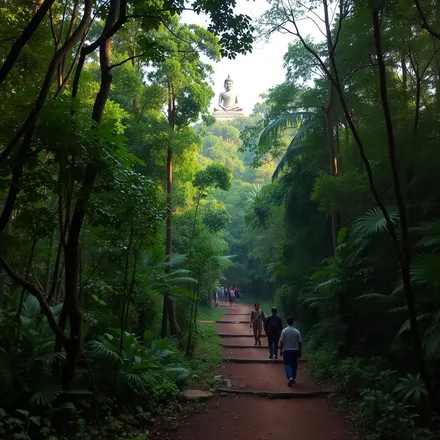
Khao Kradong Forest Park occupies the summit and slopes of an extinct volcanic crater 7 kilometers south of Buriram city center. The hill rises 265 meters above the surrounding plateau, enough to provide clear views across the patchwork of rice fields and cassava plantations that define the Isaan landscape. A paved road winds to the summit, where a large gilded Buddha image (Luang Por Phra Buddha Mahamuni) stands on a white tiered platform that is visible from the city below. The Buddha was erected in 1957 and has become the most recognizable landmark of the city, particularly when illuminated at night.
The forest on the crater slopes is the real attraction for nature-oriented visitors. The park contains a mix of dry dipterocarp and mixed deciduous forest — not tropical rainforest, but habitat rich enough to support gibbons, monitor lizards, various squirrel species, and an impressive range of birdlife. Morning visits between 6am and 9am are the most rewarding for wildlife: gibbons can sometimes be heard whooping in the trees, and several species of hornbill are resident in the area. The circuit walking path around the crater rim takes approximately 45 minutes at a relaxed pace and is accessible to any level of fitness.
For more serious wildlife watching, the broader Buriram region offers connections to the larger forest ecosystems of the Khorat Plateau. Lam Plai Mat Forest, approximately 40 kilometers north of Buriram city, is a community-managed conservation area where local guides occasionally lead bird-watching walks. The area is part of a larger wildlife corridor that connects to Dong Phayayen-Khao Yai Forest Complex — a UNESCO World Heritage Site — to the west. This corridor provides habitat connectivity for elephants, gaur (Indian bison), and various large mammal species, though sightings require time and local knowledge to arrange.
Cycling is an increasingly popular way to explore Buriram's countryside. The roads between Buriram city and the temple sites at Nang Rong are relatively flat and pass through genuinely beautiful agricultural landscapes — sugar cane fields, tamarind orchards, roadside bodhi trees — with very light traffic on secondary routes. Several informal cycling routes connect the city to Khao Kradong, the Mun River, and outlying villages. Bicycles can be rented from a handful of guesthouses in the city for 100–150 THB per day, though quality varies.
Eco-tourism in Buriram is still largely informal compared to the organized nature tourism infrastructure of Khao Yai or Doi Inthanon. This is both a limitation and an advantage: there are no set tour packages or comfortable lodges with guaranteed wildlife viewing, but there is also no artificiality. The wildlife you encounter is genuinely wild, the forest genuinely unmanaged, and the interactions with local community members genuinely spontaneous. If you approach Buriram's nature with patience and curiosity rather than expecting a curated safari experience, it will deliver something far more memorable.
Highlights
- Khao Kradong's crater-rim walking circuit at dawn — gibbons, hornbills, and morning mist
- The gilded Luang Por Phra Buddha Mahamuni visible across the Isaan plateau
- Sunset panoramas across the Khorat Plateau rice fields from Khao Kradong summit
- Bird watching in the dry dipterocarp forest — over 80 species recorded in the park
- Cycling routes from Buriram city through tamarind orchards and cassava fields
- Lam Plai Mat Forest community conservation area and informal guided walks
- Monitor lizards and squirrel species along the Khao Kradong circuit path
- Morning monk walks around the temple circuit — a meditative parallel to your own
- Wildlife corridor connections to the Dong Phayayen-Khao Yai UNESCO zone
November to February provides the most comfortable temperatures for forest walking and cycling — mornings are genuinely cool by Isaan standards, around 18–24°C, and the sky is reliably clear. Wildlife activity is highest in the early morning hours regardless of season. April and May are extremely hot and make outdoor activity uncomfortable by 9am. The wet season (June–October) turns the countryside strikingly green but makes some rural tracks muddy and impassable by bicycle.
Practical Information
Cost Level
Khao Kradong Forest Park: free entry. Bicycle rental in Buriram city: 100–150 THB/day. Motorbike rental for countryside exploration: 200–250 THB/day. A local guide for bird watching or forest walks arranged through community tourism networks: 500–800 THB for a half-day. Accommodation in Buriram city: budget guesthouses from 350 THB, mid-range hotels from 600–900 THB. Food at local markets near the park entrance: 40–60 THB per meal. A full nature day costs under 600 THB for most independent travelers.
Tips
Start the Khao Kradong circuit walk no later than 7am for the best wildlife activity and before the heat builds. Bring binoculars if you have them — the park is excellent for birds even with naked-eye observation, but optics transform the experience. The summit road is cyclable but steep; most visitors drive up and walk the crater circuit. Early morning on weekdays the park is visited mainly by locals doing merit-making or exercise, giving it a wonderfully authentic atmosphere. The park café near the summit opens around 7am and sells excellent local coffee and Isaan snacks.
Our creators on the ground in Buriram share their best recommendations in their videos.
Creators who cover this spot
Discover YouTube creators who feature this topic in their videos.
Adventures Joel
British adventure vlogger exploring Thailand by motorbike.
Global Travel Mate
Jeroen is a Dutch expat documenting Bangkok's urban landscape through bicycle exploration and cultural observation.
Ricky in Isaan
British expat documenting authentic daily life and culture in rural Isaan, Thailand.
Places in this Guide
Discover the attractions and locations featured in this travel guide.
Explore Buriram
Buriram
บุรีรัมย์Buriram is located in Northeast Thailand (Isan) and stands for authentic rural life, Khmer temple ruins, motorsport at C...All creators from Buriram →Location & Orientation


Frequently Asked Questions
What wildlife can I expect to see at Khao Kradong?
Khao Kradong is most reliably rewarding for birdlife — over 80 species have been recorded in the park, including multiple hornbill species, various woodpeckers, raptors, and a range of forest birds. Gibbons are resident in the deeper forest sections and can often be heard whooping at dawn, though direct sightings require quiet patience. Monitor lizards (up to 1.5 meters long) are commonly seen on the walking paths and are completely harmless. Squirrels, civets (nocturnal), and various insect species complete the roster. Large mammals like deer are present in the broader area but rarely seen by casual visitors.
How far is Khao Kradong from Buriram city center?
Khao Kradong is approximately 7 kilometers south of Buriram city center — a 15-minute drive or a 30-minute bicycle ride on flat, quiet roads. Songthaews running south from the city center pass near the park entrance and charge around 20–30 THB. The park is genuinely close enough for a morning excursion before moving on to the Khmer temples further east. A tuk-tuk from central Buriram to the park runs around 60–80 THB one way; negotiate a return pickup or simply call when ready to leave.
Is there any connection between Buriram's nature and the Khao Yai ecosystem?
Yes — Buriram sits at the eastern edge of the broader Khorat Plateau forest complex that connects through Nakhon Ratchasima province to Khao Yai National Park (a UNESCO World Heritage Site). This wildlife corridor is critical for large mammal movement, particularly Asian elephants and gaur. While elephant sightings in Buriram itself are extremely rare, the province's eastern forests form part of the movement corridor for populations that range across the Cambodian border. Conservation organizations working in the area have documented this connectivity through camera-trap surveys.
Are there any guided eco-tours available in Buriram?
Formal eco-tour packages in Buriram are limited compared to more established nature tourism destinations like Khao Yai or Chiang Mai. The Tourism Authority of Thailand office in Buriram city (near the train station) can connect visitors with local guides for countryside cycling and bird-watching walks. The Lam Plai Mat community conservation area occasionally hosts guided walks arranged through the local tambon administration. Facebook groups dedicated to Thai birdwatching are often the best source for finding local guides with current knowledge of active sites.
Can I combine Khao Kradong with the Buriram temple circuit in one day?
Yes — an early morning start at Khao Kradong (6–8am) followed by the drive to Nang Rong and the temple circuit makes a very full but entirely feasible single day. Khao Kradong is on the southern edge of Buriram city, and the road to Nang Rong and Phanom Rung heads east from the same direction, so the routing is logical. By leaving the park by 8:30am you arrive at Phanom Rung around 9:30–10am — before the heat peaks and before most day-tour buses arrive from Nakhon Ratchasima. This start-with-nature, end-with-history structure makes for a deeply satisfying Buriram day.