Introduction
While most travelers stay in Ao Nang or on the islands, those who base themselves in Krabi Town for even a day or two discover one of southern Thailand's most rewarding food destinations. The town sits at the junction of Thai Buddhist and Thai Muslim culinary traditions — a geographical reality that translates into extraordinary culinary diversity on its market tables and street stalls. Fresh seafood from the morning boats arrives at the riverside market daily. Muslim-run roti stalls serve flaky flatbread with yellow curry or sweetened condensed milk from before dawn. The night market on Maharaj Road deploys dozens of vendors selling everything from charcoal-grilled satay to creamy Massaman curry that represents the dish at its southern Thai peak. This guide is your roadmap through the flavors of Krabi Town and the food culture that the island day-trippers almost entirely miss.
Overview
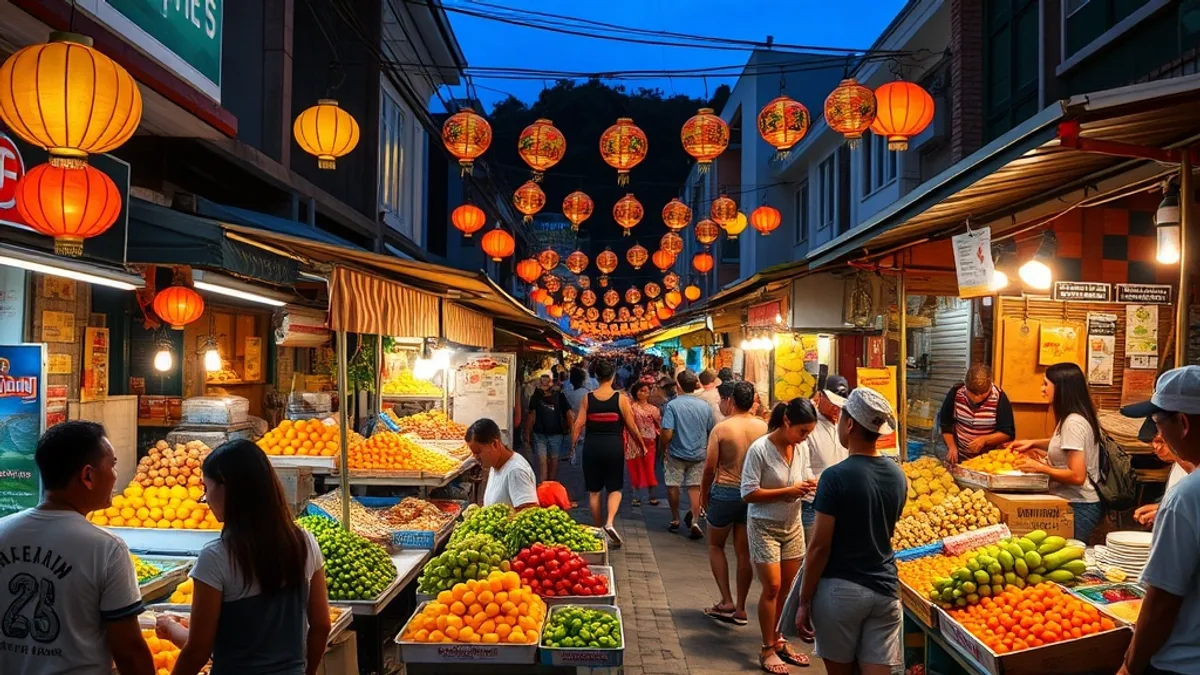
The Krabi Town Night Market on Maharaj Road is the beating heart of the town's food scene. Setting up each evening from around 5 PM, the market occupies a covered area near the riverside and spills onto adjacent streets, with vendors arriving gradually until the full circuit of stalls is operational by 6:30 PM. The food on offer reflects the deep southern Thai heritage of the region. Charcoal-grilled satay skewers — chicken, pork, and beef — basted with turmeric-heavy marinades and served with peanut sauce and compressed rice cakes is a staple. Roti canai (also spelled roti channel), a flaky pan-fried flatbread inherited from the Malay and Indian Muslim cooking traditions that define much of southern Thailand's culinary identity, is served at several stalls either savory (with yellow curry sauce or massaman) or sweet (with sugar and condensed milk). Budget 30–50 THB per roti. The market is busiest on weekends but operates most evenings; a light rain will thin the crowd but rarely closes the stalls.
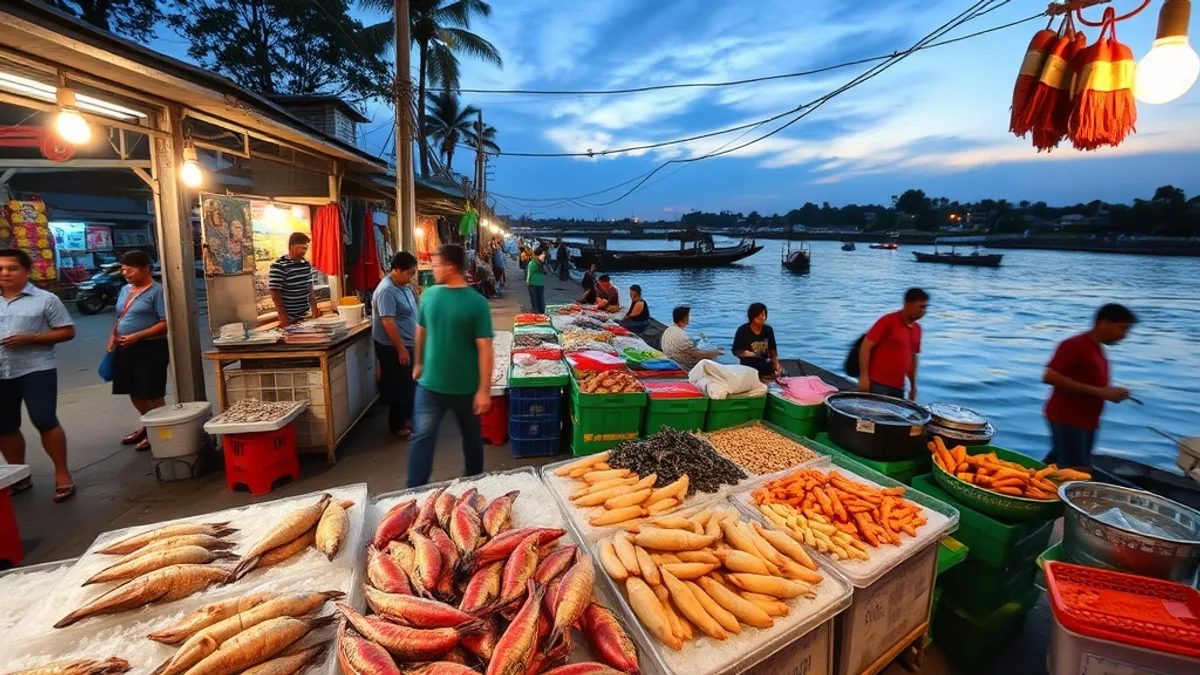
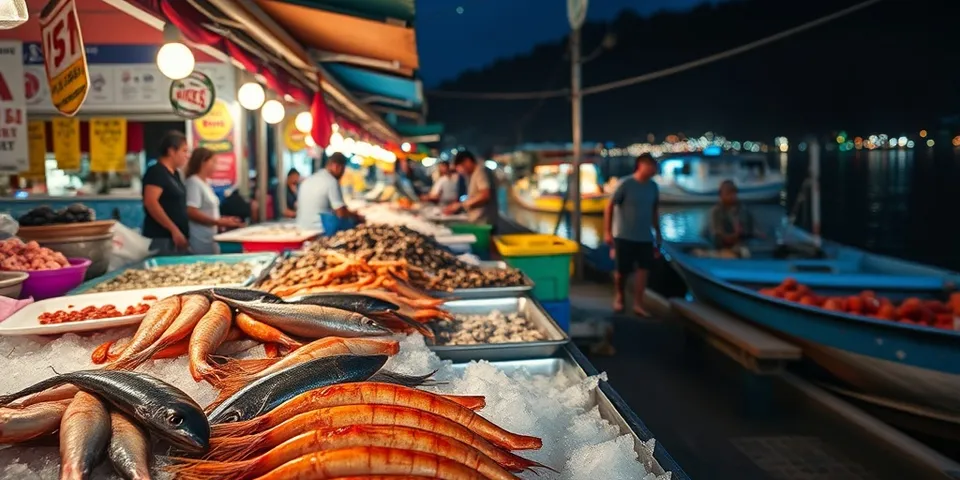
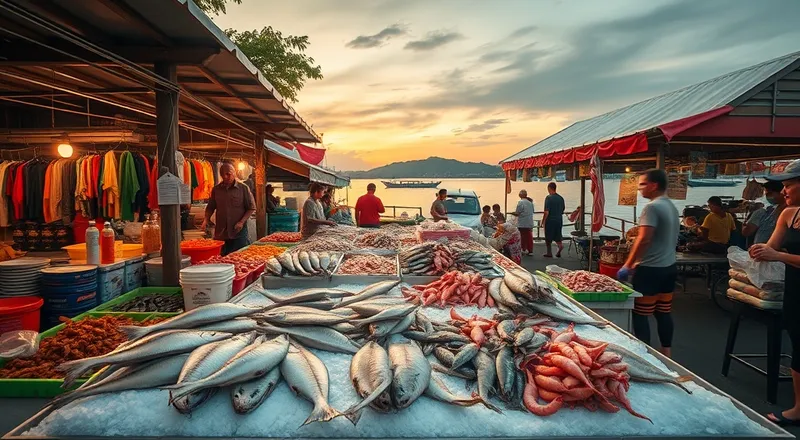
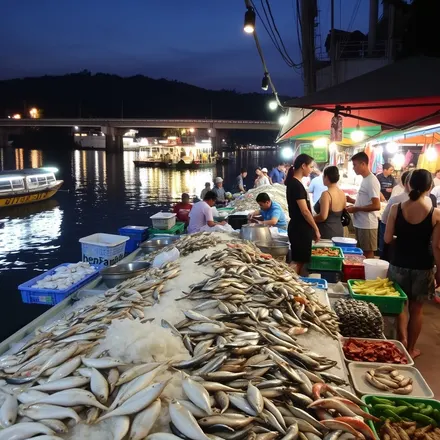
For the freshest seafood in Krabi Town, the area around Chao Fa Pier on the riverside is the place to go. Several no-frills restaurants set out tables directly beside the water, serving whatever came off the boats that morning. The menu changes daily based on availability, but expect whole fish (typically sea bass or snapper) prepared steamed with lime and chili sauce, stir-fried with ginger and spring onion, or simply grilled over charcoal. Fresh scallops, shrimp, and squid are priced by the 100-gram portion and prepared to order. These riverside restaurants charge honest local prices — a generous seafood meal for two typically costs 400–800 THB including drinks — and the atmosphere, watching longtail ferries and fishing boats pass on the river at dusk, is genuinely special.
Massaman curry reaches something close to its canonical form in Krabi. The dish is definitively a product of southern Thailand's Muslim communities, its spice profile — including cinnamon, cardamom, star anise, and nutmeg alongside the more typical Thai aromatics — reflecting centuries of trade with Arab and Indian merchants along the Andaman coast. In Krabi Town, Massaman is made with patience: the beef (sometimes mutton) is slow-cooked until it yields to gentle pressure, the potatoes absorb the rich coconut gravy, and roasted peanuts provide both texture and a counter-note to the richness. Look for versions made by Muslim-owned restaurants marked with halal certificates; the best examples in Krabi Town are found in the blocks behind the night market. A generous portion costs 80–120 THB.
Gaeng Som (sometimes called Sour Curry) is the other great southern Thai specialty. Made with fish — often fresh kingfish or snapper from the morning catch — simmered in a sour, fiery broth made from tamarind, fresh turmeric, and crushed chilies, it is a profoundly regional dish that bears no resemblance to the curries most visitors expect. It is orange-red in color, intensely sour, moderately to very spicy depending on the cook, and deeply satisfying over plain white rice. Gaeng Som divides visitors sharply — some find the sourness and fermented complexity too challenging, others declare it the greatest soup they have encountered. The best versions in Krabi Town are served from simple, family-run lunch restaurants with handwritten Thai menus near the morning market.
Krabi Town's morning market, located near the Kasikorn Bank intersection a short walk from the night market area, operates from around 6 AM to midday. The food stalls here serve the working population of the town rather than tourists, and prices reflect this: a bowl of khao tom (rice porridge with fish and fresh ginger) costs 50–70 THB, pad kra pao (basil stir fry) with rice and egg runs 60–80 THB, and a bag of fresh-cut tropical fruit — mango, pineapple, papaya — costs 30–40 THB. Banana pancakes, made on a flat griddle with ripe banana and egg, are a Muslim street food staple that appears at several stalls and provides an irresistible 30 THB breakfast.
Highlights
- Eat roti canai with Massaman curry sauce at the Maharaj Road night market for 30–50 THB
- Feast on fresh grilled fish and seafood by the river at Chao Fa Pier restaurants at dusk
- Order Massaman curry from a Muslim-owned restaurant near the night market for 80–120 THB
- Discover Gaeng Som sour curry — the fiery, tamarind-spiked southern Thai specialty
- Start the day with khao tom rice porridge and fresh fruit at the morning market from 6 AM
- Try banana pancakes on a flat griddle — a 30 THB Muslim street food institution
- Sample curry puffs (kari pap) — flaky, golden pastry filled with spiced potato from market stalls
- Navigate the Maharaj Road night market for charcoal satay, pad thai, and local sweets
- Drink fresh coconut water from young green coconuts at the morning market stalls
The night market on Maharaj Road operates from approximately 5–10 PM daily, with weekends seeing the most stalls and the liveliest atmosphere. The morning market runs 6 AM–noon and is best visited before 9 AM for the freshest selection. Riverside seafood restaurants are open for both lunch and dinner. Krabi Town's street food scene is year-round; the monsoon (May–October) brings occasional rain but rarely closes markets for long. Krabi Town is best visited as a half-day or full-day excursion from Ao Nang, or as an overnight stop when catching early morning ferries to the islands.
Practical Information
Cost Level
Krabi Town is one of the most affordable food destinations in southern Thailand. Street market dishes cost 30–80 THB each. A full meal at a local restaurant costs 150–300 THB per person including drink. Riverside seafood restaurants charge slightly more — 200–500 THB per main course fish dish — but quality is commensurately higher. Total food spend for a day of street food and one restaurant meal runs 400–800 THB per person. Ao Nang restaurants typically charge 30–50% more than equivalent Krabi Town spots for the same dishes.
Tips
Carry small denomination cash — 20, 50, and 100 THB notes — as market vendors rarely have change for 500 or 1,000 THB notes. Learn to say 'phet nit noi' (a little spicy) if you have a lower spice tolerance; southern Thai food is genuinely hotter than what most visitors expect from tourist-oriented Thai restaurants. The morning market requires an early start as the best stalls sell out of popular items by 8–9 AM. Krabi Town is easy to reach from Ao Nang by songthaew (red pickup truck) for around 80–100 THB per person, running roughly every 30–45 minutes.
Our creators on the ground in Krabi share their best recommendations in their videos.
Places in this Guide
Discover the attractions and locations featured in this travel guide.
Explore Krabi
Krabi
กระบี่Krabi is known for spectacular limestone cliffs, turquoise water and some of Thailand's most beautiful beaches. Island h...All creators from Krabi →Location & Orientation


Frequently Asked Questions
Where is the Krabi Town night market?
The main night market operates on and around Maharaj Road (Thanon Maharaj) in central Krabi Town, close to the riverside. It begins setting up from around 5 PM and is in full swing by 6:30 PM. A secondary concentration of food stalls is found near the Chao Fa Pier area on the waterfront. From Ao Nang, the market is about 18 kilometers away — approximately 25–30 minutes by songthaew or tuk-tuk. Most accommodation in Krabi Town is within easy walking distance of both the night market and the riverside food stalls.
What is special about southern Thai food in Krabi?
Southern Thai cuisine is significantly different from the central Thai cooking most visitors know from Bangkok restaurants. It is generally spicier, more pungent in its use of fermented shrimp paste and fish sauce, and reflects the strong Muslim and Malay influences of the region. Signature dishes include Massaman curry (Muslim heritage, aromatic whole spices), Gaeng Som (sour curry with tamarind and fresh turmeric), Gaeng Tai Pla (fermented fish kidney curry — an intense local specialty), and Khanom Jeen (fermented rice noodles served with curry sauce for breakfast). The fresh seafood quality also reflects the proximity to some of Thailand's richest Andaman fishing grounds.
Is the food in Krabi Town good for vegetarians?
Vegetarian options exist in Krabi Town but require some navigation. The morning market has vegetable-only stir-fry stalls and fresh fruit vendors. Indian-influenced Muslim roti stalls offer roti with sweet fillings or plain with vegetable curry. Many Thai dishes can be prepared without meat on request — 'kin jay' or 'mai sai neua' (no meat) signals your preference to vendors. However, fish sauce and shrimp paste are foundational to southern Thai cooking and are not always easy to avoid in prepared dishes. Pure vegetarian restaurants are rare in Krabi Town; the best option for strict vegetarians is to seek out stalls displaying the yellow vegetarian food flag, particularly during the annual Vegetarian Festival in October.
How do I get from Ao Nang to Krabi Town for street food?
Songthaews (shared red pickup trucks) run between Ao Nang and Krabi Town throughout the day for approximately 80–100 THB per person, taking about 25–30 minutes. They depart from the main road near Ao Nang beach when full, which usually means a wait of 10–20 minutes during the day. Tuk-tuks are faster but more expensive (200–350 THB per ride). Grab operates in the area and offers the most reliable pricing and timing for the Ao Nang to Krabi Town journey. For an evening market visit, arrange return transport before you go as songthaews become scarce after 8–9 PM.
What sweet foods should I try in Krabi Town?
Southern Thailand has a rich tradition of sweet desserts. At the night market, look for khanom chan (layered pandan and coconut milk jelly in pastel layers), tub tim krob (water chestnut rubies in coconut milk with ice), and bua loi (glutinous rice balls in warm coconut milk). At the morning market, vendors sell mango sticky rice throughout the mango season (March–May), kanom krok (coconut rice pancakes cooked in cast-iron moulds), and fresh tropical fruit cups. Banana pancakes from Muslim street stalls — cooked flat and crisp with banana and egg — provide a sweet, filling, and affordable breakfast at 30–40 THB each.