
Introduction
For more than a decade, Chiang Mai has occupied a singular position in the global nomad imagination — the city that proved remote work and genuine quality of life were not mutually exclusive. Long before the term 'digital nomad' entered mainstream usage, foreign freelancers, bloggers, and developers were converging on this northern Thai city, drawn by a combination of factors that few places on earth could match: reliable internet infrastructure, a café culture sophisticated enough to support eight-hour work sessions, living costs that made a modest Western income feel like genuine prosperity, and a surrounding landscape of mountain temples, jungle waterfalls, and hill tribe villages that transformed every weekend into an adventure. That original reputation has evolved through successive waves of nomads, infrastructure improvements, and post-pandemic rebalancing into something more mature and more layered — Chiang Mai in 2026 is a city that has absorbed decades of nomadic influence while retaining the fundamental qualities that made it special in the first place. This guide covers everything a remote worker needs to know before arriving: neighbourhoods, co-working spaces, connectivity, cost of living, community, and the practical details that determine whether a city works for you day-to-day or merely looks good on paper.
Overview
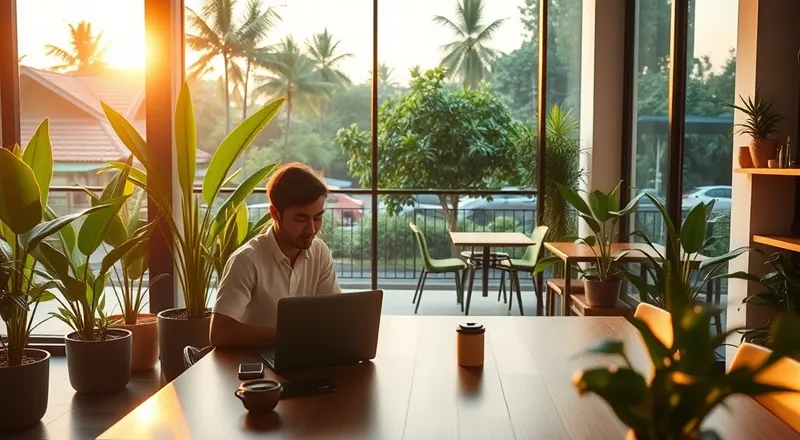
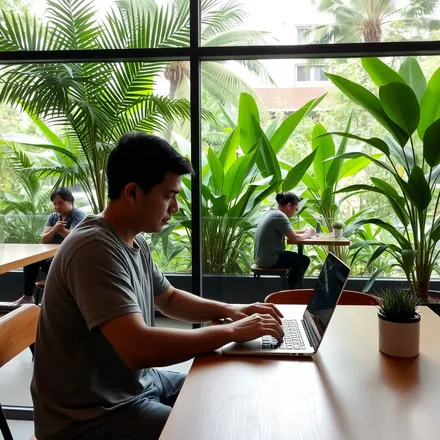
Chiang Mai's standing as Southeast Asia's premier nomad hub rests on a foundation of practical advantages that compound on each other. Internet infrastructure across the city is genuinely excellent — True Move H and AIS both provide 4G and 5G coverage throughout the urban area with speeds that regularly exceed 50 Mbps on mobile data, and fibre connections in apartments and co-working spaces routinely deliver 200-500 Mbps symmetric. Power outages are rare in the central neighbourhoods. The electricity grid is stable and consistent with standard Thai voltage (220V, 50Hz). Cafés that clearly cater to laptop workers — identifiable by their surplus power outlets, spacious seating, and high tolerance for long stays — are abundant throughout the city's café districts. The baseline conditions for productive remote work are simply better here than in most cities in the world at this price point.
The Nimman Road district (Nimmanhaemin Road and its numbered sois) is Chiang Mai's most concentrated nomad neighbourhood — a walkable area of design hotels, independent coffee shops, co-working spaces, yoga studios, health food restaurants, and boutique shopping that functions as a kind of self-contained international village within the larger city. The cafés here are the stuff of nomad legend: Think Park's cluster of creative vendors, the multiple branches of the CAMP chain (the original campus co-working café concept, operated by Maya Mall), Yellow and the series of design-forward independent coffee shops on Nimman Soi 1 through 9 that cycle through on social media with reliable regularity. The density of quality café options within a 15-minute walk is remarkable — on any given weekday morning, Nimman hosts hundreds of laptop workers spread across a dozen or more venues, creating an accidental co-working ecosystem without formal infrastructure. The downside is that Nimman's popularity has driven accommodation and food prices to levels noticeably above the Chiang Mai average, particularly for Western-style meals.
The Old City, enclosed within its ancient moat and corner bastions, offers a different nomad experience — more historical atmosphere, more street food at street food prices, more proximity to temples and the Sunday Walking Street, but fewer dedicated café work spaces and a somewhat more conservative neighbourhood character. Santitham, immediately north of the Old City, is increasingly popular among nomads seeking Nimman-adjacent café culture at substantially lower rent — one-bedroom furnished apartments here cost 8,000 to 12,000 THB per month compared to 15,000 to 25,000 THB in Nimman. The neighbourhood has its own growing café scene along Santitham Road and is a short bicycle ride from both the Old City and Nimman. For nomads planning longer stays, Santitham offers the best balance of cost, connectivity, and community access.
Formal co-working spaces in Chiang Mai range from bare-bones desk-rental operations to serious full-service facilities. CAMP at Maya Mall (multiple locations) pioneered the café co-working model and remains the most recognisable entry point for new arrivals. Yellow, Mango, and Yellow Co-working on Nimman offer day passes (250-350 THB), weekly rates (1,200-1,800 THB), and monthly memberships (3,500-6,000 THB) with reliable air conditioning, printing facilities, meeting rooms, and standing desks. For nomads who need reliable dedicated seating, private locker storage, and guaranteed power supply, a formal co-working membership pays for itself in reduced daily café spending within a few weeks. The nomad community in Chiang Mai is active and self-organised — Facebook groups, Meetup events, and informal Thursday evening meetups at rotating venues provide genuine social infrastructure for new arrivals who want to connect beyond their laptop screens.

Highlights
- Nimman Road café district — dozens of design-forward coffee shops with power outlets and high-speed WiFi, the heart of Chiang Mai nomad culture
- CAMP Co-working Café at Maya Mall — the original digital nomad café model, multiple city locations, pay-per-coffee business model
- Yellow Co-working and Mango — professional co-working spaces with day passes from 250 THB and monthly memberships from 3,500 THB
- Furnished one-bedroom apartments in Santitham for 8,000-12,000 THB per month — best value neighbourhood for longer-stay nomads
- True Move H and AIS SIM cards — 4G/5G coverage citywide, unlimited data plans from 299 THB per month
- Weekly nomad meetups and community events — Facebook groups and Meetup.com events connecting hundreds of resident remote workers
- Cost of living advantage — monthly budget of 40,000-60,000 THB covers comfortable accommodation, coworking, food, and activities
- Thailand LTR Visa (Long-Term Resident) — up to 10-year visa for remote workers meeting income requirements
- Weekend escapes within 2 hours — Doi Inthanon, Pai, Chiang Rai, Mae Hong Son — work-life balance built into the geography
Chiang Mai is a year-round nomad destination with no truly bad season for remote work. The cool season from November to February is the most comfortable and socially active, with regular community events and the highest concentration of nomads passing through. March to May is very hot and smoke season (agricultural burning) can affect air quality significantly — a serious consideration for those sensitive to particulate matter, though co-working spaces and cafés are air-conditioned. June to October brings rainy season with fresh air, lower accommodation prices, and fewer competing nomads for café seats.
Practical Information
Cost Level
Monthly living costs in Chiang Mai for a comfortable nomad lifestyle: furnished one-bedroom apartment 8,000-20,000 THB depending on neighbourhood and quality; co-working space or café budget 3,000-6,000 THB; food (mix of local and Western) 8,000-15,000 THB; transport (scooter rental or Grab) 2,000-4,000 THB; health insurance (recommended) varies widely. Total comfortable monthly budget runs 35,000-65,000 THB (approximately 950-1,750 EUR). This represents extraordinary value for a city with genuine infrastructure, healthcare, and quality of life.
Tips
Purchase a local SIM card at the airport immediately upon arrival — True Move H tourist SIMs are sold at arrival halls and provide instant connectivity. The air quality app AirVisual is essential during burning season (February-April) for monitoring daily PM2.5 levels. Chiang Mai has multiple private hospitals with English-speaking staff and international standard care at a fraction of Western prices — Chiang Mai Ram and Bangkok Hospital Chiang Mai are the most recommended. Register with your embassy if staying longer than 30 days. Always verify apartment WiFi speed before signing a lease using Fast.com or Speedtest.
Our creators on the ground in Chiang-mai share their best recommendations in their videos.

Places in this Guide
Discover the attractions and locations featured in this travel guide.
Explore Chiang Mai
Chiang Mai
เชียงใหม่Chiang Mai is the heart of the digital nomad ecosystem in Southeast Asia. Ancient temples, cool coffee shops and a world...All creators from Chiang Mai →Location & Orientation


Frequently Asked Questions
What visa do digital nomads need for long-term stays in Chiang Mai?
Thailand offers several visa options suitable for digital nomads. The most accessible is the Tourist Visa, available as a single entry (60 days, extendable to 90 days) or multiple entry (METV, valid 6 months with 60-day stays). The Thailand LTR Visa (Long-Term Resident Visa) allows stays of up to 10 years for remote workers earning a minimum of USD 80,000 annually. The TR visa stack — leaving to a neighbouring country every 60-90 days — remains commonly used but carries increasing scrutiny at borders. The Thailand Digital Nomad Visa (Destination Thailand Visa, DTV) launched in 2024 allows 180-day stays with a single entry and is the cleanest current option for most remote workers.
Is the internet in Chiang Mai cafés reliable enough for video calls and remote work?
Internet reliability in Chiang Mai's established café and co-working zones is genuinely excellent and suitable for professional remote work including video calls, large file uploads, and cloud-based workflows. Dedicated co-working spaces like Yellow and Mango guarantee minimum speeds and have backup connections. Well-known café chains and Nimman Road independent cafés typically offer 50-200 Mbps WiFi, though speeds drop during peak lunch hours. Always arrive early at popular cafés to secure a reliable power outlet and position. For mission-critical calls, a 4G/5G hotspot from a local SIM card provides a reliable backup independent of café WiFi.
Which neighbourhood is best for digital nomads in Chiang Mai?
Nimman Road is the obvious answer for first-time visitors — the highest density of co-working cafés, the most visible nomad community, and the widest range of international food options are all concentrated here. However, Nimman prices are the highest in the city. Santitham, immediately north of the Old City moat, has become the preferred neighbourhood for nomads staying longer than a few weeks — rents are 30-40 percent lower, the café scene is growing rapidly, and the neighbourhood feels more genuinely Thai than Nimman. The Old City itself offers the best historical atmosphere and proximity to temples at mid-range prices, with fewer dedicated work cafés.
How does Chiang Mai compare to Bangkok as a base for digital nomads?
Chiang Mai and Bangkok serve different nomad profiles. Bangkok offers superior international transport connections, more diverse entertainment, a larger international community, and more corporate networking opportunities — but at significantly higher living costs, with Bangkok rents typically 50-100 percent above Chiang Mai equivalents. Chiang Mai offers a more manageable human-scale city, lower costs, better air quality (outside burning season), easier access to nature, a tighter nomad community, and a slower lifestyle pace that many remote workers find more conducive to focused work. Most experienced Thailand nomads divide their time between both cities or use Chiang Mai as their primary base with periodic Bangkok visits.
What is the nomad community like in Chiang Mai and how do I connect with other remote workers?
Chiang Mai has one of the most established and self-organised nomad communities in Asia. The Facebook group 'Digital Nomads Around the World — Chiang Mai' has tens of thousands of members and active daily discussion. Nomad List consistently ranks Chiang Mai among the top five global nomad cities. Weekly in-person meetups rotate between venues in Nimman and the Old City and are listed on Meetup.com. The CAMP café network functions as an informal meeting point where it is entirely normal to strike up conversation with fellow laptop workers. Language exchange events, co-working space community evenings, and activity clubs focused on hiking, muay thai, and yoga provide additional social infrastructure.