
Introduction
In 1966, a Harvard anthropology student tripped over a tree root in a village in Udon Thani Province and noticed a pottery shard in the exposed soil. What followed was one of the most significant archaeological revelations of the twentieth century. Ban Chiang turned out to be the site of a Bronze Age settlement dating back approximately 5,000 years, producing evidence of metalworking, rice cultivation, and a sophisticated ceramic tradition that predated many comparable developments in the ancient world. UNESCO inscribed the site as a World Heritage Site in 1992, recognising it as 'the most important prehistoric settlement so far discovered in Southeast Asia.' For travellers interested in deep history, ancient material culture, and the genuine origins of civilisation in this corner of Asia, Ban Chiang is extraordinary — and still surprisingly uncrowded.
Overview
The Ban Chiang site sits within an active village of the same name, about 50 kilometres east of Udon Thani city and 30 kilometres from Kumphawapi. The village inhabitants are the direct descendants of the people who lived here across the centuries, and the community maintains a remarkable sense of continuity with its past. The streets of Ban Chiang are quiet and unhurried, and the locals are accustomed to the occasional curious visitor wandering through.
The Ban Chiang National Museum is the essential first stop. Opened in 1987 with support from the Smithsonian Institution, it is one of the best-curated provincial museums in Thailand and houses an extraordinary collection of Bronze Age artefacts recovered from the site: bronze tools and weapons, jewellery, burial goods, animal bones, and most famously the decorated pottery that has become Ban Chiang's visual signature. The museum provides important context for understanding what you are seeing — the explanatory panels are in English as well as Thai and are unusually informative. Entry fee is 150 THB for foreign visitors, 50 THB for Thai nationals.
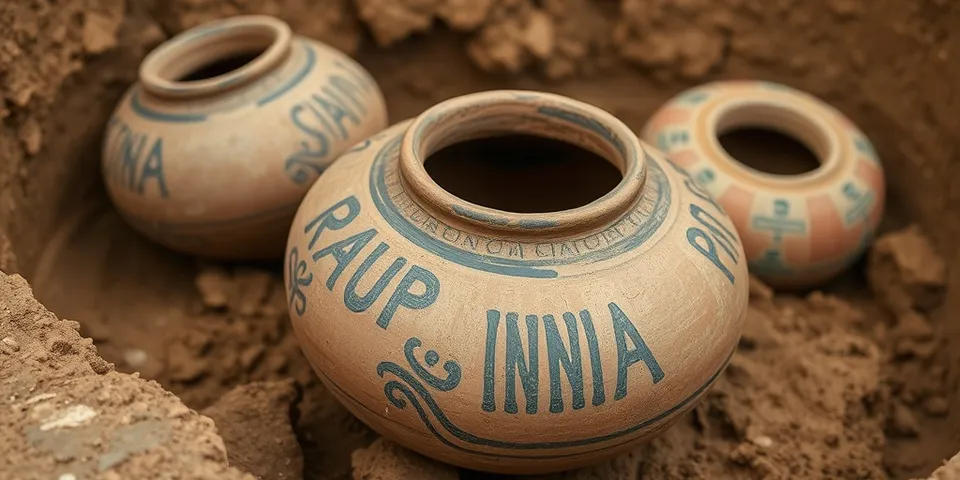
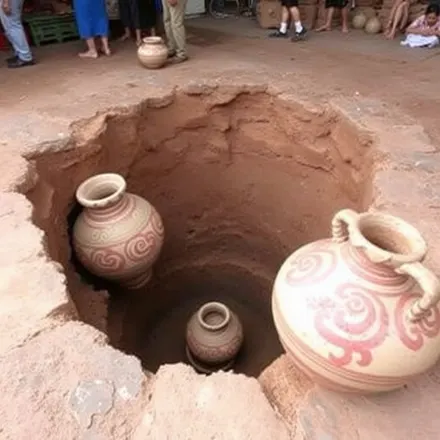
The ceramic tradition of Ban Chiang is unlike anything else in Southeast Asian prehistory. The signature style consists of rounded pots and urns decorated with flowing red-painted swirl patterns applied over a buff or cream slip. These designs appear on burial urns, cooking vessels, and ceremonial objects, and they evolved stylistically over approximately 2,000 years of occupation at the site, giving archaeologists a detailed stratigraphic record of cultural change. Reproductions are widely sold in the village, both as direct copies and as contemporary interpretations, and buying from local artisans is an excellent way to support the community.
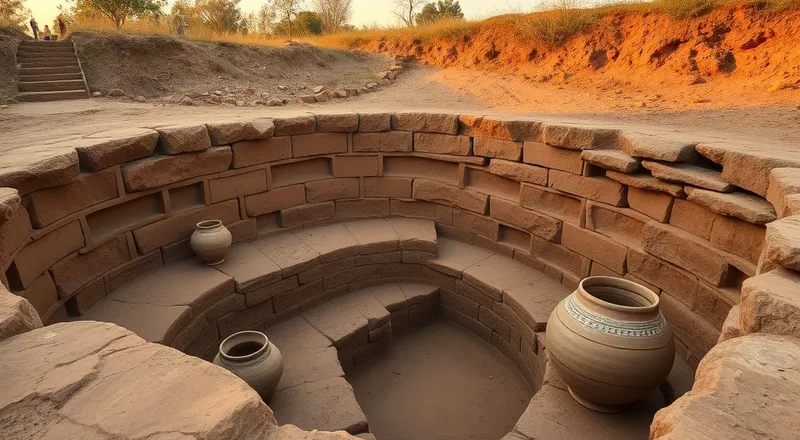
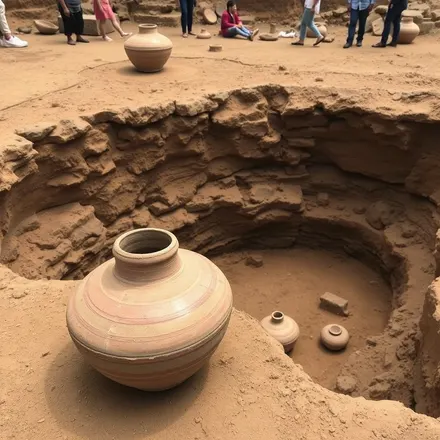
The excavation site itself — Wat Pho Si Nai — is located about 500 metres from the museum and is open for viewing. A shelter has been built over an excavated section revealing the stratigraphy of the site: human skeletons in burial positions accompanied by pottery, bronze objects, and animal remains, exactly as they were found by archaeologists in the 1970s. The interpretive information at the excavation site is less detailed than the museum, but the visual impact of seeing actual human remains and ancient objects in situ is considerable. This is not a reconstruction or display — these are the original finds in their original positions.
Ban Chiang village also has a small but lively local craft market selling traditional weavings, handmade pottery, and local food products. The village maintains traditional indigo dyeing and silk weaving practices that are worth seeking out if you have time after the archaeological sites. Several families run informal demonstrations of traditional pottery-making using techniques that, while not directly Bronze Age, maintain the spirit and aesthetics of the ancient tradition.
Highlights
- UNESCO World Heritage Site since 1992 — most important prehistoric settlement in Southeast Asia
- 5,000-year-old Bronze Age settlement with evidence of early metalworking and rice cultivation
- Ban Chiang National Museum — world-class collection of Bronze Age pottery and artefacts
- Signature red swirl pottery — one of the most distinctive prehistoric ceramic traditions in Asia
- Wat Pho Si Nai excavation site — original burial pits with skeletons and artefacts visible in situ
- Live village setting — residents are descendants of the original inhabitants
- Pottery reproduction artisans in the village — authentic pieces to buy
- Traditional weaving and indigo dyeing demonstrations
- Only 30 km from Kumphawapi — easy to combine with the Red Lotus Sea
- Entry fee 150 THB (museum), with English-language interpretation throughout
Ban Chiang is worth visiting year-round as an indoor museum-centred experience. The excavation site shelter means the burial pit is viewable in any weather. The site is quietest on weekday mornings when tour groups from Udon Thani city are less likely to be present. November through February is the most comfortable season to visit due to cooler Isaan temperatures. Combining with the Red Lotus Sea visit is most logical during the November–February lotus season — both sites are in the same region and the combined day makes excellent use of an early start.
Practical Information
Cost Level
Ban Chiang National Museum entry: 150 THB for foreign visitors, 50 THB for Thai nationals. The Wat Pho Si Nai excavation site visit is included with the museum ticket. Taxi from Udon Thani city to Ban Chiang: 400–500 THB each way (50km). Combined taxi covering Ban Chiang and Kumphawapi Red Lotus Sea in one day: negotiate 1,200–1,800 THB total. Reproduction pottery from village artisans: 200–2,000 THB depending on size and quality. A simple lunch at a village restaurant runs 80–150 THB.
Tips
Allow at least 2 hours at the museum — the collection is extensive and the labelling detailed enough to reward careful reading. The excavation site requires a separate short walk from the museum; do not skip it. Bring cash — the museum and most village vendors do not accept cards. Photography is permitted in the museum and at the excavation site. If buying reproduction pottery, look for pieces made by local Ban Chiang families rather than mass-produced imports; the quality difference is visible and the cultural significance of supporting local artisans is considerable. The museum shop sells a very good English-language book on the Ban Chiang discovery and culture.
Our creators on the ground in Udon-thani share their best recommendations in their videos.
Places in this Guide
Discover the attractions and locations featured in this travel guide.
Explore Udon Thani
Udon Thani
อุดรธานีUdon Thani is a vibrant Isan metropolis that blends modern city life with ancient history and natural wonders. The provi...All creators from Udon Thani →Location & Orientation


Frequently Asked Questions
Why is Ban Chiang considered so important archaeologically?
Ban Chiang's significance rests on several factors. First, the site provides continuous evidence of human occupation from approximately 3,600 BCE to 200 CE — a span of nearly 3,800 years — giving archaeologists an unusually detailed record of prehistoric life, death, and material culture in mainland Southeast Asia. Second, the bronze artefacts recovered from Ban Chiang suggest that metalworking technology developed in this region independently or very early in the broader Asian Bronze Age, challenging earlier assumptions that metallurgy spread exclusively from the Middle East through China. Third, the burial practices and associated goods reveal a complex social structure and sophisticated belief system. Taken together, Ban Chiang reshaped scholarly understanding of prehistoric Southeast Asian civilisation.
What is the distinctive pottery style of Ban Chiang?
The Ban Chiang pottery tradition spans approximately 2,000 years of the site's occupation and evolved through distinct stylistic phases. The most iconic and commercially recognisable style is the 'Late Period' pottery (approximately 300 BCE to 200 CE), characterised by round-bodied vessels decorated with flowing red geometric and spiral patterns painted over a cream or buff background. This swirling red-on-buff aesthetic has become internationally synonymous with Ban Chiang and is reproduced widely by local artisans. Earlier pottery phases used incised decoration and different colour palettes. The pottery was used for both daily life and mortuary purposes — burial urns containing human remains accompanied by bronze goods and animal bones are among the most frequently excavated finds.
Can I see actual human remains at the excavation site?
Yes. The Wat Pho Si Nai excavation site has been preserved and sheltered precisely to allow visitors to view the archaeological finds in their original positions. This includes human skeletons in burial positions, accompanied by the pottery vessels, bronze objects, and animal bones that were placed with them as burial goods. The remains are several thousand years old and are displayed responsibly with appropriate interpretive information. This in-situ display — rather than a reconstruction — is what makes the site genuinely remarkable. Visitors should be aware that they are looking at real ancient human remains and approach the site with corresponding respect.
How do I get to Ban Chiang from Udon Thani?
The most practical way is by taxi from Udon Thani city — the journey covers approximately 50 kilometres and takes about 1 hour, costing 400–500 THB each way. There is no convenient public bus service that covers the full journey. Some public songthaews run from Udon Thani's main bus terminal toward the Ban Chiang area, but connections require transfers and the total journey time is unpredictable — not ideal for a timed itinerary. Renting a motorcycle from Udon Thani and making your own way is a viable option for experienced riders. The most efficient approach is to hire a private driver for the day and combine Ban Chiang with the Red Lotus Sea at Kumphawapi, both of which lie in the same easterly direction from Udon Thani.
Is the Ban Chiang pottery I see in the museum original or reproductions?
The Ban Chiang National Museum displays original archaeological artefacts — the pottery, bronze tools, jewellery, and burial goods you see there are the actual objects recovered from excavations at the site over decades of archaeological work. None of the museum's core collection is reproduction. What is sold in village shops and the museum shop are reproductions made by local artisans using traditional techniques adapted to contemporary production. These reproductions range in quality from mass-produced tourist pieces to carefully made hand-decorated ceramics that honour the original tradition. Buying reproduction pottery from local Ban Chiang families is a meaningful way to support the community and take home an object connected to the site's living craft heritage.