Introduction
Surat Thani feeds itself extraordinarily well, and the traveller who looks past the ferry terminal will find a street food culture that is resolutely, defiantly local — calibrated for the tastes of southern Thai residents rather than the expectations of passing tourists. The Gulf Coast larder that surrounds the city provides the raw ingredients: oysters pulled from the bay that morning, coconuts from the largest coconut-producing province in Thailand, fresh fish hauled in by trawlers that have worked the gulf since before dawn. These ingredients arrive at Surat Thani's markets — the rambling Talat Kaset complex, the riverside stalls of Ton Pho, the morning markets hidden in neighbourhood side streets — and they are cooked according to southern Thai techniques that prioritise depth of flavour, generous seasoning, and the kind of honest simplicity that only comes from cooking what is genuinely in season. This is not a food scene designed for Instagram. It is designed for eating.
Overview
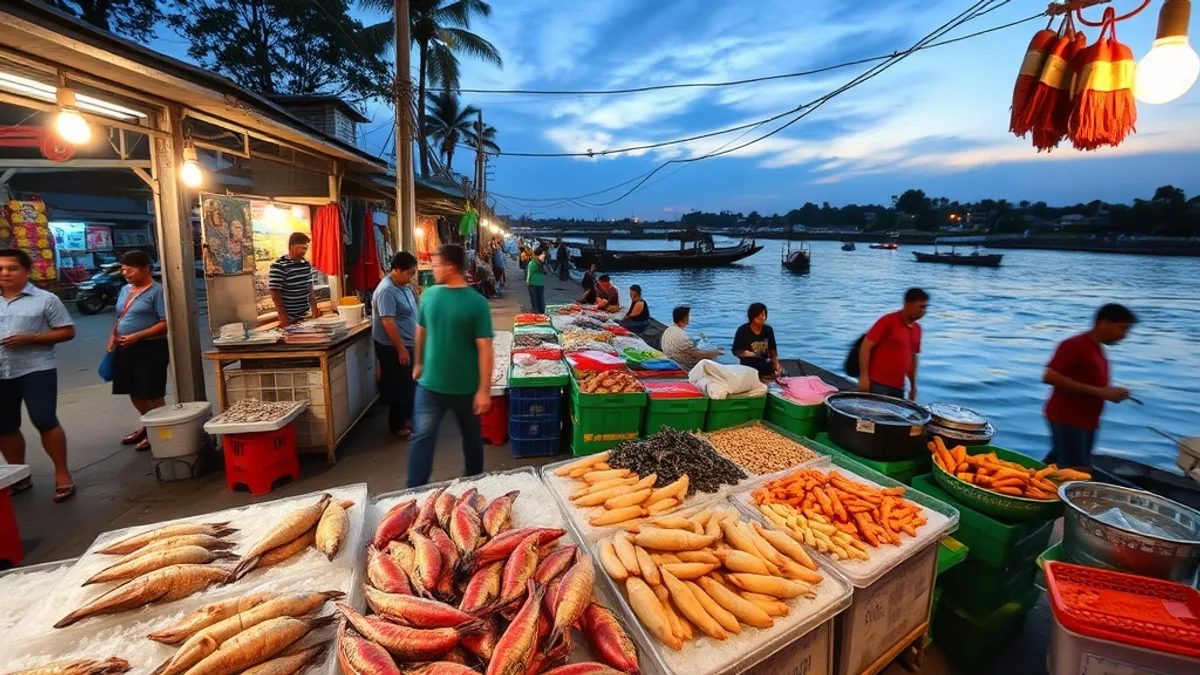
The centre of Surat Thani's evening food universe is Talat Kaset, a sprawling market complex near the town's main bus terminal that splits into two distinct sections — Kaset 1 and Kaset 2 — and operates across most of the day, though its energy concentrates between late afternoon and midnight. The market occupies a permanent structure of covered stalls supplemented by evening vendors who set up along the surrounding streets, and the range of food on offer is genuinely impressive: fresh seafood grilled over charcoal and served with nam jim seafood dipping sauce, large metal trays of slow-braised Moo Hong pork belly darkened to a deep mahogany by soy sauce and palm sugar, bowls of Khanom Chin fresh rice noodles served with a choice of southern-style curries ranging from mild coconut milk-based options to searingly hot keang tai pla fermented fish stomach curry. The prices at Talat Kaset are pitched entirely for local residents: expect to pay 50-70 THB for a full plate of rice with two or three dishes, 30-40 THB for a bowl of noodles, and 20-30 THB for snacks and desserts. The vendors here have no reason to adjust their prices or their recipes for foreigners — which is precisely what makes eating here feel like a genuine cultural encounter rather than a managed experience.
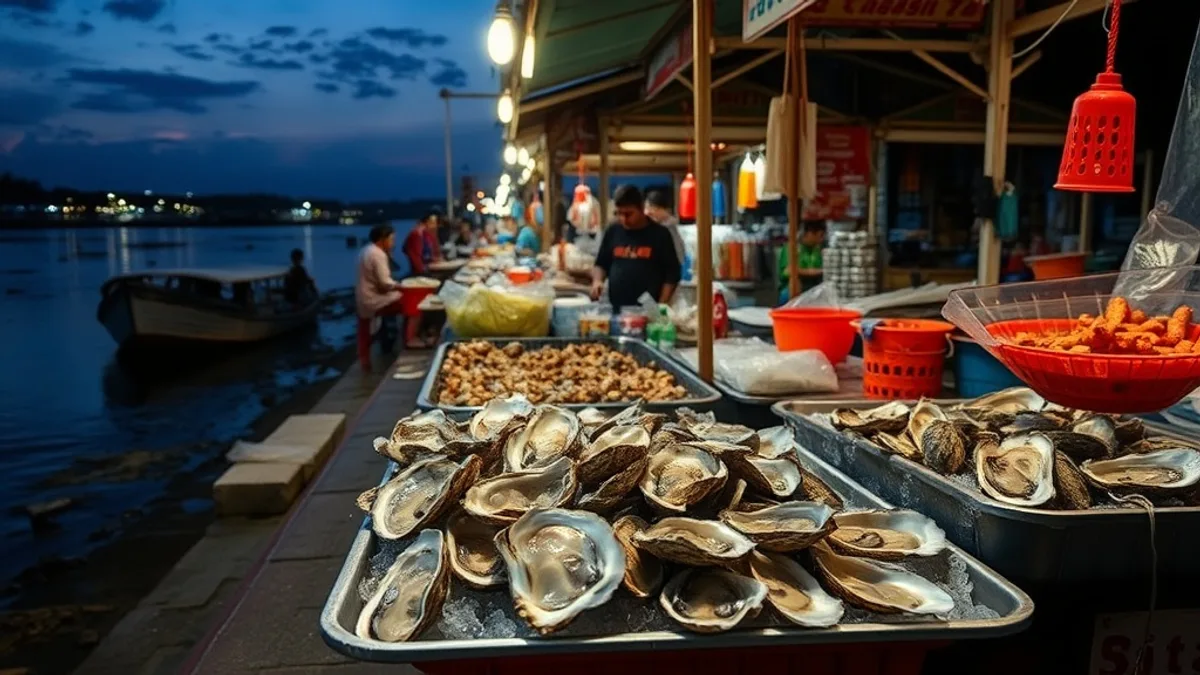
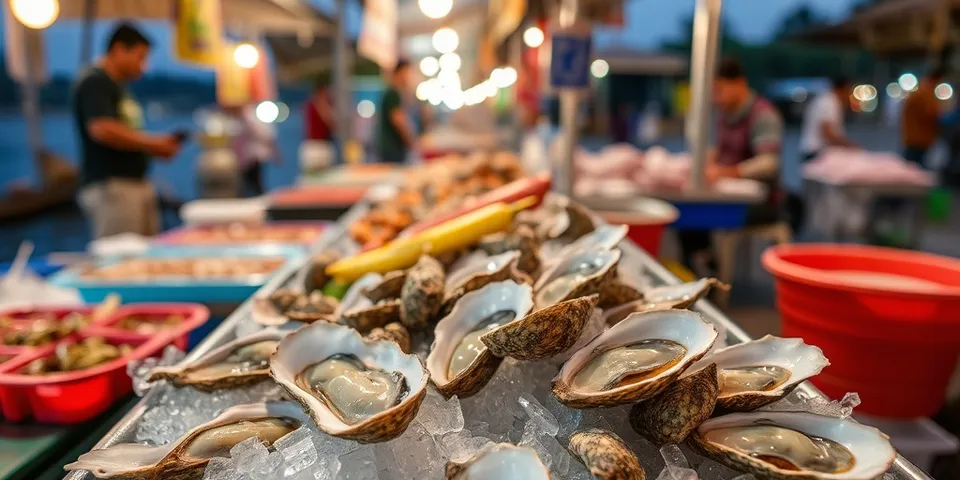
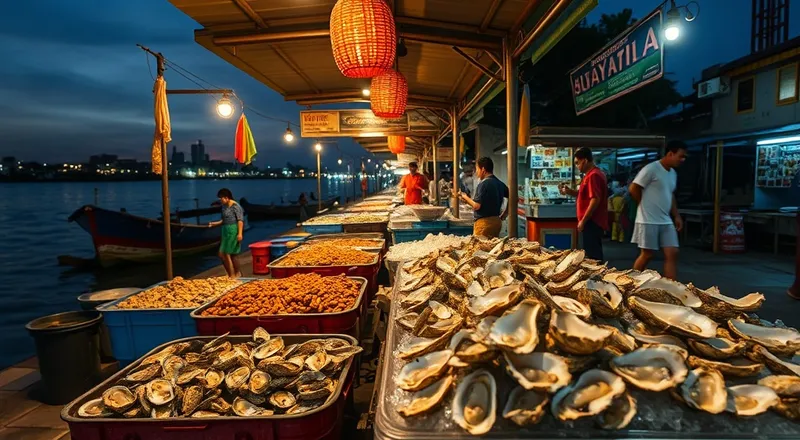
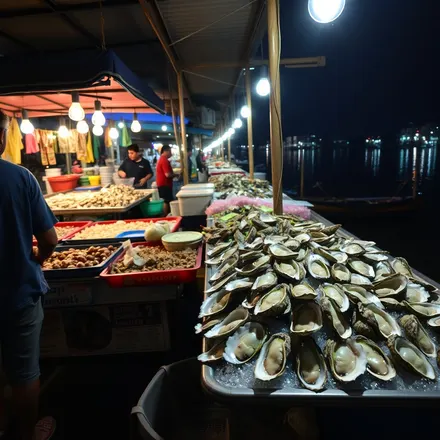
Surat Thani's most famous culinary speciality is its oysters. Ban Don Bay, which curves around the northern edge of the city, is home to one of Thailand's most productive oyster aquaculture industries, and the local Hoy Dong pickled oyster tradition — live oysters marinated with garlic, chilli, lime juice, and fish sauce and served raw — is a taste experience unlike anything found elsewhere in the country. The fresh oyster stalls that line the riverside promenade near the old Ban Don area are among the most rewarding eating experiences in southern Thailand: enormous platters of just-shucked gulf oysters on ice, served with an arsenal of condiments and accompanied by cold beer or the sugary Thai iced tea that seems to be consumed in industrial quantities in this city. Hoy Tod, the crispy oyster omelette fried in a generous amount of lard with bean sprouts and a lacy egg-starch batter, appears at multiple stalls throughout the Talat Kaset complex and is arguably the best version of this dish found anywhere outside Bangkok.
The durian culture of Surat Thani deserves its own chapter in any serious food guide. The province produces the Monthong variety — the large, meaty, intensely aromatic durian that dominates Thai domestic consumption — and the orchards surrounding the town begin selling direct to the public from large roadside stalls from June through August. Surat Thani residents have a deeply held civic pride in the quality of their local durian, and the debates about which orchard, which season, and which degree of ripeness produces the finest fruit are conducted with the same seriousness that wine enthusiasts devote to vintage comparisons. For the uninitiated, the Talat Kaset market and the fruit stalls along Talat Mai Road offer the opportunity to approach durian gradually: fresh-cut portions in styrofoam containers, durian pancakes, durian sticky rice, and durian ice cream all provide gentler entry points than confronting a whole spiked fruit for the first time.
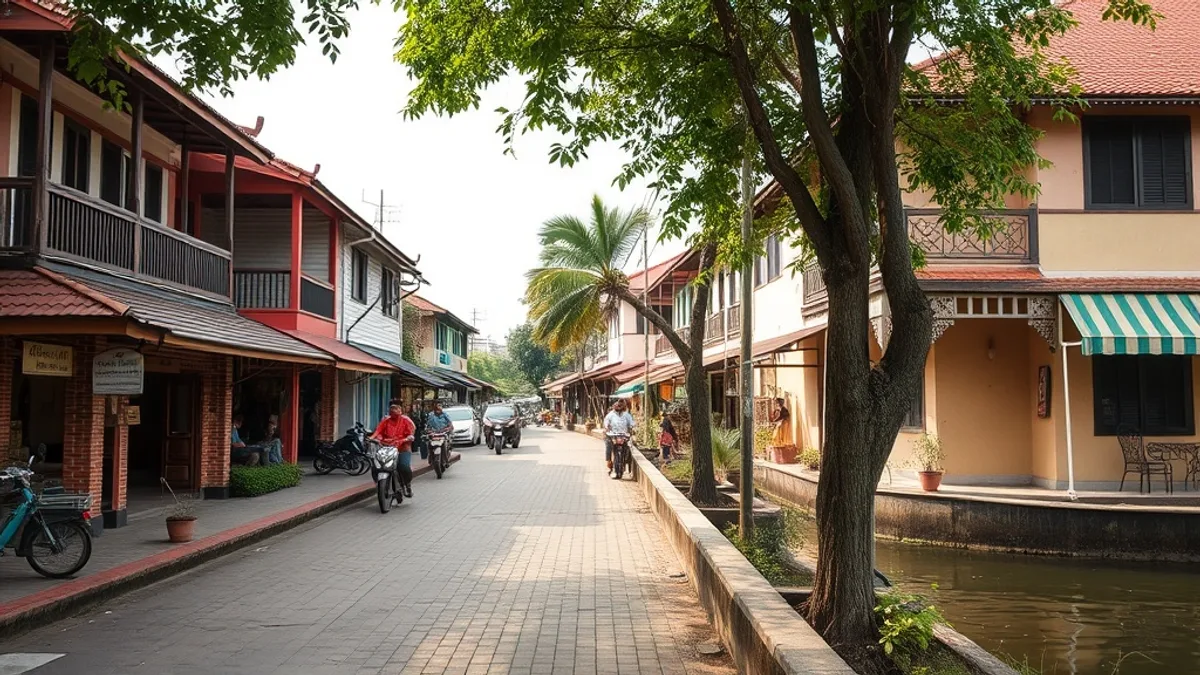
The morning market culture of Surat Thani is equally rewarding for early risers. The Ton Pho morning market near the riverside opens before 6 AM and operates until approximately 11 AM, serving the combination of fresh produce, ready-to-eat Thai breakfast foods, and the local coffee shop tradition that defines the daily rhythm of southern Thai towns. Surat Thani's coffee culture predates the contemporary Thai specialty coffee wave by decades: the traditional kopitiam-style coffee shops in the older parts of town serve robusta coffee dripped through a cloth sock filter and poured over ice with condensed milk — a preparation so sweet and so strong it functions essentially as a dessert and an energy drink simultaneously. These shops, usually occupying the ground floor of ageing Chinese shophouses, are the places where Surat Thani residents conduct the morning's social business: catching up with neighbours, reading the newspaper, and eating Por Pia Tod fried spring rolls or Khanom Pang Khai fried egg toast before heading to work.
Highlights
- Hoy Dong pickled oysters from Ban Don Bay — raw, marinated, and completely unlike oysters anywhere else in Thailand
- Moo Hong braised pork belly at Talat Kaset — slow-cooked to deep mahogany in soy sauce and palm sugar
- Hoy Tod crispy oyster omelette with bean sprouts and lacy egg-starch batter, fried in generous lard
- Khanom Chin fresh noodles with southern-style curry selection including incendiary keang tai pla
- Monthong durian direct from local orchards — Surat Thani's most celebrated agricultural export
- Traditional kopitiam coffee shops in Chinese shophouses serving sock-filtered robusta over ice with condensed milk
- Ton Pho morning market from 6 AM for the most authentic start to a southern Thai day
- Riverside oyster stalls near Ban Don with enormous platters of just-shucked Gulf oysters on ice
- Full plates of rice with two or three dishes at Talat Kaset for 50-70 THB — genuine local pricing
Talat Kaset is most rewarding from late afternoon through to around 11 PM when the full range of cooked food vendors is active. The morning market culture (Ton Pho market, kopitiam coffee shops) is best experienced between 6 and 10 AM. The durian season runs from June through August when roadside orchard stalls are at their most active and prices are at their most competitive. The coolest and most comfortable eating months are November through February. Note that many of the best-established vendors close on Buddhist holiday days when stall holders attend temple ceremonies.
Practical Information
Cost Level
Surat Thani's street food scene is priced for local residents and represents outstanding value. A full plate of rice with two dishes at Talat Kaset runs 50-70 THB. Fresh oyster platters at riverside stalls cost 80-150 THB for a generous serving. Khanom Chin noodle bowls are 30-40 THB. A traditional kopitiam coffee with condensed milk costs 25-35 THB. Fresh durian from orchard stalls runs 80-200 THB per kilogram depending on the season and variety. A comprehensive food evening across the Talat Kaset market and riverside oyster stalls costs 400-600 THB per person including drinks.
Tips
The stalls closest to the ferry piers and tourist accommodation in Surat Thani cater heavily to transiting visitors and tend to charge double the prices found at Talat Kaset. Walk ten minutes from the ferry area and prices drop significantly while quality improves. Approach durian from local vendors rather than supermarkets — the freshness difference is dramatic. For the oysters, bring a healthy appetite: the Gulf oysters are exceptionally mild compared to Atlantic varieties and most visitors find they can eat far more than expected. The traditional kopitiam coffee shops begin closing by 11 AM and many are shut entirely by midday — this is strictly a morning ritual.
Our creators on the ground in Surat-thani share their best recommendations in their videos.
Creators who cover this spot
Discover YouTube creators who feature this topic in their videos.

Discover Thailand
Christian
Discover Thailand – Deutscher Thailand Reise-Creator auf YouTube.

Eat Street Repeat
Eat Street Repeat is a USA-based creator documenting Thailand's authentic street food culture since 2015.

Thai Food Quest
American food enthusiast documenting Thailand's regional cuisine from Bangkok street carts to northern hill tribe recipes.

Places in this Guide
Discover the attractions and locations featured in this travel guide.
Explore Surat Thani
Surat Thani
สุราษฎร์ธานีSurat Thani serves as the gateway to Thailand's most popular Gulf islands, including Koh Samui, Koh Phangan, and Koh Tao...All creators from Surat Thani →Location & Orientation

Frequently Asked Questions
What makes Surat Thani's oysters special compared to oysters elsewhere in Thailand?
Surat Thani's oysters from Ban Don Bay benefit from the unique conditions of the inner Gulf of Thailand — relatively calm, nutrient-rich waters where traditional rope-culture oyster farming has been practiced for generations. The local Hoy Dong preparation — marinating live oysters in a mixture of garlic, chilli, lime juice, and fish sauce before serving them raw — is a Surat Thani speciality that exists nowhere else in Thailand in quite the same form. The oysters themselves are rounder and milder than Pacific varieties, with a clean brininess that the pungent marinade amplifies rather than overwhelms. The combination is remarkable and justifies a stop in Surat Thani for serious food travellers even if you have no interest in the ferry connections.
Where do locals actually eat in Surat Thani rather than restaurants near the ferry terminals?
The Talat Kaset complex, located near the main bus terminal on Talat Mai Road, is the genuine centre of local food life in Surat Thani and sees very few foreign visitors. The riverside area near Ban Don pier (the older part of town, distinct from the Don Sak ferry terminal 60km away) has excellent oyster stalls and seafood restaurants that cater entirely to local residents. For morning food, the streets around Ton Pho Market and the Chinese shophouse district on Na Mueang Road contain the kopitiam coffee shops that have served the local community for decades. Any restaurant prominently advertising ferry schedules or offering English menus exclusively is primarily serving transiting tourists.
Is Surat Thani a good destination for vegetarians?
Southern Thai cuisine is among the most meat-and-seafood-centric in Thailand, and Surat Thani's street food scene reflects this honestly. Dedicated vegetarian options are limited at most night market stalls. However, there are several Thai-Chinese vegetarian restaurants in the older part of town that serve complete Jae-style vegetarian meals for 50-80 THB per plate. Fresh fruit — particularly the exceptional local durian, mangosteen, and rambutan during their respective seasons — is outstanding. Rice and vegetable stir-fries can be requested at most rice-and-dishes stalls with the phrase 'mai sai neua' (no meat), though cross-contamination from shared cooking surfaces is common. Vegetarians should arrive with realistic expectations and an appreciation for excellent tropical fruit.
What is Moo Hong and where is the best place to eat it in Surat Thani?
Moo Hong is a southern Thai braised pork belly dish in which thick slices of pork are slow-cooked for several hours in a deeply reduced sauce of dark soy sauce, palm sugar, white pepper, garlic, and coriander root until the meat becomes almost lacquered and the fat renders to a yielding, silky texture. The dish is associated with the Hokkien Chinese immigrant communities of peninsular Thailand and is eaten over jasmine rice with pickled mustard greens on the side. At Talat Kaset, the best Moo Hong is found at the covered stalls in the Kaset 1 section of the market, where several vendors specialise in the dish and keep enormous clay pots of it simmering throughout the evening service. Arrive after 6 PM for the best selection.
How does the Surat Thani food scene compare to other southern Thai cities?
Surat Thani sits in a genuinely interesting culinary position: it shares the seafood abundance and Chinese heritage cuisine of the Gulf Coast cities while also being close enough to the Andaman-influenced cooking of Nakhon Si Thammarat and Trang to show some of their influences. Compared to tourist-oriented Hat Yai or Hua Hin, Surat Thani's food scene is distinctly less polished but considerably more authentic. The oyster culture is unique to this city. The kopitiam coffee tradition is stronger here than in most Thai cities of comparable size. Compared to Trang — which is famous for its dim sum and roast pork — Surat Thani's food identity is built around seafood and market cooking rather than a single signature dish. Both cities reward serious food travellers who make the effort to move beyond the tourist circuit.