Introduction
Most travellers who pass through Surat Thani never suspect they are moving through one of the most historically significant provinces in all of Thailand. This was the heartland of the ancient Srivijaya Empire — a maritime Buddhist civilisation that dominated Southeast Asia between the 7th and 13th centuries — and the sacred architecture it left behind rivals anything in Ayutthaya or Sukhothai. Layer onto this historical foundation the forest monasteries of the 20th century's most influential Buddhist thinker, a hillside temple where hundreds of wild macaques roam freely between golden stupas, and cave shrines tucked into limestone formations so old that the jungle has grown back around them, and you begin to understand why curious travellers who take the time to explore Surat Thani's temple circuit return with photographs and experiences they genuinely struggle to articulate. This is devotional Thailand at its most textured, most authentic, and most quietly extraordinary.
Overview
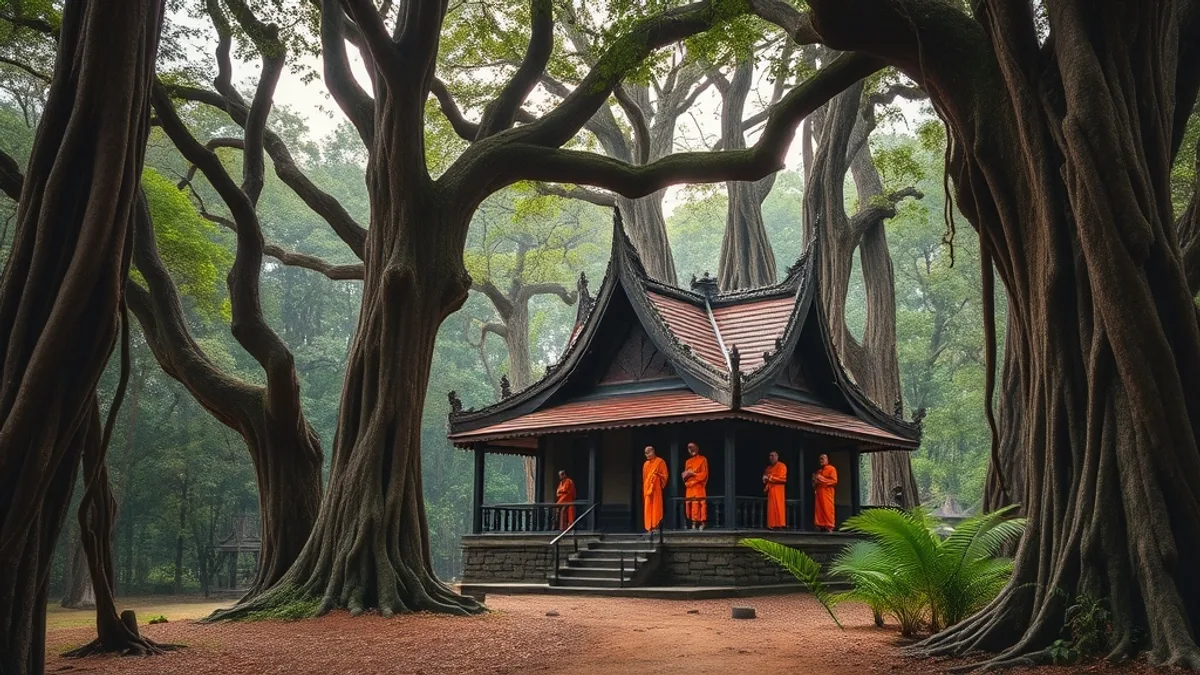
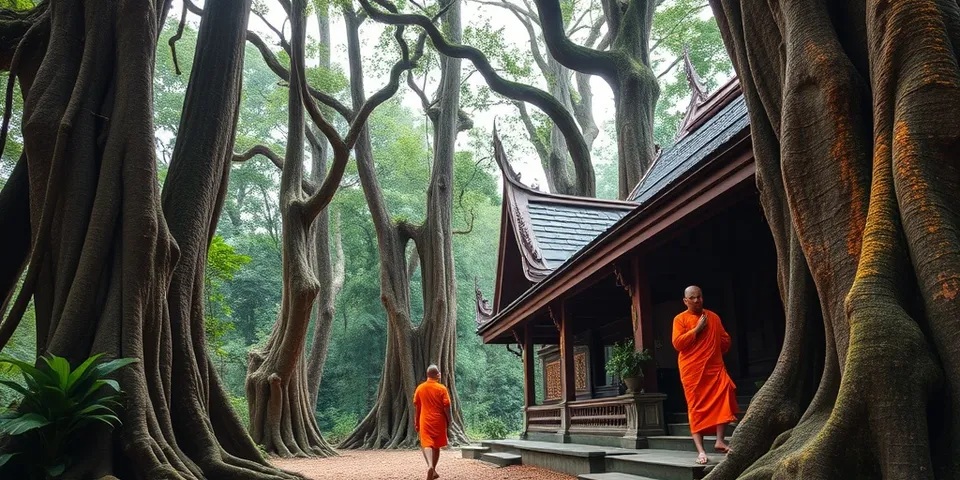
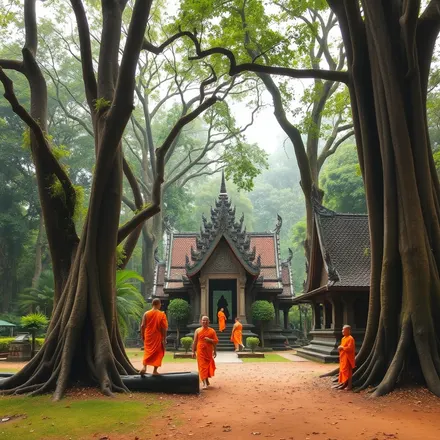
The journey into Surat Thani's sacred landscape begins most meaningfully at Wat Suan Mokkh, the Forest Monastery of the Power of Liberation, located approximately 50 kilometres north of Surat Thani town in Chaiya district. Founded in 1932 by the monk Buddhadasa Bhikkhu — arguably the most influential Buddhist thinker Thailand has ever produced — Suan Mokkh was deliberately sited within a dense forest rather than a town centre, embodying Buddhadasa's conviction that genuine spiritual practice required separation from the noise and preoccupations of commercial life. The monastery grounds are unlike any temple complex in Thailand: ancient trees tower over meditation paths, hand-painted dharma murals cover the walls of open-air pavilions, and stone sculptures depicting scenes from multiple world religions reflect Buddhadasa's radical inter-faith philosophy. The Theatre of Spiritual Entertainment, a unique open-air hall with relief panels influenced by Zen, Hindu, and Theravada imagery, is one of the most remarkable religious spaces in Southeast Asia. Visiting is free, dress code is strict (long clothes for all genders), and the atmosphere demands quiet contemplation. Adjacent to the main monastery, the International Dhamma Hermitage runs ten-day silent meditation retreats on a monthly schedule that attract participants from across Europe, North America, and Asia. Registrations fill months in advance.
A short drive from Suan Mokkh, the ancient town of Chaiya preserves the most significant remaining evidence of the Srivijaya Empire on Thai soil. The Phra Borom That Chaiya Chedi — a restored but genuinely ancient stupa whose distinctive architectural form shows clear Srivijaya influence — dates to approximately the 8th or 9th century and stands as one of the few structures in Thailand that can claim authentic continuity with that vanished maritime empire. The Chaiya National Museum houses a remarkable collection of bronze Mahayana Buddhist sculptures recovered from the surrounding area, including a seated Bodhisattva figure of extraordinary refinement that is considered one of the finest examples of Srivijaya art anywhere in the world. Wat Kaew Korawaram, within the same town, incorporates ancient laterite foundations into its contemporary structure — the stones themselves carrying centuries of accumulated ritual significance. Budget at least two hours to explore Chaiya properly; it rewards slow, attentive visitors far more than those who treat it as a quick photo stop.
Back closer to Surat Thani town, Khao Tha Phet temple occupies a dramatic position on a forested hillside, its white and gold structures emerging from dense canopy with a series of steep staircases connecting the lower entrance to the summit shrines. The resident population of long-tailed macaques — numbering in the hundreds — treat the entire complex as their territory, moving freely between the Buddha images, hanging from the banisters of covered walkways, and descending to accept offerings from visiting worshippers. The interaction here is not managed tourism; these are genuinely wild animals with established social hierarchies and complex territorial behaviour, and approaching them requires the same respect and caution you would extend to any wild primate. The views from the summit over the Gulf of Thailand and the flat coconut-palm countryside of the Surat Thani basin are quietly spectacular, particularly in the hour before sunset when the light turns gold over the water. The drive between Khao Tha Phet and the Chaiya archaeological sites passes through a landscape of limestone karst outcroppings, many of which contain small cave shrines — locally maintained sacred spaces with incense and flower offerings maintained by nearby villages that rarely appear in any guidebook and reward explorers who are willing to pull over and investigate.
The full Surat Thani temple circuit — Suan Mokkh, Chaiya National Museum, Phra Borom That Chaiya, and Khao Tha Phet — can be covered in a single long day by rented motorbike or hired songthaew, making it an ideal way to spend a layover day before taking an evening ferry to the gulf islands. Most travellers who make the effort to explore it leave with a substantially revised understanding of both Surat Thani and the depth of Thailand's Buddhist heritage.
Highlights
- Wat Suan Mokkh forest monastery — the living legacy of Buddhadasa Bhikkhu, Thailand's most influential modern Buddhist thinker
- Phra Borom That Chaiya Chedi — one of the only authentic Srivijaya Empire structures remaining in Thailand
- Chaiya National Museum — world-class collection of Srivijaya bronze sculptures including a masterwork seated Bodhisattva
- Khao Tha Phet hilltop temple with hundreds of wild long-tailed macaques roaming freely between the shrines
- Theatre of Spiritual Entertainment at Suan Mokkh — remarkable open-air hall with inter-faith dharma murals and sculpture
- International Dhamma Hermitage monthly silent meditation retreats in the forest adjacent to Suan Mokkh
- Limestone cave shrines along the road between Surat Thani and Chaiya — village-maintained sacred spaces off any tourist circuit
- Summit views from Khao Tha Phet over the Gulf of Thailand and the coconut palm coastal plain at sunset
- Wat Kaew Korawaram in Chaiya — contemporary temple built over ancient Srivijaya laterite foundations
The temple circuit is best visited between November and April when rainfall is minimal and temperatures are manageable for outdoor exploration. Early morning visits to Suan Mokkh (opening at 8 AM) allow the forest atmosphere to be experienced before tour groups arrive. Khao Tha Phet is best in late afternoon — the macaques are most active in cooler temperatures and the summit light is extraordinary from 4 PM onwards. Avoid visiting Chaiya sites during major Buddhist holidays when large crowds of Thai pilgrims make the museum and chedi inaccessible. The meditation retreats at the International Dhamma Hermitage run on a fixed monthly schedule — check the official website well in advance.
Practical Information
Cost Level
The Surat Thani temple circuit is exceptionally affordable. Entrance to Wat Suan Mokkh is free, as is the Khao Tha Phet temple complex. The Chaiya National Museum charges a modest 100 THB for foreign visitors. A full-day songthaew hire from Surat Thani town to cover all major sites costs approximately 800-1,200 THB depending on negotiation. Motorbike rental in Surat Thani runs 250-350 THB per day. Modest donations at individual temple shrines are customary and appreciated — 20-50 THB per shrine is appropriate. Food near the sites is extremely local and inexpensive: roadside stalls near Suan Mokkh serve complete meals for 50-80 THB.
Tips
Dress conservatively for all temple visits — knees and shoulders must be covered, and long trousers or a sarong wrapped around the waist are standard for entering any of the historic Srivijaya-era structures. At Khao Tha Phet, do not feed the macaques, maintain a respectful distance, and secure any bags, food, or loose items before ascending the staircase. The monkeys here are unhabituated to tourist management protocols and will snatch food, sunglasses, or phones without hesitation. At Suan Mokkh, phones should be switched to silent mode and photography inside the main meditation halls is not permitted. Hire a local guide through the Chaiya National Museum for the most contextually rich experience of the archaeological sites — fees are reasonable at around 300-500 THB for a two-hour tour.
Our creators on the ground in Surat-thani share their best recommendations in their videos.
Creators who cover this spot
Discover YouTube creators who feature this topic in their videos.
Adventures Joel
British adventure vlogger exploring Thailand by motorbike.
Discover Thailand
Christian
Discover Thailand – Deutscher Thailand Reise-Creator auf YouTube.
Global Travel Mate
Jeroen is a Dutch expat documenting Bangkok's urban landscape through bicycle exploration and cultural observation.
Places in this Guide
Discover the attractions and locations featured in this travel guide.
Explore Surat Thani
Surat Thani
สุราษฎร์ธานีSurat Thani serves as the gateway to Thailand's most popular Gulf islands, including Koh Samui, Koh Phangan, and Koh Tao...All creators from Surat Thani →Location & Orientation
Frequently Asked Questions
Is Wat Suan Mokkh open to casual visitors or only to meditation retreat participants?
Wat Suan Mokkh welcomes casual day visitors throughout the day and entry to the main monastery grounds is free of charge. The forest paths, dharma murals, and Theatre of Spiritual Entertainment are all accessible without registration. The monthly ten-day silent meditation retreats run by the International Dhamma Hermitage (the separate retreat centre adjacent to the main monastery) are a distinct programme that requires advance registration and accepts a limited number of participants. Day visitors and retreat participants share some areas of the grounds, but the retreat programme itself is entirely separate from casual visiting. Arriving at the monastery between 8 AM and 4 PM gives the best access to all areas.
How dangerous are the monkeys at Khao Tha Phet?
The long-tailed macaques at Khao Tha Phet are wild animals that have become habituated to human presence through generations of interaction with temple visitors and worshippers. They are not dangerous in the conventional sense — unprovoked attacks are rare — but they are bold opportunists that will snatch food, bags, or any attractive object within reach without warning. The primary risk is from a startled or defensive monkey if you approach too closely, make direct eye contact (perceived as a threat), or inadvertently position yourself between a mother and her young. Keep all food securely in zipped bags before entering the complex, remove dangling jewellery, and maintain a calm, non-threatening demeanour. Children should be kept close and supervised at all times.
How do I get from Surat Thani town to the temple circuit without a rental vehicle?
The most practical option for travellers without a motorbike licence is to hire a songthaew (covered pickup truck taxi) from the main songthaew stand near Talat Kaset market in central Surat Thani. Negotiate a full-day price in advance — expect to pay 800-1,200 THB for a driver who will wait while you explore each site. Alternatively, the Surat Thani-Chumphon bus that runs along Highway 41 passes through Chaiya, making it possible to reach the Chaiya sites independently by bus (approximately 40 THB, 45 minutes). Suan Mokkh is a short walk or motorbike taxi ride from the Chaiya bus stop. Getting to Khao Tha Phet independently by public transport is significantly more difficult and a hired driver remains the most practical solution.
What is the significance of the Srivijaya Empire and why does it matter for visiting Surat Thani?
The Srivijaya Empire was a powerful maritime Buddhist civilisation centred in Sumatra that controlled trade routes across much of Southeast Asia between approximately the 7th and 13th centuries. At its height, Srivijaya's religious and cultural influence extended across modern-day Thailand, Malaysia, Indonesia, and the Philippines. The Chaiya area of Surat Thani province was a significant regional centre of this empire, and the Buddhist art and architecture produced here during that period represents a unique fusion of Indian, Malay, and local traditions. The Srivijaya sculptures in the Chaiya National Museum — particularly the Bodhisattva figures — are among the finest examples of this artistic tradition surviving anywhere in the world, making Chaiya a site of genuine international art-historical significance.
Can I combine the temple circuit with a ferry departure on the same day?
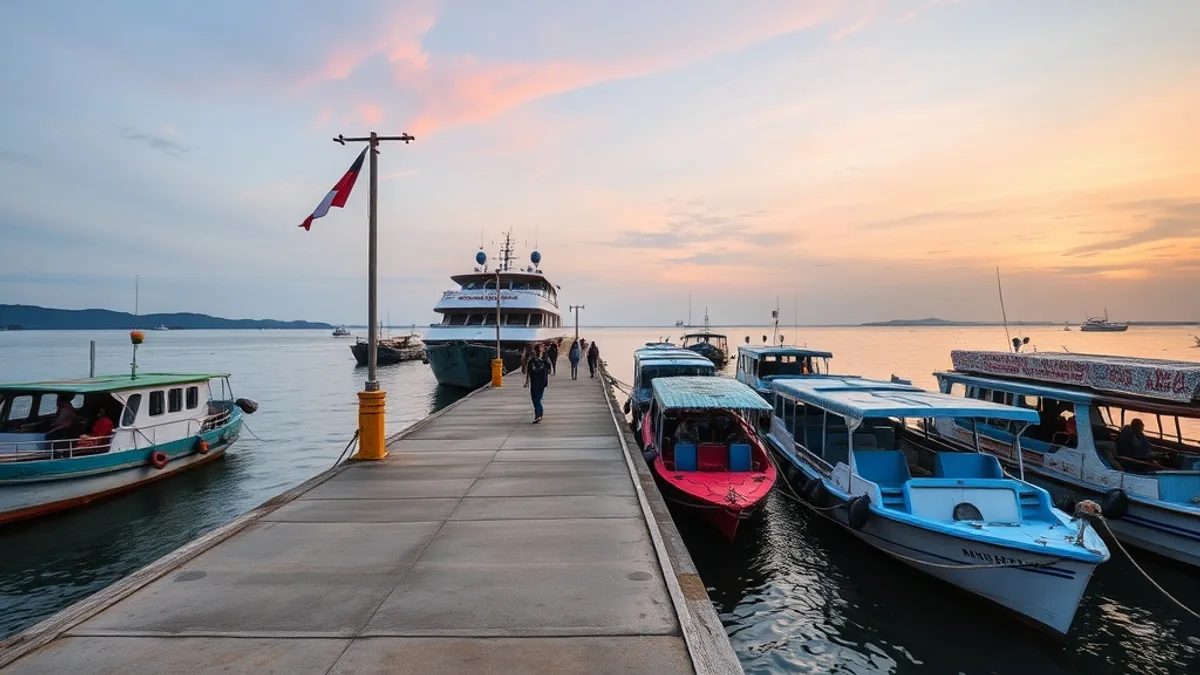
Yes, this is a very practical approach to making the most of a transit day in Surat Thani. The standard evening ferry departures to Koh Samui and Koh Phangan from Don Sak pier leave between 5 and 7 PM. Starting the temple circuit at 8 AM, spending two hours at Suan Mokkh, two hours in Chaiya (museum and chedi), and two hours at Khao Tha Phet leaves ample time to return to Surat Thani town, collect your luggage, and travel the 70 kilometres to Don Sak pier for an evening departure. A hired songthaew driver can often drop you directly at the ferry pier rather than returning to town, which saves considerable time. Confirm the ferry schedule and book tickets the night before to avoid last-minute complications.