Introduction
Beyond the beach clubs and resort pools, Koh Samui holds a rich layer of Buddhist heritage and cultural depth that rewards those willing to look for it. The island's temples range from the grandly theatrical — the golden Big Buddha statue rising forty meters above a tidal island — to the quietly contemplative village wats where monks conduct morning alms and incense smoke drifts through ancient trees. Sacred rocks, mummified monks, gilded shrines, and serene lotus ponds form a spiritual landscape that coexists surprisingly harmoniously with the island's tourist infrastructure. Whether you are a first-time visitor curious about Thai Buddhism or a seasoned traveler seeking authentic cultural encounters, Koh Samui's temple circuit offers a genuinely moving experience. This guide covers all the major sacred sites on the island, practical visiting advice, and the cultural context that makes each place meaningful rather than merely photogenic.
Overview
Wat Phra Yai — universally known as the Big Buddha Temple — is the island's most iconic cultural landmark. Accessible via a short causeway from the northeast coast near Bophut, the temple sits on the small islet of Koh Faan. The golden Buddha image, completed in 1972, stands approximately 12 meters tall atop a large platform accessed by a ceremonial staircase flanked by nagas — the mythological serpent beings that appear throughout Thai Buddhist iconography. Despite its fame, the temple retains a genuinely sacred atmosphere. Monks reside on the island, and the sound of chanting often drifts from the interior shrine buildings in the early morning. The market of amulet sellers and souvenir stalls at the base of the causeway is unavoidable, but climbing the stairs and standing before the great golden image at sunrise, before the tour groups arrive, is a quietly powerful experience. Dress respectfully: shoulders and knees must be covered, and sarongs are available for loan at the entrance.
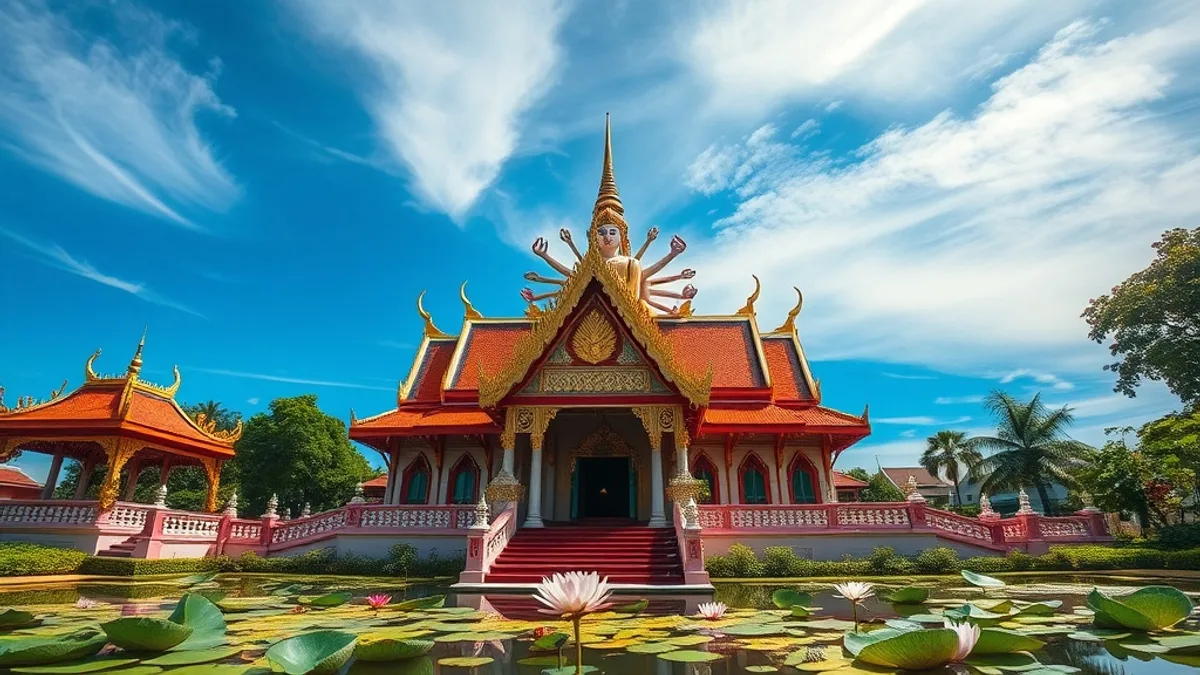
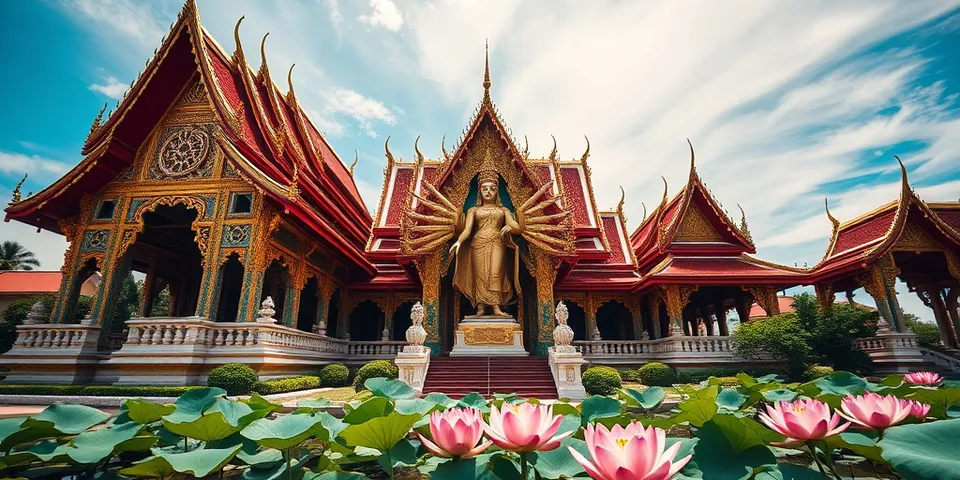
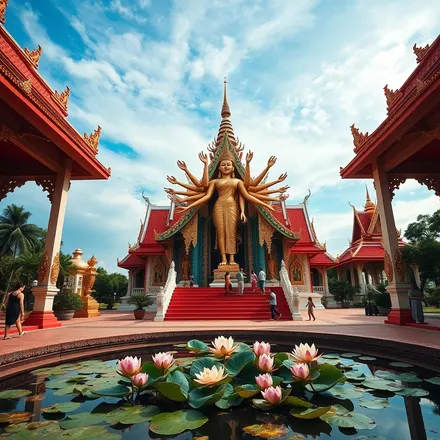
Wat Plai Laem, a short distance from Wat Phra Yai along the north coast, is arguably the most visually spectacular temple on the island. Built in a Chinese-Thai architectural style, the complex is centered around a dramatic 18-armed statue of Guanyin, the Chinese goddess of mercy, who stands on a lotus platform above a large ornamental lake. Boats carry merit-makers to feed the enormous fish that crowd the water below. The temple was constructed more recently than many on the island and its colors are vivid and well-maintained — the reds, golds, and blues of the pavilions reflecting in the still water create a scene of extraordinary beauty. Early morning visitors will find the complex almost empty, the incense rising undisturbed and the surface of the lake mirror-calm.
Wat Khunaram, inland on Route 4169 in the central part of the island, draws visitors for a reason that is simultaneously macabre and deeply meaningful within Thai Buddhist tradition: the preserved body of revered monk Luang Pho Daeng, who died in 1973 and is displayed in a glass case in an air-conditioned tower within the temple grounds. The monk requested this display as a continuing inspiration to followers, and Thai devotees come from across the country to pay their respects. The rest of the temple complex is a pleasant mix of garden, pagoda, and working monastery. The atmosphere is respectful and genuinely reverent — this is very much a living place of worship, not a tourist attraction.
On the southeast coast, the Hin Ta and Hin Yai rock formations — the Grandfather and Grandmother Rocks — occupy a unique place in Koh Samui's cultural landscape. The naturally formed rocks, shaped by millennia of coastal erosion into forms that are unmistakably, frankly, anatomical, are celebrated in local folklore as the petrified remains of an elderly couple whose boat sank near the shore. The legend varies in its telling but always ends with the couple transforming into rocks to watch over the island. Thais find them deeply auspicious and offerings are regularly left at both formations. International visitors tend to find the rocks amusing, which is entirely accepted by locals who appreciate the humor.
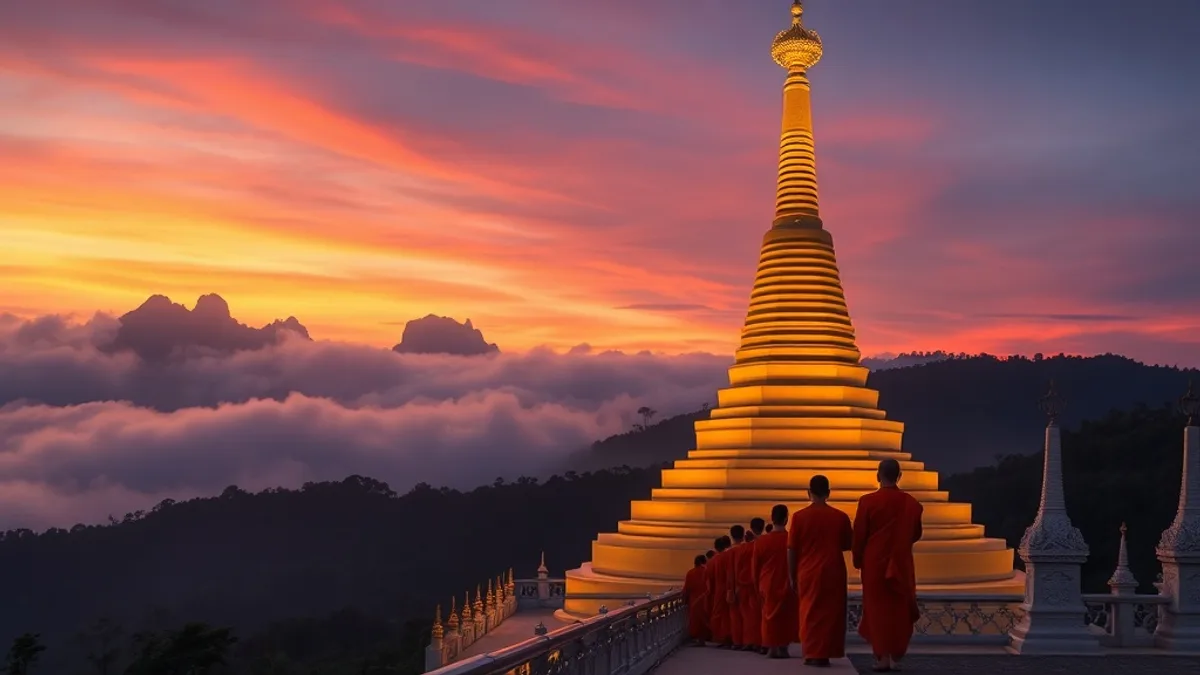
Beyond these major sites, the island has dozens of smaller village temples worth seeking out. Wat Samret in the south, known for its fine Indian-influence carved stone Buddha, and the hilltop monastery of Wat Hin Ngam, which offers panoramic views over the island's forested interior, represent the kind of quiet discovery that makes temple-hopping on Samui genuinely rewarding. Time visits to coincide with Buddhist holidays when possible — the atmosphere during Visakha Bucha or Makha Bucha, with candlelit processions circling the ubosot, is deeply moving and welcoming to respectful visitors.
Highlights
- Stand before the golden Big Buddha statue at Wat Phra Yai at sunrise before crowds arrive
- Photograph the breathtaking 18-armed Guanyin statue at Wat Plai Laem reflected in the lotus pond
- Pay respects at the preserved body of revered monk Luang Pho Daeng at Wat Khunaram
- Visit the legendary Hin Ta and Hin Yai grandmother and grandfather rocks on the southeast coast
- Explore Wat Samret's rare Indian-influenced stone Buddha carving in the island's south
- Discover the hilltop monastery of Wat Hin Ngam with sweeping jungle and sea views
- Witness morning alms-giving ceremonies at local village temples away from tourist areas
- Browse the sacred amulet market at the base of the Big Buddha causeway
- Observe merit-making rituals at Wat Plai Laem's ornamental lake and fish feeding pavilions
Temple visits are best in the early morning between 7 and 10 AM when the light is beautiful, the air is cooler, and tour groups have not yet arrived. Most temples are open from around 6 AM to 6 PM daily. Visiting during Buddhist holy days such as Visakha Bucha (May) and Makha Bucha (February) offers the most culturally rich experience but brings larger Thai crowds. The dry season from December to April is the most comfortable time weather-wise.
Practical Information
Cost Level
Entry to most of Koh Samui's temples is free, though donations are welcomed and spiritually meaningful within the Thai Buddhist tradition. Donating 20–50 THB per temple is appropriate and appreciated. The fish-feeding boats at Wat Plai Laem cost around 20 THB per bag of food. Sarong rental for modesty at Wat Phra Yai is typically free or 10–20 THB. Hiring a driver for a full temple circuit tour costs 800–1,500 THB for a half-day, or you can rent a scooter for around 200–300 THB per day and follow a self-guided route.
Tips
Always dress modestly — shoulders and knees covered for both men and women. Remove shoes before entering any temple building. Speak quietly and avoid pointing feet toward Buddha images. Never climb on statues or religious structures for photographs. Ask before photographing monks. The best circuit takes in Wat Plai Laem and Wat Phra Yai together (both in the northeast), then Wat Khunaram (central), and finally the Hin Ta and Hin Yai rocks (southeast coast) — covering the island efficiently in a morning.
Our creators on the ground in Koh-samui share their best recommendations in their videos.
Creators who cover this spot
Discover YouTube creators who feature this topic in their videos.

Discover Thailand
Christian
Discover Thailand – Deutscher Thailand Reise-Creator auf YouTube.

My Koh Samui Thailand Florenz der Auswanderer
Florenz Kittel
Florenz der Auswanderer – Deutscher Rentner auf Koh Samui auf YouTube.

Koh Samui Life
British expat documenting island life and practical insights for Koh Samui and Thailand's Gulf islands.
Places in this Guide
Discover the attractions and locations featured in this travel guide.
Explore Koh Samui
Koh Samui
เกาะสมุยKoh Samui combines a tropical island paradise with modern infrastructure. Popular with long-stay tourists and expats who...All creators from Koh Samui →Location & Orientation
Frequently Asked Questions
Do I need to pay to visit the Big Buddha temple on Koh Samui?
Entry to Wat Phra Yai (Big Buddha Temple) is free, though voluntary donations are welcomed and are a meaningful part of participating in Thai Buddhist culture. A donation of 20–50 THB is entirely appropriate. If you need a sarong to cover your legs, these are available at the entrance — some vendors charge a small fee while others provide them freely. The market stalls at the base of the causeway are commercial, but the temple itself is a free public sacred site.
What should I wear to visit temples on Koh Samui?
Both men and women should cover their shoulders and knees when visiting any temple on Koh Samui. Lightweight linen trousers, maxi skirts, or sarongs are ideal. Many temples provide sarongs for loan or a small fee if you arrive unprepared. Remove your shoes before entering any temple building — look for the pile of footwear at the door as your guide. Avoid revealing clothing, short shorts, and sleeveless tops. Carrying a lightweight scarf or wrap in your bag makes temple visits easy on a beach holiday.
Is the mummified monk at Wat Khunaram unsettling to visit?
Wat Khunaram is a functioning Buddhist temple, not a haunted house, and the atmosphere is one of deep reverence rather than the macabre. The preserved body of Luang Pho Daeng wears sunglasses (placed by devotees) and sits in a glass case in a purpose-built tower. Thai devotees visit regularly to pray and leave offerings. Most visitors who approach the site with respect and an open mind find it a genuinely moving rather than disturbing experience — a window into a different cultural relationship with mortality and the veneration of holy figures.
How do I get between the temples on Koh Samui?
Renting a scooter is the most flexible way to visit multiple temples, with daily rental costs of 200–300 THB. Be aware that Koh Samui's roads can be steep, and many tourist accidents occur on scooters — ensure you are a confident rider and always wear a helmet. Alternatively, hired songthaews (shared pickup trucks) can be negotiated for temple circuits from most beach areas. Grab operates on Koh Samui and is the safest and most hassle-free option if you prefer not to ride a scooter.
Are there any Buddhist festivals worth timing a visit around on Koh Samui?
Visakha Bucha (the holiest day in the Buddhist calendar, marking the Buddha's birth, enlightenment, and death — occurring in May on the full moon) sees candlelit processions at temples across the island and is a deeply atmospheric time to visit. Makha Bucha in February and Asanha Bucha in July are similarly significant. During the Vegetarian Festival in October, Chinese-Thai communities across the island observe strict dietary practices and elaborate street processions. All of these occasions are welcoming to respectful outside visitors.