Introduction
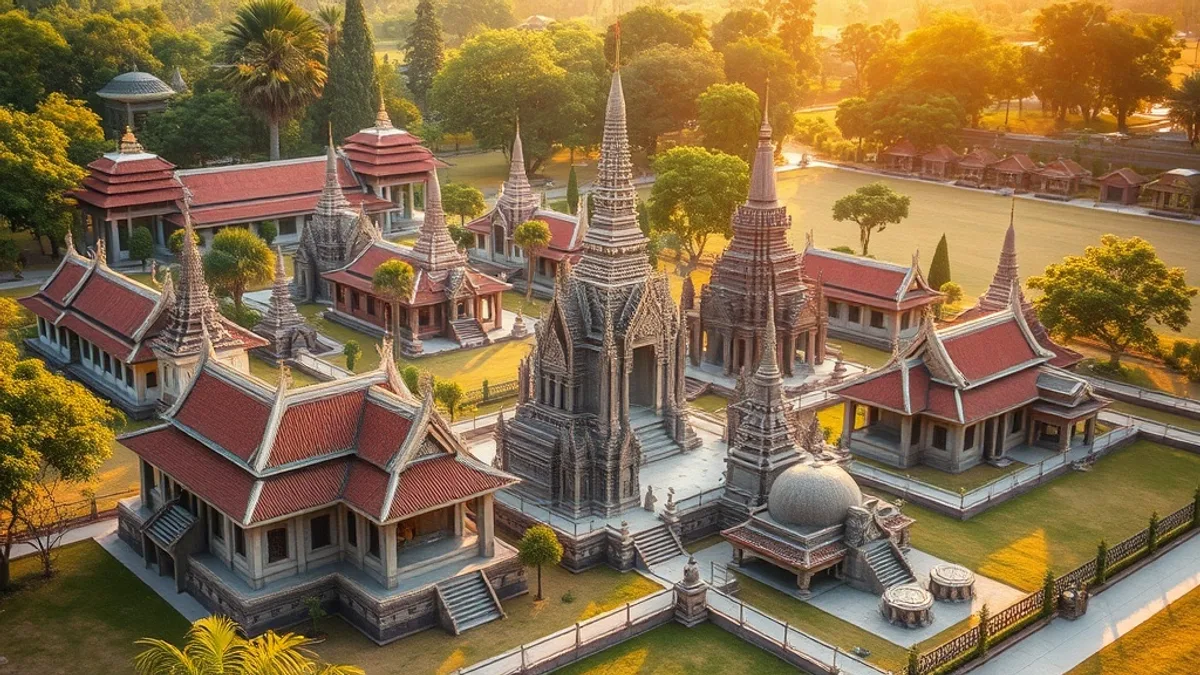
Just 30 kilometres south of Bangkok, the Ancient City — known in Thai as Muang Boran — stands as one of Southeast Asia's most remarkable cultural projects. Spread across 800 rai of parkland shaped like the map of Thailand itself, this open-air museum gathers more than 120 scale replicas and reconstructions of the kingdom's greatest monuments, from the soaring prangs of Ayutthaya to the teak pavilions of the Sukhothai era. It is neither kitsch nor merely decorative — many reconstructions here preserve architectural details that no longer exist in their original locations. Conceived by businessman Lek Viriyaphant and opened in 1972, Muang Boran is a genuine act of cultural preservation, and exploring it by bicycle or electric cart offers a half-day journey through a thousand years of Thai civilisation. Despite its extraordinary scale and importance, the park remains surprisingly uncrowded, making it one of the most rewarding day trips available from the capital.
Overview
The Ancient City spans a purpose-built landscape in Samut Prakan province that was literally sculpted into the shape of Thailand's national boundaries, with different regions of the park corresponding roughly to the geographic regions of the country. Northern Thailand's monuments occupy the upper sections, while southern Thai architectural traditions appear near the park's lower reaches. This conceptual design gives the visit an almost cartographic logic — wandering through the grounds becomes a form of imaginary travel across the entire kingdom.
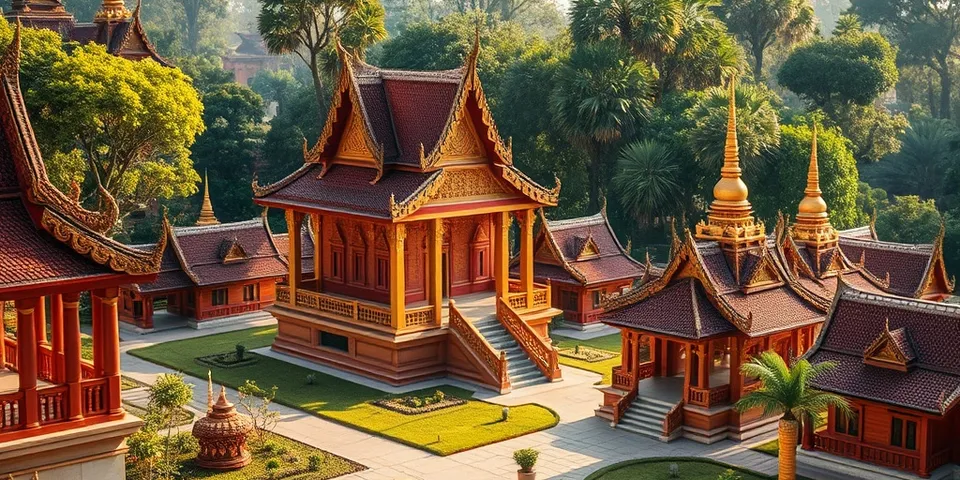
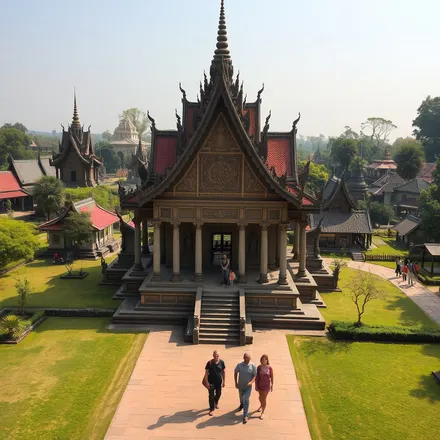
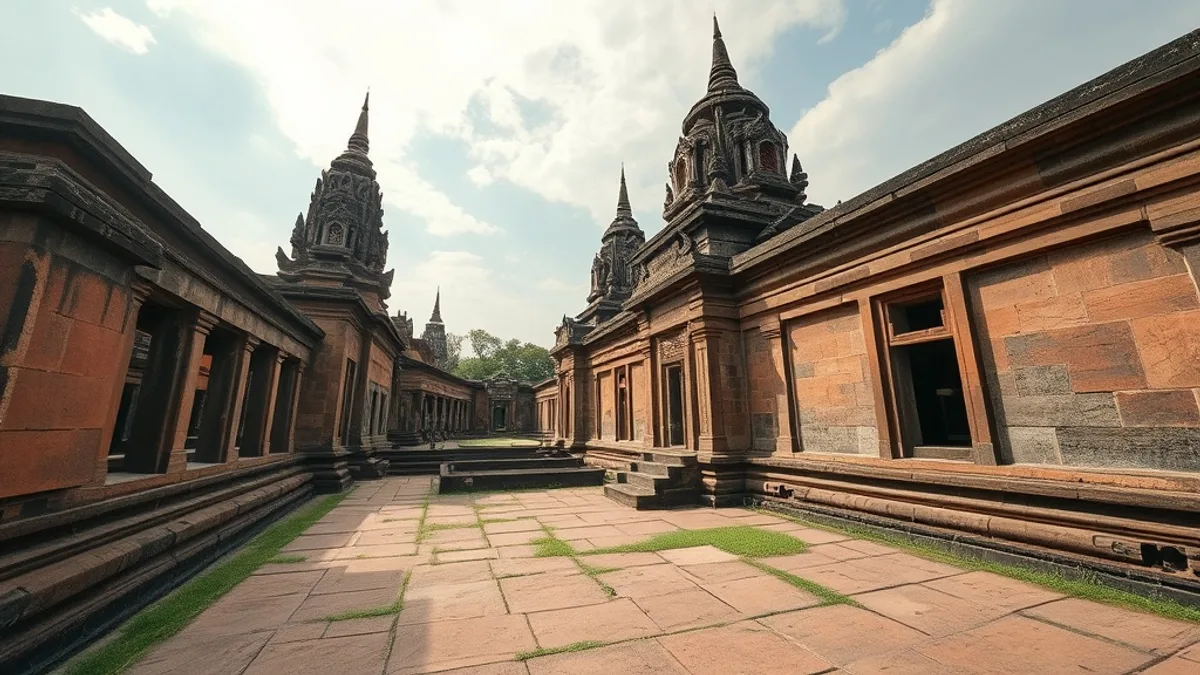
Among the 120-plus structures, certain highlights demand extended attention. The Pavilion of the Enlightened houses a serene giant reclining Buddha of exceptional craftsmanship, its surrounding gardens maintained with meticulous care. The reconstruction of the Ayutthaya royal palace presents the grand ceremonial architecture of Thailand's most powerful historical kingdom, complete with gilded spires and tiered roofs that evoke the city's former glory before its destruction in 1767. The Prasat Hin Phanom Rung replica honours the magnificent Khmer sanctuary in Buriram, allowing visitors to appreciate the scale and precision of the original's sandstone carvings in a more accessible setting.
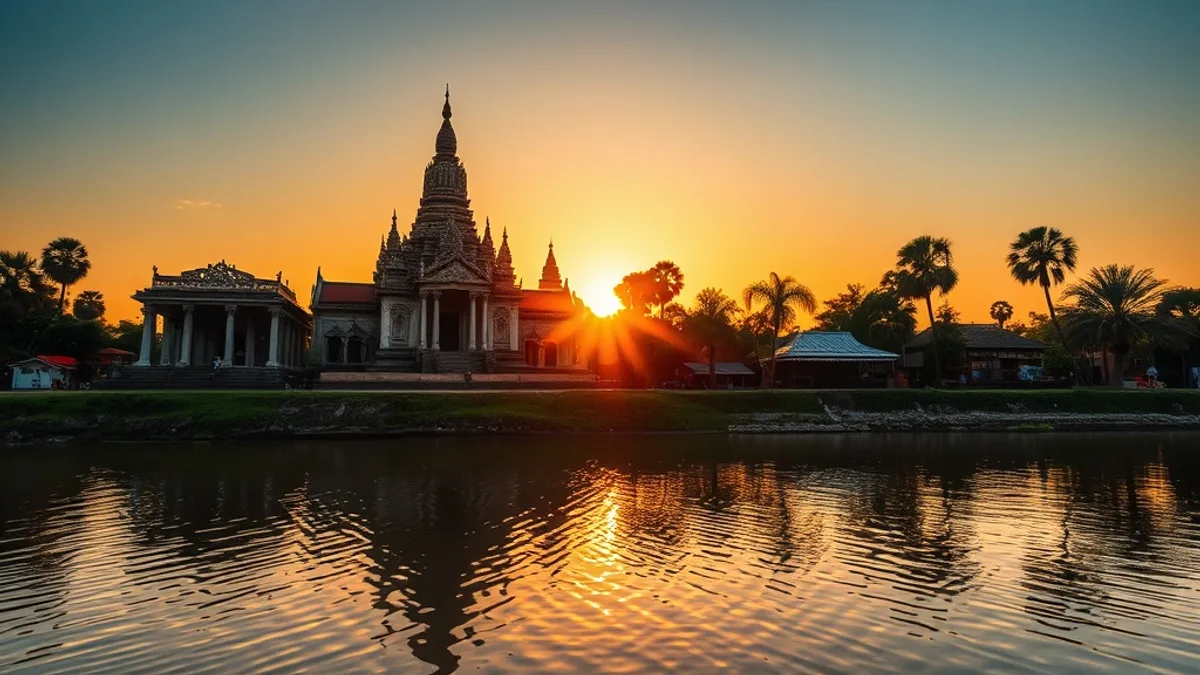
The floating village section recreates a traditional Thai riverside community, complete with wooden houses on stilts, small boats, and market stalls. This segment offers one of the park's most photogenic environments, particularly in the soft light of early morning when mist occasionally lingers over the water. Elsewhere, a reconstructed traditional Thai house complex demonstrates the regional architectural variations found across the country, from the steep roofs of northern vernacular design to the more open, airy structures of the central plains.
Practically speaking, the park rewards those who arrive early. Gates open at 9am, and spending the first hour before tour groups arrive allows for unobstructed photography and a more meditative experience. Electric carts can be hired at the entrance for approximately 200 THB per hour, providing a useful overview before deciding which areas to explore on foot. Bicycles are also available for hire at 50 THB, and cycling remains the most satisfying way to cover the ground at a pace that allows genuine appreciation. The park cafe serves simple Thai dishes, but bringing a light snack and water is advisable for the longer cycling routes.
Highlights
- 120+ scale replicas of Thai monuments from all historical eras across 800 rai of parkland
- Ayutthaya royal palace reconstruction with original gilded spire detail
- Prasat Hin Phanom Rung Khmer temple replica preserving intricate sandstone carvings
- Pavilion of the Enlightened with its giant reclining Buddha in tranquil gardens
- Floating traditional Thai village recreating riverside community life
- Regional architectural diversity from northern teak pavilions to southern mosque forms
- Park shaped like the map of Thailand — a unique conceptual design
- Bicycle hire for independent exploration at 50 THB per ride
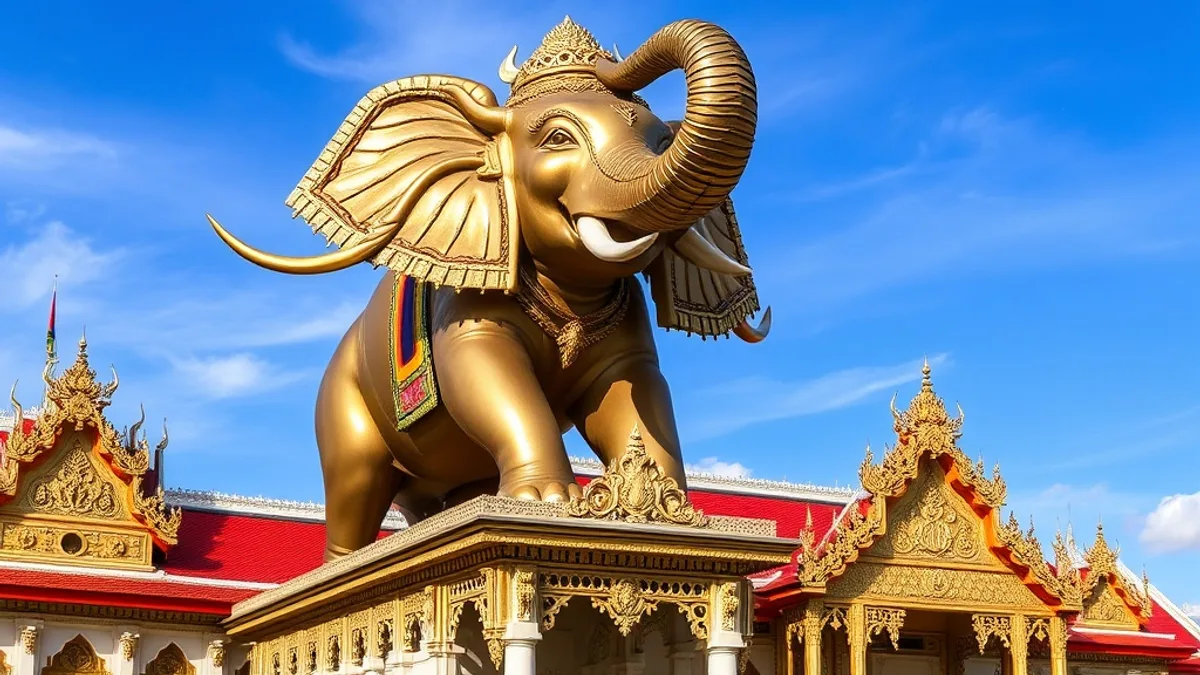
- Combine easily with the nearby Erawan Museum for a full day of Samut Prakan culture
- Virtually crowd-free mornings despite its world-class significance
Early morning visits between 9am and 11am offer the best light for photography and the most peaceful atmosphere before tour groups arrive. The park is open daily from 9am to 7pm. Avoid Thai public holidays when domestic visitor numbers spike significantly. The cool season from November to February provides the most comfortable walking conditions, though the park's shaded paths make it manageable year-round. Weekday visits are considerably quieter than weekends.
Practical Information
Cost Level
Entrance fee is 120 THB for foreigners (children 60 THB). Electric cart hire runs approximately 200 THB per hour or 500 THB for a full guided cart tour. Bicycle hire is 50 THB. Combined tickets with the Erawan Museum are available at around 500 THB total, representing a meaningful saving. Budget approximately 300-500 THB per person including transport, entry, cart hire, and a simple lunch at the park cafe.
Tips
Take the electric cart tour first to get your bearings, then return on foot or bicycle to the sections that most interest you. The park map available at the entrance is essential — the grounds are large enough to get disoriented without one. Bring sun protection as many of the connecting paths between structures are exposed. The gift shop near the entrance stocks good-quality Thai craft reproductions at fair prices.
Our creators on the ground in Samut-prakan share their best recommendations in their videos.
Creators who cover this spot
Discover YouTube creators who feature this topic in their videos.

bangkokandmore
Martin Borsetti is a German content creator based in Bangkok documenting the city's street food scene and local culinary culture.

Discover Thailand
Christian
Discover Thailand – Deutscher Thailand Reise-Creator auf YouTube.

travelventure
Marie & Jan
travelventure – Groesster deutschsprachiger Reise-Creator auf YouTube.
Places in this Guide
Discover the attractions and locations featured in this travel guide.
Explore Samut Prakan
Samut Prakan
สมุทรปราการSamut Prakan is a province bordering Bangkok to the south, offering a fascinating blend of cultural attractions and gree...All creators from Samut Prakan →Location & Orientation
Frequently Asked Questions
How do I get from Bangkok to Ancient City Muang Boran?
The easiest route is the BTS Skytrain Sukhumvit Line to Kheha station, the southern terminus, which takes around 30 minutes from central Bangkok and costs 59 THB. From Kheha, take a taxi or Grab to the Ancient City entrance — approximately 15 minutes and 80-120 THB. Alternatively, songthaews (shared pickup trucks) run from Paknam along the road towards the park, though this option requires some local navigation. Driving yourself via the Bangna-Trat highway is straightforward and recommended if you plan to combine the visit with the Erawan Museum.
How long does it take to see the entire Ancient City park?
Allow a minimum of three hours for a highlights overview, ideally four to five hours for a thorough visit. The park is genuinely large — covering 800 rai — and attempting to see everything on foot in one visit is exhausting. A practical approach is to take the electric cart tour (45-60 minutes) for orientation, then cycle or walk to your priority structures. Arriving at 9am and staying until 2pm gives a satisfying full visit with time for lunch at the park cafe without feeling rushed.
Is Ancient City suitable for children?
Yes, very much so. The scale of the reconstructed buildings impresses children, and the bicycle hire and electric carts make it manageable for young legs. The floating village section with its water features and traditional boats tends to be particularly engaging for younger visitors. The grounds are well-maintained and safe for children to explore. There are basic food and snack stalls throughout the park, and the main cafe near the entrance serves familiar Thai dishes that even selective young eaters tend to accept.
Can I combine Ancient City with the Erawan Museum in one day?
Yes, and this is the recommended approach. The Erawan Museum is approximately 10-15 minutes by taxi from the Ancient City entrance. Spend your morning at the Ancient City (9am-1pm), have lunch at the park cafe or at a local restaurant near the entrance, then visit the Erawan Museum in the afternoon (2pm-5pm). Combined tickets are available at around 500 THB. Both sites are on the BTS Bearing-Kheha corridor, making transport straightforward. Return to Bangkok comfortably by early evening.
Is photography allowed throughout the Ancient City?
Photography is freely permitted throughout the park, including inside most of the reconstructed structures. Tripods are generally allowed on the open grounds. The park's photogenic quality is exceptional — early morning light falling on the gilded spires of the Ayutthaya palace reconstruction and reflections in the floating village waterways are among the most striking compositions available. Drone photography requires advance permission from the management office and is subject to restrictions. Always be respectful when photographing in sections containing active Buddhist shrines.