Introduction
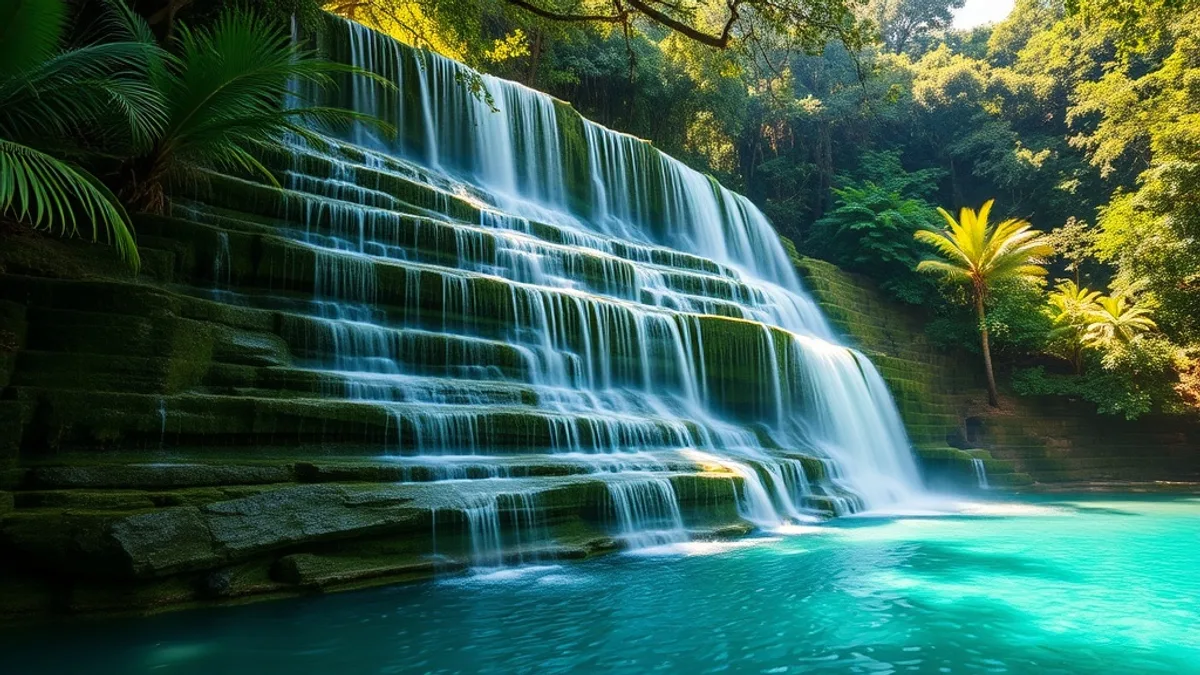
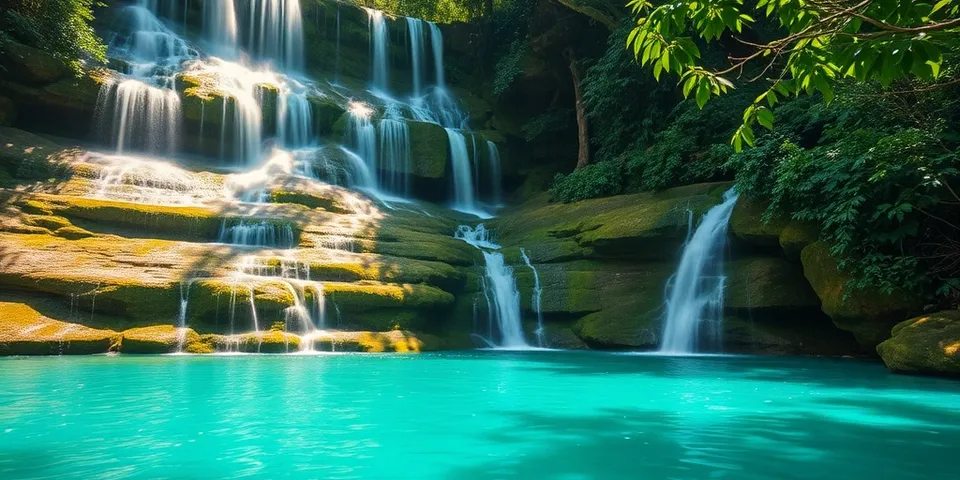
Ask any Thai person to name the most beautiful waterfall in the country and Erawan will feature near the top of almost every list. The seven-tiered cascade in Erawan National Park, about eighty kilometres northwest of Kanchanaburi town, earns that reputation through the extraordinary colour of its pools — a luminous emerald green caused by dissolved limestone minerals — and through the sheer variety of the experience each tier offers. The lowest pools are wide and accessible for non-hikers; the middle tiers have shallow swimming holes where small fish nibble gently at your feet; and the highest tiers, reached after a proper jungle hike on rocky trails, reward the effort with a beauty and solitude that few of Thailand's tourist waterfalls can match. This guide covers all seven tiers in detail, gives honest time estimates for the hike, and tells you everything you need to know to make the most of a day or overnight visit.
Overview
Erawan National Park was established in 1975 and covers approximately 550 square kilometres of forested limestone karst hills in Kanchanaburi Province. The park takes its name from the mythical three-headed white elephant of Hindu and Buddhist tradition — the Thai word Erawan — because the shape of one of the upper waterfalls is said to resemble this creature. The park is home to gibbons, macaques, hornbills, and a variety of reptiles and smaller mammals, and the forest along the waterfall trail is genuinely wild despite the park's popularity.
The seven tiers of the waterfall are numbered from bottom to top and each has a distinct character. Tier 1 — Haew Wang — is the broadest and most accessible, with a wide pool surrounded by forest and a sandy bank. It receives the most visitors and can become crowded on weekends and holidays. Tier 2 — Wang Macha — is where the famous fish nibbling experience takes place: small doctor fish congregate near the cascade and will gently exfoliate any skin they can reach. The pool is clear and the surrounding trees provide dappled shade. Tier 3 — Pha Nam Tok — involves climbing a steeper section of trail and rewards with a long curtain waterfall dropping into a deep green pool.
Tiers 4 through 6 become progressively less visited and more beautiful. The trail after Tier 3 climbs more seriously, crossing stream sections on stepping stones and navigating tree roots. Tier 4 — Wang Pha Si — has a particularly beautiful overhang that frames the cascade from below. Tier 5 — Phu Pha Erawan — is midway up and offers the first of the truly solitary pools where you may find yourself alone on a weekday. Tier 6 continues the climb through denser jungle. Tier 7 — Dong Phi Seua — is the topmost and in many visitors' opinions the most beautiful: a wide, multi-curtain waterfall set in a bowl of limestone and forest that feels genuinely remote. Getting here requires roughly ninety minutes of uphill walking from the park entrance — a trail of moderate difficulty on good surfaces but with some scrambling sections near the top.
The round trip to all seven tiers and back takes approximately three to four hours at a moderate pace, plus time in the pools. Most visitors spend five to six hours in the park total. Water shoes or sandals with grip are essential — the rocks around the pools are slippery and bare feet are impractical. Lockers are available at the park entrance for around 20 THB. Bring your own snacks and water as the park restaurant near the entrance is basic and the trail has no facilities beyond Tier 2.
The park's visitor management has evolved significantly. A daily cap on visitor numbers was introduced to protect the ecosystem, and pre-booking through the online portal (reservations.dnp.go.th) is strongly recommended, especially for weekends and public holidays when the park fills to capacity quickly. Entry is 300 THB for international adults and 100 THB for Thai nationals. Children under fourteen receive a reduced rate.
The best time to visit for maximum water volume is during and just after the rainy season — particularly from June through September, when the falls are at their most dramatic with heavy white cascades crashing through the forest. However, the trails can be slippery and leech activity increases during heavy rain. The dry season from January to April produces clearer, calmer pools that are better for swimming, but the upper tiers can slow to a trickle by April. The emerald colour of the pools, caused by dissolved mineral content rather than algae, persists year-round regardless of water volume.
Erawan National Park can be combined with the Bridge on the River Kwai and the Death Railway into a full day circuit from Kanchanaburi town, or from Bangkok as an ambitious but feasible day trip with early departure. The Hellfire Pass Memorial Museum, about ninety minutes further north on the railway route, pairs well thematically with the WWII sites in town for visitors who want to understand the full geography of the Death Railway.
Highlights
- Swim in the luminous emerald-green pools at multiple tiers of Erawan Falls
- Experience the famous fish nibbling at Tier 2 — small doctor fish gently exfoliating skin in clear water
- Hike the full seven-tier trail through genuine tropical jungle to the solitary top cascade
- Photograph the multi-curtain Tier 7 waterfall — the park's most beautiful and least visited
- Watch for gibbons calling in the forest canopy above the middle trail sections
- Swim beneath the Tier 4 overhang for one of the most photogenic waterfall compositions in Thailand
- Arrive at opening time (8 AM) to experience the lower tiers before day-trippers from Bangkok arrive
- Combine Erawan with Hellfire Pass Memorial Museum for a full day of nature and WWII history
- Observe hornbills and other forest birds along the trail sections between the lower tiers
June to September offers the highest water volumes and the most dramatic cascades, though trails can be slippery and leeches are active in heavy rain. October to January is ideal for a combination of reasonable flow and clear, swimmable pools with comfortable hiking temperatures. February to April is the driest period — the emerald colour remains beautiful but upper tier flows diminish significantly. The park is most crowded on Thai public holidays and long weekends throughout the year — check the calendar before booking. Weekday visits between November and February offer the best combination of pleasant conditions and manageable crowds.
Practical Information
Cost Level
Park entry is 300 THB for international visitors, 100 THB for Thai nationals. Children under fourteen are 150 THB and 50 THB respectively. Locker rental at the entrance costs 20 THB. Transport from Kanchanaburi town: songthaew pickup trucks operate from the town centre market to the park for around 50-80 THB per person each way, departing when full. A hired private car from Kanchanaburi is around 800-1,200 THB return with waiting time. Day trip transport from Bangkok costs significantly more. The park restaurant near the entrance serves basic Thai food at 60-120 THB per dish.
Tips
Book your park entry online at reservations.dnp.go.th at least two days in advance for weekend visits — the daily cap fills early and walk-in entry is refused when the limit is reached. Wear water shoes or grip sandals throughout the trail — every tier involves rock-hopping on limestone surfaces that can be extremely slippery even when dry. Start the hike immediately upon entry to reach Tier 7 while the light is good and return to the lower pools for swimming in the afternoon when the sun hits the water. Do not feed the fish at Tier 2 despite vendor offers near the entrance — it disrupts the natural behavior that makes the fish nibbling experience possible.
Our creators on the ground in Kanchanaburi share their best recommendations in their videos.
Creators who cover this spot
Discover YouTube creators who feature this topic in their videos.
Adventures Joel
British adventure vlogger exploring Thailand by motorbike.
Global Travel Mate
Jeroen is a Dutch expat documenting Bangkok's urban landscape through bicycle exploration and cultural observation.
travelventure
Marie & Jan
travelventure – Groesster deutschsprachiger Reise-Creator auf YouTube.

Places in this Guide
Discover the attractions and locations featured in this travel guide.
Explore Kanchanaburi
Kanchanaburi
กาญจนบุรีKanchanaburi is a province steeped in both natural beauty and wartime history, best known for the Bridge over the River ...All creators from Kanchanaburi →Location & Orientation

Frequently Asked Questions
How long does it take to hike all seven tiers at Erawan?
The trail from the park entrance to Tier 7 and back takes approximately three to four hours of walking at a moderate pace, not counting time spent swimming or resting at individual pools. The lower three tiers are accessible to most visitors including families with children and older adults. Tiers 4 through 7 require more physical effort — the trail climbs consistently and includes some scrambling sections near the top. Fit hikers move more quickly; those pausing to swim at each tier or photograph the pools should allow five to six hours total. The park closes at 4 PM so the last entry to begin the full trail should be no later than 10-11 AM.
Do I need to pre-book park entry at Erawan?
Pre-booking is strongly recommended, especially for weekends, Thai public holidays, and the high tourist season from November to February. The park has implemented a daily visitor cap to protect the ecosystem, and the online booking portal (reservations.dnp.go.th) fills weeks in advance on peak days. Walk-in entry is available if the cap has not been reached, but there is no guarantee of admission without a reservation. Weekday visits during low season (May-October excluding Thai holidays) are generally available without pre-booking, but the online system is quick to use and the small effort is worthwhile insurance.
Is it safe to swim in the pools at Erawan?
Swimming is safe in most of the designated pool areas. The national park authorities monitor water quality and the mineral-rich limestone water that gives the pools their emerald colour is generally clean and clear. Currents in the pools themselves are manageable. The main safety concern is slipping on rocks around the water's edge — limestone covered with algae is exceptionally slippery and injuries from falls are more common than water-related accidents. Always check depth before jumping into pools from rocks, and observe any warning signs posted by park staff. Swimming is not advised immediately after heavy rainfall when water turbidity and current can increase suddenly.
What should I bring to Erawan National Park?
Water shoes or grip sandals are essential and cannot be substituted by regular footwear — bare feet are impractical on the rocky sections and flip-flops provide no grip. Bring at least two litres of water per person as the trail has no facilities beyond the park entrance restaurant. Sunscreen, insect repellent, and a small first aid kit with plasters are useful. A dry bag or ziplock bags protect camera equipment and electronics near the pools. Swimwear and a quick-dry towel. Cash for the entrance fee, locker, and any food purchases. The park has minimal shade infrastructure beyond the natural forest canopy, so a hat for the exposed lower sections is advisable.
Can I visit Erawan National Park and the Bridge on the River Kwai in the same day?
Yes, this is a popular and feasible combination from Kanchanaburi town. The most practical order is to visit the bridge and war cemetery early in the morning (8-10 AM), then drive the eighty kilometres to Erawan and arrive by late morning for the waterfall hike. Alternatively, visit Erawan first for the full day and save the bridge, cemetery, and Death Railway Museum for the following day. Trying to combine a full seven-tier hike at Erawan with a thorough visit to the WWII museums and a Death Railway train ride in a single day is too ambitious — the museums alone deserve several hours. Prioritize what interests you most and allocate a second day if possible.