Introduction
No Thai beach town carries the weight of royal history quite like Hua Hin. When King Rama VII completed the Klai Kangwon Palace in 1926, he did more than build a summer retreat — he established a precedent for royal residence on the Gulf Coast that has shaped the city's identity ever since. The name Klai Kangwon translates as 'Far from Worries,' and this spirit of graceful retreat from the pressures of state runs through the entire cultural fabric of Hua Hin. From the elegant teak railway station that once delivered the royal court directly from Bangkok, to the hillside temples commanding panoramic views across the Gulf of Thailand, to the beloved monk statue at Wat Huay Mongkol where Thais travel from across the country to seek blessings, Hua Hin offers a cultural and historical depth that its beach-resort reputation only partially captures. For the traveller willing to look beyond the sun loungers and seafood stalls, this is a town where Thai royal history, coastal Buddhism, and a century of elegant leisure overlap in a uniquely satisfying way.
Overview
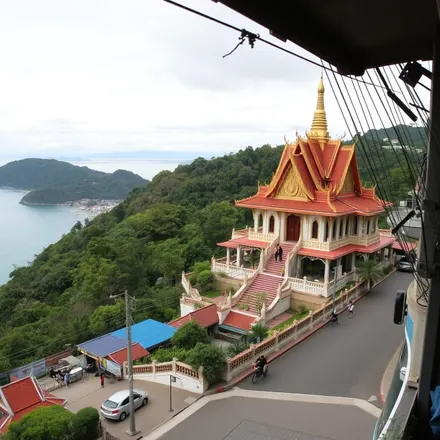
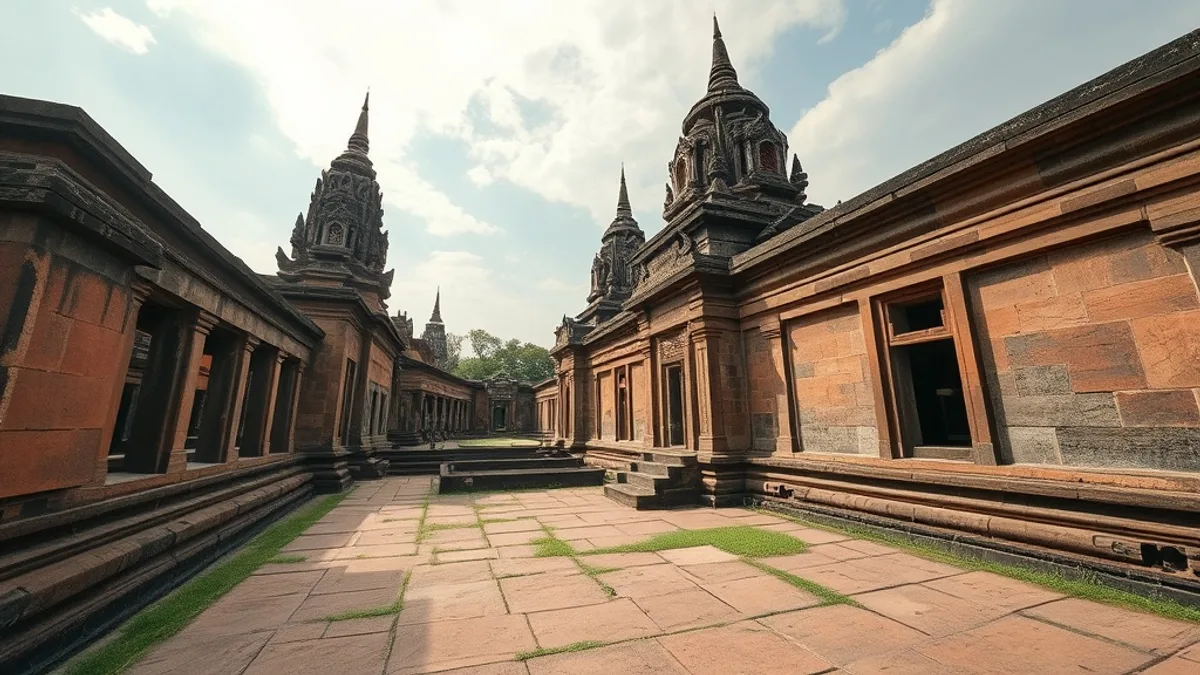
Klai Kangwon Palace stands on the northern edge of Hua Hin Beach and remains an active royal residence — King Rama IX spent considerable time here during his 70-year reign, and the palace retains deep personal significance for the Thai royal family. Public access to the palace grounds is permitted on certain days when the royal family is not in residence, but the schedule varies and should be checked in advance with the local municipality. Even from the perimeter, the graceful neoclassical Thai architecture, the manicured gardens descending toward the sea, and the atmosphere of dignified seclusion make the visit worthwhile. The palace is painted in the characteristic soft cream and green palette of early twentieth-century Siamese royal architecture, with elegant pitched roofs and covered verandahs facing the Gulf. Nearby, the restored Hua Hin Railway Station is one of the most photographed buildings in Thailand. Built during the reign of Rama VI, the red-and-cream wooden structure with its carved Thai-style gables houses a royal waiting room that was used by the king on his journeys from Bangkok. The room has been preserved with period furnishings and offers a touching glimpse into a particular moment in Siamese history when the train represented the very pinnacle of modernity.
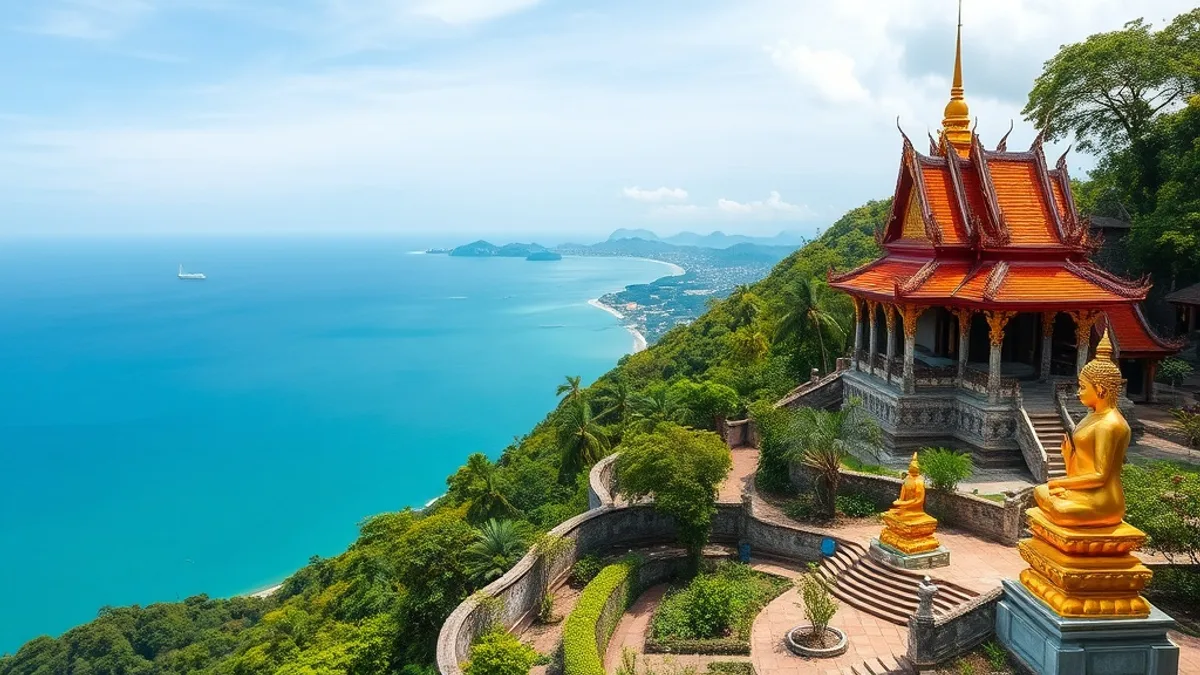
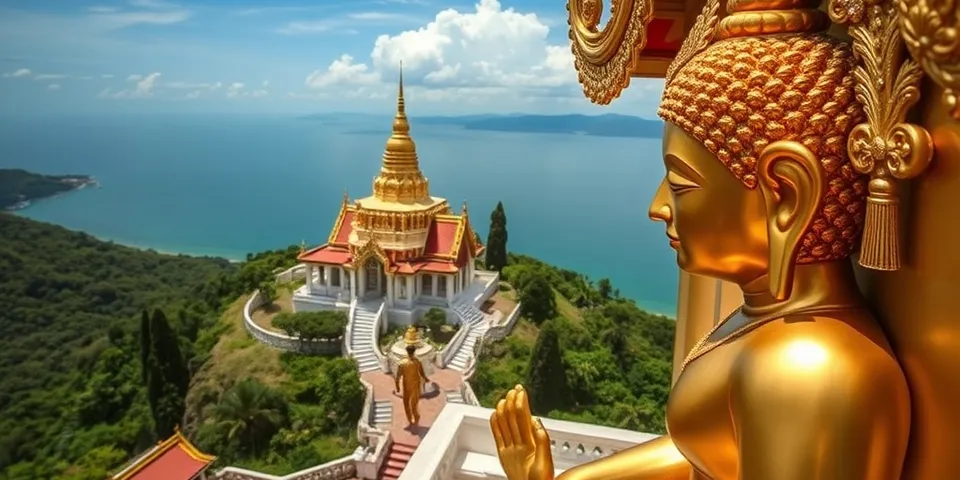
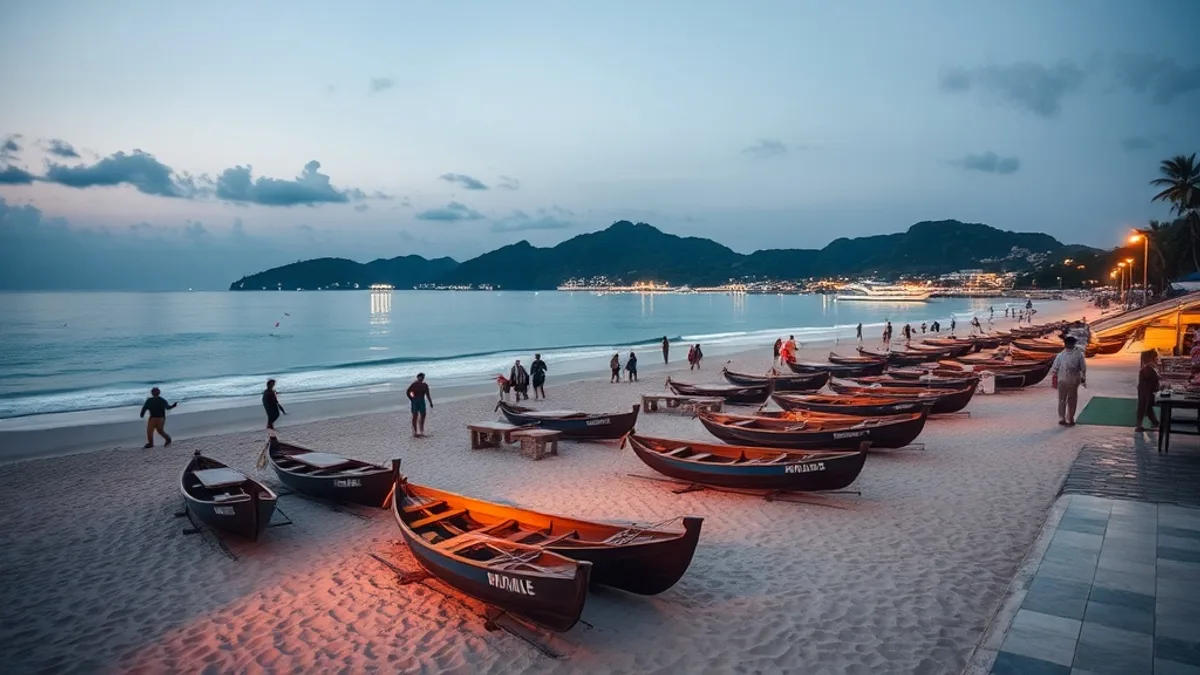
Wat Khao Takiab — universally known as Chopstick Hill Temple — occupies the summit of a rocky promontory at the southern end of Hua Hin Beach. The climb is steep but the reward considerable: a large standing Buddha in saffron robes surveys the full arc of the Gulf of Thailand, and smaller shrines and spirit houses are tucked into the rocks at various levels. The resident troop of long-tailed macaques is both the temple's most famous attraction and its most unpredictable element. The monkeys are bold and entirely accustomed to humans — they will approach anyone carrying food, and several have developed a talent for unzipping backpacks. Keep valuables secure and resist the urge to feed them. The fishing village at the base of the hill is one of Hua Hin's most atmospheric corners, with wooden houses on stilts over the water and boats in various states of repair pulled up on the shore. The seafood restaurants here are excellent and very local in character.
Wat Huay Mongkol, located approximately 15 kilometres west of town in the hills, is one of southern Thailand's most visited Buddhist pilgrimage sites. The main attraction is a colossal statue of Luang Pu Thuad, a revered monk from the seventeenth century whose miraculous legend involves turning seawater to fresh water to save a stranded crew during a sea voyage. The statue towers 16 metres high and is surrounded by extensive temple grounds with smaller shrines, lotus ponds, and a building displaying the monk's personal relics and biography. Thousands of Thai pilgrims come each week to pray, make offerings, and seek blessings from the monk's image. Visiting as a non-Buddhist traveller is entirely welcomed, provided dress standards are observed — shoulders and knees covered as a minimum. The sense of living, breathing devotion at the site is quite different from the more museum-like atmosphere of many famous temples.
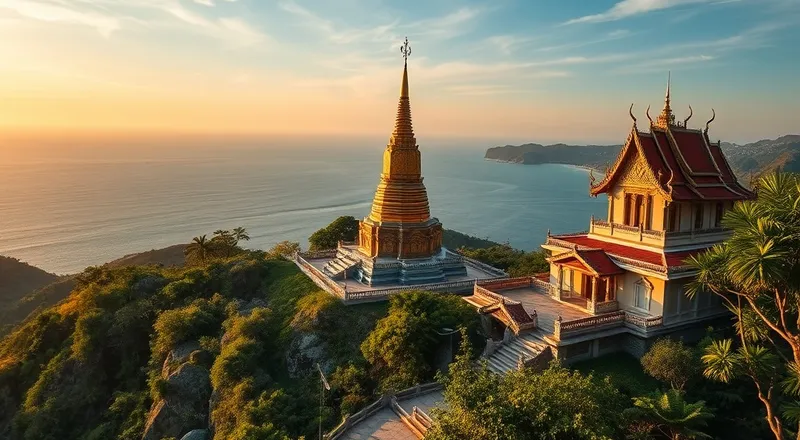
Khao Hin Lek Fai, a hilltop park and viewpoint northwest of the city centre, was laid out at royal command and offers excellent panoramic views across Hua Hin and the Gulf. Several paths wind through the parkland, passing rock formations, shade trees, and small shrines. It is an excellent spot to watch the sunset from above, with the city's rooftops and the silver band of the sea visible to the east. For those interested in recent Thai history, the Sam Phraya Museum near the palace district contains exhibits on Hua Hin's development as Thailand's first modern beach resort and on the royal connections that defined its character.
Highlights
- Stand at the perimeter of Klai Kangwon Palace, the royal summer residence that gave Hua Hin its distinguished identity
- Explore Thailand's most beautiful railway station with its preserved royal waiting room and carved Thai-style gables
- Climb Khao Takiab (Chopstick Hill) for panoramic Gulf views and an encounter with resident macaque monkeys
- Pay respects at the towering 16-metre Luang Pu Thuad statue at Wat Huay Mongkol, a living pilgrimage site
- Watch the sunset from Khao Hin Lek Fai hilltop park above the city and the shimmering Gulf
- Wander the fishing village beneath Khao Takiab for stilted houses, wooden boats, and local seafood restaurants
- Discover the preserved royal waiting room at Hua Hin Station, once the arrival point for the Siamese royal court
- Visit the smaller hilltop shrines and spirit houses scattered among the rocky outcrops of Khao Takiab
- Learn the history of Hua Hin as Thailand's first modern beach resort at the local heritage exhibits near the palace
The dry season from November to February offers the most comfortable conditions for temple visits and hilltop climbs. Morning visits to Wat Khao Takiab and Khao Hin Lek Fai are preferable — the light is better for photography, temperatures are lower, and the monkey population is generally calmer. Wat Huay Mongkol is busiest on weekends and Thai public holidays when pilgrims arrive in large numbers; weekday mornings offer a quieter experience. Palace access schedules vary — check the official royal household website or the Hua Hin municipality office before making a dedicated visit.
Practical Information
Cost Level
Most of Hua Hin's royal heritage sites are free or very inexpensive. Wat Khao Takiab charges no entrance fee; a small donation is appropriate. Wat Huay Mongkol is free to enter with optional merit-making donations for incense, flowers, and gold leaf. Khao Hin Lek Fai park charges a nominal 20-30 THB entry. Hiring a songthaew to Wat Huay Mongkol from town costs 200-400 THB return for a private hire; motorbike taxi is cheaper at around 100-150 THB one way. Many visitors combine sites in a half-day tuk-tuk or motorbike tour for 400-600 THB.
Tips
Dress modestly for all temple visits — long trousers or a sarong, and a shirt covering the shoulders are minimum requirements and are taken seriously at Wat Huay Mongkol. At Khao Takiab, hold bags and any food items close to your body before ascending the stairway — the macaques are skilled thieves and the risk is genuinely real. For the railway station, visit in the early morning before the day's first trains to photograph the platform and waiting room without crowds. Hiring a local guide for a half-day heritage tour is worth the 600-1,000 THB fee for the depth of historical context they provide.
Our creators on the ground in Hua-hin share their best recommendations in their videos.

Places in this Guide
Discover the attractions and locations featured in this travel guide.
Explore Hua Hin
Hua Hin
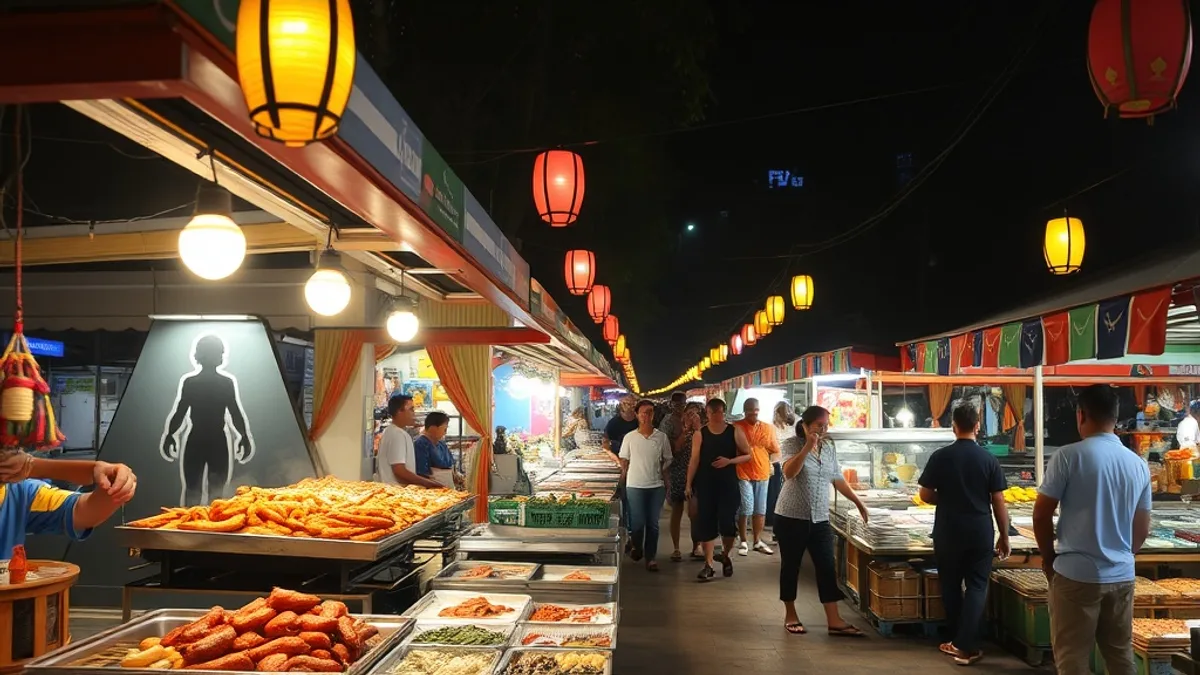
หัวหินHua Hin is one of the most popular coastal towns for expats and retirees in Thailand. Beaches, golf courses, night marke...All creators from Hua Hin →Location & Orientation
Frequently Asked Questions
Can tourists visit Klai Kangwon Palace?
Klai Kangwon Palace is an active royal residence and public access is only permitted on specific days when no members of the royal family are in residence. The schedule is not publicly fixed in advance and can change at short notice. The best approach is to check with the Hua Hin municipality tourist office (located near the town centre) on the day of your visit. When the palace is open, visitors can walk the grounds and gardens, and sometimes view the exterior of the main building. The palace is also visible from the beach to the north of the city, and the perimeter provides pleasant walking even when public access is not available.
Is Hua Hin Railway Station worth visiting if I arrive by car?
Absolutely. Hua Hin Railway Station is one of the most beautiful wooden railway stations in all of Southeast Asia and is worth a dedicated visit regardless of how you arrive in the city. The cream-and-red painted building with its carved Thai gables, hanging flower baskets, and preserved royal waiting room is a genuinely moving piece of early twentieth-century Thai architecture. The station remains active, so you can watch trains arriving and departing while exploring the platform. The best time to visit is early morning before the heat builds and before the day-tripping crowds arrive. The royal waiting room is located inside the main building.
How far is Wat Huay Mongkol from Hua Hin town?
Wat Huay Mongkol is approximately 15 kilometres west of Hua Hin town centre, in the foothills toward Kaeng Krachan National Park. By motorbike it takes around 25 minutes via Route 3169. By songthaew or tuk-tuk, expect 30-40 minutes depending on traffic. There is no reliable public bus service directly to the temple, so most visitors arrive by private motorbike rental, hired tuk-tuk, or as part of an organised half-day tour from town. The road passes through pleasant Thai countryside and small villages, making the journey itself enjoyable. Combining the visit with Khao Hin Lek Fai viewpoint nearby makes for an efficient half-day itinerary.
What should I know about the monkeys at Khao Takiab?
The long-tailed macaques at Wat Khao Takiab are numerous, confident, and entirely habituated to humans. They pose no serious threat to most visitors but are persistent and occasionally aggressive when food is visible. The key rules are: do not bring visible food up the steps, keep bags zipped and held close, do not make eye contact for extended periods as this can be read as a challenge, and if a monkey grabs something, release it rather than fighting — a minor loss is preferable to a bite. The temple authorities occasionally have staff with slingshots to manage the monkey population on busy days. The monkeys are genuinely entertaining to watch at a safe distance and are photogenic subjects from elevated positions.
What is the story behind Luang Pu Thuad and why is the shrine so important?
Luang Pu Thuad was a Buddhist monk believed to have lived between 1582 and 1682 in what is now southern Thailand. He is one of the most revered figures in Thai and Malaysian Buddhist tradition, credited with numerous miracles including the legend of turning seawater fresh to save a stranded ship's crew. Amulets bearing his image are among the most sought-after in Thailand and are worn by millions of people as protective talismans. The giant statue at Wat Huay Mongkol was constructed in the 1990s to honour this legacy and has become one of southern Thailand's most important pilgrimage destinations. Visiting the shrine, you observe Thai Buddhism as a living, emotionally resonant practice rather than a historical curiosity.