Introduction
When the sun drops behind the hills of Prachuap Khiri Khan province and the Gulf breeze picks up along the shore, Hua Hin transforms into one of Thailand's most rewarding evening food destinations. The royal resort town has always taken its food seriously — this is a city where Bangkok's most discerning weekenders come to eat, and where generations of royal patronage have established an expectation of quality that permeates everything from the grandest seafood terrace to the humblest noodle cart. Unlike the frantic market scenes of Chiang Mai or the overwhelming scale of Bangkok's street food corridors, Hua Hin's markets operate with a certain quiet confidence. The vendors know their regulars, the seafood arrives daily from the fishing boats docked at the pier, and the recipes have been refined across decades. Whether you come for the legendary grilled prawns of Dechanuchit Road, the artisanal food stalls of Cicada Market, or the pre-dawn produce ritual of Chatchai Market, eating your way through Hua Hin is a deeply pleasurable exercise in understanding Thai coastal cuisine at its most authentic and accomplished.
Overview
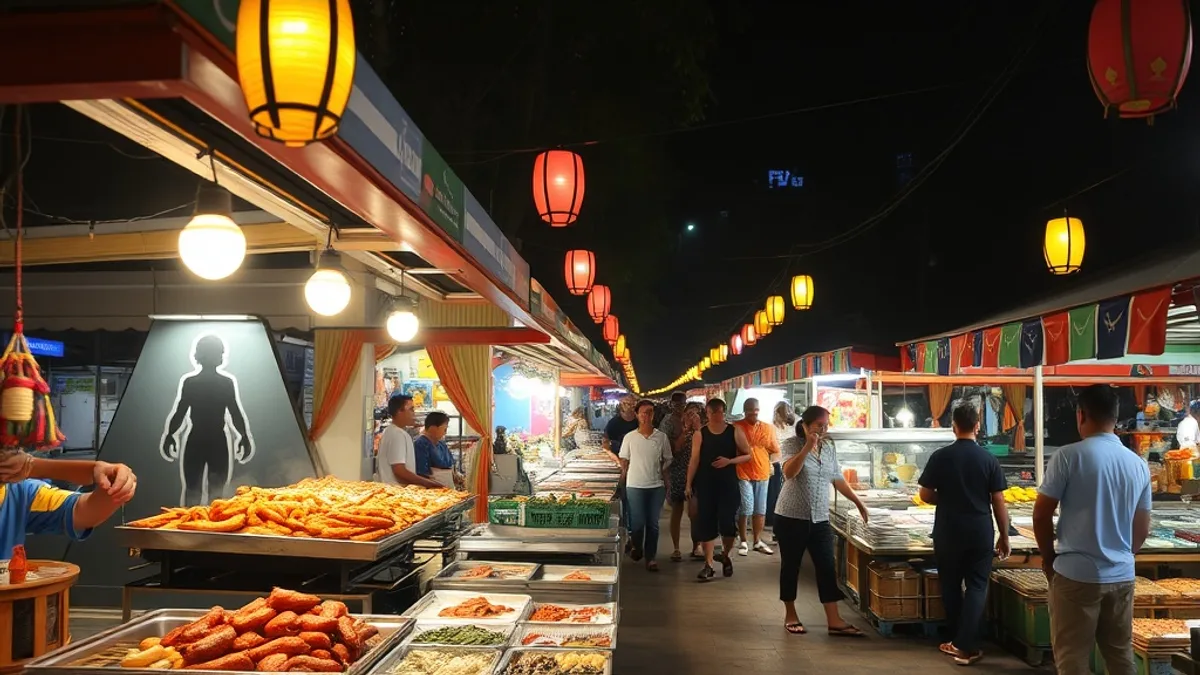
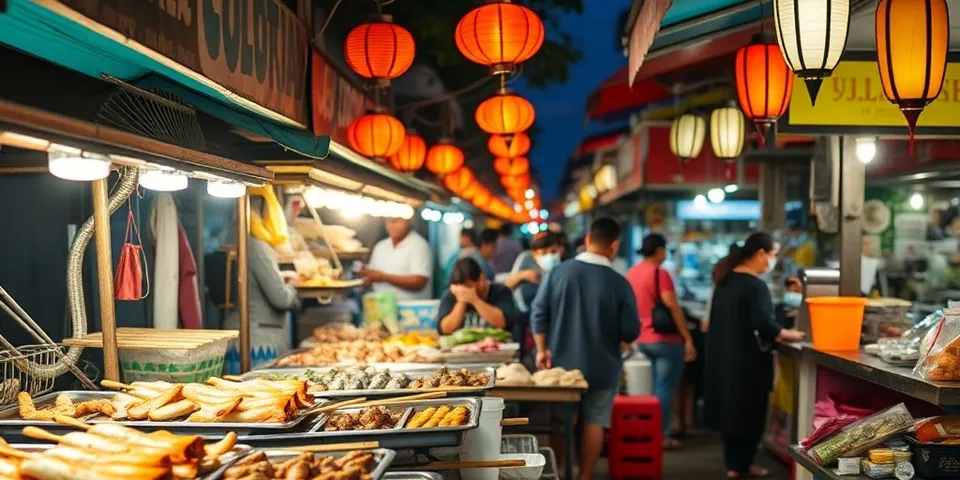
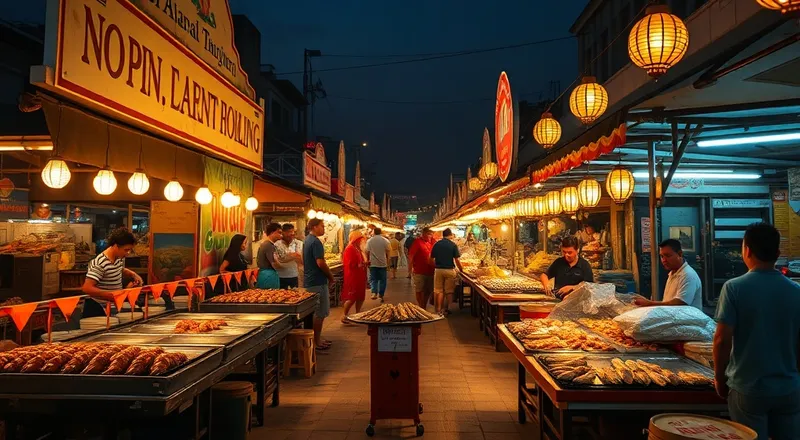
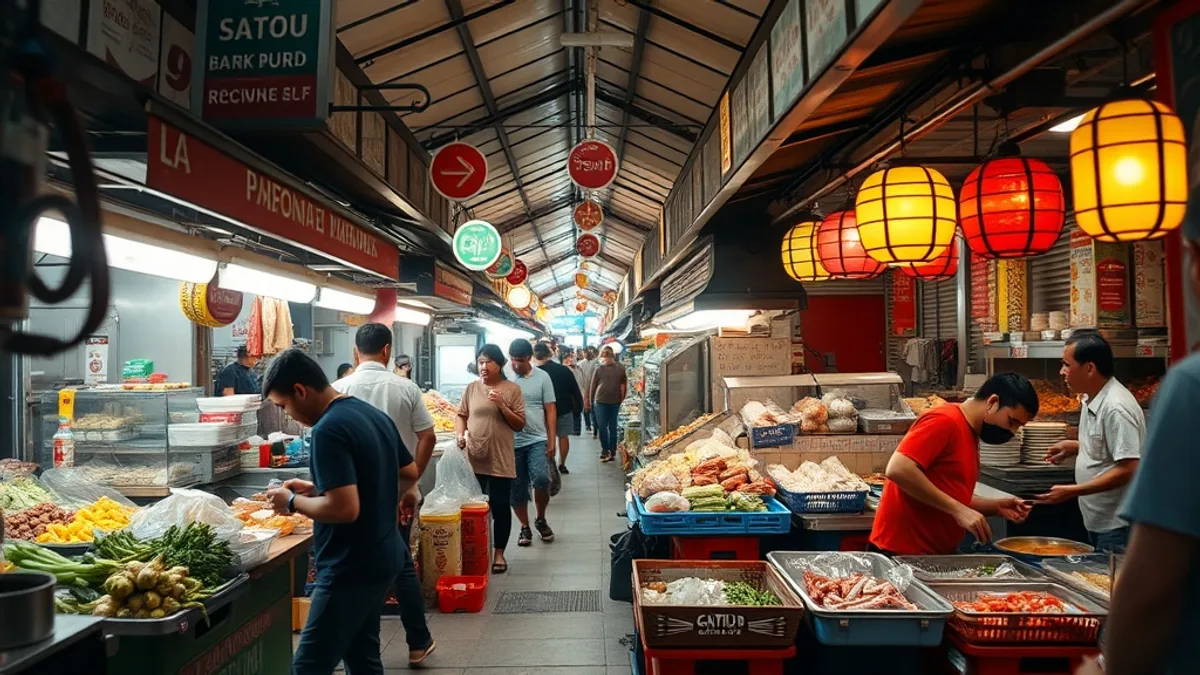
The Hua Hin Night Market — anchored on Dechanuchit Road and its surrounding sois — is the undisputed heart of the city's food scene. Operating from around 6 PM until midnight, the market runs along a narrow alley perpendicular to Phetkasem Road, and the density of stalls, the glow of charcoal grills, and the perfume of garlic and fish sauce combine to create an atmosphere that is unmistakably and irreplaceably Thai. The seafood is the headline act: enormous tiger prawns grilled over coals and served with a tart nam jim sauce, whole pla kapong (sea bass) wrapped in lemongrass and grilled in banana leaf, and half-metre-long squid charred to caramelised perfection. Oyster pancakes — known as hoi tod — are perhaps Hua Hin's single most iconic street dish. A thick batter of egg and tapioca flour is poured onto a screaming hot iron griddle, fresh oysters or mussels are pressed in, and the whole thing is flipped and crisped until the edges crackle. It arrives topped with bean sprouts and a generous drizzle of sriracha. Eating one at the market, standing over a plastic stool while the cook works two pans simultaneously, is a quintessential Hua Hin experience.
Cicada Market, operating on Friday, Saturday and Sunday evenings at the Marigot Bay complex, represents a more curated vision of the market concept. Created to showcase local artisans and independent food vendors, the space is architecturally considered — open wooden pavilions, string lights, gravel paths — and the food offer reflects a similar thoughtfulness. You will find northern Thai khao soi served alongside fresh pasta vendors, grilled corn with flavoured butters next to traditional kanom krok coconut pancakes. Live acoustic music drifts through the space, and the general atmosphere is relaxed enough for lingering. Prices are slightly higher than the night market but still entirely reasonable. The arts-and-crafts section is genuinely worth browsing, with local ceramicists, textile designers, and painters selling work you are unlikely to find elsewhere.
For the morning hours, Chatchai Market on Phetkasem Road is the destination that reveals how the city actually feeds itself. Operating from around 5 AM until noon, this covered wet market is where local restaurants source their ingredients and where Hua Hin households have shopped for generations. The produce section is a spectacle of colour and abundance — papayas the size of rugby balls, lychees heaped in purple mounds, bitter melon and Thai eggplant in a dozen varieties. The seafood section rewards early arrival: the catch from the previous night's boats is laid out fresh on ice, and vendors selling crab curry paste, dried shrimp, and pickled fish line the outer walls. Several breakfast stalls operate within the market, serving boat noodles, congee, and fresh-pressed juices to vendors and shoppers alike. It is unglamorous by design, resolutely functional, and gives a more honest picture of Thai food culture than any tourist-facing market.
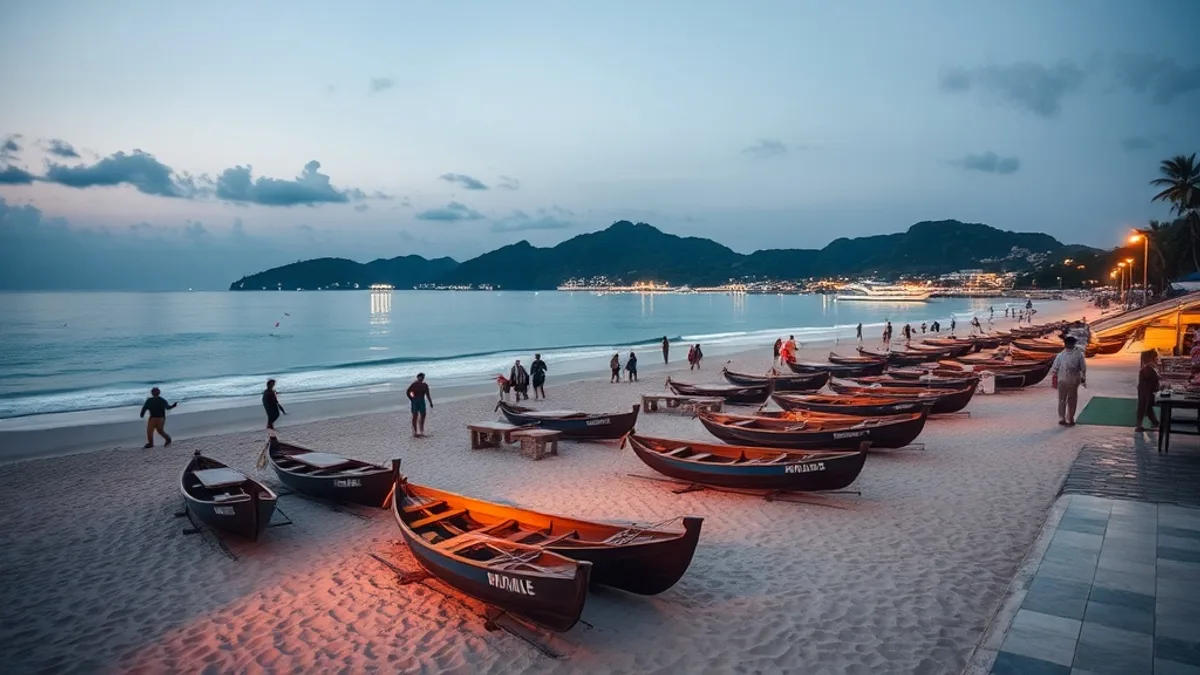
The Tamarind Market, situated further along the coastal road, occupies a different register again — a smaller, calmer space focused on homestyle Thai cooking and traditional desserts. The mango sticky rice served here is some of the finest in the region: Khao Dawk Mali rice steamed to translucency, blanketed in thick coconut cream, with slices of Mahachanok mango so ripe they almost dissolve. For a complete picture of Hua Hin's evening food culture, the seafood stalls strung along the beach south of the fishing pier deserve separate attention. These open-air restaurants, operating in the open air with tables pushed almost to the waterline, serve the most direct expression of the fishing town's identity: whatever came in on the boats that morning, grilled, steamed, or fried in a wok, with cold Singha and the sound of waves as accompaniment.
Highlights
- Devour freshly grilled tiger prawns and whole squid at the legendary Dechanuchit Road Night Market
- Try hoi tod oyster pancakes, Hua Hin's most iconic street dish, straight from a sizzling iron griddle
- Browse artisanal food stalls and live music at Cicada Market on weekend evenings at Marigot Bay
- Rise early for Chatchai Market and witness how the city's restaurants source their daily seafood catch
- Eat the definitive mango sticky rice at the Tamarind Market with coconut cream and Mahachanok mango
- Dine at beach-front seafood restaurants south of the fishing pier with waves breaking metres from your table
- Sample fresh grilled corn, kanom krok coconut pancakes, and northern-style khao soi at Cicada's food court
- Follow locals to the Hua Hin Railway Market for a mix of fresh produce and cooked street food
- Order the full seafood platter — pla kapong, goong pad prik, and deep-fried soft-shell crab — at a market-edge restaurant
The night market operates best during the cooler dry season from November through February, when evening temperatures are comfortable and the market atmosphere is at its liveliest. Weekend evenings draw larger crowds but also more stalls. Cicada Market runs Friday through Sunday year-round. Chatchai Market is most rewarding visited between 6 and 8 AM on any day of the week, when produce is freshest and the breakfast stalls are in full swing. Avoid visiting the night market on major Thai public holidays when prices may rise and the area becomes congested.
Practical Information
Cost Level
Hua Hin's markets remain genuinely affordable by any standard. At the night market, a plate of grilled prawns costs 150-350 THB depending on size, hoi tod runs 60-80 THB, and a full seafood dinner for two with drinks typically comes to 500-900 THB. Cicada Market prices run 10-20% higher. Chatchai Market is the cheapest of all — a bowl of boat noodles or congee costs 40-60 THB. Mango sticky rice at the Tamarind Market is 80-120 THB. Budget 300-500 THB per person for a satisfying evening food tour.
Tips
Arrive at the night market before 7 PM on weekends to secure seating at the best seafood stalls — they fill quickly. For hoi tod, look for stalls where the cook is working a queue rather than an empty griddle: turnover ensures freshness. Bring cash as most market stalls do not accept card payments. At Chatchai Market, point and smile confidently — vendors are accustomed to non-Thai speakers and will weigh, price, and bag your selection without fuss. Cicada Market has a dedicated car park; the night market is best reached on foot or by songthaew from most hotels.
Our creators on the ground in Hua-hin share their best recommendations in their videos.

Places in this Guide
Discover the attractions and locations featured in this travel guide.
Explore Hua Hin
Hua Hin
หัวหินHua Hin is one of the most popular coastal towns for expats and retirees in Thailand. Beaches, golf courses, night marke...All creators from Hua Hin →Location & Orientation
Frequently Asked Questions
What is the most famous food to eat at Hua Hin Night Market?
Hua Hin is most famous for its grilled seafood, particularly tiger prawns, whole sea bass in lemongrass, and charcoal-grilled squid. Hoi tod — the crispy oyster or mussel pancake made with egg and tapioca batter on a cast-iron griddle — is widely considered the signature Hua Hin street dish. Mango sticky rice made with locally grown Mahachanok mangoes is the essential dessert. The night market along Dechanuchit Road is the primary destination for all of these, though the beach-front seafood restaurants south of the fishing pier are equally worth a visit for a more atmospheric setting.
What is Cicada Market and how is it different from the night market?
Cicada Market is a curated weekend market at the Marigot Bay complex, open Friday through Sunday evenings. It combines an arts-and-crafts marketplace with a food court featuring independent vendors serving both Thai and international dishes. The atmosphere is more relaxed and aesthetic than the Dechanuchit Road night market — think string lights, wooden pavilions, live acoustic music, and artisan ceramics. Food prices are slightly higher but the variety is greater and the seating more comfortable. It is particularly popular with Bangkok weekenders and families, and worth visiting for the creative energy as much as the food.
Is Chatchai Market worth visiting as a tourist?
Absolutely. Chatchai Market on Phetkasem Road is a fully functioning wet market that locals use for daily shopping, and visiting it offers an authentic glimpse of Thai market culture that most tourist itineraries miss. The seafood section in particular — with its freshly landed fish, crabs, and shellfish laid on ice — is a revelation for anyone interested in Thai cuisine. Several breakfast stalls inside serve excellent boat noodles and congee for 40-60 THB. Arrive between 6 and 8 AM for the best atmosphere and freshest produce. Bring a small bag if you plan to buy fresh fruit.
How do I find the best seafood restaurants near the Hua Hin fishing pier?
The fishing pier area along the northern beach is home to a cluster of open-air seafood restaurants that are popular with both locals and in-the-know visitors. Walk north along the beach from the main hotel strip toward the pier and look for the rows of tables set up almost at the water's edge. These establishments have no fixed hours — they open when the boats come in and close when the food runs out. The best approach is to walk the row, check what fresh catch is displayed on ice outside each restaurant, and choose based on the quality of what you see rather than a menu. Prices are posted by weight for the live seafood tanks.
Can I find vegetarian food at Hua Hin's markets?
Yes, though Hua Hin's market scene is heavily oriented toward seafood and meat. At Cicada Market, several vendors cater specifically to vegetarian diners, including those selling pad thai with tofu, vegetable curries, and fresh fruit dishes. Chatchai Market's produce section is an excellent source for buying fresh vegetables, herbs, and tropical fruit. At the night market, look for stalls selling kanom krok coconut pancakes, fresh mango sticky rice, and stir-fried vegetable dishes — all naturally vegetarian. Communicating 'kin jay' (vegan/strictly no meat) or 'mai ao nuea sat' (no meat) clearly to vendors will usually result in a suitable modification.