Introduction
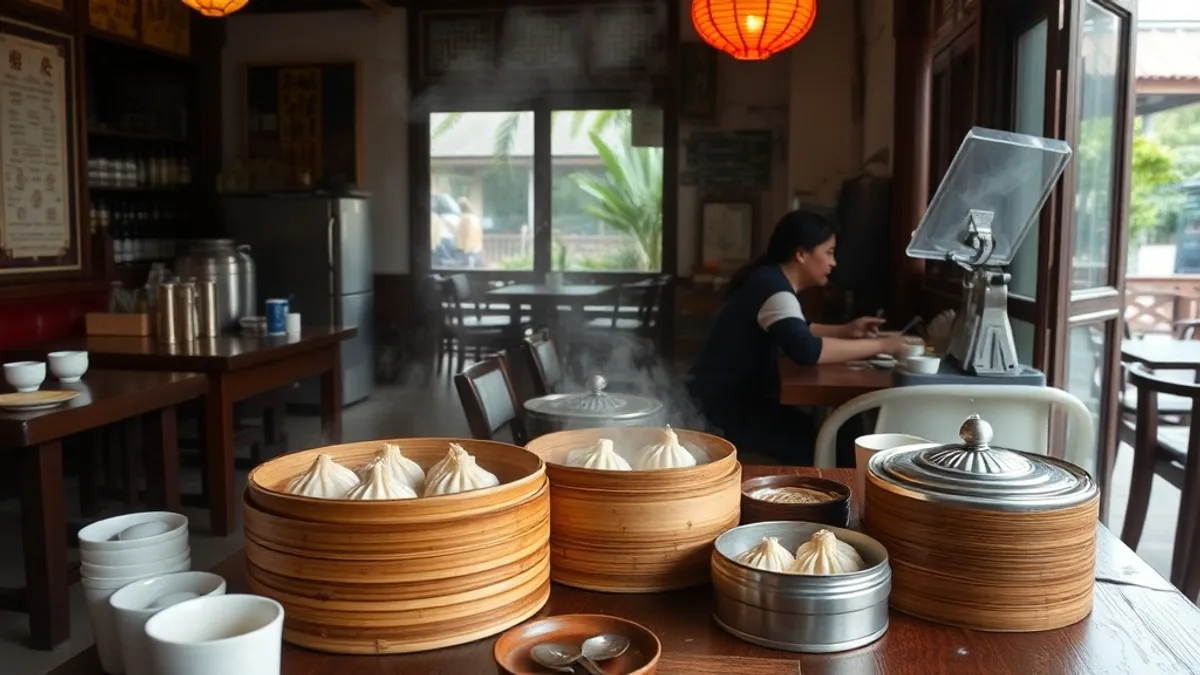
Ask any Thai food enthusiast to name the country's most underrated food city and Trang will appear on a list that is considerably shorter than it ought to be. This compact Andaman coast provincial capital has a food identity so distinct, so stubbornly specific to its Chinese immigrant heritage and southern Thai geography, that it functions almost as an argument for the proposition that the most interesting cuisines develop in provincial places rather than cosmopolitan ones. The roast pork tradition that Trang has exported to the rest of Thailand, the morning dim sum culture that defines its daily social rhythm, the evening street food scene around the clock tower area — all of it reflects a community that has been cooking the same things exceptionally well for generations, without the pressure to adapt to tourist expectations or the temptation to dilute what was already working. Eating in Trang at night is an exercise in trusting that the person in front of you with the roasting fire knows exactly what they are doing.
Overview
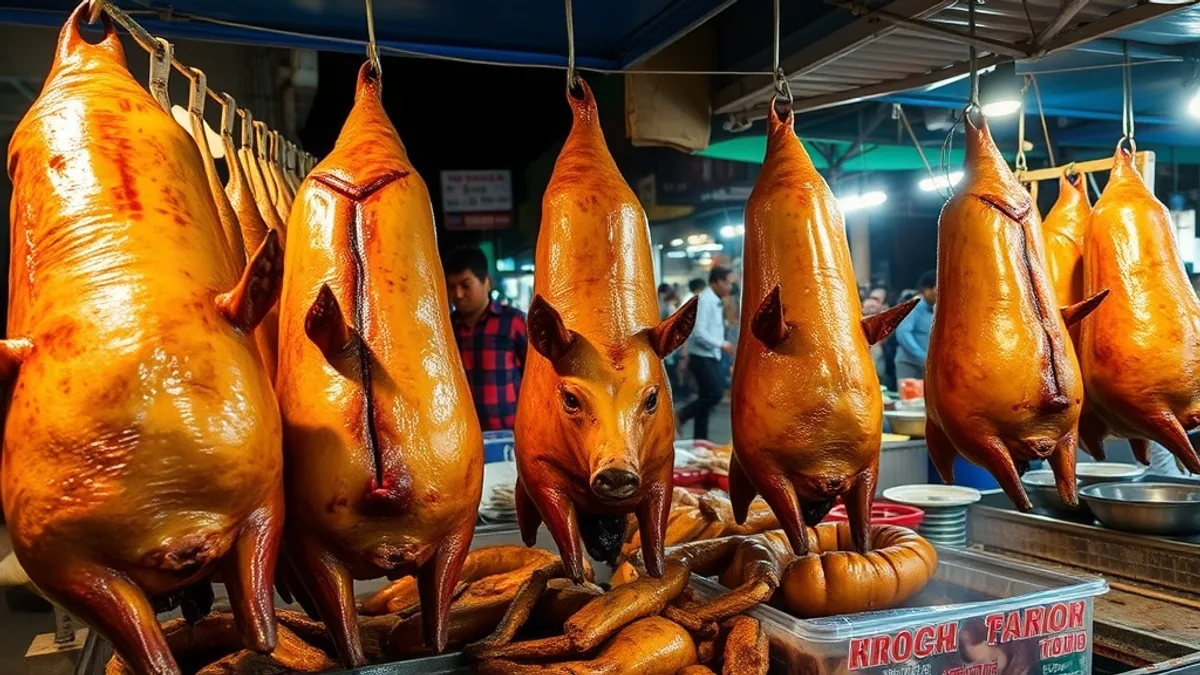
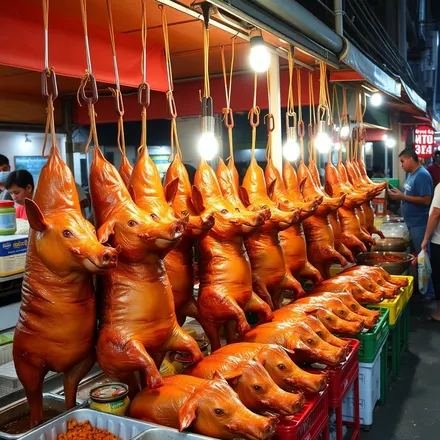
The centre of Trang's evening food life organises itself around the area near the clock tower and the Ruean Thip market complex, where a combination of permanent market stalls and evening street vendors creates a food environment that operates from late afternoon through to midnight. The range of food available within a short walking distance of the clock tower is remarkable for a city of Trang's modest size: roast pork vendors with whole pigs displayed on hooks behind glass counters, Khanom Jeen noodle stalls serving the fresh fermented rice noodles that are one of southern Thailand's most satisfying breakfast and lunch foods, satay stalls threading marinated pork and chicken onto bamboo skewers over charcoal fires that produce a low, constant fragrance of wood smoke and caramelised palm sugar.
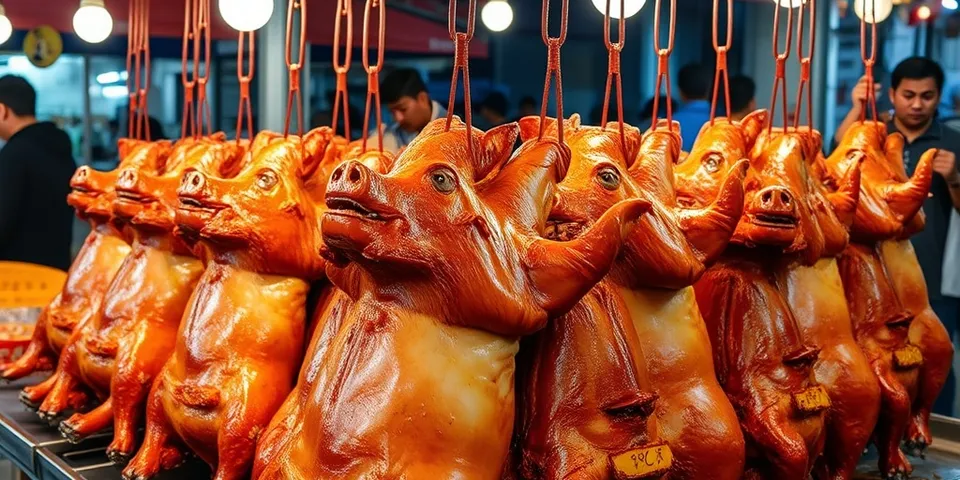
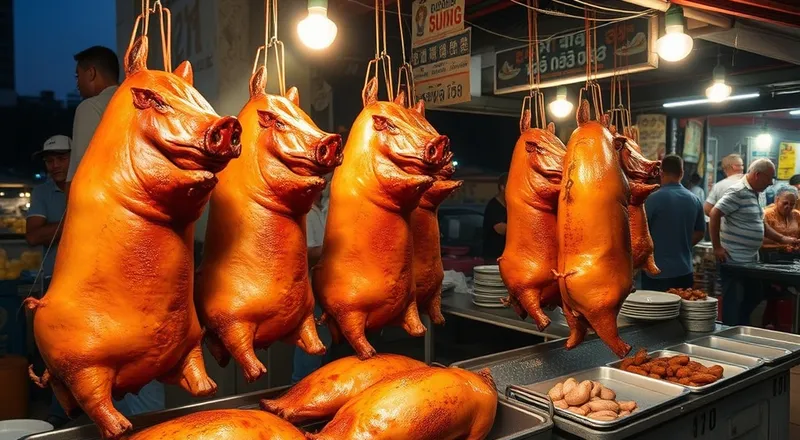
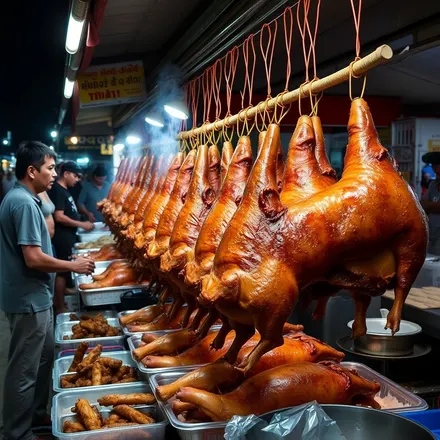
Moo Yang Trang — the Trang roast pork tradition — is the city's most famous culinary export and deserves careful attention from any visitor serious about southern Thai food. The preparation involves whole pigs roasted over beds of coconut shell charcoal in a slow process that takes the better part of a day, producing pork with a crackling exterior of burnished amber and an interior of extraordinary tenderness and juiciness. The use of coconut shell rather than wood charcoal is specific to Trang and is credited locally with imparting a subtly sweet smokiness to the meat that other fuels cannot replicate. Trang roast pork shops are identifiable by the roasting structures visible at the front of the premises — steel or brick chambers with ventilated fronts where whole pigs are mounted on frames above glowing beds of shell charcoal. The best shops sell out by late morning, making them a mid-morning destination rather than an evening one for visitors who want to taste the freshest product. The roast pork arrives on your plate with jasmine rice, a small bowl of clear pork broth, pickled mustard greens, and a side of the sweet-savoury dipping sauce that perfectly counterpoints the richness of the crackling.
The evening Ruean Thip market near the clock tower provides the night market dimension of Trang's food scene — vendors selling grilled corn, fried snacks, fresh-cut fruit, and the local desserts that punctuate a southern Thai food evening. The most notable of these is A-ping, a dessert shop near the market area that serves an exceptional taro ice cream — smooth, lightly sweet, with the characteristic earthiness of good quality taro root — that has developed a devoted following among Trang residents. Fresh coconut ice cream served in the shell, kanom krok (coconut rice cakes cooked in dimpled iron pans over charcoal), and various flavours of look chup (mung bean paste moulded into miniature fruit shapes and glazed) round out the dessert options.
Khanom Jeen — fresh fermented rice noodles served with a choice of curries from a rotating selection of paste-based gravies — is one of southern Thailand's most compelling breakfast and early lunch dishes and is found at dedicated Khanom Jeen shops throughout Trang. The southern Thai version uses a notably more pungent and fermented noodle than the central Thai equivalent, and the curry selection typically includes several options ranging from the mild and coconut-rich to the intensely flavoured keang tai pla (fermented fish stomach curry) that represents southern Thai food at its most challenging and most rewarding. Sai Krok Trang — the local pork sausage, fermented slightly and seasoned with herbs — is sold by street vendors around the market area and at dedicated stalls, served sliced over rice or wrapped in fresh vegetables with small chillis and ginger. It is to Trang what sai oua is to Chiang Mai: a regional sausage culture that defines a specific culinary geography.
Highlights
- Moo Yang Trang whole roast pork over coconut shell charcoal — the city's most famous culinary export, best before midday
- A-ping taro ice cream near the clock tower market — the dessert Trang residents will point you to without hesitation
- Khanom Jeen fresh fermented rice noodles with southern curry selection including the challenging keang tai pla
- Sai Krok Trang fermented pork sausage — the regional sausage culture that defines Trang's food identity
- Satay stalls over coconut charcoal near Ruean Thip market — the low constant smoke and caramelised sugar aroma of a Trang evening
- Kanom krok coconut rice cakes cooked in dimpled iron pans — a southern Thai dessert at its most textural
- Roast pork display counters — whole lacquered pigs on hooks with the crackling visible from the street
- Street food 40-70 THB per item — one of the best value evening food circuits in all of southern Thailand
- Fresh coconut ice cream served in the shell by evening market vendors
The Trang clock tower evening food scene is most active from approximately 5 PM through to midnight, with peak vendor activity between 6 and 9 PM. For roast pork specifically, the optimal visiting time is mid-morning (9-11 AM) when the pigs have completed their slow roasting and the crackling is at its freshest — most roast pork shops sell out by 1 PM. Khanom Jeen shops operate primarily as morning and lunch establishments, typically open from 6 AM to 2 PM. The most comfortable eating weather is November through February; the hot season (March-May) makes outdoor evening eating less pleasant but does not significantly affect the food quality.
Practical Information
Cost Level
Trang street food is priced for local residents and represents exceptional value. Moo Yang Trang roast pork with rice: 70-100 THB for a generous plate. Khanom Jeen with curry: 35-50 THB. Satay skewers: 5-8 THB each (typically ordered by the dozen). Sai Krok Trang sausage: 40-60 THB for a portion. A-ping taro ice cream: 30-50 THB per serving. Kanom krok: 20-30 THB for a full portion of twelve pieces. A comprehensive Trang street food evening sampling five or six dishes costs 300-450 THB per person. Fresh Singha or Chang beer from the market convenience stalls runs 50-65 THB per can.
Tips
The Moo Yang Trang roast pork is a morning food, not an evening food — if you arrive at the roast pork shops after lunch, the day's supply will be exhausted or the remaining pork will have been sitting for several hours. Plan a separate morning visit specifically for the roast pork, ideally before 11 AM. For the evening market circuit, start at the Ruean Thip area and work outward through the clock tower streets rather than attempting to navigate the whole area at once. The narrow alley food stalls south of the clock tower are less well-known to visitors and tend to have lower prices and more local clientele than the main market frontage.
Our creators on the ground in Trang share their best recommendations in their videos.
Creators who cover this spot
Discover YouTube creators who feature this topic in their videos.
Discover Thailand
Christian
Discover Thailand – Deutscher Thailand Reise-Creator auf YouTube.
Eat Street Repeat
Eat Street Repeat is a USA-based creator documenting Thailand's authentic street food culture since 2015.
Thai Food Quest
American food enthusiast documenting Thailand's regional cuisine from Bangkok street carts to northern hill tribe recipes.
Places in this Guide
Discover the attractions and locations featured in this travel guide.
Explore Trang
Trang
ตรังTrang is one of southern Thailand's best-kept secrets, offering pristine islands, hidden beaches, and a unique culinary ...All creators from Trang →Location & Orientation

Frequently Asked Questions
What makes Trang roast pork different from roast pork elsewhere in Thailand?
The defining characteristic of Moo Yang Trang is the fuel: coconut shell charcoal rather than the wood charcoal or gas used in roast pork operations elsewhere. Coconut shell burns at a consistent, relatively moderate temperature with a distinct aromatic quality that is credited locally with imparting a subtle sweetness to the pork fat and crackling that wood smoke cannot reproduce. The slow-roasting process over this specific fuel takes eight to ten hours for a full pig and produces a result that experienced tasters can distinguish reliably from roast pork prepared by other methods. The tradition of using coconut shell is partly practical — Trang province has historically had abundant coconut production — and has become a protected aspect of local culinary identity that roast pork vendors maintain with considerable pride.
Where exactly are the best roast pork shops in Trang?
The most celebrated Trang roast pork operations are clustered in the central area around the Trang clock tower and the older commercial streets nearby. Rather than recommending specific names — which may change over time as individual shops open and close — the most reliable approach is to look for shops with the roasting structures visible from the street and the longest queue of local customers during the mid-morning window. Several shops that have occupied the same addresses for decades are identifiable by the large lacquered photographs of roasted pigs displayed prominently in their frontage. The Tourism Authority of Thailand's Trang office can provide a current list of established roast pork vendors if specific addresses are needed.
What is keang tai pla and should I try it?
Keang tai pla (also spelled gaeng tai pla) is a distinctly southern Thai curry made with the fermented innards and stomach of fish — specifically the intestines and stomach packed with partially digested fish and salt, fermented in sealed containers for weeks to months until the paste develops an intensely pungent, funky, and deeply savoury character unlike anything in central or northern Thai cooking. The resulting curry is mixed with vegetables (usually aubergine, bamboo shoots, and long beans) and coconut milk and produces a dish of extraordinary complexity and genuine acquired-taste intensity. The honest answer to whether you should try it depends entirely on your tolerance for very strong fermented flavours. It is one of southern Thailand's most authentic and unreconstructed dishes and, for the right palate, one of the most rewarding things you can eat in the region.
Are there vegetarian options at the Trang night market?
Southern Thai street food is among the most challenging environments for vegetarians in Thailand — the cuisine is deeply rooted in pork, seafood, and fish sauce, and most dishes incorporate animal products in ways that are not always visible. That said, the Trang market area includes fresh fruit stalls, kanom krok coconut rice cakes (typically vegetarian), look chup mung bean desserts, and fresh-cut fruit with tamarind dipping sauce that provide substantial vegetarian eating. Several Thai-Chinese vegetarian restaurants in the older part of Trang town serve complete jae-style meals for 50-70 THB per plate. The morning Khanom Jeen stalls occasionally include a plain coconut curry option without meat, though the noodles themselves may be cooked in shared equipment with meat-based preparations.
How does the Trang night market compare to the famous Hat Yai night market?
Hat Yai, 160 kilometres south of Trang along the peninsula, has one of the most visited and commercially developed night market scenes in southern Thailand — the scale, variety, and quality are impressive but the atmosphere has adapted significantly to accommodate the large number of Malaysian and Singaporean cross-border tourists who drive much of the Hat Yai food economy. Trang's night market is considerably smaller, less elaborate, and almost entirely oriented to local residents. The result is that Hat Yai offers more variety and a more festive atmosphere, while Trang offers more authenticity and more distinctly local culinary identity — particularly in the roast pork tradition, the dim sum culture, and the Khanom Jeen quality that reflects genuine local production rather than scaled-up tourist supply.