Introduction
The standard benchmark for Andaman coast beaches in the imagination of most travellers is set by Railay, Koh Lanta, or the Phi Phi Islands — and while each of these places earns its reputation in some measure, they all require sharing their beauty with crowds that are, in peak season, genuinely substantial. Trang's mainland Andaman coastline — backed by Hat Chao Mai National Park and extending southwards through one of the least developed stretches of Thai shoreline — offers an alternative benchmark: beaches of equivalent natural quality where the footprint left by tourism is so light as to be almost invisible. Hat Chao Mai beach, Hat Chang Lang, Hat Yong Ling, and Pak Meng — these names appear in relatively few guidebooks, the national park that protects them sees a fraction of the visitor numbers of more famous reserves, and the sea turtle nesting program at Hat Yong Ling continues because the beach is quiet enough to support it. This guide is for the traveller who considers an empty beach not a bonus but a baseline requirement.
Overview
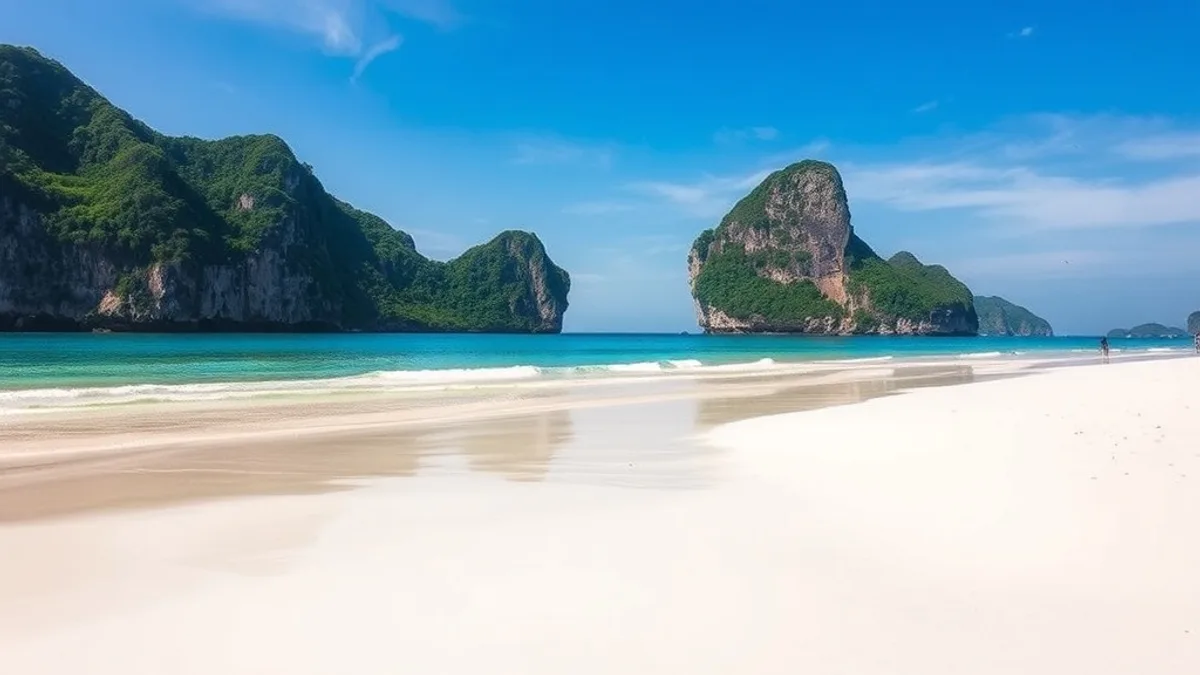
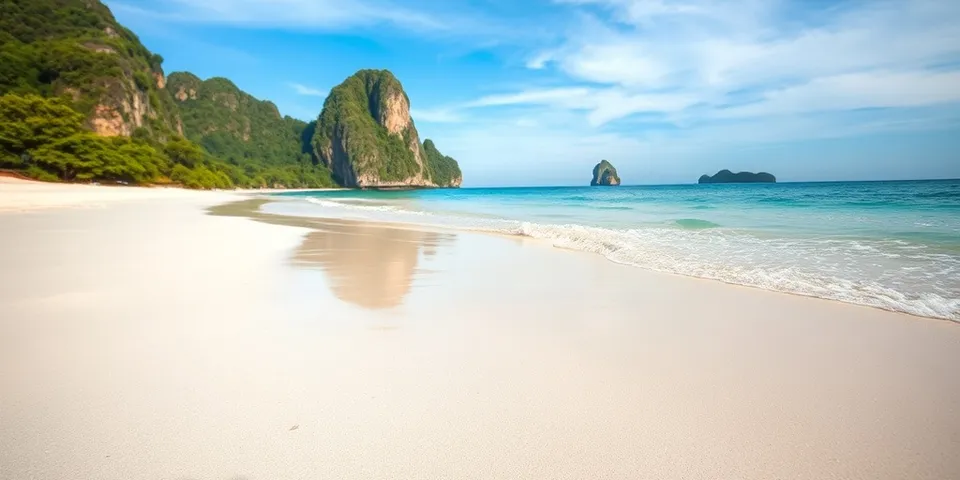
Hat Chao Mai National Park forms the protected framework for most of Trang's mainland Andaman coast, covering approximately 230 square kilometres of coastline, offshore islands, and marine habitat. The park headquarters sits near the southern end of Hat Chao Mai beach, a long arc of sand that curves for several kilometres between forested headlands with the limestone islands of the Trang archipelago visible on the horizon throughout the day. The beach itself is wide, flat, and backed by casuarina forest that provides shade in the mid-afternoon heat — a practical amenity that is more valuable than it sounds when temperatures climb past 34 degrees Celsius. The national park's beach frontage sees perhaps a few dozen visitors on a busy day, compared to the thousands who share similarly photogenic beaches in the Krabi and Phuket regions. The park charges 200 THB foreign visitor entry and provides a basic visitor centre with maps and information.
Hat Chang Lang, a few kilometres north of the park headquarters, has a different character from Chao Mai: wider, with an expansive horizon unobstructed by island outcroppings, and facing the open Andaman Sea in a way that produces powerful sunset views when the sky is clear. The beach here is popular on Thai public holidays when local families from Trang town set up picnics under the coconut palms along the upper beach, but for most of the week it functions as the kind of empty shoreline that photographers travel specifically to find. The Amari Trang Beach Resort — the one significant resort development along this stretch — occupies a discreet position at the southern end of Chang Lang and provides the only hotel-standard accommodation on the mainland beach, though its presence is subtle enough that the beach as a whole retains an unmanicured quality.
Hat Yong Ling, reached by a short track through national park forest approximately 10 kilometres south of Pak Meng, is among the most significant sea turtle nesting beaches remaining in the Andaman coast national park system. Hawksbill and olive ridley turtles nest here between approximately November and February, and the park authority maintains a small protection program that marks and monitors nests during the nesting season. Visitor access to the beach is managed to protect nesting activity, particularly at night, but daytime visits are welcomed and the beach itself is one of the most beautiful and least visited in the entire province. The reef system just offshore at Hat Yong Ling provides good snorkeling accessible directly from the beach — coral coverage is healthier here than at beaches with heavier visitor traffic.
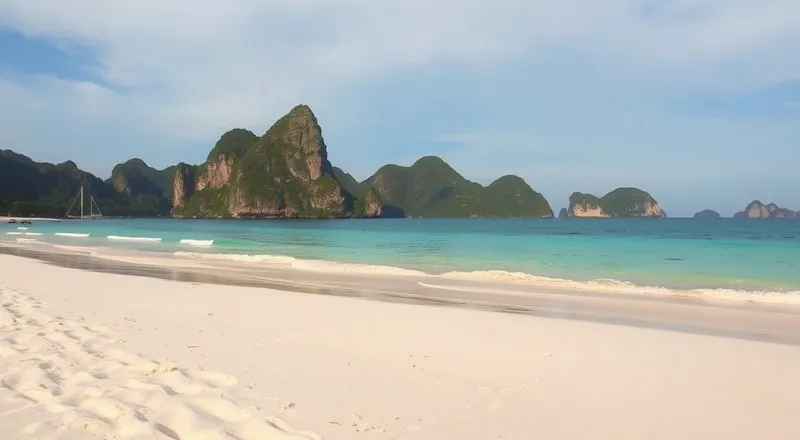
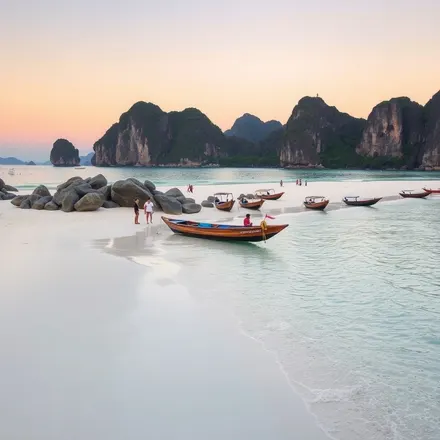
Pak Meng Beach, at the northern end of the Hat Chao Mai National Park coastal zone, functions as the departure point for day trips to the Trang archipelago and has a small cluster of seafood restaurants and guesthouses operating along its northern end. Despite this relatively higher level of activity compared to the beaches further south, Pak Meng retains an unhurried character: the bay is wide and gently shelving, the water calm and shallow for a considerable distance offshore, and the late afternoon light across the arc of the bay produces some of the most photogenic sunset conditions available on the Trang coast. The seafood restaurants at Pak Meng serve the freshest fish and shellfish available on the mainland, sourced directly from the boats that operate in the national park waters, at prices that are surprisingly modest given the quality.
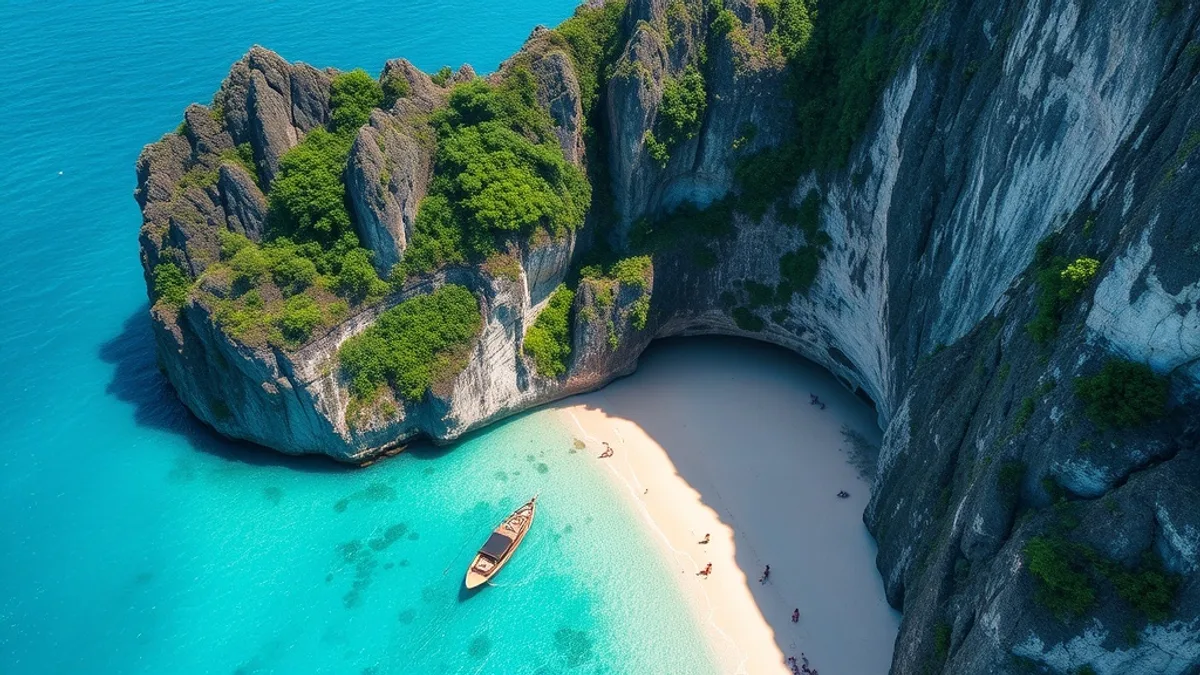
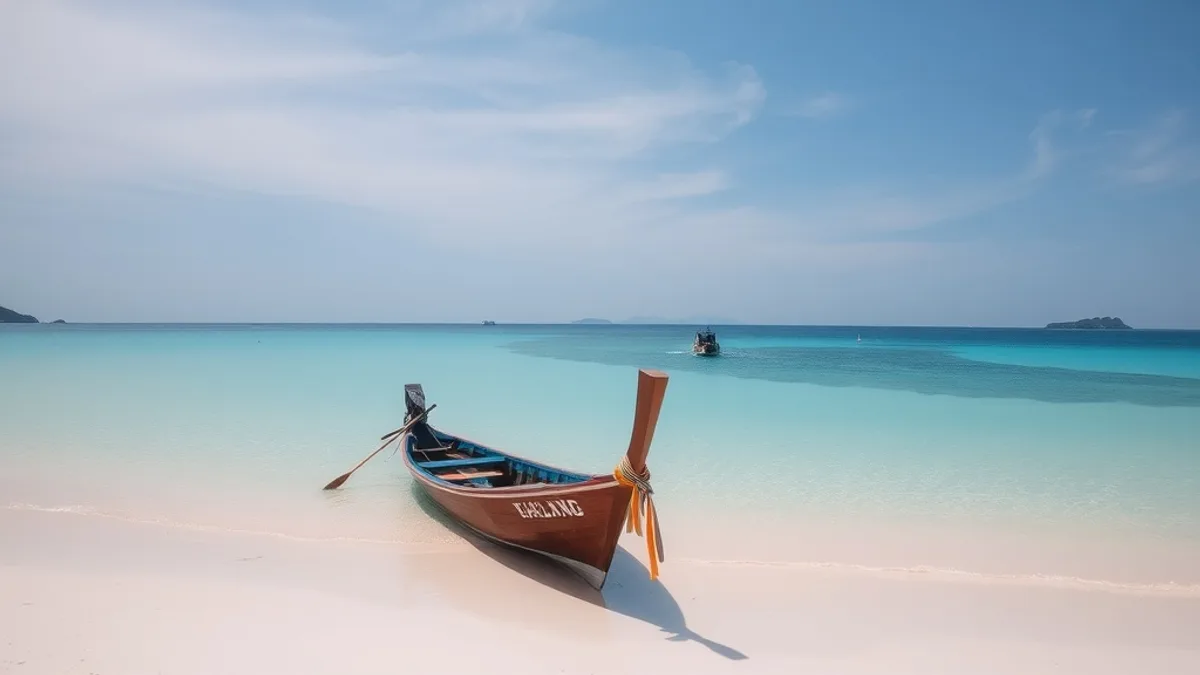
For travellers interested in genuinely remote beaches accessible only by longtail, several bays along the national park coastline have no public road access and can only be reached by sea from Pak Meng or Kuantungku pier. These unnamed or locally-named bays — small, forest-backed, with coral visible in the clear water — represent the furthest end of the Trang beach spectrum and are shared, on a given day, with no one. Hiring a longtail from Pak Meng pier for a half-day coastal exploration runs approximately 1,200-1,800 THB per boat and gives access to three or four of these beaches within the national park boundary.
Highlights
- Hat Chao Mai — long, casuarina-backed national park beach with limestone island views and near-zero visitor numbers on weekdays
- Hat Yong Ling sea turtle nesting beach — protected hawksbill and olive ridley nesting area with snorkeling reef offshore
- Pak Meng sunset — wide bay, shallow turquoise water, and the Trang archipelago silhouetted on the western horizon
- Hat Chang Lang expansive horizon — wide open Andaman Sea views with sunset photography conditions that rival any beach in southern Thailand
- Remote longtail-only bays along the national park coast — completely undeveloped forest-backed beaches shared with no one
- Hat Chao Mai National Park entry — 200 THB that provides access to some of Thailand's least-visited national park coastline
- Pak Meng seafood restaurants — freshest daily-catch fish and shellfish at mainland prices directly from national park waters
- Beach camping in the national park (with advance permit) — wake up to a sea turtle nesting beach at dawn
- Ko Libong dugong sighting by kayak from the island's shoreline — within the same coastal zone as the mainland beaches
November through April is optimal for Trang's Andaman beaches: calm seas, consistent sunshine, and the turtle nesting season at Hat Yong Ling (November-February) running concurrently. March and April offer the warmest water and clearest snorkeling conditions while most European visitors have returned home. Avoid May through October for beach visits when the southwest monsoon produces rough seas, occasional heavy rain, and can make longtail access to remote beaches impossible for days at a time. Thai public holidays (especially Songkran in April) bring significant domestic visitor numbers to Pak Meng and Chang Lang — weekdays are dramatically quieter.
Practical Information
Cost Level
Hat Chao Mai National Park entry: 200 THB per foreign visitor. Songthaew from Trang town to Pak Meng Beach: 50 THB per person. Longtail charter from Pak Meng for half-day coastal exploration: 1,200-1,800 THB per boat. Snorkeling equipment rental at Pak Meng: 100-150 THB per day. Seafood lunch at Pak Meng restaurants: 300-500 THB per person with multiple dishes. National park beach camping permit: 30-60 THB per person per night (plus 200 THB park entry). Amari Trang Beach Resort: 3,000-6,000 THB per night for the only hotel-standard accommodation on the mainland beach.
Tips
Hat Yong Ling is often missed by visitors who focus exclusively on Pak Meng as the departure point for island trips — it requires a separate 10-kilometre drive south through the national park and is not signposted prominently. Bring all food and water for visits to the more remote southern beaches, as there are no facilities beyond the national park headquarters and the Pak Meng cluster. Reef-safe sunscreen is mandatory in the national park — rangers at the park headquarters checkpoint enforce this with increasing consistency. For beach camping, apply in advance at the national park headquarters or contact Hat Chao Mai National Park directly — permits are generally straightforward to obtain but require paperwork that cannot be done at the last minute.
Our creators on the ground in Trang share their best recommendations in their videos.
Places in this Guide
Discover the attractions and locations featured in this travel guide.
Explore Trang
Trang
ตรังTrang is one of southern Thailand's best-kept secrets, offering pristine islands, hidden beaches, and a unique culinary ...All creators from Trang →Location & Orientation
Frequently Asked Questions
How do Trang's beaches compare to Krabi's famous beaches in terms of natural quality?
The natural quality of the water, sand, and limestone karst scenery along Trang's Andaman coast is essentially equivalent to the best of Krabi — the same geological formation, the same sea, and the same quality of light. The meaningful differences are all on the human side: Trang has a fraction of the accommodation capacity, tour operators, and daily visitor numbers. Railay at peak season has thousands of people on its beach; Hat Chao Mai on a weekday has dozens. The coral reefs accessible from Trang's beaches have better coverage and more active fish populations than comparable reefs in heavily visited Krabi areas, for the simple reason that lower visitor pressure means less physical damage. The trade-off is that Trang's mainland beach infrastructure is minimal — if you need beachside cocktail bars and sun lounger rental, Krabi provides this and Trang largely does not.
Can I see sea turtles nesting at Hat Yong Ling?
Sea turtle nesting at Hat Yong Ling occurs primarily between November and February, with hawksbill turtles the most commonly recorded species. Daytime nesting is rare — turtles almost always come ashore at night — and the national park authority restricts night beach access during active nesting season to protect the process. The park occasionally organises supervised conservation visits during nesting season that allow small groups of visitors to observe from a respectful distance, which must be arranged through the park headquarters. During the day, the beach itself is accessible without restrictions, and the offshore reef provides snorkeling encounters with juvenile hawksbill turtles with reasonable frequency during November-February.
Is beach camping allowed in Hat Chao Mai National Park?
Beach camping is permitted in designated areas of Hat Chao Mai National Park with an advance permit from the park administration. The camping areas are basic — no facilities beyond a clearing and access to a basic toilet block — but the experience of waking up on a national park beach that is genuinely empty of other visitors is difficult to replicate elsewhere in southern Thailand. Permits are processed at the park headquarters near the Chao Mai beach visitor centre and cost 30-60 THB per person per night in addition to the standard 200 THB park entry fee. Camping near the turtle nesting areas at Hat Yong Ling is restricted during nesting season and requires specific permission from the park authority.
What wildlife other than sea turtles and dugongs can I expect to see on the Trang coast?
The Hat Chao Mai National Park coastal zone supports a surprisingly rich wildlife population for a relatively compact protected area. The mangrove channels at the southern end of the park and near Kantang are important habitat for small-clawed otters, monitor lizards, and water birds including purple herons and kingfishers of multiple species. The forested headlands between beaches shelter dusky langurs (spectacled langurs), commonly visible in the treetops in the early morning. The offshore waters produce regular encounters with bottlenose dolphins, particularly in the channels between the mainland and the offshore islands, and the reef systems host sea snakes, octopus, cuttlefish, and the usual range of tropical reef fish species at concentrations above what you typically see on heavily visited reefs.
How do I get from Trang town to the mainland beaches?
Songthaews run regularly between Trang town's clock tower area and Pak Meng Beach, taking approximately 45 minutes and costing 50 THB per person. This service runs throughout the day with departures roughly every 30-45 minutes. For Hat Chao Mai and Hat Yong Ling, the most practical option is to hire a motorbike in Trang town (200-300 THB per day) and ride out along the coastal road, which provides the flexibility to stop at multiple beaches and access the national park camping areas. Taxis and songthaew charters for groups are available from Trang town for approximately 500-800 THB round trip. There is no regular public transport that stops directly at Hat Chao Mai or Hat Yong Ling — visitors must have their own vehicle or arrange a private charter.