Introduction
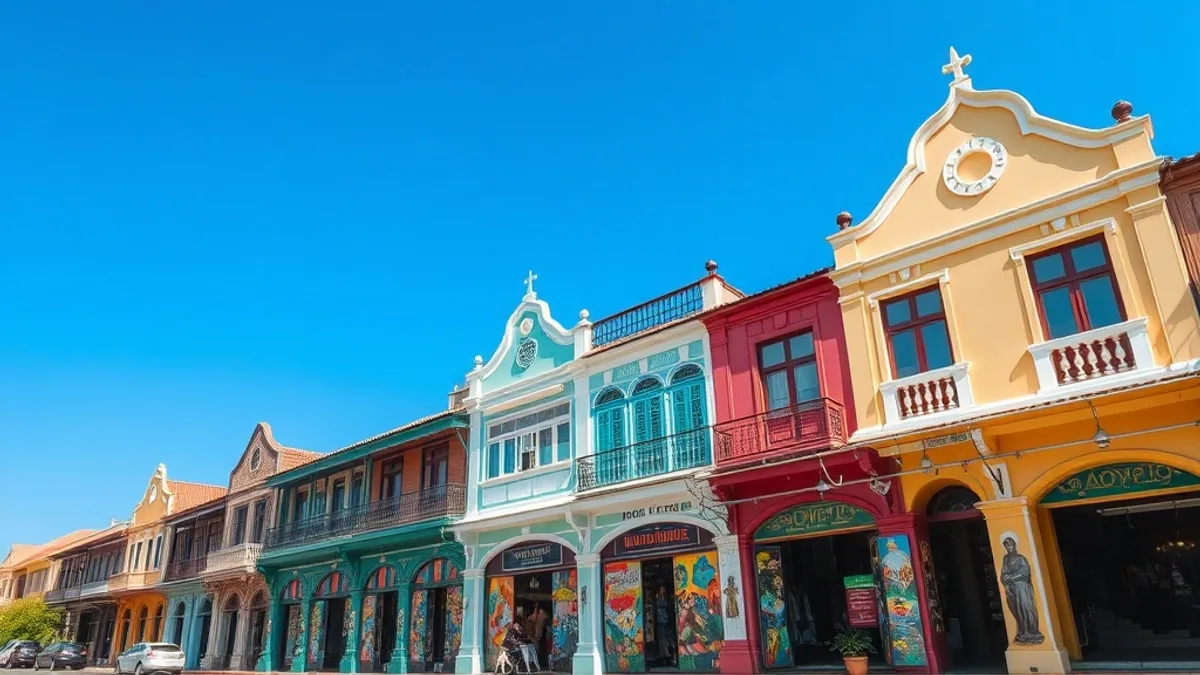
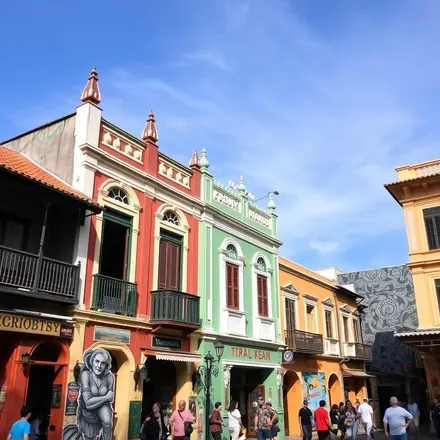
Most visitors to Phuket arrive with visions of white sand beaches, turquoise water, and the controlled hedonism of Patong. They miss, entirely, one of the most architecturally distinctive and historically layered neighbourhoods in all of Thailand — a compact grid of streets in Phuket Town where the legacy of nineteenth-century tin mining wealth has been preserved in a collection of Sino-Portuguese shophouses that rivals anything in Penang or Macau for sheer visual splendour. Phuket Old Town is a neighbourhood where the cosmopolitan history of the island is written in facades — in the pastel-painted stucco arcades of Thalang Road, the elaborate Chinese clan houses of Dibuk Road, the colourful street murals by local and international artists that have transformed every available wall into an open-air gallery, and the intimate coffee shops and art spaces that have taken root in restored colonial buildings without erasing the patina of age that makes them valuable in the first place. This is a Phuket that rewards slow travel: comfortable shoes, no particular schedule, a camera, and a willingness to turn down every interesting side street you encounter.
Overview
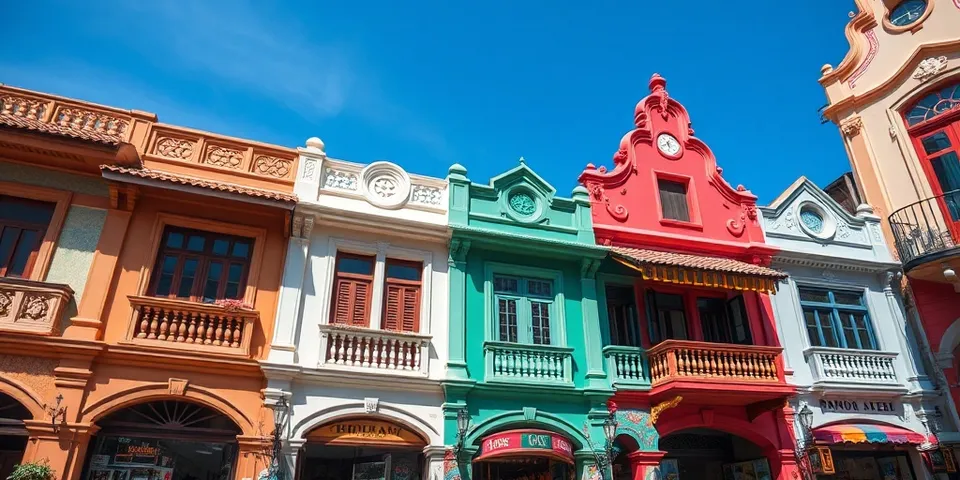
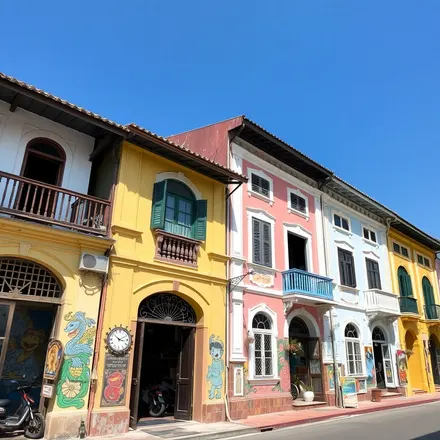
The architectural story of Phuket Old Town begins in the nineteenth century, when Hokkien Chinese migrants arrived to work the tin mines that made Phuket one of the wealthiest provinces in Siam. The successful mine owners — the Tin Barons — built in a hybrid style that blended the Romanesque arcades and decorative plasterwork of Portuguese colonial architecture with the ornamental vocabulary of southern Chinese building traditions: elaborate roof ridges with guardian figures, internal light wells called tangki that ventilate the deep shophouse plan, and wooden shuttered windows painted in the vivid colour combinations — yellow and white, turquoise and cream, dusty pink and grey — that now define the visual identity of the neighbourhood. The streets around Thalang Road, Dibuk Road, Phang Nga Road, and Krabi Road contain the highest concentration of intact Sino-Portuguese architecture, with individual buildings spanning from modest two-storey shophouses to grand merchant mansions that once housed the commercial empires of the island's most powerful families.
The most iconic surviving mansion in Phuket Old Town is the Chinpracha House on Krabi Road, a 200-year-old private residence that has been carefully preserved by the Chinpracha family and opens to visitors. The house offers a rare look inside the domestic world of a nineteenth-century Phuket merchant family: shuttered rooms filled with period furniture, a courtyard garden overhung with tropical trees, and personal artefacts — silver tea sets, family portraits, ceremonial objects — displayed in their original context rather than behind glass cases. Admission is 200 THB and includes a guided explanation of family history and architectural features. Just as rewarding architecturally, and more accessible to independent exploration, is the Blue Elephant Cooking School and Museum Restaurant on Krabi Road, occupying a magnificently restored Sino-Portuguese mansion that was once the provincial governor's residence. The restaurant serves refined southern Thai cuisine on the ground floor while a small museum on the upper floors chronicles the culinary and cultural history of Phuket.
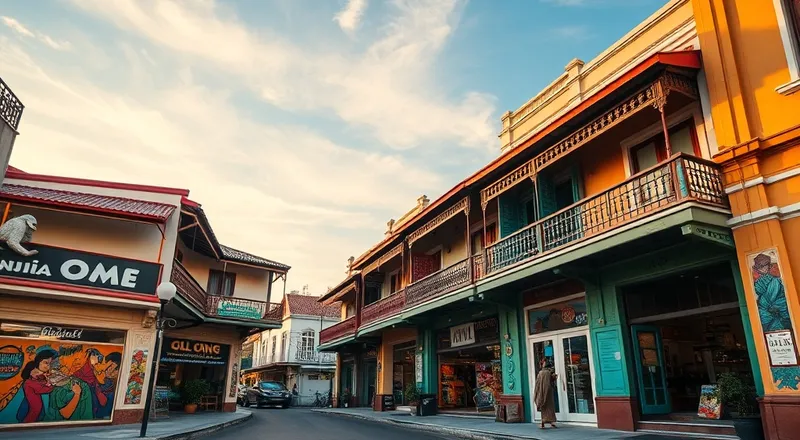
The street art dimension of Phuket Old Town has evolved over the past decade from a handful of mural installations into a comprehensive outdoor gallery that uses the neighbourhood's textured walls and architectural backdrops as canvases of extraordinary quality. The initiative began with a series of narrative murals by local artist Khun Withit Ruangrit depicting historical scenes from Phuket's past — a tin miner at work, a Chinese merchant family arriving by boat, traditional wedding processions — and has expanded to include works by international street artists who are drawn by the visual richness of the setting. A dedicated walking map of the street art trail is available from the Old Town Heritage office on Phang Nga Road and from most accommodation in the neighbourhood. The murals are concentrated around Thalang Road, Soi Romanee, and the streets connecting Dibuk and Phang Nga Roads.
The Phuket Vegetarian Festival, held annually over nine days in October according to the Chinese lunar calendar, transforms the Old Town into one of the most extraordinarily intense cultural spectacles in Southeast Asia. The festival honours the Nine Emperor Gods and involves ritual purification practices including firewalking, self-mortification by spirit mediums, and elaborate street processions departing from the Chinese shrines that are distributed throughout the neighbourhood. The two most important shrines — Jui Tui Shrine on Ranong Road and Put Jaw Shrine on Phang Nga Road — are the centres of ceremonial activity during the festival and worth visiting year-round for their incense-thick atmosphere and architectural quality. Outside festival season, Phuket Old Town maintains a walkable charm that is best experienced in the early morning hours before 10 AM when the streets are quiet, the golden light falls at a flattering angle, and the neighbourhood belongs entirely to its residents rather than its visitors.
Highlights
- Thalang Road and Dibuk Road — the most photogenic streets of Sino-Portuguese shophouses with pastel facades and arcaded walkways
- Chinpracha House on Krabi Road — 200-year-old Tin Baron mansion open for visits, full of period furniture and family history
- Blue Elephant Museum Restaurant — beautifully restored governor's mansion serving refined southern Thai cuisine
- Street art trail through Soi Romanee and connecting laneways — narrative murals of Phuket history on textured colonial walls
- Jui Tui Shrine and Put Jaw Shrine — active Chinese clan shrines central to the October Vegetarian Festival
- Phuket Vegetarian Festival (October) — one of Southeast Asia's most extraordinary cultural spectacles
- Thailand Indigo and Baan Teelanka (upside-down house) — unique design attractions within walking distance of the Old Town core
- Independent coffee shops in restored shophouses — among the best café culture in southern Thailand
- Old Town Heritage Walking Tour — free self-guided maps available from the heritage office on Phang Nga Road
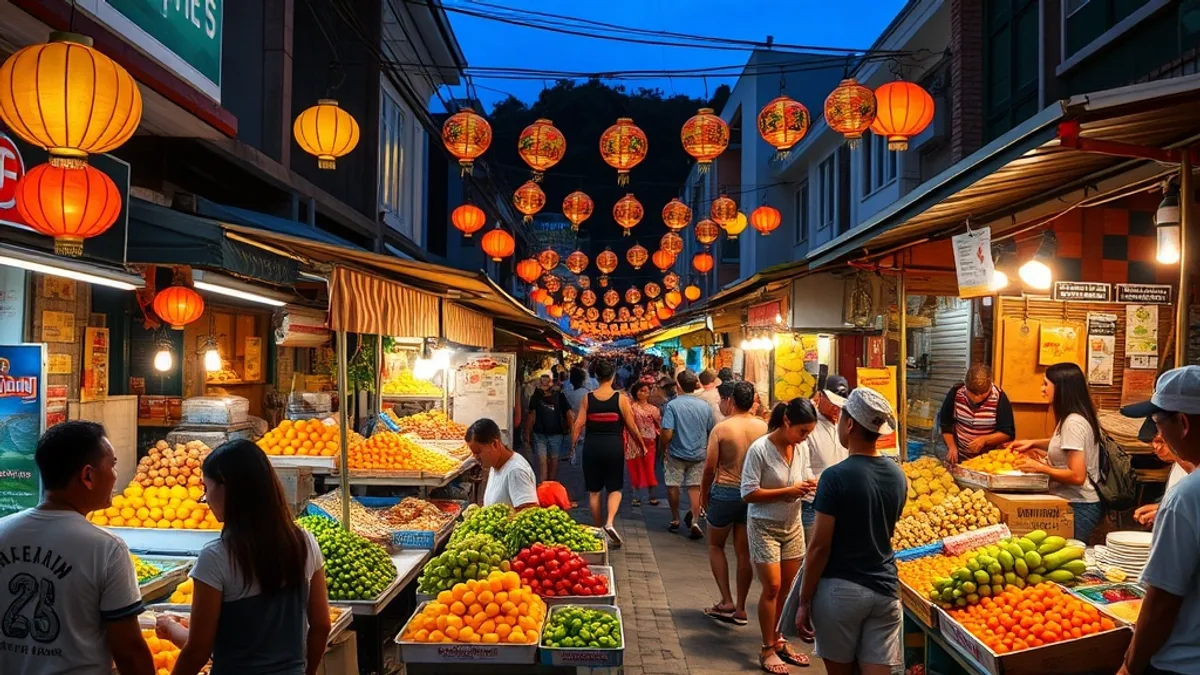
Phuket Old Town is walkable year-round but the most comfortable exploration conditions are from November to February during the cool and dry season. Early morning visits between 7-10 AM offer the best light for photography and the most peaceful streets before tourist groups and midday heat arrive. The Vegetarian Festival in October is a unique once-a-year spectacle worth planning around. Sunday evenings bring the Old Town Walking Street market along Thalang Road from 4 PM — a lively combination of street food and local craft stalls with excellent atmosphere.
Practical Information
Cost Level
Phuket Old Town is among the most affordable parts of the island. Chinpracha House admission: 200 THB. Blue Elephant Restaurant lunch: 400-800 THB per person. Most street art viewing is completely free. Coffee in Old Town independent cafés: 70-120 THB. The Sunday Walking Street is free to enter with most food items at 40-80 THB. A full day of Old Town exploration including a heritage lunch and coffee stops comfortably fits within 800-1,200 THB per person. Budget accommodation in the Old Town area (heritage boutique guesthouses) runs 800-2,000 THB per night.
Tips
Wear comfortable walking shoes with grip as the tiled arcade footpaths can be uneven and slippery after rain. The street art murals are best photographed in the morning light before 10 AM when shadows fall across the walls at photogenic angles. Download an offline map before visiting as mobile signal in the interior laneways can be weak. The Old Town is compact enough to cover entirely on foot but a bicycle hired from accommodation makes the wider neighbourhood more accessible. Hire from guesthouses rather than street vendors for better maintained bicycles at comparable prices of 60-100 THB per day.
Our creators on the ground in Phuket share their best recommendations in their videos.
Creators who cover this spot
Discover YouTube creators who feature this topic in their videos.

Phuket 24 Hours
German content creator documenting life, tourism, and nightlife on Phuket Island.

Phuket Paradise
Swedish expat sharing insider knowledge of Phuket's beaches, resorts, restaurants, and local attractions.

See Phuket
See Phuket is a German content creator providing insider perspectives on southern Thailand's Phuket and Krabi regions.
Places in this Guide
Discover the attractions and locations featured in this travel guide.
Explore Phuket
Phuket
ภูเก็ตPhuket is Thailand's most popular island and a playground for expats, luxury travellers and content creators. White beac...All creators from Phuket →Location & Orientation
Frequently Asked Questions
How long does it take to walk around Phuket Old Town?
A thorough walking exploration of Phuket Old Town's core streets — Thalang, Dibuk, Phang Nga, and Krabi Roads plus the connecting laneways — takes approximately two to three hours at a relaxed pace that allows time for photographs, coffee stops, and brief visits to open shopfronts and shrines. Adding a visit to Chinpracha House and the Blue Elephant Restaurant extends the itinerary to a comfortable half-day experience. The complete street art trail mapped by the heritage office covers about 2.5 kilometres. Most visitors combine an Old Town walk with a lunch and afternoon beach visit for a full day itinerary.
Is Phuket Old Town worth visiting if I only have one day on the island?
Phuket Old Town is absolutely worth including in a single-day Phuket itinerary and offers something genuinely different from the beach experience that dominates most island visits. A morning in the Old Town (7-11 AM) pairs naturally with an afternoon at a nearby beach such as Patong, Karon, or Kata. The neighbourhood provides historical and cultural context that makes the rest of the island more meaningful. For travellers who have seen multiple Thai beach destinations, the Old Town's architectural distinctiveness and café culture may be the most memorable part of their Phuket visit.
What is the best way to get to Phuket Old Town from Patong Beach?
Phuket Town, which contains the Old Town, is approximately 14 kilometres east of Patong Beach. A metered taxi from Patong to Phuket Town costs approximately 300-400 THB and takes 20-30 minutes depending on traffic. Grab (the regional ride-hailing app) offers competitive pricing in the same range. A tuk-tuk from Patong is more expensive at 400-600 THB one-way. Local songthaews (shared minibuses) run from Patong to Phuket Town market for approximately 40 THB but require knowledge of the route and waiting for departure. Renting a scooter provides the most flexible access and costs 200-300 THB per day.
When is the Phuket Vegetarian Festival and what should visitors expect?
The Phuket Vegetarian Festival runs for nine days in October according to the Chinese lunar calendar — exact dates vary annually between early and mid-October. The festival involves ritual processions departing from the major Chinese shrines in the Old Town, with spirit mediums (mah songs) undergoing remarkable self-mortification rituals. The processions begin very early in the morning (typically 7-9 AM) and are both visually extraordinary and genuinely intense. Visitors should dress conservatively around shrine areas, refrain from pointing feet toward sacred objects, and follow the guidance of event marshals. The festival draws large crowds and accommodation should be booked months in advance.
Are there good restaurants in Phuket Old Town?
Phuket Old Town has developed one of the best restaurant scenes on the island, with a concentration of quality that goes well beyond its area size. The Blue Elephant in the restored governor's mansion is the most celebrated, serving refined southern Thai cuisine with a focus on Phuket's distinctive culinary heritage including local specialities like moo hong (braised pork belly) and Phuket-style noodles. Many independent shophouse restaurants serve excellent local food at market prices — 80-200 THB for a complete meal. The Old Town café scene is genuinely outstanding with several roastery-quality coffee shops occupying beautifully restored interiors. The Sunday evening Walking Street adds street food stalls with local specialities from 4 PM.