Introduction
There are cities that have shopping, and then there is Hat Yai — a city that has turned retail into a form of regional tourism so potent that entire bus companies operate exclusively to transport Malaysian and Singaporean shoppers across the border and back every weekend. This isn't hyperbole: Hat Yai's position as the commercial capital of southern Thailand and its proximity to the Malaysian border have created a shopping ecosystem of remarkable scale and variety, anchored by the legendary Kim Yong Market, threaded through with night bazaars and weekend markets, and complemented by modern shopping centres that give the city an urban retail density unusual outside Bangkok. The combination of Thai prices, cross-border duty differentials, a product range that blends Thai, Chinese, and Malay commercial cultures, and the sheer energy of a city that takes its commercial identity seriously makes Hat Yai one of Southeast Asia's most rewarding and underappreciated shopping destinations.
Overview
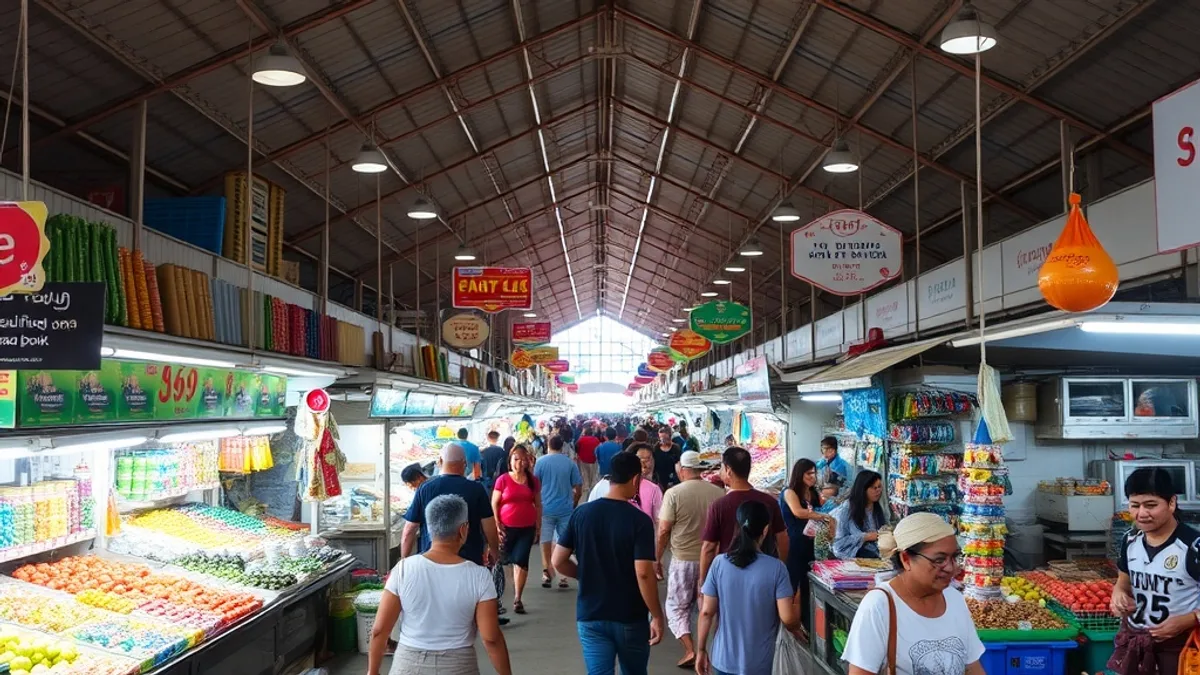
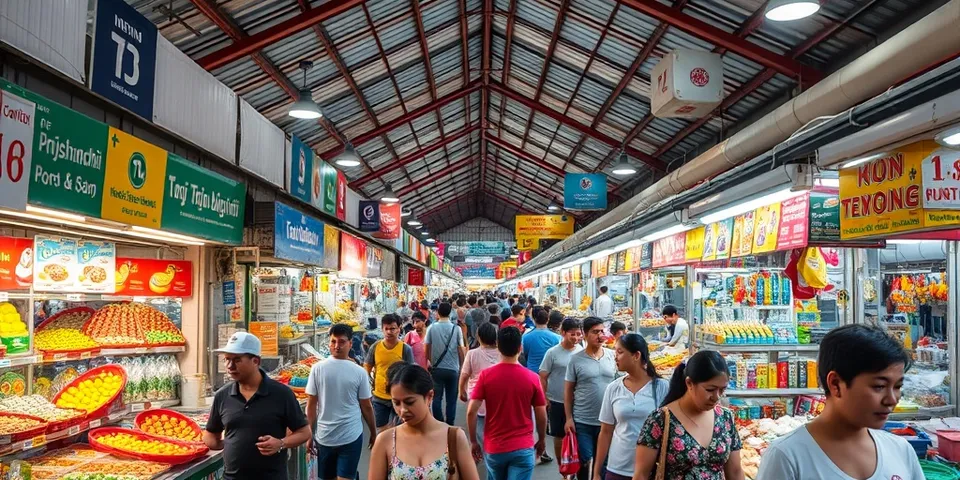
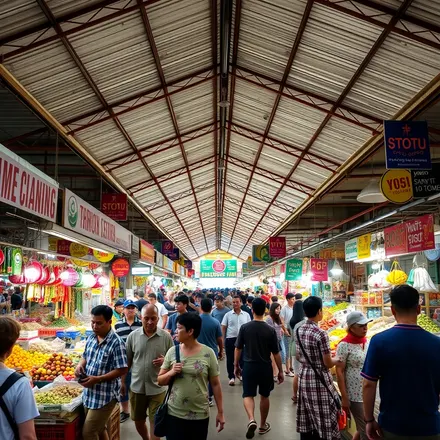
Kim Yong Market is the undisputed nucleus of Hat Yai's shopping identity. This enormous covered market — occupying a multi-storey building and spilling onto surrounding streets — has operated for decades as the primary wholesale and retail destination for southern Thailand and the primary draw for cross-border shopping visitors from northern Malaysia. The market's inventory is staggering in its breadth: bolts of Thai silk and synthetic fabric sold by the metre, ready-to-wear clothing at prices that make Bangkok's Chatuchak Market look expensive, electronics and accessories at duty-differential prices that make the cross-border journey economically rational for Malaysian buyers, local spices and condiments unavailable in any supermarket north of the border, household goods, beauty products, dried seafood, preserved foods, traditional medicines, and a food hall in the basement that serves as an unofficial all-day canteen for the market's workforce and regular visitors. Navigation requires commitment — the market's layout is deliberately labyrinthine, with vendors arranged in clusters by product category that reward patient exploration rather than targeted shopping.
Greenway Night Bazaar, operating primarily in the evenings from Wednesday through Sunday, occupies a large open-air plaza near the city centre and functions as Hat Yai's most accessible and tourist-friendly market. Fashion clothing — both branded and unbranded — dominates the product mix, with a concentration of streetwear labels popular with the young Malaysian and Singaporean visitors who form the core customer base. The atmosphere is genuinely enjoyable: food stalls circle the perimeter, live music plays from a central stage on weekend nights, and the browsing crowd is dense enough to create energy without being oppressively crowded. Prices are higher than Kim Yong Market but lower than equivalent products in Kuala Lumpur or Singapore, and vendors are generally accustomed to negotiating with international visitors.
The Asean Trade Center and its surrounding commercial blocks represent Hat Yai's wholesale district — the source from which independent retailers across southern Thailand and northern Malaysia stock their inventory. Individual visitors can buy here too, and the prices are correspondingly lower than retail markets, though minimum quantities sometimes apply. The adjacent blocks around Asean Trade Center specialise in specific product categories — one street almost exclusively for textile merchants, another for electronics distributors, another for beauty and cosmetics — creating a commercial geography that rewards those willing to map and navigate it systematically. Lee Garden Plaza, Hat Yai's established mid-range shopping mall, provides an air-conditioned counterpoint to the outdoor and covered markets, with a mix of Thai and international retail brands, a cinema, and food courts on the upper floors. Central Festival Hat Yai, the city's newest and largest shopping mall, arrived with the full complement of premium Thai and international brands and a food and entertainment offering aimed at the city's growing middle class as well as visiting shoppers from Malaysia.
For visitors interested in genuinely distinctive Thai products rather than mass-market retail, the shopping calculus shifts to a different set of destinations. Thai silk fabric — both genuine handwoven silk and good-quality machine-woven alternatives — is available at Kim Yong Market at prices dramatically below Bangkok retail. Southern Thai handicrafts, including batik fabrics that reflect the cultural fusion of the Thai-Malay border region, are sold at specialist stalls throughout the market area. Local spice pastes, dried seafood preparations, and premium fish sauce from Songkhla Province represent some of the most transportable and distinctive souvenirs available in the city, and these are found in greatest variety and lowest price at Santisuk Market and the food sections of Kim Yong Market. Currency exchange is straightforward throughout Hat Yai — booths are abundant near all major markets, and rates are competitive with Bangkok.
Highlights
- Kim Yong Market — massive multi-storey covered market, the commercial heart of Hat Yai, fabric, clothing, electronics, spices and food at wholesale prices
- Greenway Night Bazaar — open-air evening market from Wednesday to Sunday, fashion, street food, live music, cross-border shopping atmosphere
- Asean Trade Center — Hat Yai's wholesale district, product categories arranged by street, prices below retail markets
- Lee Garden Plaza — established mid-range mall with Thai and international brands, cinema, food courts
- Central Festival Hat Yai — the city's largest and newest mall, premium brands, entertainment complex
- Thai silk fabric by the metre at Kim Yong Market — genuine handwoven and machine-woven silk, prices dramatically below Bangkok retail
- Southern Thai batik and border-region textiles — unique cultural fusion products not found elsewhere in Thailand
- Dried seafood and local condiments — fish sauce, shrimp paste, dried squid and specialty preserved items at wholesale food market prices
- Electronics and accessories at border-differential prices — significant savings for Malaysian and Singaporean buyers versus home country retail
- Currency exchange booths throughout all market areas — competitive rates, no need to prepare large cash amounts in advance
Weekday mornings at Kim Yong Market (before noon) offer the best combination of full stall operation, manageable crowds, and vendor patience for browsing and price negotiation. Weekend afternoons and evenings bring the largest cross-border crowds, with queues forming at popular stalls and the energy of the market reaching its peak — exciting if you enjoy the atmosphere, exhausting if you prefer to shop deliberately. The Greenway Night Bazaar is best visited on Friday or Saturday evenings when the music programme, food stall variety, and crowd energy are at their fullest. Avoid Chinese New Year week for market shopping — much of Kim Yong Market closes as Teochew Chinese vendors observe the holiday.
Practical Information
Cost Level
Hat Yai shopping costs vary enormously by product category and negotiation skill. Basic clothing at night bazaars starts at 100-200 THB per item. Thai silk fabric at Kim Yong Market runs 300-800 THB per metre for quality pieces. Electronics are priced by market rates but typically 10-20 percent below equivalent Kuala Lumpur or Singapore retail. Local food products — spice pastes, fish sauce, dried seafood — cost 50-200 THB per item. Luggage to carry purchases home is a practical consideration: wheeled bags are sold throughout the market area at 500-1,500 THB. Budget shoppers can spend meaningfully at Hat Yai for 1,000-2,000 THB; those shopping for fabric, electronics, or wholesale quantities should budget 5,000-15,000 THB and arrive with a specific shopping list.
Tips
Bring a large wheeled suitcase or purchase one at the market — the volume of goods available at Hat Yai prices routinely exceeds what day-trippers anticipate. Bargaining is expected and practised at all non-mall market venues, but aggressive bargaining on very low-priced items damages goodwill — a respectful negotiation of 10-20 percent off the opening price is appropriate. The best fabric stalls at Kim Yong Market are on the upper floors where foot traffic is lower and vendors have more time to show their full inventory. Money exchange rates inside Kim Yong Market are competitive but rates on the surrounding streets are often slightly better. Carry both Thai baht and Malaysian ringgit if crossing the border — some stalls near the market accept ringgit at a rough exchange rate as a convenience for cross-border visitors.
Our creators on the ground in Hat-yai share their best recommendations in their videos.


Places in this Guide
Discover the attractions and locations featured in this travel guide.
Explore Hat Yai
Hat Yai
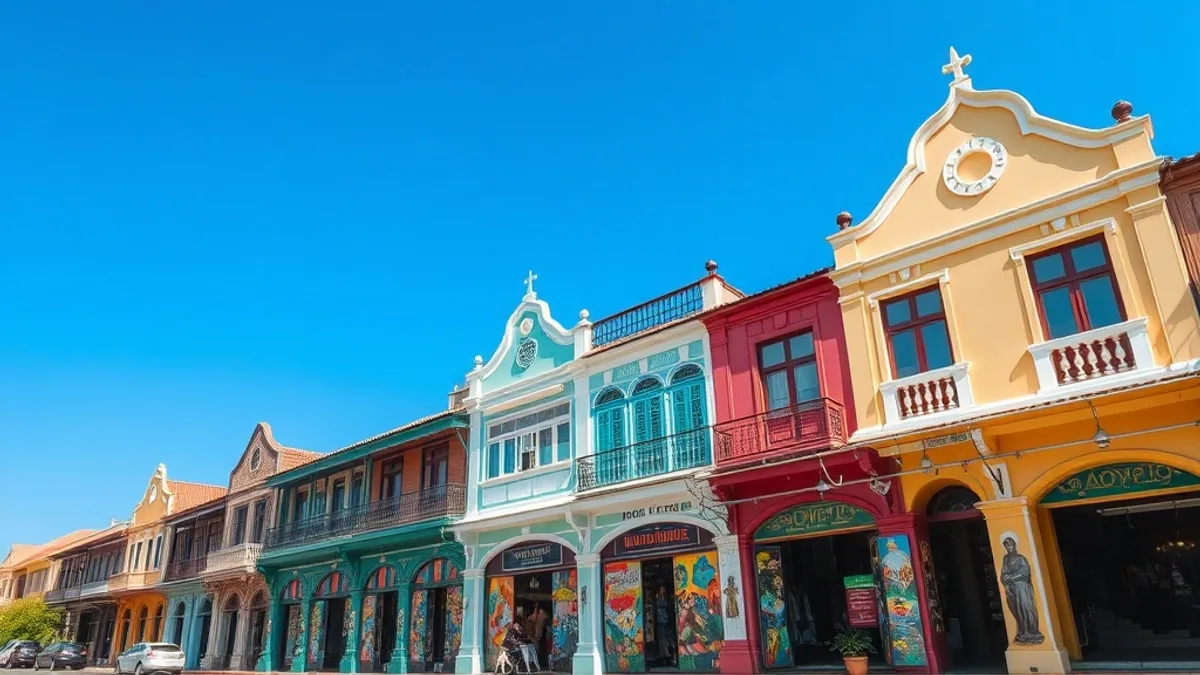
หาดใหญ่Hat Yai is the largest city in southern Thailand and a bustling commercial hub known for its incredible street food, liv...All creators from Hat Yai →Location & Orientation
Frequently Asked Questions
Why do so many Malaysians and Singaporeans come to Hat Yai specifically to shop?
The cross-border shopping pilgrimage to Hat Yai is driven by a combination of price differentials, product availability, and cultural affinity. Thai retail prices — particularly for clothing, fabric, electronics, and food products — are consistently lower than Malaysian or Singaporean equivalents, sometimes significantly so. The border is easily crossed by train, bus, or car from northern Malaysia, making Hat Yai a practical day trip or weekend destination. The cultural overlap between Hat Yai's Sino-Thai-Malay commercial culture and northern Malaysian consumer preferences means that the products on offer feel simultaneously familiar and distinct. Finally, Hat Yai's food scene provides an additional draw that transforms a shopping trip into a culinary experience — the combination of shopping and eating makes the journey worthwhile on multiple levels simultaneously.
What are the best things to buy in Hat Yai that you can't easily find elsewhere?
Several product categories make Hat Yai shopping particularly worthwhile for value or uniqueness. Thai silk fabric — both handwoven regional varieties and machine-woven alternatives — is available at Kim Yong Market at prices dramatically below Bangkok retail or international Thai silk retailers. Southern Thai food products, including fish sauce produced in Songkhla Province, dried seafood preparations, and specialty spice pastes incorporating local southern Thai flavours, make excellent transportable souvenirs that are genuinely difficult to source outside the region. Southern Thai batik, reflecting the cultural fusion of the Thai-Malay border region, is artistically distinct from both Malay batik and central Thai textile traditions. Electronics accessories and clothing at night bazaar prices represent straightforward value rather than distinctive products, but the savings can be substantial for visitors making the cross-border journey for other reasons.
Is bargaining expected at Hat Yai's markets, and how should I approach it?
Bargaining is expected and practised at all of Hat Yai's markets except the modern shopping malls. The approach should be respectful and measured rather than aggressive — vendors at Kim Yong Market and the night bazaars are experienced negotiators who have developed finely tuned responses to different buyer tactics. A reasonable opening strategy is to ask for a price, express mild surprise, and suggest a counter-price of approximately 70-80 percent of the ask, then settle somewhere in between. On very low-priced items (under 100 THB), bargaining is less appropriate and can create awkwardness. The best negotiating positions come from genuine interest in buying, from purchasing multiple items from a single vendor, and from speaking some basic Thai courtesy phrases — even a simple 'phaeng pai' (too expensive) delivered with a smile gets a warmer response than silence or a counter-price delivered in English.
What is Kim Yong Market like and how do I navigate it?
Kim Yong Market is large, dense, and deliberately complex — a multi-storey covered building with product categories clustered by floor and area in a layout that is partially logical and partially organic, having evolved over decades rather than been planned systematically. Ground floor areas tend towards food products, fresh produce, and daily essentials. Upper floors concentrate textiles, clothing, and accessories. The areas immediately surrounding the main building extend the market's footprint into adjacent streets and covered walkways. The most effective navigation strategy is to enter with time rather than a specific list — budget two to three hours minimum for a thorough exploration, allow yourself to be drawn into interesting areas without following a predetermined path, and use the food hall in the basement as a rest and reorientation point midway through your visit. Most vendors speak enough English for basic transactions; some have WeChat Pay or QR payment options for Malaysian and Singaporean buyers.
Are the shopping centres in Hat Yai worth visiting compared to the markets?
Hat Yai's shopping centres — particularly Central Festival Hat Yai and Lee Garden Plaza — serve a different purpose than the markets and are worth visiting for specific reasons rather than as alternatives to market shopping. Central Festival Hat Yai is genuinely impressive for a provincial Thai city, with a full roster of premium Thai brands, international cosmetics and fashion labels, a large supermarket, and a cinema and entertainment complex. It is the most comfortable option during Hat Yai's hot and humid afternoons and is the best place to purchase premium Thai skincare, fashion, and lifestyle brands. Lee Garden Plaza is slightly older and smaller but conveniently located near the major market areas and functions well as an air-conditioned rest stop between market sessions. Neither mall offers the price levels or product uniqueness of Kim Yong Market, but both complement rather than compete with the market experience.