Introduction
Hat Yai presents a face to the world that is defined by commerce and cuisine, but beneath the market bustle lies a city of remarkable spiritual diversity and depth. The coexistence of Buddhist temples, Chinese Taoist and Guanyin shrines, Muslim mosques, and the unique Sam Muen Spirit Shrine creates a sacred geography that reflects Hat Yai's position at one of Southeast Asia's most culturally layered crossroads. The city's most famous religious site, Wat Hat Yai Nai, houses what is reputedly the third-largest reclining Buddha in the world — an extraordinary feat of religious architecture that most visitors to Hat Yai manage to overlook entirely while focused on the food markets. This guide argues that the temples and shrines of Hat Yai deserve at least as much attention as the fried chicken, and that a day spent moving between the city's sacred sites reveals a cultural complexity that is entirely absent from Hat Yai's reputation as a transit and shopping destination.
Overview
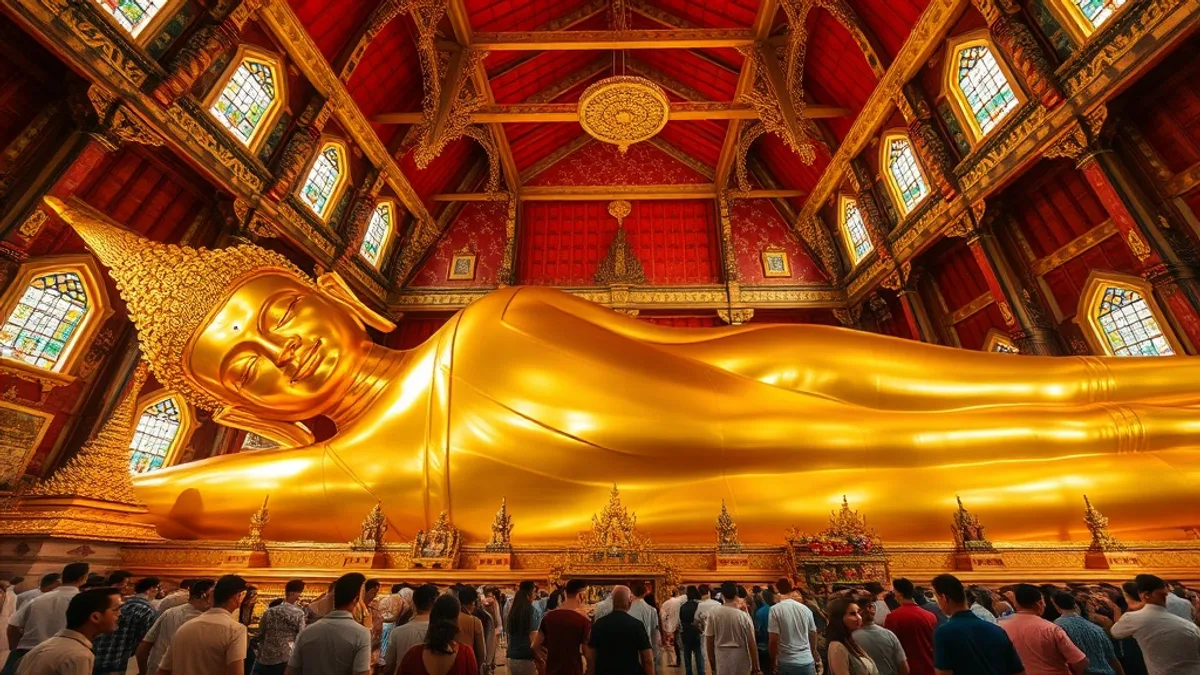
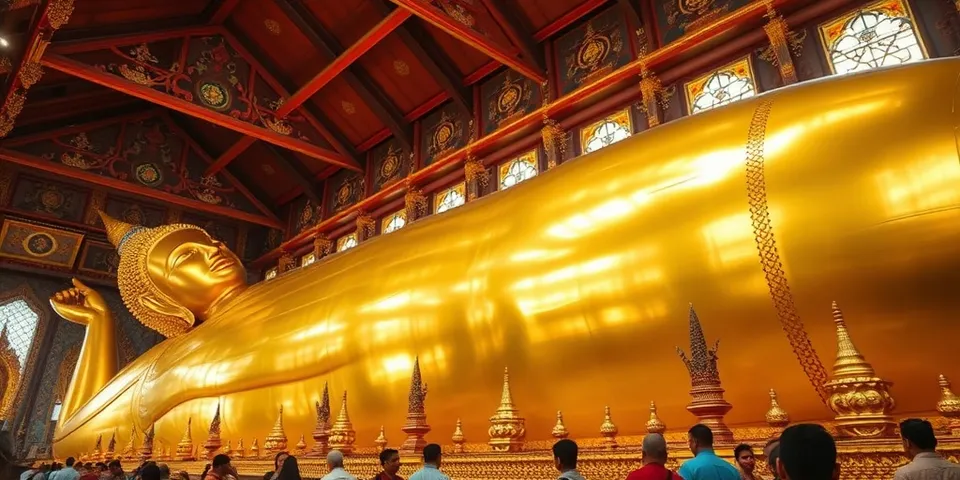
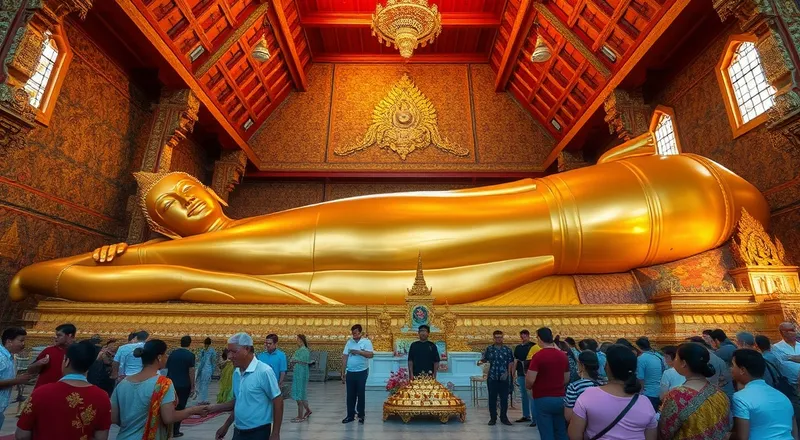
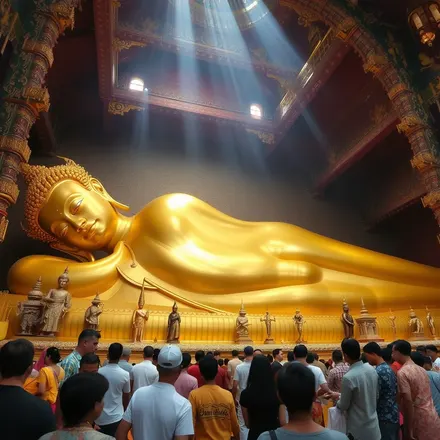
Wat Hat Yai Nai is the city's most significant and most visually striking religious monument. The wat's central feature is its enormous reclining Buddha — Phra Phuttha Thaksin Ming Mongkol — a gilded figure measuring 35 metres in length and 15 metres in height, enclosed within a specially constructed vihara building. Unlike most reclining Buddha images, which are viewed from the outside or from within open-sided structures, the Wat Hat Yai Nai statue is housed inside an ornate building that visitors enter through the Buddha's base, walking through three floors of interior chambers that contain hundreds of small Buddha images, mural paintings, and shrines. The experience of standing inside the body of the Buddha, surrounded by the offerings and quiet devotion of Thai worshippers, is genuinely moving and unlike anything else in southern Thailand. The wat grounds contain additional statues, spirit houses, and a large open pavilion where monks chant during morning and evening prayers. Entry is free, though donations are welcomed and merit-making stalls line the approach.
The Sam Muen Spirit Shrine, located near the city centre, represents one of Hat Yai's most distinctive and least-discussed cultural curiosities. The shrine is dedicated to a cluster of sacred elephants — large painted elephant statues believed to possess spiritual power, particularly in matters of good fortune and business success. The Teochew Chinese merchant community, which has historically dominated Hat Yai's commercial life, has maintained the shrine as a site of active religious practice rather than mere cultural heritage — business owners visit before major ventures, families bring offerings during auspicious dates, and the shrine receives a continuous stream of devotees throughout the day. The elephant imagery connects to both Hindu-influenced Thai spirit belief and to the Chinese concept of the elephant as an auspicious symbol of wisdom and prosperity. The shrine's eclectic aesthetic — combining Chinese decorative elements with Thai spirit house traditions and Indian iconography in the elephant motifs — makes it a perfect physical expression of Hat Yai's cultural synthesis.
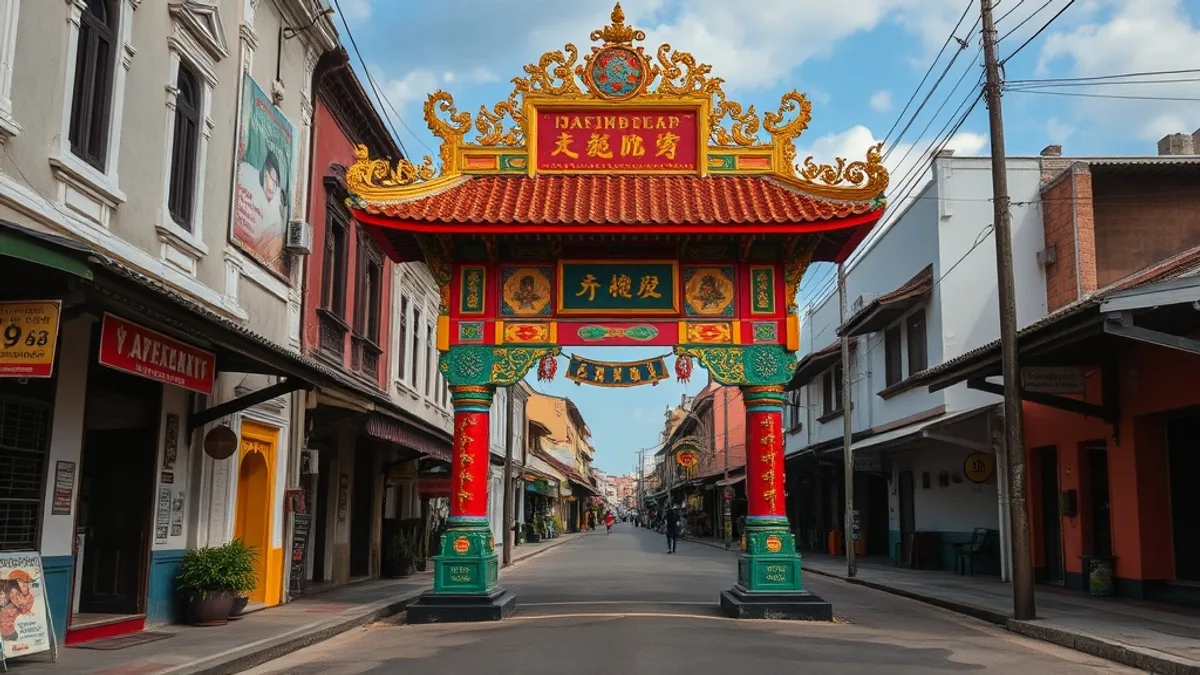
The city's Chinese temple network reflects the Teochew community's centuries-long presence in the region. Multiple Guanyin (Goddess of Mercy) shrines are dispersed throughout Hat Yai's commercial districts, and several larger Chinese temples near Kim Yong Market and the town centre conduct regular ceremonies that are open to respectful visitors. Chinese New Year in Hat Yai is a major spectacle: the commercial district is decorated with elaborate lantern installations, lion dance troupes move from business to business in processions that can last hours, and the major Chinese temples host all-night ceremonies drawing thousands of participants. The event is arguably Hat Yai's most spectacular annual festival and one of the most impressive Chinese New Year celebrations in Thailand outside of Bangkok's Chinatown.
Hat Yai's Muslim sacred heritage is woven into the city's urban fabric in ways that become visible once you know what to look for. The Nurul Islam Mosque near the night bazaar area is the city's largest and most prominent, its minarets visible across the commercial district. Several smaller surau (prayer rooms) are integrated into the market areas to serve the city's Muslim traders and shoppers. During Ramadan, the Muslim-majority areas of Hat Yai take on a distinctive character after sunset — elaborate stalls selling traditional Malay-influenced breaking-of-fast foods set up along certain streets, and the evening atmosphere carries a festive quality that rewards visitors willing to be present outside the typical tourist schedule. Respecting both Buddhist and Muslim religious sites in Hat Yai requires straightforward considerations: remove footwear before entering any temple or mosque, dress modestly (shoulders and knees covered), and follow the lead of local worshippers in terms of noise level and photography.
Highlights
- Wat Hat Yai Nai — home to Thailand's third-largest reclining Buddha (35 metres), uniquely enclosed in a multi-floor vihara building visitors walk through
- Phra Phuttha Thaksin Ming Mongkol — the reclining Buddha statue, gilded and surrounded by hundreds of devotional images on three interior floors
- Sam Muen Spirit Shrine — unique elephant spirit shrine, active site of Teochew Chinese merchant devotion and business blessing rituals
- Chinese Guanyin temples throughout the commercial district — multiple active Chinese temples reflecting the Teochew community's 150+ year presence
- Chinese New Year Hat Yai — one of Thailand's most impressive CNY celebrations, lantern displays, lion dances, all-night temple ceremonies
- Nurul Islam Mosque — the city's largest mosque, minaret visible across the commercial district, open to respectful non-Muslim visitors outside prayer times
- Ramadan evening food markets — seasonal stalls selling traditional Malay-influenced breaking-of-fast foods, the city's most atmospheric evening event
- Buddhist-Muslim cultural coexistence — Hat Yai's functioning multi-faith urban life is visible, unremarkable, and genuinely inspiring
- Merit-making stalls at temple approaches — incense, flower garlands, release-a-bird ceremonies, and donated food at very low prices for participating visitors
- Songkran water festival at Hat Yai — the Thai New Year celebration takes on particular energy in Hat Yai given the city's commercial vitality and young cross-border visitor demographic
Wat Hat Yai Nai is best visited in the early morning (7 to 9am) when monks conduct their daily routines and local worshippers come to make merit — the atmosphere is authentic and contemplative before tourist groups arrive. Chinese New Year (January or February) is the most spectacular time to visit Hat Yai for its religious and cultural life. The exact date shifts annually according to the lunar calendar — plan two to three weeks in advance and book accommodation early, as the city fills significantly during this period. Ramadan evenings for the Muslim food market experience — timing depends on the Islamic lunar calendar. Weekdays for all temple visits provide a more peaceful atmosphere; weekends bring larger cross-border crowds whose primary focus is the markets.
Practical Information
Cost Level
Visiting Hat Yai's temples and shrines is essentially free. Wat Hat Yai Nai charges no admission fee, though donations of 20-50 THB are appropriate and welcome. Sam Muen Shrine and the Chinese temples are open to visitors at no charge. Merit-making supplies — incense sticks, flower garlands, small Buddha figures — are available from temple approach stalls at 10-50 THB. Guided tours of Hat Yai's spiritual sites are available through hotels and guesthouses at approximately 300-500 THB per person for a half-day city tour, though the sites are all accessible independently by tuk-tuk or on foot within the central city area.
Tips
For Wat Hat Yai Nai, remove shoes before entering the vihara building and allow at least 45 minutes to explore all three interior floors properly — rushing through misses the contemplative quality that makes the site exceptional. At Sam Muen Shrine, observe the protocols of existing worshippers before taking photographs — most devotees welcome respectful documentation but some ceremonies require privacy. At the Nurul Islam Mosque and other Muslim sites, visit outside the five daily prayer times (approximately dawn, noon, mid-afternoon, sunset, and night) when the mosque may be closed to non-worshippers. For the Chinese New Year period, book a hotel with a central location in early November to guarantee availability at reasonable rates.
Our creators on the ground in Hat-yai share their best recommendations in their videos.
Places in this Guide
Discover the attractions and locations featured in this travel guide.
Explore Hat Yai
Hat Yai
หาดใหญ่Hat Yai is the largest city in southern Thailand and a bustling commercial hub known for its incredible street food, liv...All creators from Hat Yai →Location & Orientation
Frequently Asked Questions
Is the reclining Buddha at Wat Hat Yai Nai really one of the largest in the world?
The Phra Phuttha Thaksin Ming Mongkol at Wat Hat Yai Nai measures 35 metres in length and 15 metres in height, placing it among the largest reclining Buddha statues in Thailand and consistently cited in Thai sources as one of the top three by size. Rankings of 'world's largest' are contested and vary by measurement methodology, but the claim of third-largest is widely reproduced in Thai tourism materials. What distinguishes the statue more meaningfully than its size ranking is its unique architectural setting — the statue is enclosed within a specially constructed vihara building and approached from the base, with three floors of interior chambers visitors walk through, creating an immersive devotional experience unlike any other reclining Buddha site in Thailand.
What is the Sam Muen Spirit Shrine and why is it significant?
The Sam Muen Spirit Shrine is one of Hat Yai's most distinctively local religious sites — a cluster of large painted elephant statues believed to hold spiritual power, maintained primarily by Hat Yai's Teochew Chinese business community. The shrine combines Chinese merchant religious practice with Thai spirit belief traditions, creating a devotional site that doesn't map neatly onto either Buddhist or Taoist categories. Business owners visit before major commercial decisions and during auspicious dates to make offerings and request blessing for their ventures. The elephant motif connects to Indian and Thai Buddhist iconography of the elephant as a symbol of wisdom and auspiciousness, filtered through the Teochew community's own interpretive traditions. The shrine is an active place of worship rather than a heritage site, which gives it an energy and authenticity that more tourist-oriented religious sites sometimes lack.
How do I visit both Buddhist temples and Muslim mosques respectfully in Hat Yai?
Hat Yai's multi-faith environment is genuinely welcoming to respectful visitors of all backgrounds. For Buddhist temples, the core requirements are removing footwear before entering any building on temple grounds, wearing clothing that covers shoulders and knees (sarongs are often available to borrow at temple entrances), maintaining a quiet and respectful demeanour inside buildings, and asking permission before photographing monks or devotional ceremonies. For mosques, the same dress requirements apply with greater strictness — women should also cover their hair when entering. Visit outside the five daily prayer times when the mosque may be open to non-worshippers. At all religious sites, follow the lead of local worshippers, observe before photographing, and prioritise the experience of the space over documentation.
When is Chinese New Year in Hat Yai and what should I expect?
Chinese New Year in Hat Yai falls on the same date as globally (typically late January or early February, shifting annually with the lunar calendar) and is celebrated with particular intensity given the city's substantial Teochew Chinese community. The commercial district is decorated with elaborate red lantern installations from around two weeks before the new year date. Lion dance troupes tour the commercial streets in the days preceding and immediately following new year, stopping at business entrances for ceremonies that can involve significant fireworks. The city's Chinese temples host all-night ceremonies on new year's eve that are open to respectful visitors. The festive period lasts approximately two weeks through the Lantern Festival. Accommodation books up quickly — reservations two to three months in advance are advisable. The combination of the city's commercial energy, the decorations, the performances, and the temple ceremonies makes this one of the most impressive Chinese New Year experiences in Thailand outside Bangkok's Yaowarat.
What is Hat Yai's spiritual atmosphere like compared to other Thai cities?
Hat Yai's spiritual landscape is more ethnically and religiously diverse than most Thai cities, reflecting its position as a cultural meeting point between Thai Buddhist, Sino-Thai Taoist and Buddhist, and Malay Muslim traditions. Unlike the uniformly Buddhist temple towns of central and northern Thailand, Hat Yai presents a genuine religious pluralism that is visible in everyday life — a mosque minaret rising above a street of Chinese-script shophouses next to a Buddhist temple compound is an unremarkable Hat Yai streetscape. This coexistence is not merely architectural: the city's Muslim, Buddhist, and Chinese populations participate in each other's major festivals to a degree that surprises visitors expecting religious separation. Songkran water celebrations incorporate Muslim residents alongside Buddhist participants; Chinese New Year brings Buddhist Thai families to watch the temple ceremonies. Hat Yai's sacred life is worth experiencing precisely because it does not conform to the single-tradition narrative that characterises most Thai city temple tourism.