Introduction
Bangkok rewards the curious in ways that its famous landmarks rarely can. For every gilded roof of the Grand Palace visible from the river, there is a crumbling shrine tucked into a mechanic's alley, a neighbourhood café hidden behind a corrugated iron gate, or a rooftop bar favoured by architects and graphic designers where not a single Khao San Road backpacker has ever set foot. The city that presents itself to first-time visitors — the temples, the tuk-tuks, the floating markets — is a perfectly good Bangkok. But the Bangkok that opens up after a few days of wandering is something altogether more intoxicating. The key is geography. Bangkok's old districts cluster along the east bank of the Chao Phraya in a tangle of communities that each carry their own distinct identity. Talat Noi is a Portuguese-Chinese neighbourhood where century-old shophouses lean over narrow lanes and spirit houses share space with vintage motorcycle workshops. Pak Khlong Talat, the wholesale flower market at the foot of the Memorial Bridge, comes alive between midnight and 4 AM in a blaze of marigolds, orchids, and jasmine garlands. Bang Rak, running along the riverfront between Wat Muang Khae and the Oriental Hotel, has quietly become one of the most interesting neighbourhoods in Southeast Asia. This guide is for the traveller who has already seen the postcard Bangkok and is ready for the version that doesn't appear in most guidebooks.
Overview
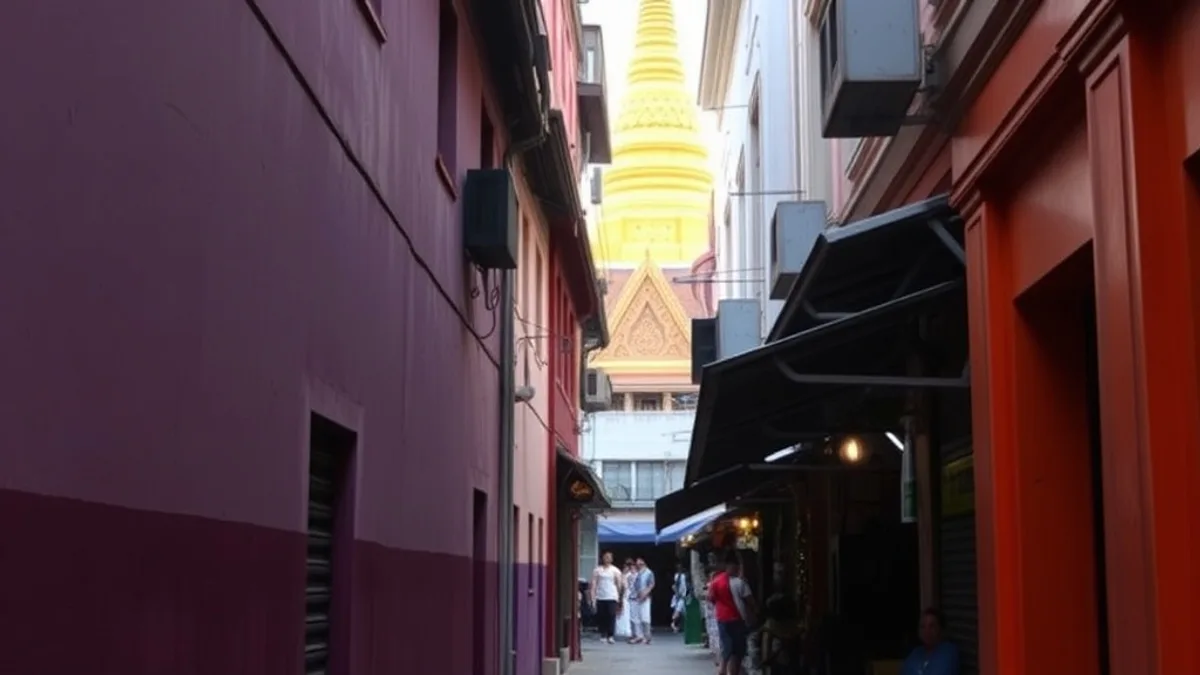
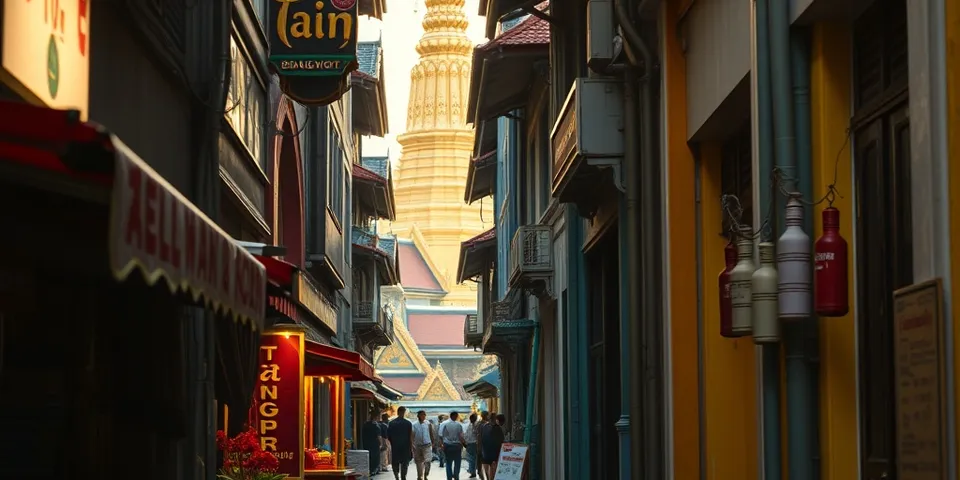
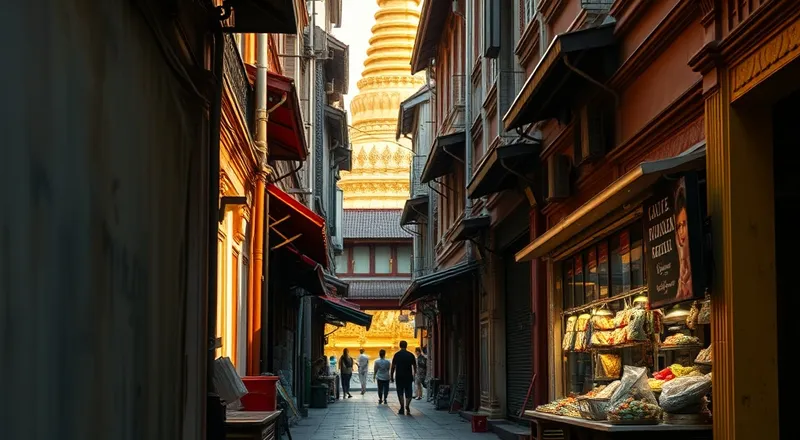
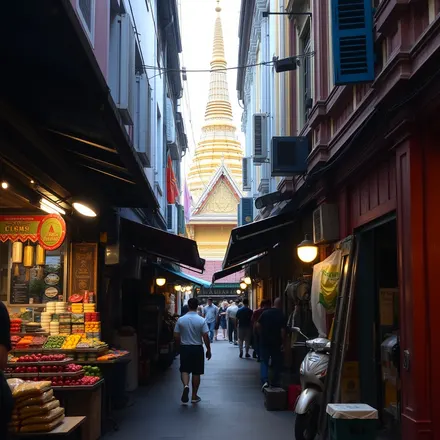
Talat Noi — literally 'small market' — sits south of Chinatown and east of the river in one of Bangkok's oldest continuously inhabited quarters. Portuguese traders established a presence here in the seventeenth century, followed by Chinese immigrants who built the dense, labyrinthine neighbourhood that still survives largely intact today. The district's most famous resident is the Chao Mae Tubtim Shrine, a small fertility shrine tucked into a commercial compound that has accumulated thousands of red wooden phalli as offerings over the decades — a spectacle that is simultaneously surreal and deeply reverent. The neighbourhood's soul, however, is in its streets: a café culture has taken root in the ground floors of century-old shophouses, and the lane connecting the Mariamman Temple to the riverside is one of the finest short walks in all of Bangkok. The Lhong 1919 pier complex nearby, a restored Chinese merchant house turned art and market space, makes an excellent anchor for an afternoon in this district.
Phra Nakhon district, the ancient core of Bangkok north of the Grand Palace, conceals more temples per square kilometre than anywhere else in the city, yet most visitors see only Wat Pho and Wat Arun. Wat Ratchanatdaram, with its unusual multi-spired Loha Prasat metal castle, sits virtually deserted just minutes from Democracy Monument. Wat Suthat and the Giant Swing in front of it are magnificent and genuinely overlooked. The Phra Nakhon neighbourhood around Banglamphu — distinct from the tourist zone of Khao San Road a few blocks away — harbours canal-side teak houses, antique dealers, and old-school noodle shops that open only for a few hours each morning. Walk here at 7 AM when monks collect alms and the streets still belong to residents.
Pak Khlong Talat, Bangkok's 24-hour flower market at the base of the Memorial Bridge, is one of the great sensory experiences in Thailand. Wholesale traders begin arriving around midnight, and by 2 AM the narrow lanes around the market are choked with motorbike carts, trucks, and buyers selecting million-baht loads of blooms destined for hotels, temples, and funeral parlours across the city. Arriving at this hour feels like descending into a fragrant, slightly chaotic dream. Dawn brings a more manageable rush as retail customers pick up fresh garlands and floral arrangements. Even a brief stop at 6 AM, before the morning heat arrives, imprints itself permanently in the memory.
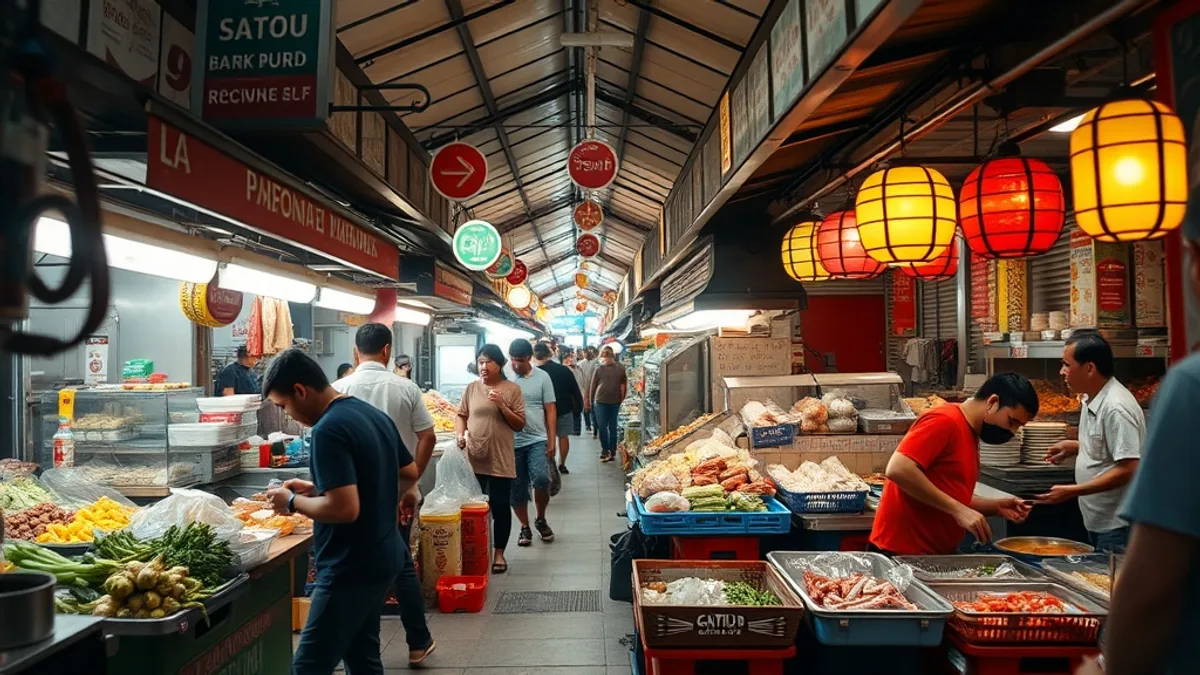
Chinatown's famous Yaowarat Road is well-documented, but the alleys running perpendicular to it — Soi Nana and the lanes around Talad Kao, the old market — offer a more unscripted experience. Street food vendors here serve food for other street food vendors: the portions are enormous, the prices absurd, and the quality extraordinary. Bang Rak waterfront, a five-minute walk south of the nearest BTS stop at Saphan Taksin, hosts a cluster of extraordinary bars and restaurants in repurposed colonial-era buildings overlooking the river. This is where Bangkok's creative class has been quietly drinking for a decade, and the density of quality establishments in a short stretch of riverside road is remarkable.
Highlights
- Explore the century-old Portuguese-Chinese lanes of Talat Noi at dawn before the heat sets in
- Visit the extraordinary Chao Mae Tubtim Shrine in Talat Noi — one of Bangkok's most unusual sacred sites
- Arrive at Pak Khlong Talat flower market between midnight and 3 AM to witness the wholesale orchid and marigold trade
- Discover Wat Ratchanatdaram's multi-tiered metal castle, one of Bangkok's most architecturally unusual temples
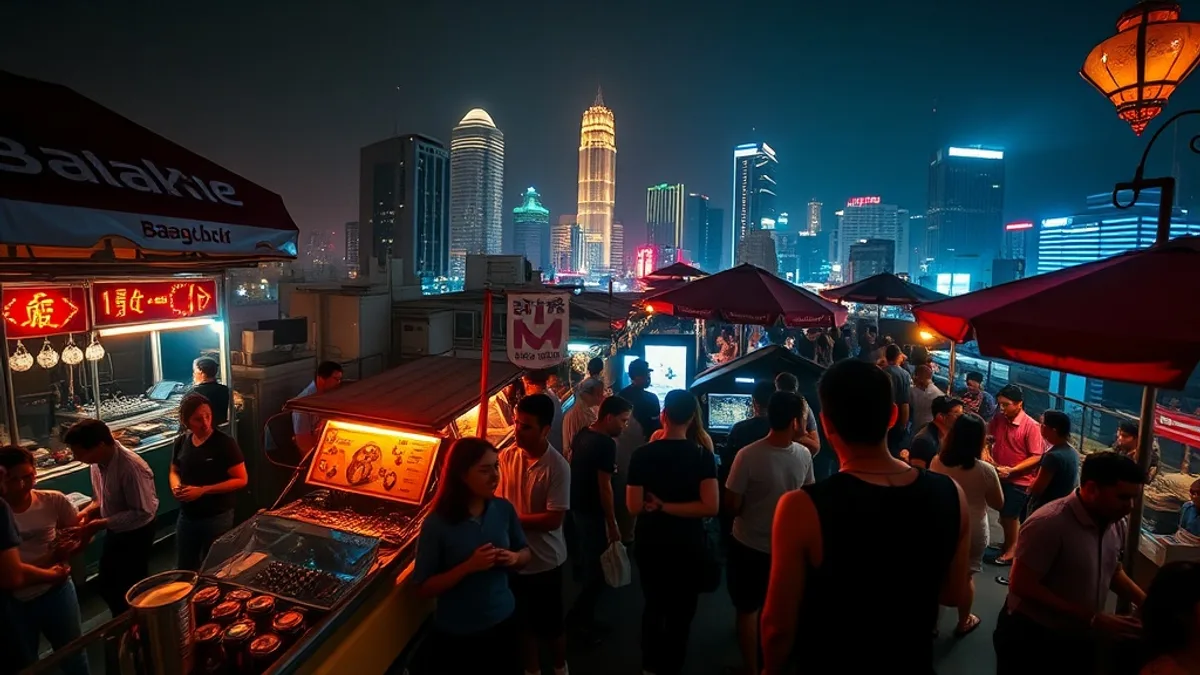
- Find the hidden rooftop bars and design studios of Bang Rak waterfront, Bangkok's most creative neighbourhood
- Walk Soi Nana in Chinatown for street food stalls serving meals for other street food vendors at pre-dawn prices
- Watch the alms-giving procession at sunrise in the Phra Nakhon neighbourhood away from the Khao San Road crowds
- Photograph Wat Arun's riverside facade at sunrise from the opposite bank before the tour boats begin running
- Browse Lhong 1919's restored Chinese merchant complex for art, craft vendors, and river views
Bangkok's old neighbourhoods are best explored in the cooler months from November to February. Early morning — between 6 and 9 AM — is universally the best time regardless of season: the light is golden, the heat is manageable, and the streets belong to residents rather than tourists. The flower market is only worth visiting between midnight and 6 AM. Chinatown's hidden alleys are most alive on weekend evenings and during Chinese New Year in January or February.
Practical Information
Cost Level
Most of Bangkok's hidden-gem experiences cost very little. Temple entry is free at most lesser-visited wats, or 20-50 THB at the more developed sites. Street food in Chinatown alleys and Phra Nakhon morning markets runs 40-80 THB per dish. The Bang Rak riverside bars are notably more expensive — cocktails at the better-known spots cost 350-500 THB — but several neighbourhood bars charge 150-200 THB. Lhong 1919 entry is free; Grab rides between districts cost 60-120 THB.
Tips
Wear comfortable walking shoes and carry a paper map or downloaded offline map of the Rattanakosin island area — mobile signal can be patchy in some older lanes. Dress modestly for temple visits: shoulders and knees covered. The Chao Phraya Tourist Boat (blue flag line, 150 THB day pass) connects many riverside neighbourhoods and avoids Bangkok's traffic entirely. For Talat Noi, the MRT Hua Lamphong station is the most convenient starting point. Avoid visiting Chinatown by private car — motorbike taxis from Hua Lamphong MRT are far faster.
Our creators on the ground in Bangkok share their best recommendations in their videos.
Places in this Guide
Discover the attractions and locations featured in this travel guide.
Explore Bangkok
Bangkok
กรุงเทพมหานครBangkok's vibrant street food scene, temples, nightlife and its world-famous expat community make the capital the most-f...All creators from Bangkok →Location & Orientation
Frequently Asked Questions
What is Talat Noi and why do travellers love it?
Talat Noi is one of Bangkok's oldest surviving neighbourhoods, located south of Chinatown between Yaowarat Road and the Chao Phraya River. Its appeal lies in its authentic, unhurried atmosphere: century-old Chinese shophouses, a Portuguese-influenced heritage, narrow lanes connecting shrines and workshops, and a recent wave of independently owned cafés and bars that have moved in without fundamentally changing the neighbourhood's character. The area is a favourite of photographers, urban explorers, and travellers who prefer stumbling onto things to following a fixed itinerary. The Mariamman Temple, the Chao Mae Tubtim Shrine, and the Lhong 1919 complex are key anchors.
What time should I visit Pak Khlong Talat flower market?
The flower market is a 24-hour operation, but the most extraordinary window is between midnight and 4 AM when the wholesale trade is at its peak. Truck after truck arrives laden with jasmine garlands, marigold wreaths, and orchid arrangements destined for Bangkok's temples and hotels. The lanes become a fragrant, organised chaos of carts and buyers. If a late-night visit is not practical, arriving between 5 and 7 AM still catches the morning retail rush with good colour and activity. Midday visits are functional but lack atmosphere. The market is located at the base of the Memorial Bridge and is easily reached by riverside boat to Pak Khlong Talat pier.
Which lesser-known temples in Bangkok are worth visiting?
Wat Ratchanatdaram and its remarkable Loha Prasat metal castle — a forty-spired ordination hall unique in Theravada Buddhism — sit near the Golden Mount with almost no queue, despite being one of Bangkok's most architecturally extraordinary buildings. Wat Suthat on Bamrung Mueang Road is another overlooked masterpiece, with murals covering the interior walls and a bronze Buddha larger than the one in Wat Pho. Wat Kanlayanamit in the Thonburi district across the river houses a giant seated Buddha in a cavernous viharn and sees virtually no foreign visitors. All three are free or low-cost to enter.
What is the Bang Rak neighbourhood known for?
Bang Rak — the name means 'village of love' — is a riverfront district south of Silom that has evolved into Bangkok's most quietly sophisticated neighbourhood. The strip of century-old buildings along Charoenkrung Road between the Shangri-La Hotel and the Mandarin Oriental has attracted an unusual density of independent bars, restaurants, galleries, and creative agencies. The TCDC (Thailand Creative and Design Center) at the River City complex is a world-class design library and coworking space. Several of Bangkok's most celebrated cocktail bars are here, including those that regularly appear on Asia's 50 Best Bars lists. It rewards slow exploration on foot on a weekend afternoon.
How do I explore Bangkok's hidden districts without getting lost?
Download Google Maps or Maps.me for offline use before leaving your accommodation — mobile internet in some older lanes and markets can be unreliable. The Chao Phraya Tourist Boat (blue flag, 150 THB day pass) provides a logical spine connecting most riverside hidden-gem neighbourhoods including Talat Noi, Pak Khlong Talat, Banglamphu, and Bang Rak. From each pier, the interesting territory is within fifteen minutes' walk. Alternatively, booking a half-day walking tour of the old city with a local guide provides context that transforms what might seem like random alleys into coherent historical narrative.