Introduction
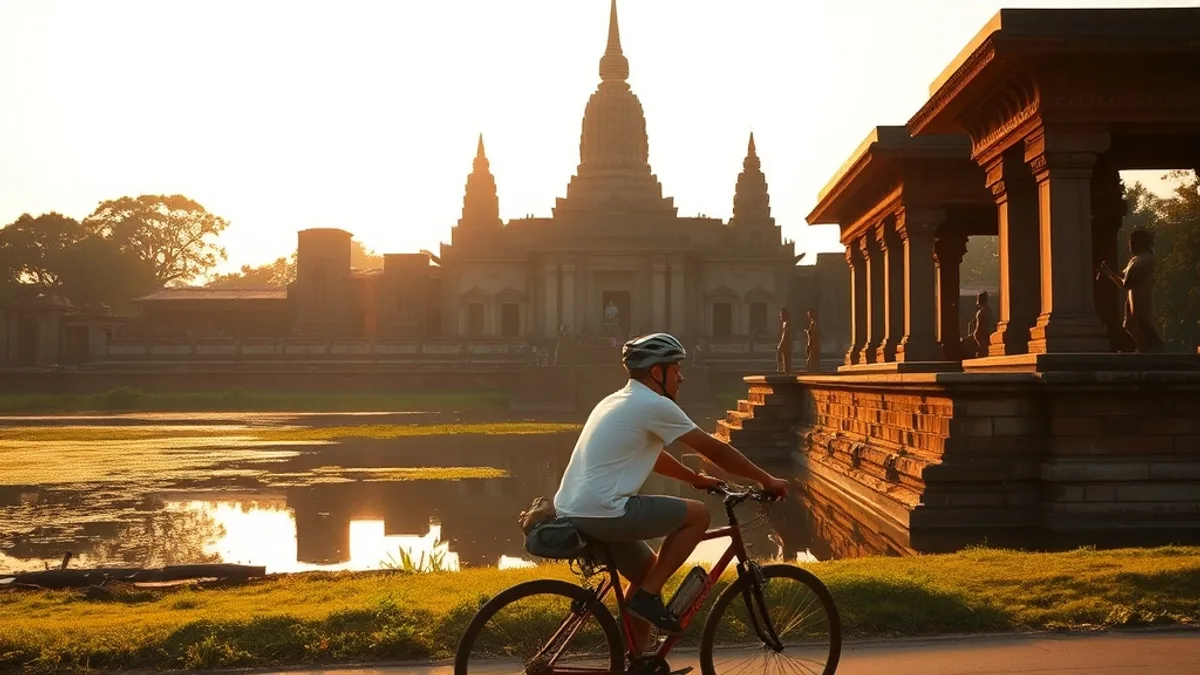
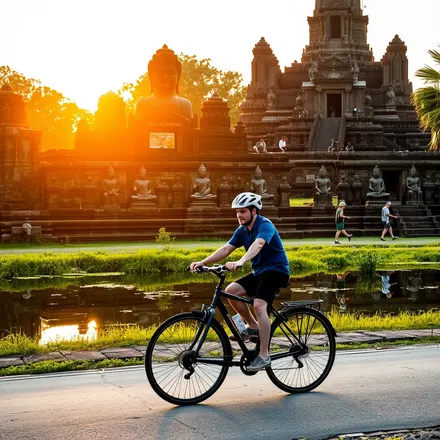
There is a moment on a bicycle in Ayutthaya — perhaps as you freewheel past a headless Buddha statue half-swallowed by a ficus tree, or pause on a riverbank to watch a longtail boat streak past a broken prang — when the sheer improbability of the place announces itself. This was once the capital of one of the most powerful kingdoms in Asia: a city of one million people that astonished seventeenth-century European ambassadors with its wealth, its gold, and the sophistication of its court. Today those palaces are fields of brick rubble and broken spires, haunted by the memory of their former grandeur and surrounded by a modern Thai city that has grown up quietly around them. Cycling is not just the most convenient way to connect these dispersed ruins — it is the most emotionally resonant. On a bicycle you move at the pace of discovery, close enough to the stones to touch them, free to turn down an unmarked lane toward a temple nobody else seems to have found. The island city of Ayutthaya, bounded by three rivers and laced with ancient moats, was made for exploring on two wheels.
Overview
The geography of Ayutthaya's historic island plays directly into the hands of the cyclist. Bounded by the Chao Phraya, Pa Sak, and Lopburi rivers, the island measures roughly four kilometres from east to west and three from north to south — entirely manageable as a cycling circuit, with the ruins clustered close enough together that most visitors can see the essential sites within three to five hours of pedalling. Bike rental is concentrated around the ferry landing on the south bank, where shops charge 50-100 THB per day for decent bicycles or 150-250 THB for electric bikes that make the summer heat far more forgiving. The ferry itself carries passengers and cyclists across the Pridi Damrong Bridge channel for about 5 THB — a three-minute crossing that immediately puts you on the island.
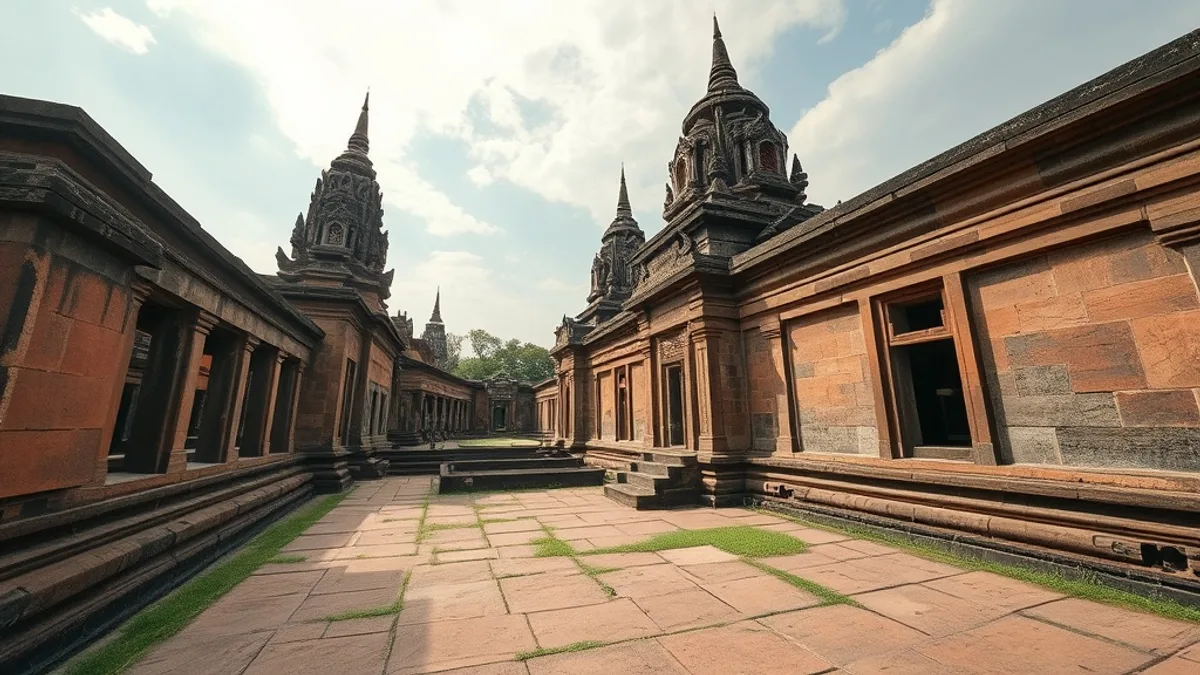
The classic three-hour loop begins at Wat Phra Si Sanphet, the former royal temple whose three restored chedis (stupa towers) are perhaps the most recognisable image of Ayutthaya and appear on an extraordinary proportion of Thailand's tourism marketing. Built in the late 15th century, the temple served as the royal chapel of the Ayutthaya kings and housed a massive standing Buddha covered in 250 kilograms of gold — melted down by the Burmese invaders who sacked the city in 1767. The three remaining chedis contain the ashes of three Ayutthayan kings, and their limestone-patched profiles against a blue sky are an image of genuine beauty. Adjacent lies the Wihan Phra Mongkhon Bophit, housing a large seated bronze Buddha, restored and still venerated.
Cycling east from here, Wat Mahathat is the ruin that has generated the most famous photograph in all of Thailand: a serene stone Buddha head entwined in the roots of a banyan tree, calmly absorbed by the forest. No one knows definitively how the head came to be there — the most plausible explanation involves the roots gradually drawing it down over centuries as the surrounding structure collapsed. Visitors are asked to kneel at eye level when photographing it, a request rooted in genuine reverence rather than bureaucratic rule. The wider complex of Wat Mahathat is one of Ayutthaya's most extensive, with dozens of ruined prangs, ordination halls, and galleries spreading across a large rectangular compound.
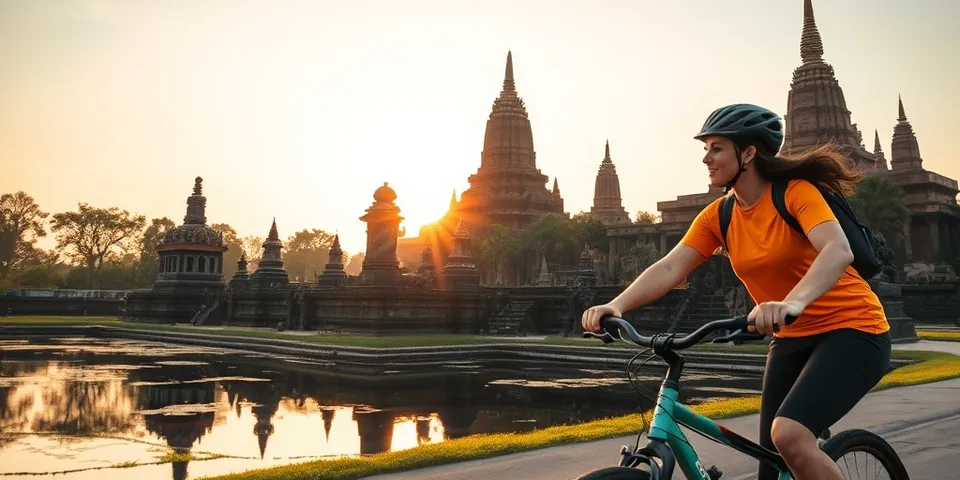
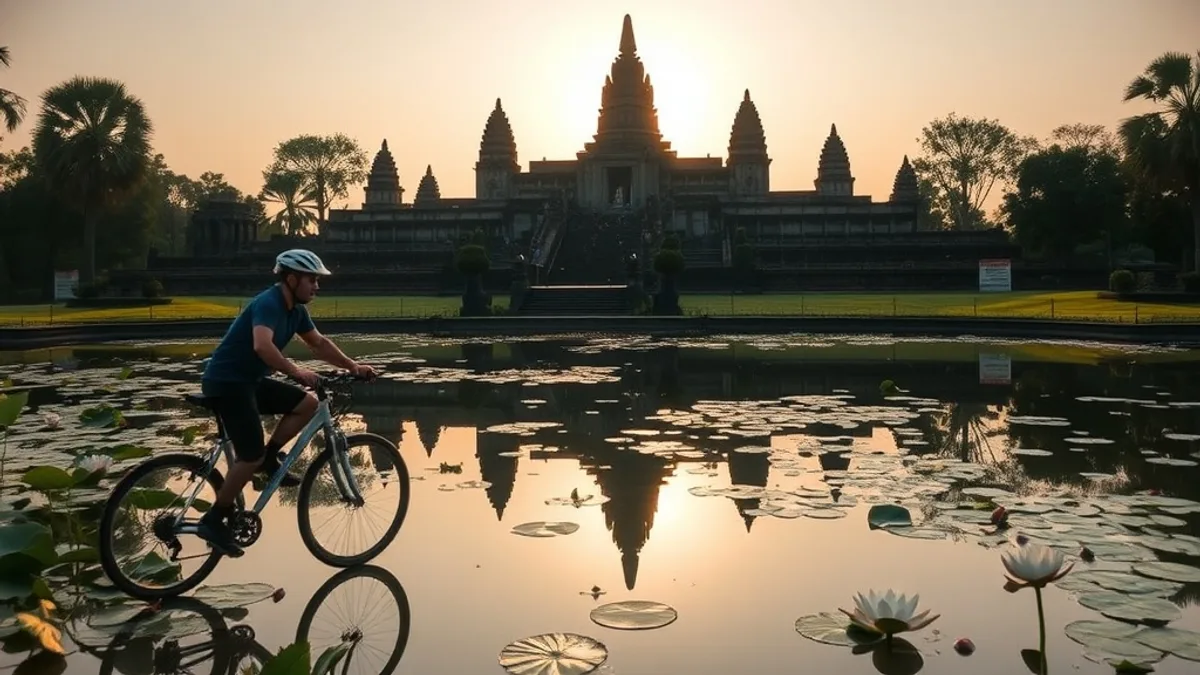
The five-hour full-day loop extends west and south of the island to include Wat Chaiwatthanaram, whose position on the Chao Phraya riverbank makes it the most photogenic temple to visit at sunset. A Khmer-influenced layout with a central prang surrounded by eight smaller towers reflects in the river on calm evenings, creating a scene of extraordinary beauty. Accessible by bicycle via the road running along the western bank of the island, the temple complex is particularly dramatic in the golden hour. Along the way, Wat Phra Ram — its single ruined prang rising above a lotus-filled pond — rewards a brief pause, and the small local restaurants along the river road between the island and the western temples serve excellent boat noodles and fresh coconut juice at thoroughly local prices.
Highlights
- Cycle the classic three-hour temple loop past Wat Phra Si Sanphet's three restored royal chedis
- Photograph the world-famous Buddha head entwined in banyan tree roots at Wat Mahathat
- Reach Wat Chaiwatthanaram on the Chao Phraya riverbank for the most spectacular sunset view in Ayutthaya
- Cross the river by longtail ferry with your bicycle for the authentic island entry experience
- Discover unmarked temple ruins along quiet lanes between the major sites using a paper map
- Stop at riverside stalls between temples for boat noodles and fresh coconut juice at local prices
- Rent an electric bicycle to tackle the full-day circuit in comfort even during the hot season
- Explore Wat Phra Ram with its single prang reflected in a lily-covered pond on a calm morning
- Navigate the outer perimeter road along the river moat for a view of the island from the water's edge
October to February offers the most comfortable cycling weather, with temperatures in the 25-32 degree range and lower humidity. The cooler months also mean longer daylight hours for the full-day circuit. March to May is intensely hot and cycling in the midday hours should be avoided — start early (7-8 AM) and aim to be finished before noon, or take a two-hour midday break. June to September brings occasional rain that can make the ruins more atmospheric but the brick paths slippery. The light for photography is finest in early morning and in the hour before sunset, making two shorter sessions on the bike more rewarding than a single full-day push.
Practical Information
Cost Level
Bicycle rental costs 50-100 THB per day for a standard bike, 150-250 THB for electric. The ferry crossing is 5 THB per person (bikes carry free or for a few baht). Ayutthaya Historical Park entry varies by temple: Wat Phra Si Sanphet and Wat Mahathat each charge 50 THB for foreigners. A combined pass covering multiple major sites can reduce costs. Boat noodles at riverside stalls run 40-60 THB per bowl. Total cost for a self-guided full-day cycling tour including bike hire, temple entries, and food is typically 500-800 THB per person.
Tips
Carry at least 1.5 litres of water per person — there are few water sources once inside the ruin compounds, and the heat is relentless from mid-morning. Wear a hat and apply sunscreen before departing; the lack of shade between temples is significant. Most bike rental shops near the ferry can provide a basic paper map marking the main temples and cycling routes. For the sunset at Wat Chaiwatthanaram, arrive 45 minutes before sunset to find a good position as the site becomes busy in the late afternoon. If cycling with children, the inner island loop is flat and straightforward; the outer river road has more traffic.
Our creators on the ground in Ayutthaya share their best recommendations in their videos.
Creators who cover this spot
Discover YouTube creators who feature this topic in their videos.
Adventures Joel
British adventure vlogger exploring Thailand by motorbike.
Discover Thailand
Christian
Discover Thailand – Deutscher Thailand Reise-Creator auf YouTube.
travelventure
Marie & Jan
travelventure – Groesster deutschsprachiger Reise-Creator auf YouTube.
Places in this Guide
Discover the attractions and locations featured in this travel guide.
Explore Ayutthaya
Ayutthaya
อยุธยาAyutthaya, the ancient capital of the Siamese kingdom, is a UNESCO World Heritage Site renowned for its majestic temple ...All creators from Ayutthaya →Location & Orientation
Frequently Asked Questions
Where do I rent a bicycle in Ayutthaya?
The highest concentration of bicycle rental shops is on the south side of the Chao Phraya river, near the ferry landing in the area south of Chao Phrom Road. Several shops also operate on the island itself, near the Ayutthaya Historical Study Centre and along Naresuan Road. Standard bicycles rent for 50-100 THB per day and are generally well-maintained at the reputable shops. Electric bicycles (150-250 THB per day) are increasingly available and popular during the hot season. Most shops ask for a passport or a photocopy as a deposit. The ferry crossing to the island with your bicycle costs around 5-10 THB.
How long does it take to cycle the main Ayutthaya temple sites?
The compact inner island loop visiting Wat Phra Si Sanphet, Wat Mahathat, Wat Ratchaburana, and Viharn Phra Mongkhon Bophit takes roughly two to three hours of cycling plus time inside the ruins — allow a full morning of four to five hours including stops. The extended full-day circuit that adds Wat Chaiwatthanaram on the western riverbank and several less-visited sites requires six to seven hours total, including lunch. Serious cyclists with a strong interest in history will benefit from two days — one focused on the inner island and one on the outer temples and canal districts. Electric bikes make the full-day circuit accessible to most fitness levels.
Is cycling safe in Ayutthaya?
The island's internal roads are generally quiet and safe for cycling, with low traffic volumes between the main temple sites. The perimeter roads along the rivers are busier but have reasonable sight lines. The main hazard is the heat rather than traffic — dehydration and heat exhaustion are real risks if you do not carry sufficient water and take breaks in shade. Wear a helmet if one is available (some rental shops provide them, though not all). The only route that requires caution is the main road on the south bank near the ferry landing where minibus traffic is heavier. Night cycling is not recommended as road surfaces are uneven and lighting is poor.
Can I combine cycling with a boat tour of Ayutthaya?
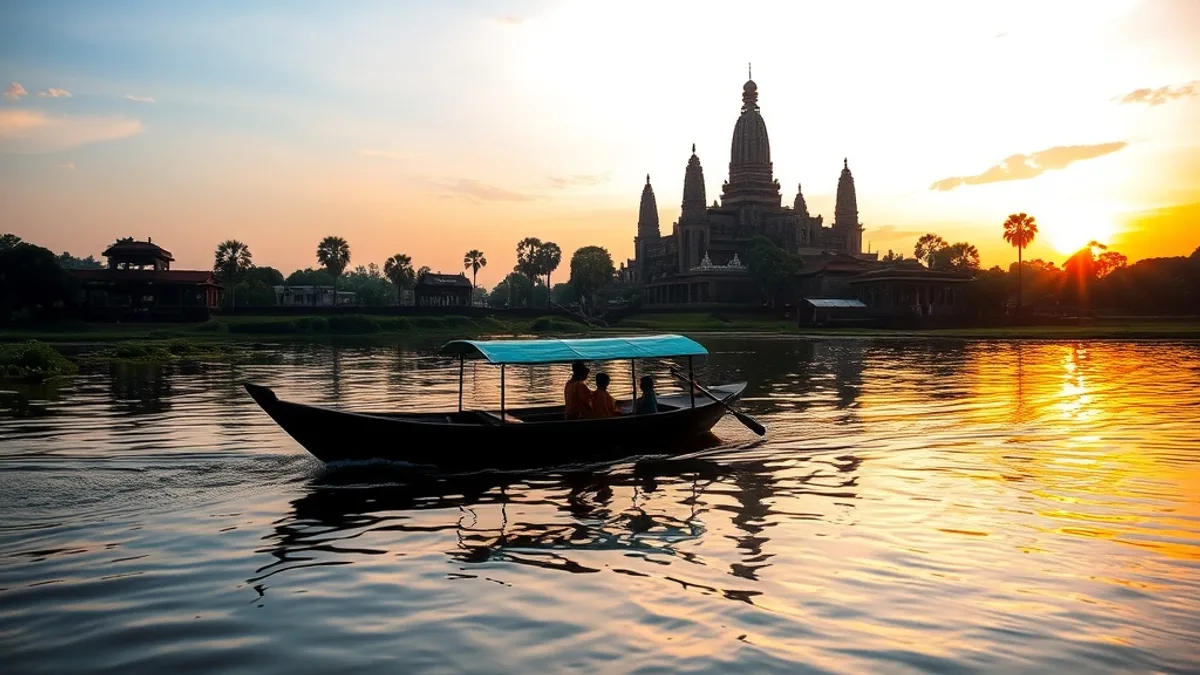
Absolutely — combining the two modes of transport is one of the best ways to experience Ayutthaya comprehensively. The standard approach is to cycle the inner island temples in the morning, then take a private longtail boat for a two-hour river circuit in the late afternoon, visiting the river-facing temples (Wat Chaiwatthanaram, Wat Phutthai Sawan) from the water. Private longtail hire from the main pier costs 600-1,200 THB per hour depending on the boat. The river perspective on the ruins that line the banks is completely different from the land view and well worth the additional cost. Your bicycle can be left at the rental shop or a guesthouse while you take the boat.
What is the dress code for visiting Ayutthaya temples?
The major temples at Ayutthaya Historical Park require modest dress: covered shoulders and knees as a minimum. Several of the most visited sites — Wat Phra Si Sanphet, Wat Mahathat — have sign-posted dress requirements enforced by staff at the entrance. Lightweight trousers or a sarong over shorts are the practical solution for cyclists who do not want to cycle in heavy fabric. Some rental shops and temple entrances sell or lend sarongs for a small fee. Shoes that can be removed easily are useful as many temple compounds require removing footwear before entering ordination halls or accessing certain areas.