Introduction
Food tells history in ways that archaeology cannot. In Ayutthaya, where the physical fabric of the ancient kingdom is largely ruins, the culinary traditions carry a living memory of the city's extraordinary cosmopolitan past — Persian traders who brought their rosewater-scented sweets, Chinese merchants whose boat noodle recipes never left the river, Japanese samurai who settled in their own quarter and left traces in the spiced grilled meats of the street vendors. The food of Ayutthaya is central Thai cooking at its most historically layered: richer in Chinese influence than the south, spicier than the north, and marked by a riverine quality that comes from centuries of proximity to some of Thailand's most productive waterways. A visit to Ayutthaya's food scene is also a corrective to the assumption that the city exists primarily as a historical museum. These night stalls and morning markets are where the city's 80,000 residents eat every day, and the quality is as high as you will find anywhere in the central plains region.
Overview
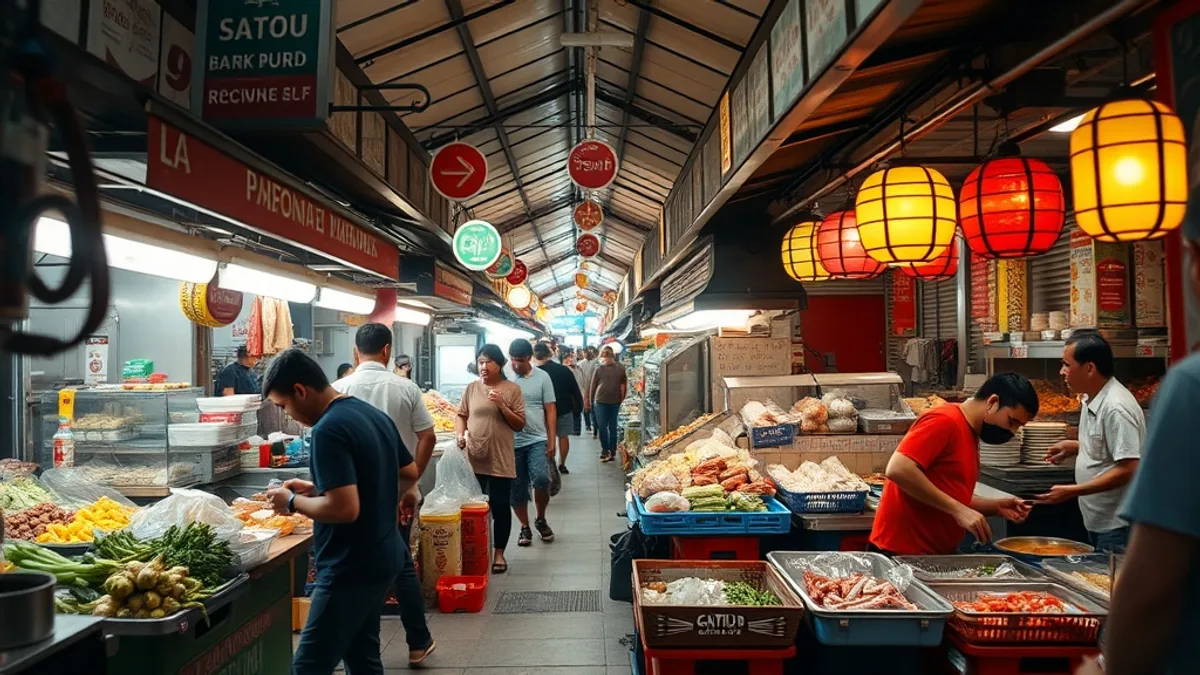
The Ayutthaya night market stretches along the Chao Phraya riverfront south of the historic island, spreading across a wide esplanade that fills up from around 5 PM with vendors, families, and the occasional tourist who has wandered beyond the ruin compounds. The market occupies several overlapping areas: a row of permanent open-sided restaurants serving grilled river fish and crab curries directly above the water; a more informal cluster of mobile vendors selling fried items from carts; and a small covered section where sweets, fruit, and cold drinks are arranged. The atmosphere is entirely local — this is where Ayutthaya people come to eat dinner and socialise, not a curated tourist attraction. Prices reflect this: a full grilled fish with rice and vegetables costs 80-120 THB, and most street snacks are in the 30-60 THB range.
Hua Raw Market, on the north bank of the island near Naresuan Road, is Ayutthaya's most important morning market and opens at around 4 AM, reaching peak activity between 6 and 8 AM. The market is messy, loud, and completely wonderful. The fresh produce section fills the inner rows — enormous catfish still alive in polystyrene tanks, clusters of morning glory and holy basil, towers of pomelos from the nearby orchards at Bang Pa-In. The cooked food section around the perimeter is the destination for the best local breakfast in the city: a bowl of boat noodles with pork blood cake costs 25-40 THB, the khao tom (rice soup) is thick and savoury, and the fried dough sticks sold at the corner stall are pulled fresh from the oil and eaten immediately with sweetened condensed milk.
Roti sai fai — translated approximately as 'thread pancake' or candy floss pancake — is Ayutthaya's most iconic street snack and worth seeking out specifically. An extremely thin rice flour crepe is pressed onto a griddle, filled with sweet threads of spun sugar (resembling angel hair, sometimes tinted pink or green), and rolled into a tight cylinder. The texture is extraordinary: the warm crepe giving way to the dissolving sweetness of the sugar threads inside. Several stalls near the Chao Phrom Market area sell these, and the visual performance of the sugar spinning is part of the appeal.
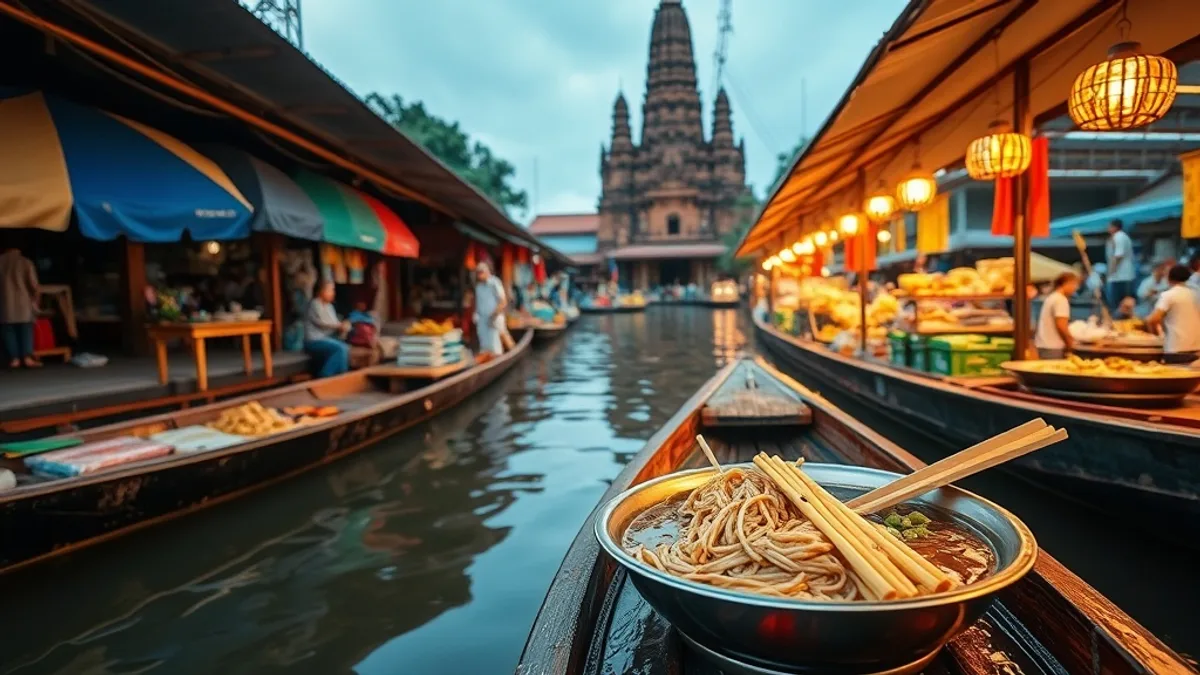
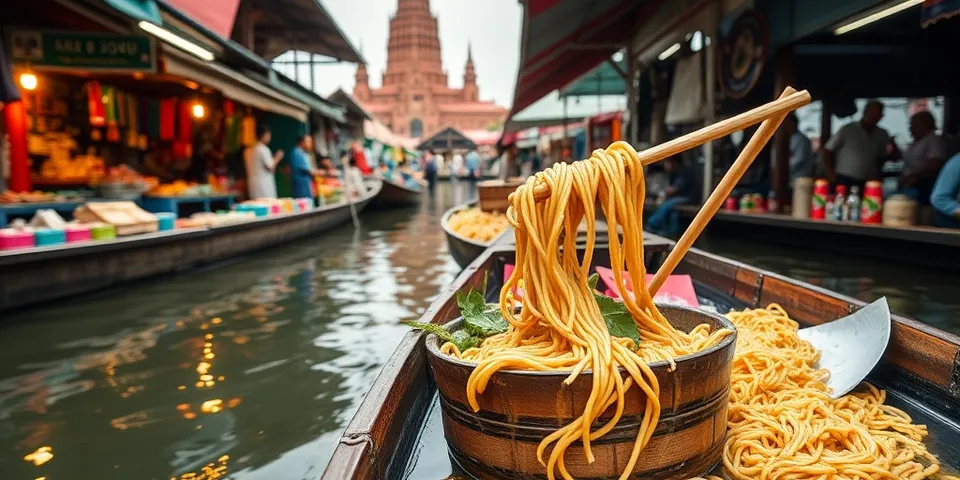
For a more substantial historical reference, the boat noodle tradition of Ayutthaya deserves attention. Before roads made land transport practical, vendors in small wooden boats would paddle through the canals and rivers of the central plains selling bowls of noodle soup to the riverside communities and passing boats. The standard boat noodle — a small, intensely flavoured bowl of thin rice noodles in a dark pork or beef broth made with blood, herbs, and aromatics — remains unchanged from these origins. The broth is among the most complex of any Thai soup tradition: five spice, star anise, soy, pork bone, and coriander root producing a depth that a single bowl barely begins to exhaust. Lung Lek floating restaurant near the east bank pier serves one of Ayutthaya's most authentic versions, accessible by crossing a wooden gangplank to a floating pontoon over the river.
The Pa Lek noodle restaurant, operating from a family house on the island for decades, represents the older strand of Ayutthaya's Chinese-inflected noodle culture. The kitchen produces a roasted pork egg noodle dish of genuine distinction — the pork marinated in five spice and honey before roasting, the noodles freshly made, the broth assembled from a stock pot that has been running continuously for longer than any of the staff can definitively confirm. Meals here cost 50-80 THB for a generous bowl and the experience of the family dining room, with its faded photographs and the sound of the wok from the back kitchen, is as memorable as the food.
Highlights
- Hunt down roti sai fai — Ayutthaya's famous candy-floss thread pancake — near Chao Phrom Market
- Eat authentic boat noodles at Lung Lek floating restaurant, moored on the river's edge east of the island
- Explore Hua Raw Market before dawn for the freshest catch, the best boat noodle breakfast, and the full local experience
- Dine at the Chao Phraya riverfront night market as the sun sets over the ruins with locals at plastic tables
- Order a roasted pork egg noodle bowl at Pa Lek restaurant, a decades-old Ayutthaya family institution
- Watch the theatrical performance of sugar thread spinning at a roti sai fai vendor stall
- Try khao chae — a royal-tradition cold rice dish with ice water and accompaniments, available in season
- Follow the local breakfast trail from Hua Raw Market's deep-fried dough stalls to the congee carts nearby
- Taste the grilled river fish and crab curry from the open-sided Chao Phraya riverside restaurants at sunset
Ayutthaya's food scene is active year-round, but visiting during the cool season (November to February) makes outdoor eating at the night market genuinely pleasant rather than a test of heat tolerance. Hua Raw Market runs daily year-round and is most atmospheric visited between 6 and 8 AM. The night market along the river is busiest on weekend evenings when locals from the surrounding province descend. For roti sai fai, the most consistent vendors are those with established spots near Chao Phrom Market, operating daily from around 4 PM until the sugar runs out — typically by 8 or 9 PM.
Practical Information
Cost Level
Ayutthaya's food is among the most affordable of any major Thai heritage city. Boat noodles cost 25-40 THB per bowl (eat three or four). A complete grilled fish dinner with rice and vegetables at the riverside market runs 80-150 THB. Roti sai fai is 20-40 THB per piece. A full breakfast at Hua Raw Market including boat noodles, fried dough, and a coffee costs under 100 THB. Even the best restaurant meals in Ayutthaya rarely exceed 200-300 THB per person including soft drinks. Budget 300-500 THB for a thorough food day covering breakfast market, lunch noodles, and an evening riverside meal.
Tips
For Hua Raw Market, arriving at 6 AM rather than 8 AM makes a significant difference to both the energy and the food quality — the best cooked items sell out early. Ask any guesthouse or tuk-tuk driver to point you to the current best roti sai fai vendor as stall locations shift seasonally. At the riverside night market, claim a table before ordering rather than ordering first — tables fill quickly after 6 PM on weekends. Boat noodles are small by design; ordering one bowl is usually not enough, so order several varieties to experience the full range. Most vendors at all these sites are accustomed to pointing to menus, so language is not a barrier.
Our creators on the ground in Ayutthaya share their best recommendations in their videos.
Creators who cover this spot
Discover YouTube creators who feature this topic in their videos.

Eat Street Repeat
Eat Street Repeat is a USA-based creator documenting Thailand's authentic street food culture since 2015.

Mark Wiens
American food travel creator based in Bangkok specializing in cinematic Thai street food and culinary documentation.

Thai Food Quest
American food enthusiast documenting Thailand's regional cuisine from Bangkok street carts to northern hill tribe recipes.

Places in this Guide
Discover the attractions and locations featured in this travel guide.
Explore Ayutthaya
Ayutthaya
อยุธยาAyutthaya, the ancient capital of the Siamese kingdom, is a UNESCO World Heritage Site renowned for its majestic temple ...All creators from Ayutthaya →Location & Orientation

Frequently Asked Questions
What is roti sai fai and where can I find it in Ayutthaya?
Roti sai fai is a street sweet unique to Ayutthaya — a paper-thin rice flour crepe filled with spun sugar threads and rolled into a cylinder. The sugar spinning is done by hand in a theatrical display: a cone of melted sugar is drawn into fine threads by a skilled vendor and piled into the crepe. The threads are sometimes tinted pink, green, or left golden white. The result is a delicate, perfumed sweet that dissolves in the mouth. The best vendors cluster near Chao Phrom Market and along the riverfront road south of the historic island. They typically operate from mid-afternoon, and the spun sugar display draws a small crowd of onlookers making the stalls easy to spot.
What are boat noodles and why are they associated with Ayutthaya?
Boat noodles are small, intensely flavoured bowls of rice noodle soup in a dark broth made from pork or beef stock with blood, five spice, star anise, and coriander root. They originated with vendors who sold noodles from small wooden boats navigating the canals and rivers of Ayutthaya and the central plains. The small bowl size reflects the economics of boat-side selling — customers would order three, four, or five bowls rather than one large portion. The tradition survives most purely in the Ayutthaya region and at the floating restaurants along the river. At 25-40 THB per bowl, ordering multiple varieties across an hour of eating is entirely practical and highly recommended.
Is Hua Raw Market open every day?
Yes. Hua Raw Market operates daily, opening as early as 4 AM and winding down by around 11 AM when the fresh produce is sold out and the morning crowd disperses. The most rewarding time to visit is between 6 and 8 AM when the market is at full activity: the fish and produce sections are stocked, the cooked breakfast stalls are in full swing, and the general energy is at its liveliest. Vendors are accustomed to non-Thai visitors and will price items and communicate through pointing and gestures without difficulty. The market is located on the north side of the historic island near Naresuan Road and is easily reached by bicycle or tuk-tuk from most Ayutthaya guesthouses.
Where is the best place to eat grilled river fish in Ayutthaya?
The Chao Phraya riverfront south of the historic island has the best concentration of grilled river fish restaurants, operating from late afternoon into the evening. These open-air establishments sit directly above the water and serve freshly grilled pla kapong (sea bass), pla chon (snakehead fish), and various river catfish species with rice, vegetables, and nam jim dipping sauce. The fish is sourced locally and priced by weight — point to your preferred fish from the ice display at the entrance. Prices typically run 80-200 THB for a whole fish depending on size. The floating restaurant area at Lung Lek is also excellent for both grilled fish and boat noodles in a particularly atmospheric setting.
What is the best way to do a food tour in Ayutthaya without a guide?
The self-guided food tour of Ayutthaya is straightforward and very rewarding. Start at Hua Raw Market at 6-7 AM for boat noodles and fried dough. By bicycle, head to the Chao Phrom Market area mid-morning for roti sai fai preparation and fresh fruit. Lunch at Pa Lek noodle restaurant on the island (open from around 10 AM). In the late afternoon, cycle to the Lung Lek floating restaurant east of the island for a bowl of authentic boat noodles before the evening. As sunset approaches, move to the Chao Phraya riverside market for grilled fish and an evening meal at the river's edge. The entire route is navigable by bicycle and covers the essential strands of Ayutthaya's food culture in one day.