Phuket Old Town (Sino-Portuguese Quarter)
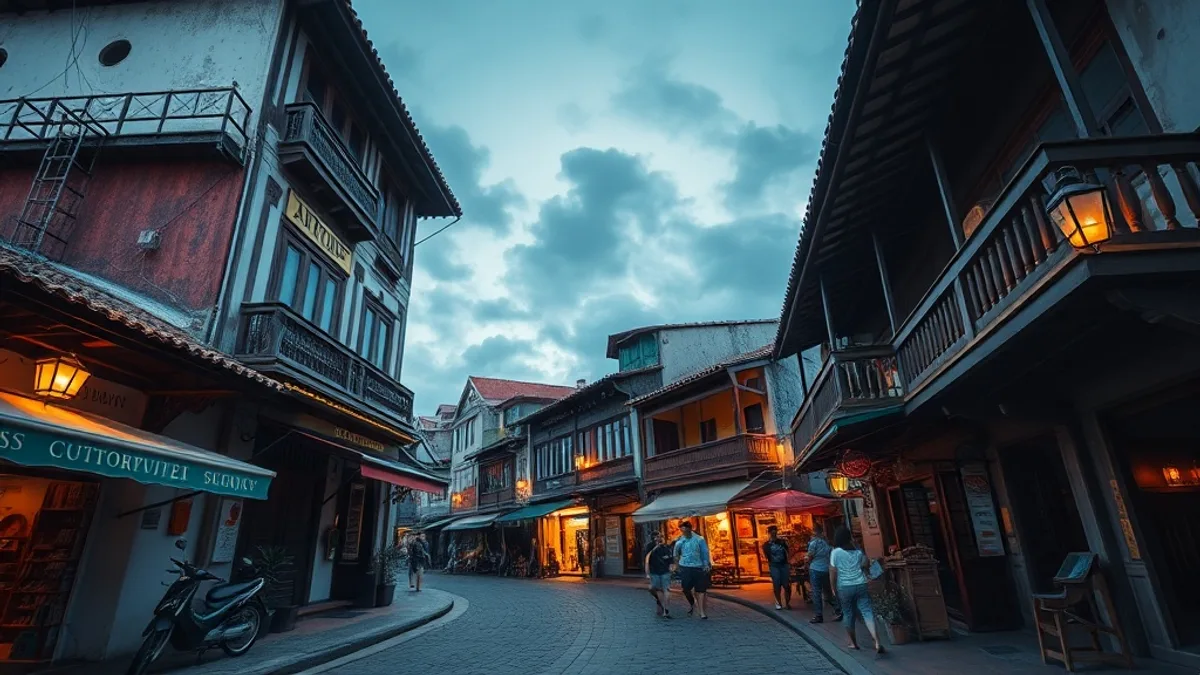
Phuket's charming UNESCO-recognised heritage quarter — pastel Sino-Portuguese shophouses, vibrant street art murals, boutique cafes, and active Chinese shrines. The Sunday Walking Street (17:00–22:00) is a weekly highlight. Best explored by bicycle in the morning before the heat builds.
About this Place
Phuket Old Town is the island's most historically and architecturally distinctive neighbourhood, born from the tin mining boom of the 19th century when waves of Hokkien Chinese traders settled here alongside Portuguese and Malay communities. The resulting Sino-Portuguese shophouse architecture — pastel-painted two-storey buildings with covered five-foot walkways, ornate shuttered windows, and decorative plasterwork — lines the length of Thalang, Dibuk, Krabi, and Phang Nga Roads in a style found nowhere else in Thailand in such concentration. In recent years the area has undergone a quiet renaissance. Century-old shophouses have been converted into specialty coffee roasters, boutique guesthouses, art galleries, and farm-to-table restaurants without losing their architectural character. Street art murals by local and international artists are found throughout the lanes — the most famous, on Thalang Road, depict scenes from traditional Phuket life and have become photography landmarks in their own right. The Blue Elephant cooking school occupies a beautifully restored Sino-Portuguese mansion and offers half-day Thai cooking classes. The Phuket Thai Hua Museum, housed in the town's original Chinese school, documents the history of the Peranakan community with genuine artefacts and photographs. Chinese shrines including Jui Tui Shrine and Put Jaw Shrine remain active centres of worship. The Old Town is best explored on foot or by rented bicycle in the cooler morning hours before 11:00. The Sunday Walking Street market runs every week from 17:00 to 22:00 and draws both locals and visitors with street food and handicrafts.
Location
7.8870, 98.3882
Nearby Creators
More Nearby Locations
Phuket's iconic 45-metre white marble Buddha atop Nakkerd Hill — visible from across the island. The summit terrace offers 360-degree panoramic views over Chalong Bay, Kata, and Karon beaches. Free entry with donations welcome; dress code enforced. Popular at sunset.
Phuket's most beloved crescent beach — 1.5km of white sand with calm swimming in dry season and real surf in the monsoon months. Kata Noi cove is a short walk south; the Karon Viewpoint three-beach panorama is 10 minutes up the hill. Quieter and more relaxed than Patong.
Phuket's most energetic and well-serviced beach — 3km of golden sand with parasailing, jet skis, and beachside massage by day. After dark, Bangla Walking Street delivers Phuket's most famous nightlife. Jungceylon mall is nearby. The island's liveliest base for those who want everything on their doorstep.
Thailand's most iconic island archipelago — vertical limestone cliffs, Maya Bay (filming location of 'The Beach'), crystal snorkelling waters, and Viking Cave sea-gypsy paintings. Day trips depart Phuket by 90-minute speedboat. Overnight stays on Ko Phi Phi Don available. Best October to April.