Introduction
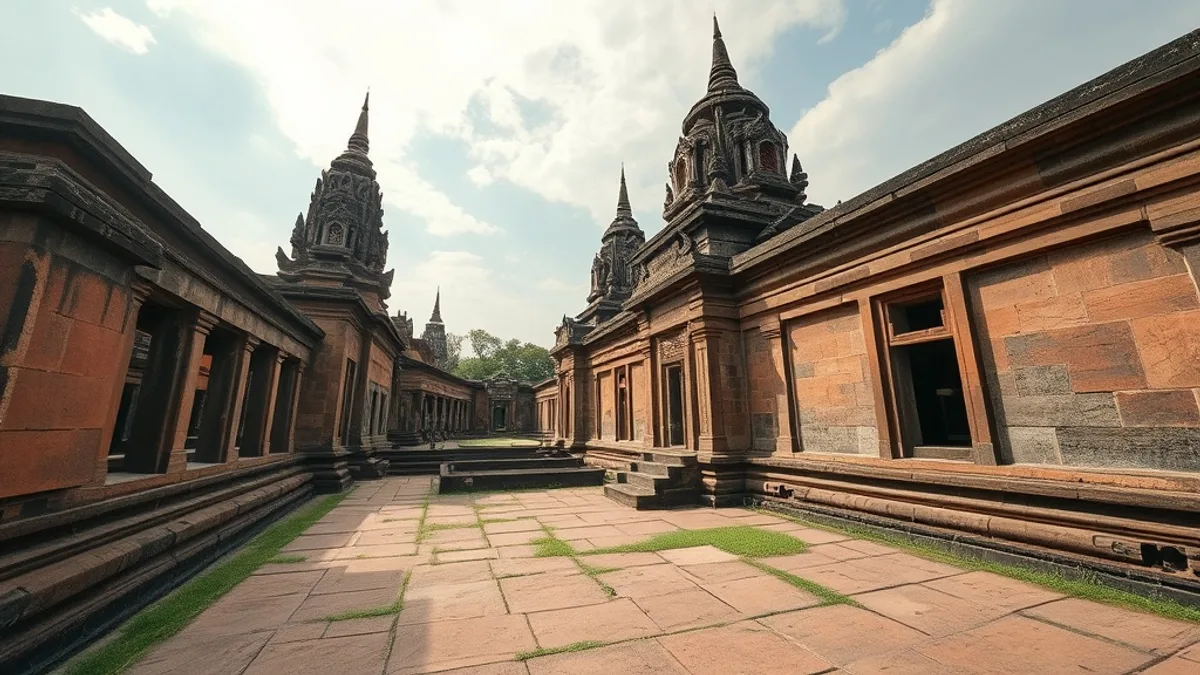
For over four centuries, Ayutthaya stood as one of the largest and most cosmopolitan cities in the world, a thriving capital whose wealth and grandeur attracted traders, diplomats, and adventurers from across the globe. Founded in 1350 on an island formed by three converging rivers, the Kingdom of Ayutthaya grew into a trading powerhouse that rivaled contemporary London and Paris in population. When Burmese armies sacked the city in 1767, they left behind a haunting landscape of shattered temples, headless Buddha statues, and crumbling palace walls that today form one of Southeast Asia's most atmospheric archaeological sites. Now a UNESCO World Heritage Site just 80 kilometers north of Bangkok, Ayutthaya's ruins are remarkably accessible — close enough for a day trip from the capital yet extensive enough to warrant an overnight stay for those who want to absorb the full scope of what was once the heart of the Siamese Empire. The famous image of a Buddha head entwined in the roots of a banyan tree at Wat Mahathat has become an icon of Thai cultural heritage, but the ancient capital offers far more than a single photograph. This guide covers the essential temples, the best ways to navigate the site, and the historical context that transforms these ruins from mere stone into a powerful story of rise and fall.
Overview
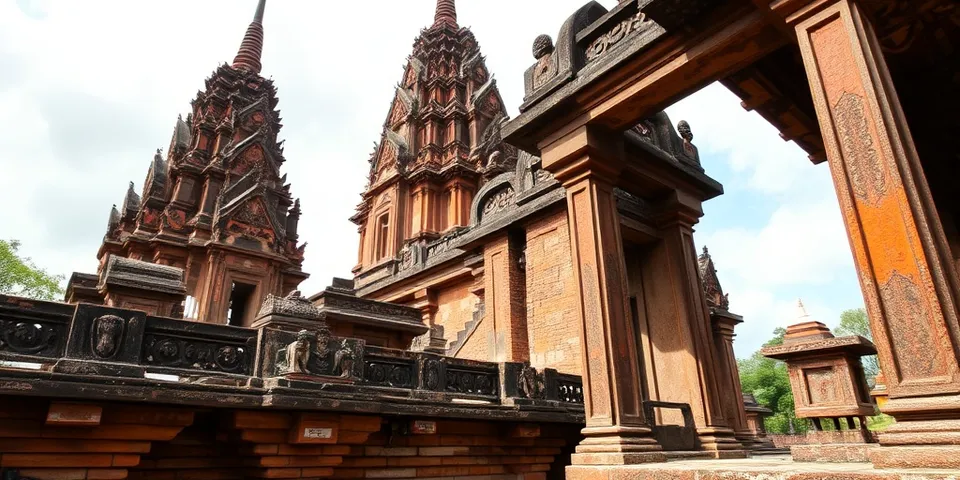
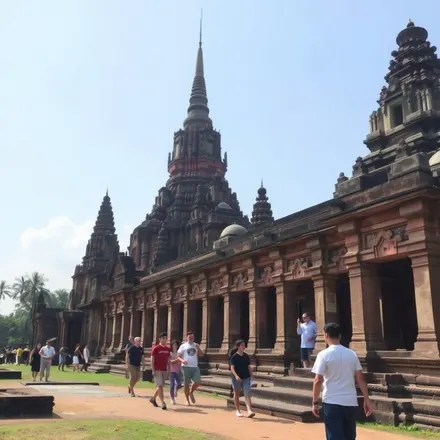
Ayutthaya Historical Park occupies the central island formed by the Chao Phraya, Lopburi, and Pa Sak rivers, with additional temple sites scattered beyond the moats on the surrounding riverbanks. The core archaeological zone contains hundreds of ruins, but a handful of major sites capture the most significant elements of Ayutthaya's former glory. Wat Mahathat is the most visited and perhaps most emotionally striking temple in the park. Once the spiritual center of the kingdom and residence of the supreme patriarch, the temple was systematically destroyed by Burmese invaders who toppled its iconic central prang and decapitated its Buddha images. Today, rows of headless Buddha statues sit along the base of crumbling stupas, a silent testimony to the violence of the city's fall. The famous Buddha head cradled in the roots of a bodhi tree is located here — visitors are required to crouch below the head level when photographing it as a sign of respect. Wat Phra Si Sanphet was the grandest temple of the royal palace, equivalent in status to Bangkok's Wat Phra Kaew today. Its three iconic bell-shaped chedis, once containing the ashes of Ayutthayan kings, remain the most recognizable silhouette of the ancient city. The adjacent royal palace grounds, though largely reduced to foundations, convey the enormous scale of the original complex.
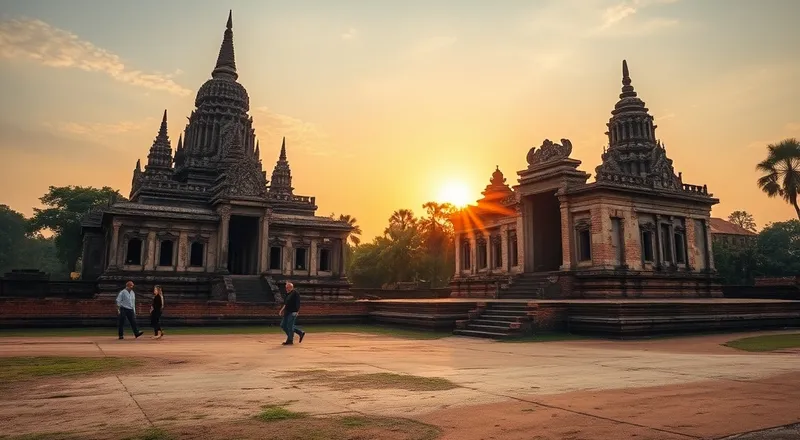
Walking through the site at sunset, when warm light illuminates the laterite walls, provides one of Ayutthaya's most photogenic moments. Wat Ratchaburana, next to Wat Mahathat, contains the best-preserved Khmer-style prang in the park. Visitors can descend steep stairs into the underground crypt where original murals depicting scenes from Buddhist heaven and hell survive in remarkable condition — some of the oldest paintings in Thailand. The temple was built in 1424 by King Boromracha II on the cremation site of his two older brothers who killed each other in a succession battle, adding a dramatic historical layer to the visit. Across the river from the island, Wat Chai Watthanaram is arguably the most photogenic temple in all of Ayutthaya. Built in Khmer style to commemorate a military victory, its central prang rises above a symmetrical arrangement of smaller towers in a composition that recalls Angkor Wat on a smaller scale. The riverside location means the temple is best approached by boat, and the view from the water with the entire complex reflected in the river surface is unforgettable. Several tour operators offer evening visits when the temple is illuminated. Wat Yai Chai Mongkhon, set slightly outside the main island, features an enormous chedi and a massive reclining Buddha draped in golden robes.
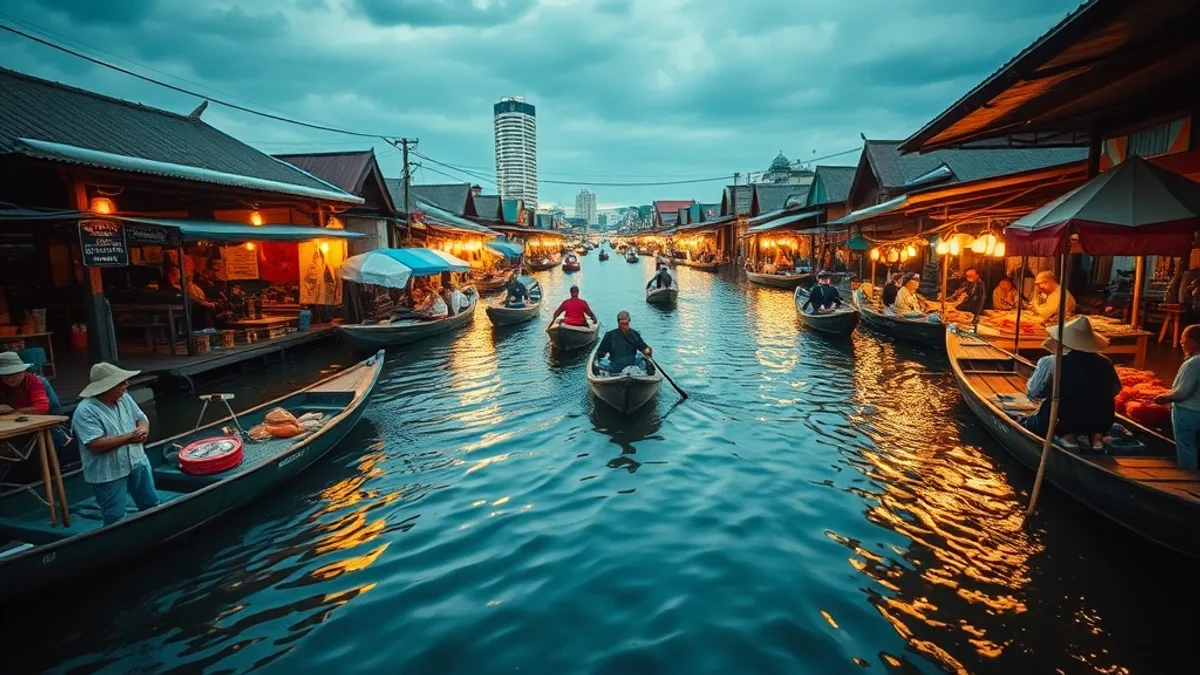
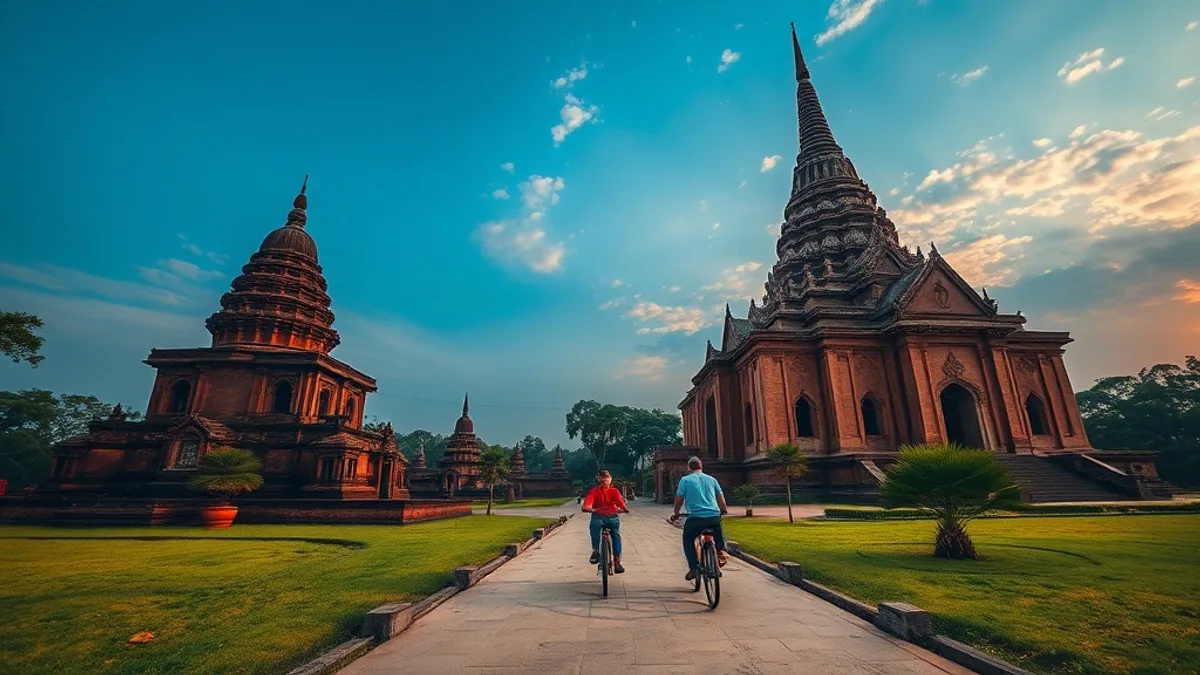
The temple remains an active Buddhist monastery, giving it a living quality that purely archaeological sites lack — saffron-robed monks walk the grounds alongside tourists, and the sound of chanting drifts from the prayer halls. The hilltop chedi can be climbed for panoramic views across the surrounding rice paddies. Navigation around Ayutthaya is straightforward. Bicycle rental is available throughout the old town for 50-80 THB per day, and the flat terrain makes cycling between temples easy. Tuk-tuks can be hired for customized temple circuits, typically charging 200-300 THB per hour. A boat tour along the rivers provides a different perspective, passing temple ruins, riverside communities, and the bustling central market. Many visitors combine Ayutthaya with a stop at the summer palace of Bang Pa-In, a stunning collection of Thai, Chinese, and European architectural styles set in manicured gardens about 20 kilometers south of the city.
Highlights
- Photograph the iconic Buddha head entwined in bodhi tree roots at the atmospheric Wat Mahathat
- Watch sunset paint the three royal chedis of Wat Phra Si Sanphet in golden light
- Descend into the underground crypt at Wat Ratchaburana to see Thailand's oldest surviving murals
- View the Khmer-style grandeur of Wat Chai Watthanaram reflected in the riverside waters
- Climb the massive chedi at Wat Yai Chai Mongkhon for views across rice paddies and ancient ruins
- Cycle between temples on flat, shaded paths through the historic island's archaeological zones
- Cruise the three rivers surrounding Ayutthaya on a sunset boat tour past illuminated temples
- Visit the eclectic royal architecture of Bang Pa-In Summer Palace on the journey from Bangkok
November to February offers the most pleasant temperatures with clear skies and moderate heat, making cycling between temples comfortable. December and January are particularly good with cooler mornings. March to May is brutally hot with temperatures regularly exceeding 38 degrees Celsius — bring ample water and start early. The rainy season from June to October occasionally causes river flooding that can affect low-lying temple sites, though this is rare. The Loy Krathong festival in November brings evening celebrations around the illuminated ruins.
Practical Information
Cost Level
A combined entry ticket covering the major temples costs 220 THB for foreigners. Individual temple entry runs 50 THB each. Bicycle rental is 50-80 THB per day. Tuk-tuk temple tours cost 200-300 THB per hour, with a typical three-hour circuit running 800-1,000 THB. Boat tours range from 200-500 THB per person for group trips. Budget accommodation in Ayutthaya starts at 300-500 THB, mid-range hotels 800-1,500 THB. The train from Bangkok costs 15-345 THB depending on class.
Tips
Take the train from Bangkok's Bang Sue station for an inexpensive and scenic 90-minute journey rather than dealing with Bangkok traffic. Start your temple tour at Wat Mahathat early in the morning when the light is soft and crowds are thin. Rent a bicycle at the guesthouse area near the train station and plan a clockwise loop of the island. Bring a hat, sunscreen, and at least two liters of water — shade between temples is limited. For Wat Chai Watthanaram, time your visit for late afternoon when the light is warmest and the riverside reflection is clearest.
Our creators on the ground in Ayutthaya share their best recommendations in their videos.
Places in this Guide
Discover the attractions and locations featured in this travel guide.
Explore Ayutthaya
Ayutthaya
อยุธยาAyutthaya, the ancient capital of the Siamese kingdom, is a UNESCO World Heritage Site renowned for its majestic temple ...All creators from Ayutthaya →Location & Orientation
Frequently Asked Questions
Can I visit Ayutthaya as a day trip from Bangkok?
Yes, Ayutthaya is one of Bangkok's most popular day trips. The train from Bang Sue station takes about 90 minutes and costs as little as 15 THB for third class. Minivans from Victory Monument take about 90 minutes and cost around 60-80 THB. Organized tours from Bangkok run 1,000-2,500 THB including transport, guide, and some entry fees. A full day gives you time to cover the four or five major temples comfortably. Staying overnight allows you to enjoy sunset and early morning visits when the ruins are most atmospheric.
How should I get around Ayutthaya?
Bicycle is the best way to explore — the island is flat, distances between major temples are moderate, and cycling gives you complete freedom to stop and explore at your own pace. Rental shops are concentrated near the train station and charge 50-80 THB per day. Tuk-tuks offer a faster alternative for those who prefer not to cycle in the heat, with customizable circuits. Boat tours provide a unique river perspective and access to Wat Chai Watthanaram across the water.
How long do I need to explore Ayutthaya properly?
A single full day covers the major highlights if you start early and use a bicycle or tuk-tuk. Serious history enthusiasts and photographers should plan two days to explore the outlying temples, visit the Ayutthaya Historical Study Center, and see Bang Pa-In Summer Palace. The difference between a rushed day trip and a two-day visit is substantial — overnight stays allow you to experience sunset at Wat Chai Watthanaram and early morning solitude at Wat Mahathat, the two most atmospheric times.
What is the difference between Ayutthaya and Sukhothai?
Both are UNESCO-listed ancient Thai capitals, but they represent different eras and artistic traditions. Sukhothai is older, featuring a more graceful and spiritual artistic style, set in a rural park-like setting ideal for cycling. Ayutthaya is larger and grander, with Khmer-influenced architecture, and sits on an island surrounded by a modern town. Sukhothai feels meditative while Ayutthaya feels epic. If you can only visit one, Ayutthaya is more accessible from Bangkok; if you have time for both, the combination provides a complete picture of pre-modern Thai civilization.
Why are so many Buddha statues in Ayutthaya headless?
When the Burmese army captured and destroyed Ayutthaya in 1767, soldiers systematically decapitated Buddha statues and melted gold leaf as acts of conquest and to extract precious materials. Many heads were never recovered, and the headless statues have been deliberately preserved in their damaged state as a memorial to the city's fall. Some heads were stolen by treasure hunters over the centuries. The Thai government has chosen not to restore the statues, allowing them to stand as powerful reminders of the kingdom's history.